US arms sales pause would push Taiwan toward asymmetric-defense tech: Analysts分析人士称,美国暂停对台军售将促使台湾转向非对称防御技术。
The idea of Trump using arms sales as a negotiating chip with China has sparked concerns that Washington might decline procurement deals with Taiwan.
NEW TAIPEI CITY, Taiwan — U.S. President Donald Trump’s apparent move to delay a massive weapons sale to Taiwan after a summit with his Chinese counterpart will drive the island’s military further toward self-sufficiency, with sights on asymmetric warfare rather than technological might if ever in a war with China, analysts say.
Days after Trump met Chinese President Xi Jinping in Beijing, the U.S. acting Navy secretary said a $14 billion arms package to Taiwan had been delayed. The president is due to announce an update the package’s status, Taipei-based Central News Agency reported on May 23.
Although it’s unclear whether Trump will stick to his pledge, scrap it or wait to see whether China comes through on large purchases of American imports as a reciprocal gesture, experts in Taiwan said the delayed sale represents an interim pullback in U.S. commitment to Taiwan’s defense.
“U.S. arms sales to Taiwan have never been merely about weapons acquisition,” said Huang Chung-ting, associate research fellow with the Institute for National Defense and Security Research in Taipei.
“They are also a visible form of political credibility, commitment credibility and allied trust,” he said. “Beijing may become more likely to underestimate U.S. resolve to intervene, while the deterrent significance originally carried by Taiwan’s arms purchases would also be diluted.”
The idea of Trump using arms sales as a negotiating chip with China has sparked concerns in Taipei that Washington might decline procurement deals with Taiwan until the president leaves office, said Huang Kwei-bo, a diplomacy department professor at National Chengchi University in Taipei.
U.S. arms sales to Taiwan are a longstanding source of friction between Washington and Beijing. China has claimed sovereignty over self-ruled Taiwan since the late 1940s and never dropped the threat of force, if needed, to unify the two sides. Since mid-2022 the People’s Liberation Army forces have stepped up flybys and large-scale exercises in the Taiwan Strait.
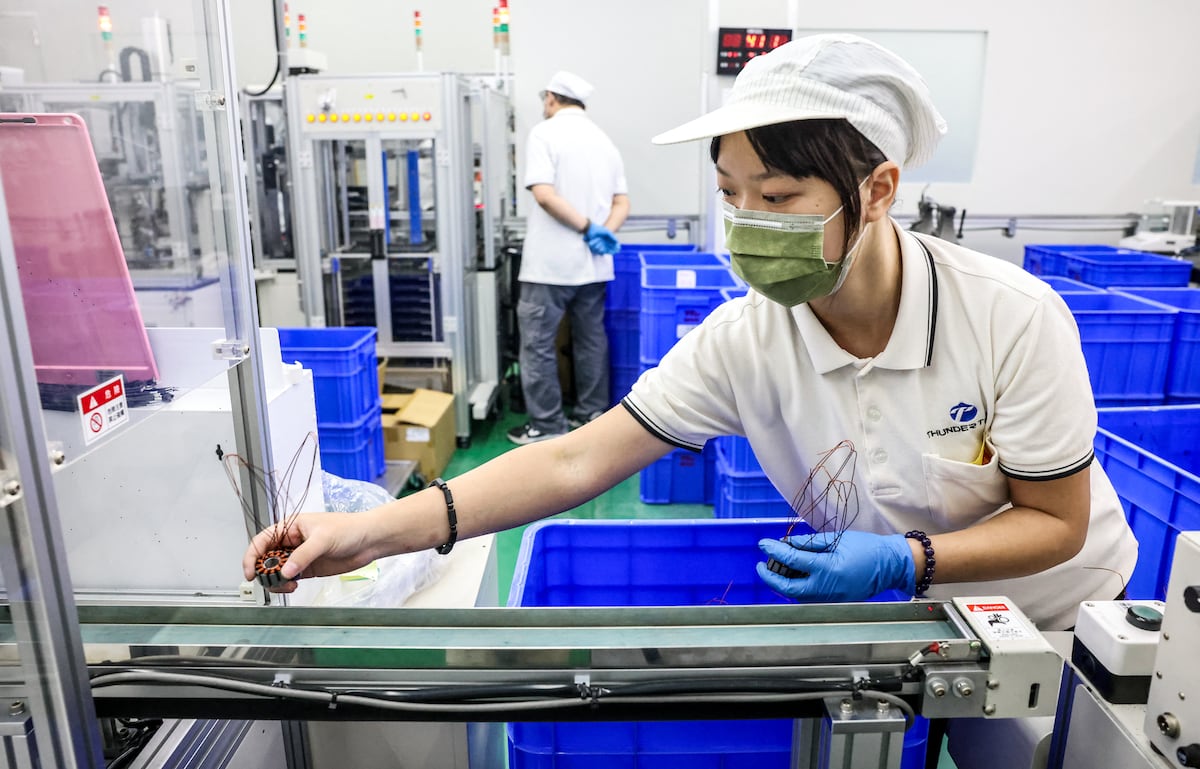
Worries about the U.S. commitment would refocus Taiwanese officials on indigenous weapons development, experts said.
“Attempts will be made to shift to further self-reliance, particularly with regard to the drone industry, and building up the munitions industry,” said Brian Hioe, a non-resident fellow at the Taiwan Research Hub of the University of Nottingham.
“Ironically, having to take into account the possibility that the U.S. does not provide Taiwan arms may push Taiwan further toward asymmetric defense, rather than reliance on big-ticket items — as the U.S. has called on Taiwan to do,” he said.
The island long known for a range of high-tech manufacturing for the past 50 years has pursued its own air defense system, advanced anti-ship missiles and a submarine fleet. In February, Taiwan President Lai Ching-te announced an eight-year budget to modernize the military and what he called “asymmetric capabilities across seven major categories”.
Asymmetric air and sea warfare refers to a numerically weaker force fighting off a stronger one through unconventional means. China’s armed forces are larger than Taiwan’s.
But Taiwan still lacks an indigenous, unified system capable of both interception and counterattack, said Chen Yi-fan, assistant professor in the Diplomacy and International Relations Department at Taiwan’s Tamkang University.
Domestically produced munitions, he added, are not yet “fully integrated into a comprehensive defense network,” and Taiwan doesn’t have enough Patriot Advanced Capability-3 air defense missile system and Army Tactical Missile System to protect strategic assets and critical infrastructure from attack. Lockheed Martin makes both. Patriots, or PAC-3, are in the package that’s now paused.
If Trump were to green-light the $14 billion package, the PAC-3 would take four to five years for delivery because “defense production capacity has long lagged behind demand,” Chen added.
A top U.S. envoy to Taipei said after the May 13-15 Trump summit in China that U.S. Taiwan policy hasn’t changed. A commitment to help Taiwan’s self-defense has anchored that policy since 1979.
A deputy minister with the Taiwan government’s Mainland Affairs Council also said in a May 18 statement that U.S. policy toward the island had “not changed” since the Trump-Xi summit and that Washington made “no promises” to China on arms sales.
Before the apparent pause in Washington, Taiwan’s government had approved a $9.34 billion special defense budget for a weapons the United States had already approved. Purchases would include High Mobility Artillery Rocket Systems (HIMARS) and Javelin anti-tank missiles.
台湾新台北市——分析人士称,美国总统唐纳德·特朗普在与中国总统举行峰会后,明显推迟向台湾出售大量武器,这将促使台湾军队进一步走向自给自足,如果将来与中国发生战争,台湾的关注点将放在非对称战争上,而不是技术实力上。
在特朗普与中国国家主席习近平在北京会晤几天后,美国代理海军部长表示,一项价值140亿美元的对台军售计划已被推迟。据台北中央通讯社5月23日报道,总统将宣布该计划的最新进展。
尽管目前尚不清楚特朗普是否会坚持承诺、放弃承诺,或者等待中国以大量购买美国进口商品作为对等姿态,但台湾专家表示,此次军售延迟代表着美国对台湾防务承诺的暂时性撤回。
“美国对台军售从来都不仅仅是武器采购,”台北国防安全研究院副研究员黄仲廷表示。
“它们也是政治信誉、承诺信誉和盟友信任的可见体现,”他说。“北京可能更倾向于低估美国干预的决心,而台湾购买武器原本所具有的威慑作用也会被削弱。”
台北国立政治大学外交系教授黄桂波表示,特朗普将军售作为与中国谈判的筹码,引发了台北方面的担忧,他们担心华盛顿可能会在特朗普卸任前拒绝与台湾达成采购协议。
美国对台军售一直是华盛顿和北京之间长期摩擦的根源。自上世纪40年代末以来,中国一直声称对自治的台湾拥有主权,并且从未放弃必要时动用武力统一两岸的威胁。自2022年中期以来,中国人民解放军加大了在台湾海峡的飞行表演和大规模军事演习力度。
专家表示,对美国承诺的担忧将使台湾官员重新将注意力集中在自主武器研发上。
“我们将努力转向进一步的自力更生,尤其是在无人机产业和发展军火产业方面,”诺丁汉大学台湾研究中心非常驻研究员Brian Hioe表示。
“具有讽刺意味的是,考虑到美国可能不会向台湾提供武器,这可能会促使台湾进一步走向不对称防御,而不是依赖昂贵的武器装备——正如美国一直呼吁台湾做的那样,”他说。
过去50年来,台湾一直以高科技制造业闻名,并致力于发展自主防空系统、先进反舰导弹和潜艇舰队。今年2月,台湾总统赖清德宣布了一项为期八年的军事现代化预算,旨在提升台湾的军事实力,并打造他所谓的“七大类非对称作战能力”。
非对称海空战是指数量较弱的一方运用非常规手段对抗数量较强的一方。中国的军队规模大于台湾。
但台湾淡江大学外交与国际关系系助理教授陈义凡表示,台湾仍然缺乏能够进行拦截和反击的本土统一系统。
他补充说,国产弹药尚未“完全融入综合防御体系”,台湾目前没有足够的“爱国者先进能力-3”(PAC-3)防空导弹系统和陆军战术导弹系统来保护战略资产和关键基础设施免受攻击。这两种系统均由洛克希德·马丁公司生产。“爱国者”导弹系统(PAC-3)包含在目前暂停的采购计划中。
陈补充说,如果特朗普批准这项 140 亿美元的方案,PAC-3 的交付需要四到五年时间,因为“国防生产能力长期以来一直落后于需求”。
美国驻台北高级特使在5月13日至15日特朗普访华峰会后表示,美国对台政策没有改变。自1979年以来,支持台湾自卫的承诺一直是该政策的基石。
台湾陆委会副部长在5月18日的一份声明中也表示,自特朗普与习近平峰会以来,美国对台湾的政策“没有改变”,华盛顿也没有就对华军售做出“任何承诺”。
在华盛顿方面出现明显的停顿之前,台湾政府已批准了一项93.4亿美元的特别国防预算,用于采购美国此前已批准的武器。采购项目包括高机动性火箭炮系统(HIMARS)和标枪反坦克导弹。