New Zealand Air Force receives first Super Hercules cargo plane新西兰空军接收首架超级大力神运输机
The fleet will eventually comprise five aircraft, decided in a $1 billion deal that goes back to 2020.
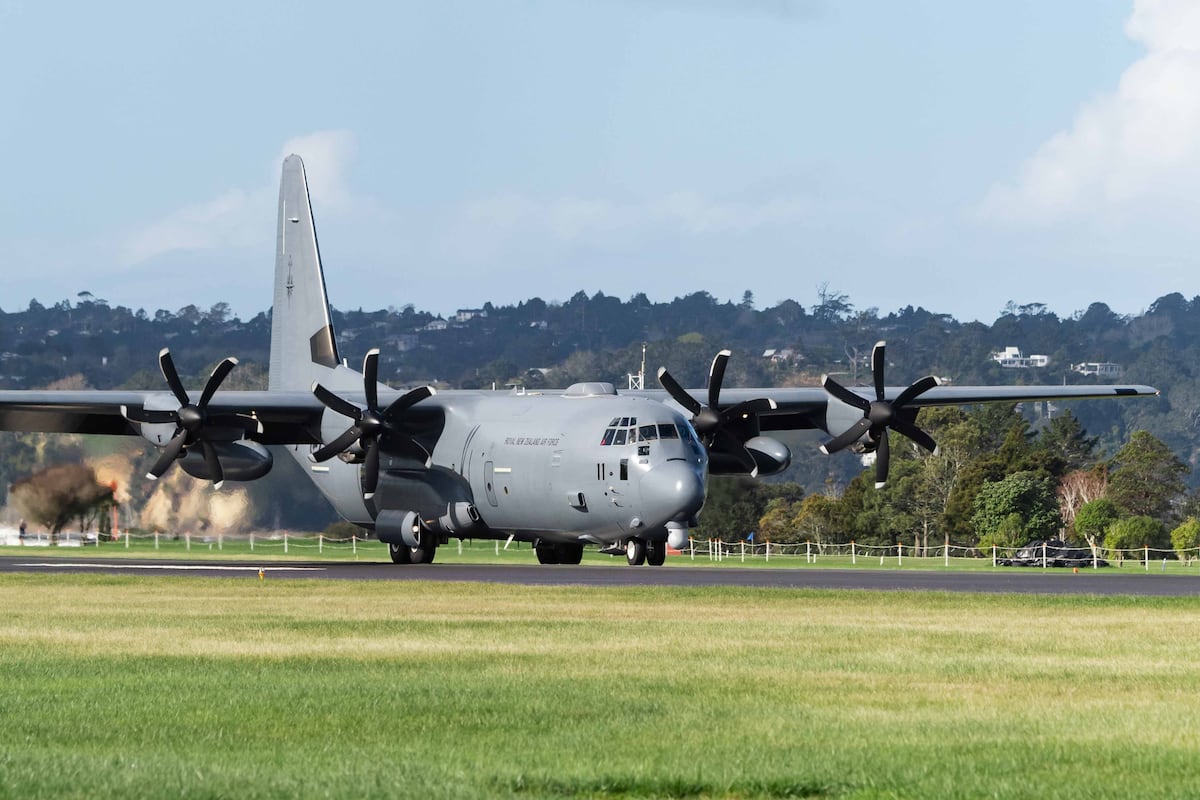
CHRISTCHURCH, New Zealand — The first of five C-130J-30 Super Hercules aircraft touched down in New Zealand earlier this month, part of a plan by the Royal New Zealand Air Force (RNZAF) to retire its 1960s-era C-130H Hercules fleet.
The initial plane, made by Lockheed Martin, was welcomed to RNZAF Base Auckland in a ceremony on Sept. 10. Chief of Defence Force Air Marshal Tony Davies stated: “We’ve taken a huge step forward in our tactical air transport capability. The additional capabilities the new C-130J fleet brings will open up expanded roles for the aircraft to meet the needs of New Zealand and our partners.”
Wing Commander Bradley Scott, who spearheads the air service’s No. 40 Squadron that will operate the new fleet, told Defense News that all five C-130Js would arrive by the end of October.
The Hercules is a workhorse in an air force fleet that possesses no combat aircraft. Indeed, the first C-130J’s workload commenced the following day, as it moved cargo and provided familiarization for air movements staff at several airbases around New Zealand.
Kiwi aircraft have an L3Harris Wescam MX-20HD electro-optic camera mounted under the nose to assist search-and-rescue or disaster-relief missions, something they regularly perform around New Zealand and the South Pacific. The C-130Js also have a SATCOM-based wide-bandwidth broadband system.
Scott noted: “It’s not necessarily a step change in capability with the C-130J, but it’s certainly a modernization and capability enhancement that we’ll receive.” He said the new aircraft “can carry more things a farther distance and burn less fuel doing so.”
Flights to Antarctica are part of the C-130J’s remit, and these will occur within a few months. Final operational release for the aircraft in all roles is scheduled for late 2025.
Dispensing with a competitive tender, Wellington budgeted NZ$1.521 billion (US$990 million) for the aircraft and related infrastructure in 2020. Interoperability with partners like Australia and the U.S. was an important consideration, and the package includes a full-motion flight simulator stationed at Whenuapai.
Crew and maintainer training started in the United States last year; four aircrews have already been trained by the U.S. Air Force, with two more to go. The simulator has not arrived yet, but the first New Zealand-based training program will start in early 2026. “Under the J-model contract, we’d be aiming to achieve as much training as possible in the simulator,” Scott explained.
The air service here already retired two C-130Hs this year. All will be gone by Jan. 31, 2025, after the fleet will have collectively flown nearly 155,000 hours over 97,000+ sorties.
Gordon Arthur is an Asia correspondent for Defense News. After a 20-year stint working in Hong Kong, he now resides in New Zealand. He has attended military exercises and defense exhibitions in about 20 countries around the Asia-Pacific region.
新西兰基督城——本月初,五架 C-130J-30 超级大力神运输机中的第一架降落在新西兰,这是新西兰皇家空军 (RNZAF) 退役其 20 世纪 60 年代的 C-130H 大力神机队的计划的一部分。
首架由洛克希德·马丁公司制造的飞机于9月10日在奥克兰皇家新西兰空军基地举行仪式,正式交付。国防军司令托尼·戴维斯空军上将表示:“我们在战术空运能力方面迈出了巨大的一步。新的C-130J机队带来的额外能力将拓展该型飞机的用途,以满足新西兰及其合作伙伴的需求。”
负责指挥空军第 40 中队操作新机队的布拉德利·斯科特中校告诉《防务新闻》,所有五架 C-130J 飞机将于 10 月底前抵达。
在新西兰空军没有作战飞机的情况下,大力神运输机是空军机队的主力运输机。事实上,首架C-130J第二天就开始执行任务,运送货物并为新西兰各地几个空军基地的空运人员提供熟悉操作的培训。
新西兰空军的飞机机头下方安装了一台L3Harris Wescam MX-20HD光电摄像机,用于协助搜救或灾害救援任务,这类任务他们在新西兰和南太平洋地区经常执行。C-130J飞机还配备了基于卫星通信的宽带系统。
斯科特指出:“C-130J 的性能未必是质的飞跃,但无疑是一次现代化升级和能力提升。” 他说,新飞机“可以运载更多货物,飞行更远的距离,同时还能节省燃料。”
飞往南极洲的航班是C-130J的任务之一,这些航班将在几个月内起飞。该机型所有任务的最终投入使用计划于2025年底进行。
惠灵顿政府没有进行公开招标,而是在 2020 年为飞机及相关基础设施拨款 15.21 亿新西兰元(9.9 亿美元)。与澳大利亚和美国等合作伙伴的互操作性是一个重要的考虑因素,该项目还包括在韦努阿派机场安装一台全动态飞行模拟器。
机组人员和维护人员的培训去年在美国启动;美国空军已经培训了四组机组人员,还有两组待培训。模拟器尚未运抵,但首个在新西兰开展的培训项目将于2026年初启动。“根据J型合同,我们的目标是尽可能多地利用模拟器进行培训,”斯科特解释道。
今年,该地空军已经退役了两架C-130H运输机。到2025年1月31日,所有C-130H运输机都将退役,届时该机队累计飞行时间将接近15.5万小时,飞行架次超过9.7万架次。
戈登·阿瑟是《防务新闻》的亚洲特派记者。在香港工作20年后,他现居新西兰。他曾到访亚太地区约20个国家,参加过军事演习和防务展览。