SPEAR Mini-Cruise Missile Getting An Electronic Warfare Variant To Swarm With Is A Huge DealSPEAR迷你巡航导弹获得电子战版本,可以进行集群攻击,这意义重大。
The advent of a swarm of networked SPEAR strike and electronic warfare missiles is very bad news for enemy air defenses and the targets they protect.
新闻视频
Updated Dec 1, 2019 6:01 AM EST
It’s becoming increasingly clear that the age of highly networked air-launched munitions that can swarm together and work as a team is rapidly approaching. This is not just about big cruise missiles. Even the most diminutive of smart weapons could be adapted to become part of an undulating, rapid-reacting, network of disparate munitions that work cooperatively to accomplish a set of goals and directives. MBDA’s Select Precision Effects At Range Capability Three (SPEAR-3) mini-cruise missile, a weapon that itself was adapted from the Brimstone short-range air-to-ground missile, is now getting an electronic warfare variant that will work alongside its traditional brethren to shatter enemy air defenses and to protect launching aircraft, and even other missiles, from their deadly reach.
MBDA’s SPEAR-3 is a standoff precision-guided munition that uses some of the same components found in the company’s successful Brimstone short-range air-to-ground missile. Adding a pair of pop-out wings and a small turbojet engine, SPEAR-3 is able to fly an estimated 85 miles to prosecute smaller targets, including those on the move, in any weather, day or night. It does this via leveraging a tri-mode seeker capable of radar, infrared, and laser homing. The missile is capable of autonomously picking out targets once it flies to the target area, or the target can be data-linked to the missile via the launch platform’s sensors or from third party sensor information the aircraft receives from its own data links. The missile can also strike a target via laser guidance, whether that be from a party of the ground nearby or an aircraft overhead the target area.
The American GBU-53/B Small Diameter Bomb II, better known as Stormbreaker, uses a very similar tri-mode terminal guidance package and also includes GPS, inertial navigation, and a data-link system for midcourse guidance, just like SPEAR-3. So, overall the two weapons are similar in many respects, but SPEAR-3 has nearly double the range and can reach its targets faster than the unpowered Stormbreaker glide bomb.
Weight and dimensions wise, they are similar, as well. It isn’t clear if Stormbreaker’s 105lb warhead is substantially larger than SPEAR-3’s. One would assume this would be the case as SPEAR-3 has to accommodate an engine and fuel, while Stormbreaker does not. If the warhead from Brimstone is carried over, it is substantially smaller than the one found on Stormbreaker, but it’s still very capable of blasting through heavy armor and taking down small fortified structures, as well as softer targets.
Just with its standard capability set, SPEAR-3 is one potent missile that will benefit 4th generation and 5th generation fighters alike. The F-35 is slated to be able to carry four in each of its bays while still retaining room for a Meteor air-to-air missile in each bay, as well. 4th generation tactical fighters like the Eurofighter Typhoon will be able to carry three to a rack externally.
The recent announcement from MBDA that they will be developing an electronic warfare variant of their mini cruise-missile of sorts alongside their partner’s Leonardo is not only highly logical, it also has the potential to drastically increase the tactics set, survivability, and capabilities of the baseline SPEAR-3 itself. Named SPEAR-EW, this adaptation will work as a jammer and decoy missile to distract, blind, and spoof enemy air defense systems in a similar manner as America’s Miniature Air-Launched Decoy-J/X (MALD-J/X), but with more of a tactical focus due to its far shorter range, and with a more distinct goal of working with its kinetic (high-explosive-armed) cousins directly.
SPEAR-EW could be used to help protect friendly fighters moving through a threat corridor by executing electronic attacks on threaten emitters or to assist fighters acting in the Wild Weasel role to get close enough to destroy air defenses directly with shorter-ranged munitions. But where they could really shine, is when they are used in concert with conventional SPEAR-3 missiles in the cooperative destruction of enemy air defenses (DEAD) role.
By pairing SPEAR-3s with SPEAR-EWs in a fully networked fashion, the mini-cruise missiles can work as a swarm to shatter critical parts of the enemy’s air defense network. For instance, SPEAR-EW could spoof or jam an enemy threat emitter while SPEAR-3s search for and destroy not just the emitter, but all the components of the SAM site arranged nearby.
F-35B packing four spears and a Meteor in each bay. , MBDA
SPEAR-EW could also provide electronic warfare screening on the fly for SPEAR-3s that are trying to make their way to a set of targets between the launch aircraft and the surface threat or threats. By detecting a pop-up threat on its own or via data-link from the launch aircraft, SPEAR-EW could act in real-time to suppress the threat so that the rest of the horde of missiles can make it to their target areas safely.
Maybe most importantly, because SPEAR-EW is powered by a small Pratt & Whitney TJ-130 turbojet engine, it can throttle back and loiter over an area for an extended period of time while using its electronic bag of tricks to disrupt nearby air defenses. In fact, it could even be launched preemptively into an area where road-mobile SAM systems are feared to be lurking, hopping into action the moment one of them rears its ugly head—or in this case its radio frequency emissions, to be exact.
It’s also quite possible that SPEAR-EW could be used kinetically even in just a hit-to-kill manner. Punching a hole in a threatening radar dish equals a mission kill. No explosive warhead is needed if it can home in directly on the radar emissions source or if it has GPS coordinates of that source data-linked to it by a third-party aircraft, such as the fighter that launched it. In other words, once its jamming job is done, it may be able to make a kill run at the emitter it was targeting. That is if a standard SPEAR-3 isn’t retargeted in real-time via the data-link network to kill the emitter first. In fact, SPEAR-EW could possibly be programmed to request the retargeting of the SPEAR-3 autonomously depending on the nature of the threat and the commands it has to work off of from the launching aircraft. It’s also possible that SPEAR-EW may retain SPEAR-3’s warhead. If that is the case, it could be used as a suppression of enemy air defenses (SEAD) weapon, prosecuting kinetic strikes on threat emitters as requested in lieu or in addition to jamming them.
Brimstone missiles, which shares some components with the SPEAR-3, on a triple rack. MBDA has developed a similar triple rack for SPEAR-3., Joseph Trevithick
For highly defended targets, where advanced short-range air defenses (SHORADs) are present, such as the Russian-made Pantsir S1 point defense system, SPEAR-EW could be an absolutely critical component of any standoff attack. Advanced SHORADs have the capability to not only take down aircraft, but also the weapons they fire and even the bombs they drop. This is in addition to larger cruise missiles and drones. Spear-EW could provide essential electronic warfare support to an approaching wave of SPEAR-3s or even larger cruise missiles, such as Stormshadows, jamming those SHORAD systems so that they don’t shred the attacking munitions during their terminal phases of flight. At the very least, they could make it possible for SPEAR-3s to destroy the SHORADs before the heavier munitions or aircraft arrive over the target area.
The idea that you could do all this while not expending higher-end, heavier, standoff decoy-jammers, and do so en masse from tactical fighters—even stealthy ones with tight weapons bays—is a big plus. There is also a naval component to discuss. SPEAR-3s could be incredibly effective anti-ship missiles, especially for taking on swarms of smaller vessels operating in the littorals.
Even against larger ships, a dozen SPEAR-3s blasting holes in a vessel’s sensors and superstructure would likely result in a mission kill, or at least leave that vessel vulnerable to attack from heavier weaponry, such as anti-ship cruise missiles. Having escort jammers in the form of SPEAR-EWs flying with SPEAR-3s in a cooperative swarm would be a very nasty and hard to defend against threat for an enemy flotilla to content with.
Leonardo has been a real mover in expendable, active, electronic-warfare enabled countermeasures space. The company’s Britecloud expendable active decoy is cutting-edge in its abilities and concept of deployment and operation. Some of that same technology will likely be ported over to SPEAR-EW.
MBDA’s press release is blatantly clear that they see the mix of EW and traditional strike SPEAR-3s working together will have intensely synergistic impacts on the battlefield, with the two capabilities combined being far greater than the sum of their parts. They also make indirect note that SPEAR-3, with its longer-range, faster flight time, and loitering ability, is superior to its glide-bomb competitors:
Defence Minister Anne-Marie Trevelyan said: “These state-of-the-art electronic jammers will confuse our adversaries and keep our pilots safer than ever in the air. Paired with the devastating power of precision Brimstone and Meteor missiles, our world-class F-35 and Typhoon jets will continue to rule the skies in the years to come.” Mike Mew, MBDA UK Director of Sales and Business Development, said: “SPEAR-EW is a revolutionary new capability that, alongside the existing SPEAR3 weapon, marks a fundamental change in the ability of friendly air forces to conduct their missions despite the presence of enemy air defences. Our vision for SPEAR is to create a swarm of networked weapons able to saturate and neutralise the most sophisticated air defences. Adding SPEAR-EW to the family alongside our existing SPEAR strike missile demonstrates the principle of introducing complementary variants to the SPEAR family that will add significant capability and force multiplication without the need to repeat the platform integration. We have an exciting roadmap of variants, spirals and technology insertions in the pipeline to further enhance the family as we move forward.” The core of SPEAR-EW’s payload is Leonardo’s advanced, miniaturised Digital Radio Frequency Memory (DRFM) technology, which offers the most advanced and future-proof electronic jamming and deception available on the market today. The new SPEAR-EW will complement the SPEAR network enabled miniature cruise missile, which is designed to precisely engage long range, mobile, fleeting and re-locatable targets in all weathers, day or night, in the presence of countermeasures, obscurants and camouflage, while ensuring a safe stand-off range between the aircraft and enemy air defences. Powered by a turbojet engine the SPEAR missile offers over double the range, and a far more flexible operating envelope, when compared to a conventional glide weapon. SPEAR-EW utilises this long endurance through its capacity to be launched at enhanced stand-off ranges and loiter while carrying out its jamming mission.
Defence Minister Anne-Marie Trevelyan said: “These state-of-the-art electronic jammers will confuse our adversaries and keep our pilots safer than ever in the air. Paired with the devastating power of precision Brimstone and Meteor missiles, our world-class F-35 and Typhoon jets will continue to rule the skies in the years to come.”
Mike Mew, MBDA UK Director of Sales and Business Development, said: “SPEAR-EW is a revolutionary new capability that, alongside the existing SPEAR3 weapon, marks a fundamental change in the ability of friendly air forces to conduct their missions despite the presence of enemy air defences. Our vision for SPEAR is to create a swarm of networked weapons able to saturate and neutralise the most sophisticated air defences. Adding SPEAR-EW to the family alongside our existing SPEAR strike missile demonstrates the principle of introducing complementary variants to the SPEAR family that will add significant capability and force multiplication without the need to repeat the platform integration. We have an exciting roadmap of variants, spirals and technology insertions in the pipeline to further enhance the family as we move forward.”
The core of SPEAR-EW’s payload is Leonardo’s advanced, miniaturised Digital Radio Frequency Memory (DRFM) technology, which offers the most advanced and future-proof electronic jamming and deception available on the market today.
The new SPEAR-EW will complement the SPEAR network enabled miniature cruise missile, which is designed to precisely engage long range, mobile, fleeting and re-locatable targets in all weathers, day or night, in the presence of countermeasures, obscurants and camouflage, while ensuring a safe stand-off range between the aircraft and enemy air defences. Powered by a turbojet engine the SPEAR missile offers over double the range, and a far more flexible operating envelope, when compared to a conventional glide weapon. SPEAR-EW utilises this long endurance through its capacity to be launched at enhanced stand-off ranges and loiter while carrying out its jamming mission.
Networking between swarms of munitions, not just the manned aircraft or drones that launch them, is emerging as a focus of future air combat. The USAF has very high hopes for their ambitious Golden Horde initiative and other branches, such as the U.S. Army, are also pushing hard to eventual provide enhanced networking across smart munitions and various platforms in the battlespace.
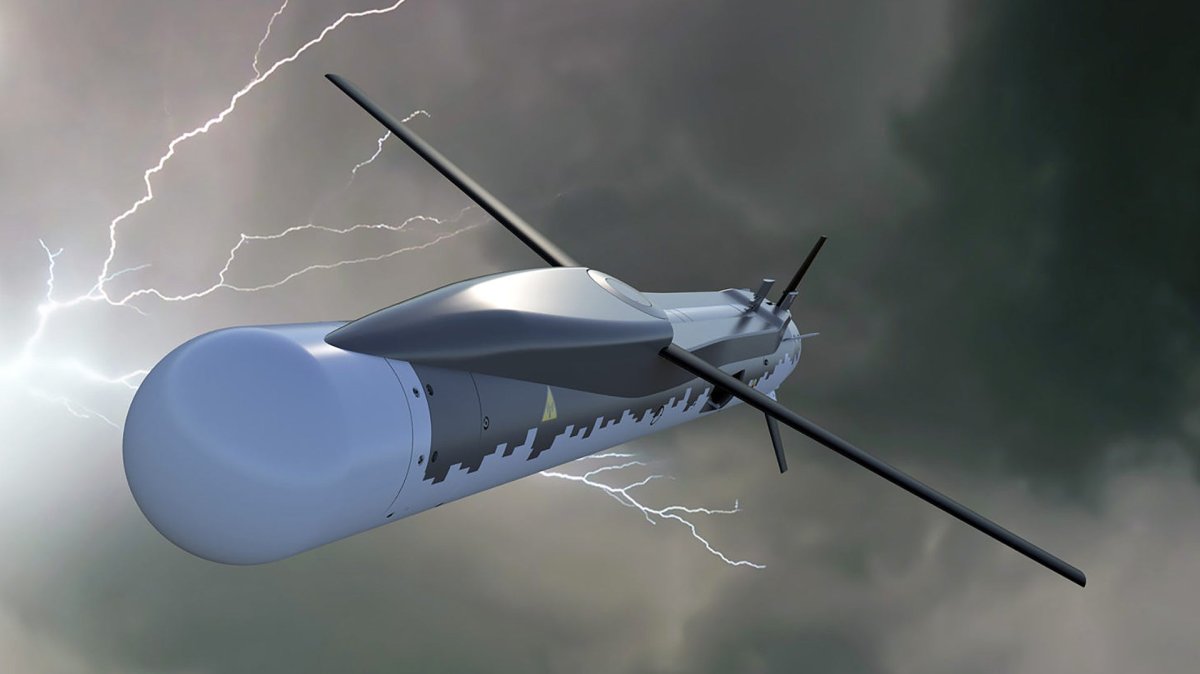
SPEAR-3 rendering, MBDA
SPEAR and SPEAR-EW represent a truly exciting combined capability that can change the way tactical aircraft prosecute their missions over the battlefield. Although some will underline how they give fourth generation fighters a much-needed boost in survivability, the payoffs are also potentially very big for the F-35, which will receive SPEAR-3 capability as part of its upcoming Block IV upgrade.
Although it is hard to spot by some radars, the F-35 has retained key countermeasure systems found on 4th generation fighters, such as fiber-optic towed decoys and soon it will also have the ability to launch chaff countermeasures . Being able to fire off a standoff jamming missile, whether to help its launch platform survive or to help other munitions get to their targets, is a huge edge that could really make the Joint Strike Fighter much more lethal and wile. Even firing one off as the F-35 exfiltrates from enemy territory, where its less stealthy rear would be exposed to enemy radars, could be a tactic that means the difference between life and death. The SPEAR-EW could loiter and draw threat radars and even enemy missiles away from the F-35 as it accelerates to safety.
The combo could also be remarkably devastating if adapted for American heavy bombers. One can imagine B-2 or B-21 carrying hundreds of these weapons at a time, raining them down on entire enemy formations and air defense nodes from a relatively safe distance. And like the F-35, having a few SPEAR-EWs onboard to use defensively when needed to solve a tactical problem or plug an intermittent vulnerability gap could be incredibly useful for American bomber crews.
There are other critical applications as well. Equipping increasingly vulnerable attack helicopters with SPEAR-EW—a missile that could be carried on their stub-wing pylons—would be highly advantageous as it can help protect the helicopters from the same roving SHORAD systems mentioned earlier.
Regardless, MBDA is really onto something here. If they can execute the networking development successfully and offer these missiles at a price that is somewhat relevant, the SPEAR family could be the ideal tactical swarming standoff weapon concept that blazes a trail into the realm of swarming munitions.
Contact the author: Tyler@thedrive.com
Comments couldn’t be loaded. Please refresh the page.
更新于美国东部时间2019年12月1日上午6:01
越来越明显的是,能够协同作战、高度联网的空射弹药时代正在迅速逼近。这不仅仅关乎大型巡航导弹。即使是最小型的智能武器,也可以被改造,融入到由各种不同弹药组成的动态、快速反应网络中,协同完成既定目标和指令。MBDA公司的“远距离精确打击能力三型”(SPEAR-3)微型巡航导弹,其本身就是由“硫磺石”(Brimstone)短程空地导弹改进而来,如今又推出了一款电子战版本,它将与传统的同类导弹协同作战,摧毁敌方防空系统,并保护发射飞机乃至其他导弹免受其致命威胁。
MBDA公司的SPEAR-3是一款防区外精确制导导弹,它采用了该公司广受好评的“硫磺石”(Brimstone)短程空地导弹的部分相同组件。SPEAR-3增加了一对可伸缩机翼和一个小型涡轮喷气发动机,射程约为85英里(约137公里),能够在任何天气条件下昼夜打击包括移动目标在内的小型目标。它利用三模导引头实现这一目标,该导引头能够进行雷达、红外和激光制导。导弹飞抵目标区域后能够自主选择目标,也可以通过发射平台的传感器或飞机自身数据链接收的第三方传感器信息,将目标信息与导弹进行数据链接。此外,该导弹还可以通过激光制导攻击目标,激光制导既可以来自附近的地面单位,也可以来自目标区域上空的飞机。
美国的GBU-53/B小直径炸弹II型,更广为人知的名称是“风暴破坏者”(Stormbreaker),它采用了非常相似的三模末端制导组件,并且也像SPEAR-3一样,配备了GPS、惯性导航和用于中段制导的数据链系统。因此,总的来说,这两种武器在许多方面都很相似,但SPEAR-3的射程几乎是无动力滑翔炸弹“风暴破坏者”的两倍,而且到达目标的速度也更快。
重量和尺寸方面,它们也十分相似。目前尚不清楚“风暴破坏者”的105磅弹头是否比“矛-3”的弹头大得多。人们可能会认为情况确实如此,因为“矛-3”需要容纳发动机和燃料,而“风暴破坏者”则不需要。如果“硫磺”的弹头被沿用,它比“风暴破坏者”上的弹头要小得多,但仍然能够穿透重型装甲,摧毁小型防御工事以及较软的目标。
仅凭其标准性能,SPEAR-3 就是一款威力强大的导弹,能够同时惠及第四代和第五代战斗机。F-35 战斗机预计每个弹舱可携带四枚 SPEAR-3,同时每个弹舱还能额外容纳一枚“流星”空空导弹。而像欧洲台风战斗机这样的第四代战术战斗机则可以外挂三枚 SPEAR-3。
MBDA公司近日宣布将与合作伙伴莱昂纳多公司共同研发其小型巡航导弹的电子战版本,这一举措不仅合乎逻辑,而且有望大幅提升SPEAR-3导弹的战术能力、生存能力和作战效能。这款名为SPEAR-EW的改进型导弹将作为干扰和诱饵导弹,以类似于美国小型空射诱饵导弹J/X(MALD-J/X)的方式干扰、致盲和欺骗敌方防空系统。但由于其射程更短,因此更侧重于战术应用,并且其目标更明确,即直接与动能(高爆)导弹协同作战。
SPEAR-EW 可用于保护友军战机在威胁走廊中行进时免受电子攻击,攻击目标为威胁发射源;也可用于协助执行“野鼬鼠”任务的战机接近敌方防空系统,使用短程弹药直接摧毁防空系统。但 SPEAR-EW 的真正优势在于与常规 SPEAR-3 导弹协同使用,执行“协同摧毁敌方防空系统”(DEAD)任务。
通过将SPEAR-3导弹与SPEAR-EW导弹以完全联网的方式配合使用,这些小型巡航导弹可以形成集群,摧毁敌方防空网络的关键部分。例如,SPEAR-EW导弹可以干扰或欺骗敌方威胁发射源,而SPEAR-3导弹则可以搜索并摧毁该发射源以及附近所有地空导弹阵地的组件。
F-35B 每个弹舱可挂载四枚“矛”式导弹和一枚“流星”导弹。,MBDA
SPEAR-EW还可以为SPEAR-3导弹提供即时电子战掩护,使其能够飞越发射飞机和地面威胁之间的目标区域。SPEAR-EW能够自主探测突发威胁,或通过发射飞机的数据链探测到威胁,并实时采取行动压制威胁,从而确保其余导弹能够安全抵达目标区域。
或许最重要的是,由于SPEAR-EW由一台小型普惠TJ-130涡轮喷气发动机提供动力,它可以降低速度并在目标区域上空长时间盘旋,同时利用其电子设备干扰附近的防空系统。事实上,它甚至可以先发制人地部署到可能潜伏有公路机动式地空导弹系统的区域,一旦发现此类系统——或者更准确地说,是发现其无线电频率辐射——便立即投入战斗。
SPEAR-EW 甚至有可能以直接命中的方式进行动能攻击。在威胁的雷达天线上打出一个洞就等于摧毁目标。如果它能够直接追踪雷达辐射源,或者通过第三方飞机(例如发射它的战斗机)的GPS数据链路获取该辐射源的坐标,则无需爆炸性弹头。换句话说,一旦干扰任务完成,它就可以对目标辐射源进行攻击。当然,前提是标准的 SPEAR-3 没有通过数据链网络实时重新锁定目标,先将其摧毁。事实上,SPEAR-EW 可能被编程为根据威胁的性质和发射飞机的指令自主请求重新锁定 SPEAR-3。SPEAR-EW 也可能保留 SPEAR-3 的弹头。如果情况属实,它可以作为压制敌方防空系统(SEAD)武器使用,根据要求对威胁发射源进行动能打击,以代替或补充干扰。
“硫磺石”导弹与“矛-3”导弹共享部分组件,并安装在三联挂架上。MBDA公司也为“矛-3”导弹开发了类似的三联挂架。——约瑟夫·特雷维西克
对于防御严密的目标,例如部署了俄罗斯制造的“铠甲S1”近程防空系统等先进近程防空系统(SHORAD)的目标,SPEAR-EW电子战系统可能成为任何远程攻击中至关重要的组成部分。先进的SHORAD系统不仅能够击落飞机,还能摧毁飞机发射的武器,甚至包括投掷的炸弹。此外,它们还能拦截更大型的巡航导弹和无人机。SPEAR-EW系统可以为即将到来的SPEAR-3导弹群,甚至是更大型的巡航导弹(例如“风暴阴影”导弹)提供必要的电子战支援,干扰这些SHORAD系统,使其无法在攻击弹药的末段飞行阶段将其摧毁。至少,SPEAR-EW系统能够使SPEAR-3导弹在重型弹药或飞机抵达目标区域之前摧毁这些SHORAD系统。
无需耗费高端、笨重的远程诱饵干扰器,就能从战术战斗机(甚至是武器舱空间狭小的隐形战斗机)上大规模发射干扰弹,这无疑是一大优势。此外,海军方面也值得探讨。SPEAR-3导弹可能成为极其有效的反舰导弹,尤其适用于对付在近岸海域活动的成群小型舰艇。
即使面对大型舰艇,十几架SPEAR-3导弹也能在其传感器和上层建筑上炸出弹孔,很可能直接导致任务失败,或者至少使其容易受到更重型武器(例如反舰巡航导弹)的攻击。如果SPEAR-3导弹与护航干扰机(例如SPEAR-EW)组成协同作战的集群,对敌方舰队而言,这将是一个极其棘手且难以防御的威胁。
莱昂纳多公司在可消耗型主动电子战对抗措施领域一直走在前列。该公司研发的Britecloud可消耗型主动诱饵,无论在性能、部署还是操作理念方面,都处于行业领先地位。部分相同的技术很可能会被移植到SPEAR-EW系统中。
MBDA的新闻稿明确指出,他们认为SPEAR-3电子战和传统打击能力相结合,将在战场上产生强大的协同效应,两种能力的结合将远超二者之和。他们还间接指出,SPEAR-3凭借其更远的射程、更快的飞行时间和滞空能力,优于其滑翔炸弹竞争对手。
国防部长安妮-玛丽·特里维廉表示:“这些最先进的电子干扰器将迷惑我们的对手,并使我们的飞行员在空中比以往任何时候都更加安全。配合威力强大的精确制导‘硫磺石’和‘流星’导弹,我们世界一流的F-35和‘台风’战斗机将在未来几年继续称霸天空。” MBDA英国销售与业务发展总监Mike Mew表示:“SPEAR-EW是一项革命性的全新能力,它与现有的SPEAR3武器相结合,从根本上改变了友军空军在敌方防空系统存在的情况下执行任务的能力。我们对SPEAR的愿景是打造一个网络化武器集群,能够饱和并摧毁最先进的防空系统。将SPEAR-EW与我们现有的SPEAR打击导弹一起加入SPEAR系列,体现了我们向SPEAR系列引入互补型改进型的原则,这些改进型将在无需重复平台集成的情况下显著增强作战能力和力量倍增。我们制定了令人振奋的改进型、螺旋式升级和技术集成路线图,以进一步增强SPEAR系列的性能。” SPEAR-EW有效载荷的核心是莱昂纳多公司先进的小型化数字射频存储器(DRFM)技术,该技术提供当今市场上最先进、面向未来的电子干扰和欺骗能力。新型SPEAR-EW将与SPEAR网络化微型巡航导弹形成互补。SPEAR导弹旨在全天候、昼夜无间地精确打击远程、机动、瞬时移动且可重新定位的目标,即使面对对抗措施、遮蔽物和伪装也能有效作战,同时确保飞机与敌方防空系统之间保持安全的防区外距离。SPEAR导弹采用涡轮喷气发动机驱动,射程是传统滑翔武器的两倍以上,作战范围也更加灵活。SPEAR-EW利用其超长的续航能力,能够在更远的防区外发射,并在执行干扰任务时进行滞空飞行。
国防部长安妮-玛丽·特里维廉表示:“这些最先进的电子干扰器将迷惑我们的对手,并使我们的飞行员在空中比以往任何时候都更加安全。配合威力强大的精确制导‘硫磺石’和‘流星’导弹,我们世界一流的F-35和‘台风’战斗机将在未来几年继续称霸天空。”
MBDA英国销售与业务发展总监迈克·缪表示:“SPEAR-EW是一项革命性的全新能力,它与现有的SPEAR3武器相结合,从根本上改变了友军空军在敌方防空系统存在的情况下执行任务的能力。我们对SPEAR的愿景是打造一个网络化武器集群,能够饱和并摧毁最先进的防空系统。将SPEAR-EW与我们现有的SPEAR打击导弹一起加入SPEAR系列,体现了我们为SPEAR系列引入互补型改进型的原则,这些改进型将在无需重复平台集成的情况下显著增强SPEAR系列的能力和作战效能。我们制定了一系列令人振奋的改进型、螺旋式升级和技术整合计划,以在未来进一步增强SPEAR系列的性能。”
SPEAR-EW 有效载荷的核心是 Leonardo 的先进小型化数字射频存储器 (DRFM) 技术,它提供了当今市场上最先进、面向未来的电子干扰和欺骗技术。
新型SPEAR-EW将与SPEAR网络化微型巡航导弹形成互补。SPEAR导弹旨在全天候、昼夜无间地精确打击远程、机动、瞬时移动且可重新定位的目标,即使面对对抗措施、遮蔽物和伪装也能有效作战,同时确保飞机与敌方防空系统之间保持安全的防区外距离。SPEAR导弹采用涡轮喷气发动机驱动,射程是传统滑翔武器的两倍以上,作战范围也更加灵活。SPEAR-EW利用其超长的续航能力,能够在更远的防区外发射,并在执行干扰任务时进行滞空飞行。
未来空战的重点不仅在于发射弹药的有人驾驶飞机或无人机之间的联网,更在于弹药集群之间的联网。美国空军对其雄心勃勃的“金帐汗国”计划寄予厚望,而其他军种,例如美国陆军,也在大力推进,力求最终实现智能弹药和各种战场平台之间的增强型联网。
SPEAR-3渲染,MBDA
SPEAR 和 SPEAR-EW 代表了一种真正令人振奋的联合能力,它能够改变战术飞机在战场上执行任务的方式。尽管有人会强调它们如何显著提升第四代战斗机的生存能力,但对于即将进行 Block IV 升级的 F-35 而言,其潜在收益也十分巨大,因为 F-35 将获得 SPEAR-3 能力。
尽管某些雷达难以探测到,F-35 仍然保留了第四代战斗机的关键对抗系统,例如光纤拖曳诱饵,而且很快还将具备发射箔条干扰弹的能力。能够发射远程干扰导弹,无论是为了保护发射平台还是帮助其他弹药命中目标,都是一项巨大的优势,能够显著提升联合攻击战斗机的杀伤力和隐蔽性。即使是在 F-35 脱离敌方领空时发射干扰导弹,此时其隐蔽性较差的后部将暴露在敌方雷达的探测之下,这种战术也可能决定生死。SPEAR-EW 导弹可以盘旋在敌方领空,吸引敌方雷达甚至导弹的注意力,从而帮助 F-35 加速脱离险境。
如果将这套组合武器改装到美国重型轰炸机上,其威力将极其惊人。可以想象,B-2或B-21轰炸机一次携带数百枚这样的武器,从相对安全的距离向敌方整个编队和防空节点倾泻火力。而且,就像F-35战斗机一样,在需要解决战术难题或填补临时防空漏洞时,机上携带几套SPEAR-EW电子战系统进行防御,对美国轰炸机机组人员来说也极其有用。
此外,还有其他一些关键应用。为日益脆弱的攻击直升机配备 SPEAR-EW 导弹(这种导弹可以挂载在短翼挂架上)将大有裨益,因为它可以帮助保护直升机免受前文提到的那种移动式近程防空系统的攻击。
无论如何,MBDA 的确在这方面取得了突破性进展。如果他们能够成功完成网络化开发,并以相对合理的价格提供这些导弹,那么 SPEAR 系列导弹有望成为理想的战术集群防区外武器,为集群弹药领域开辟新天地。
联系作者:Tyler@thedrive.com
评论加载失败,请刷新页面。