Oil prices, fear of Trump? China mysteriously reduced warplane activity near Taiwan油价上涨,还是对特朗普的恐惧?中国神秘地减少了台湾附近的战机活动。
Analysts are puzzled by a recent decrease in Chinese warplane sorties toward Taiwan.
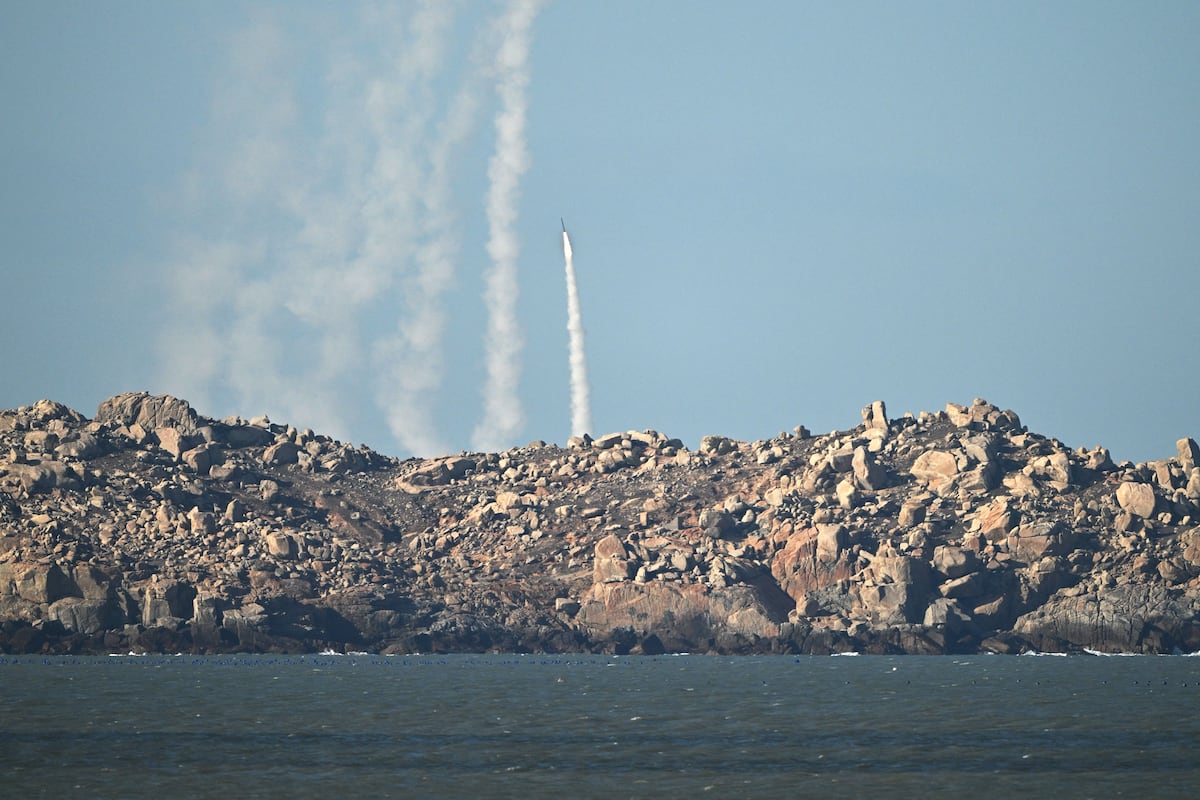
NEW TAIPEI CITY, Taiwan — Could it be high fuel prices, or a desire to avoid upsetting U.S. President Donald Trump? What about China’s annual political confab in early March? Analysts have offered different explanations for a recent trend: a net reduction in daily Chinese fighter plane activity near Taiwan over the past three weeks.
While the People’s Liberation Army has said nothing of the drop in activity near the self-ruled island that China claims as its own – flyby data comes from Taiwan’s Ministry of National Defense – analysts point to a confluence of likely reasons led by political calculations.
China would hope not to anger the U.S. president before he meets with his Chinese counterpart Xi Jinping, especially with Trump tied up in the Iran war, said Alexander Huang, a Taiwanese university professor and chairman of the Council of Strategic and Wargaming Studies in Taipei.
The two leaders’ summit is expected in late April.
Beijing has claimed sovereignty over Taiwan for more than seven decades and threatened use of force to take it, if necessary. Washington sells arms to the island, which it sees as an informal ally in the Western Pacific along with Japan, South Korea and the Philippines. A 1979 act of Congress allows the United States to help defend Taiwan, if attacked.
But the drop in warplane activity was probably not a “concession” to Trump, said Denny Roy, senior fellow at the East-West Center think tank in Hawaii.
“If anything, Beijing would want to remind Trump that tensions are high over Taiwan and would argue that to lower tensions the US must reduce its support for Taipei,” Roy said.
China’s March 4-11 Two Sessions, an annual event in Beijing where delegates from around the country examine work reports and approve laws, could have focused China’s leadership away from military activity in the Taiwan Strait, Huang said. He said the air force may have lacked a clear mandate for that period, leading to fewer flights.
“While there has been much speculation on the decline in incursions, it’s all the case that PLA military activity declines ahead of the Two Sessions,” said Brian Hioe, non-resident fellow at the Taiwan Research Hub of the University of Nottingham.
China’s removal of two top generals including a senior vice-chairman of the Central Military Commission in January may have created a “residual” effect that dented air exercises near Taiwan, Huang added.
Since the start of March, the Taiwanese defense ministry logged as few as two PLA aircraft sorties on three days since March 7, down from usually a dozen or more per day before March.
Other daily sortie counts in March ranged from three to eight, though with odd spikes into low double digits.
The sorties usually fly over waters near Taiwan, which sits across a strait 160 kilometers (99 miles) from China. Analysts have described aircraft maneuvers as “grey zone tactics” aimed at intimidating Taiwan’s President Lai Ching-te, who takes a dim view of Beijing.
Oil price hikes due to conflict in the Middle East would deter but not stop the Chinese warplane activity since Beijing can absorb the cost, analysts say. Jet fuel prices have risen more than 80% during the conflict.
“It’s definitely a waste of energy and of course a burden, but they wouldn’t have the same concern as in a democratic country,” said Huang Chung-ting, an associate research fellow with the Institute for National Defense and Security Research in Taipei.
Taiwanese officials aren’t guessing the reasons.
Shen Yu-chung, deputy minister of the Taiwan government’s Mainland Affairs Council said on March 10 that “we fear that only China would know” the reason for the recent letup in activity.
PLA aircraft over the three days ending on March 19 showed renewed activity, the Taiwan defense ministry said via X. It reported 28 sorties in the 24 hours ending at 6 a.m. on Tuesday, 36 aircraft by Wednesday morning and 12 planes at the same time on Thursday.
A resumption to the norm does not mean more than before the hiatus, Hioe said.
“It is important not to see a return to regular activity as large-scale military exercises, as some media reports have framed it,” he said.
台湾新台北市——这究竟是高油价所致,还是为了避免得罪美国总统特朗普?又或是三月初的中国年度政治会议?分析人士对近期出现的趋势提出了不同的解释:过去三周,中国战机在台湾附近空域的每日活动量净减少。
尽管中国人民解放军对中国声称拥有主权的自治岛屿附近活动的减少只字未提——飞越数据来自台湾国防部——但分析人士指出,这可能是由政治考量引发的多种原因造成的。
台北战略与兵棋推演研究委员会主席、台湾大学教授黄国强表示,中国希望在与中国国家主席习近平会晤之前不要激怒美国总统,尤其是在特朗普深陷伊朗战争泥潭的情况下。
预计两国领导人峰会将于四月下旬举行。
北京声称对台湾拥有主权已有七十余年,并威胁称如有必要将动用武力收复台湾。华盛顿向台湾出售武器,并将台湾视为其在西太平洋的非正式盟友,其他盟友还包括日本、韩国和菲律宾。1979年美国国会通过的一项法案授权美国在台湾遭受攻击时协助其进行防御。
但夏威夷东西方中心智库高级研究员丹尼·罗伊表示,战机活动的减少可能并非对特朗普的“让步”。
罗伊说:“如果说北京有什么意图的话,那就是提醒特朗普台湾问题上的紧张局势很高,并会认为,为了缓和紧张局势,美国必须减少对台北的支持。”
黄先生表示,3月4日至11日在北京举行的中国两会,是每年一度的全国性会议,来自全国各地的代表会在此审议工作报告并批准法律。他指出,两会期间,中国领导层的注意力可能从台湾海峡的军事活动上转移开来。他还表示,空军可能缺乏明确的任务授权,导致飞行次数减少。
“虽然外界对入侵事件减少有很多猜测,但解放军在两会召开前军事活动减少是事实,”诺丁汉大学台湾研究中心非常驻研究员Brian Hioe表示。
黄补充说,中国在1月份撤换了包括中央军委高级副主席在内的两名高级将领,可能产生了“残留”影响,削弱了台湾附近的空中演习。
自 3 月初以来,台湾国防部记录显示,自 3 月 7 日以来,有三天解放军飞机出动架次仅为两次,而 3 月之前通常每天出动十几架次或更多。
3 月份其他每日出动架次在 3 到 8 架之间,但偶尔也会有两位数的低峰值。
这些飞行任务通常飞越台湾附近海域,台湾与中国大陆隔海峡相望,相距160公里(99英里)。分析人士将这些飞机行动描述为旨在恐吓台湾总统赖清德的“灰色地带战术”,赖清德对北京持负面态度。
分析人士称,中东冲突导致的油价上涨会抑制但不会阻止中国的战机活动,因为北京有能力承担相关成本。冲突期间,航空燃油价格已上涨超过80%。
“这无疑是浪费精力,当然也是一种负担,但他们不会像在民主国家那样担忧,”台北国防安全研究所副研究员黄仲廷说。
台湾官员们并不猜测其中的原因。
台湾政府陆委会副部长沈宇中3月10日表示,“我们担心只有中国才知道”近期活动减少的原因。
台湾国防部通过X通讯社表示,解放军战机在截至3月19日的三天内活动有所增加。报告显示,截至周二上午6点的24小时内,解放军战机出动28架次;截至周三上午,出动36架次;截至周四上午,出动12架次。
Hioe表示,恢复正常并不意味着比中断之前更好。
他说:“重要的是,不要把恢复正常活动看作是大规模军事演习,正如一些媒体报道的那样。”