After reshuffling, Israel could create ‘opportunities’ for regional military cooperation重组之后,以色列或将为区域军事合作创造“机遇”。
Gen. Kenneth McKenzie believes moving Israel to CENTCOM from EUCOM will have long lasting benefits.
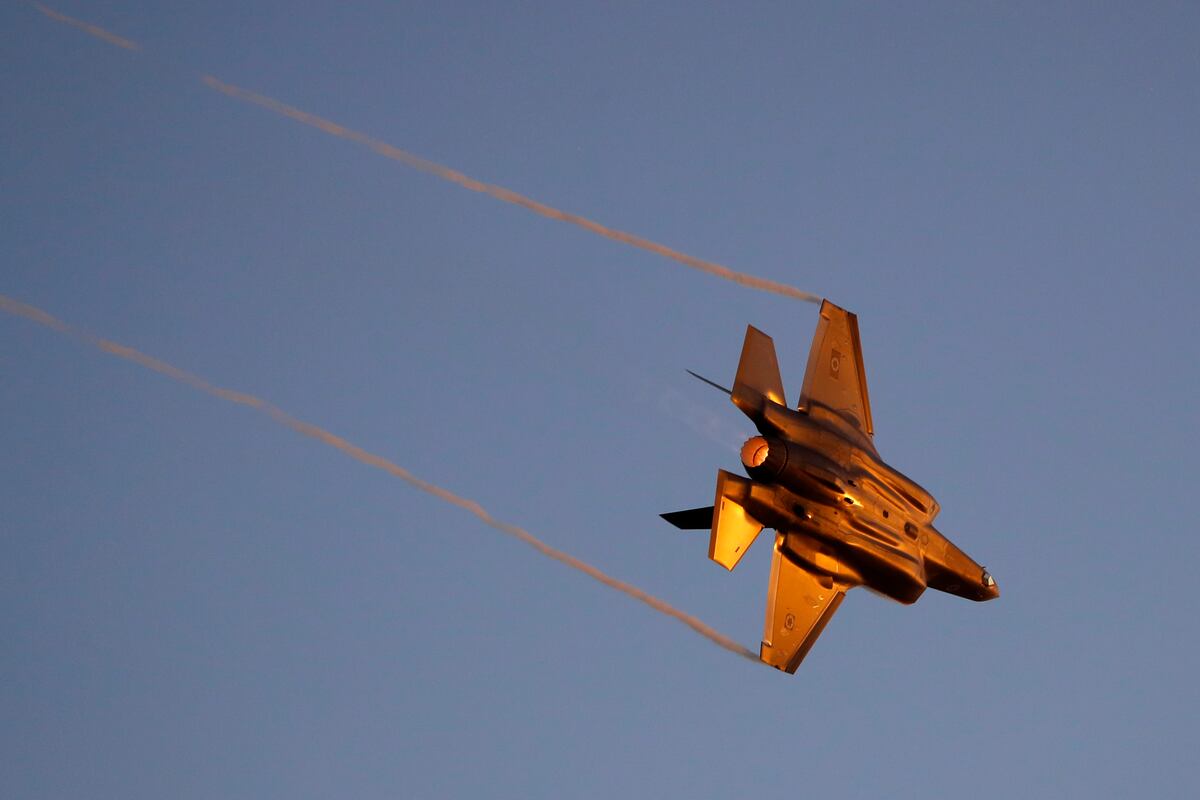
WASHINGTON — The Trump administration’s decision to move military responsibility for Israel from U.S. European Command to U.S. Central Command will help work toward a collective approach to security in a region where America’s main allies have traditionally been in conflict.
That’s the read from Marine Gen. Kenneth McKenzie, the head of CENTCOM, who said Monday that “bureaucratically, it’s just the thing that makes it a little easier to work those relationships.”
“We do a lot of business with Israel now just as a practical matter of fact, because their threats generally emanate from the east,” McKenzie said at an event hosted by the Middle East Institute. “In a certain way, this is just a natural recognition of that at the operational level.”
Just a few days before the end of his administration, President Donald Trump ordered the Pentagon to shift the combatant command authorities for Israel from EUCOM to CENTCOM, a surprise move that broke with years of Pentagon tradition. The move comes on the heels of a series of political agreements between Israel and its neighbors, known collectively as the Abraham Accords.
The DoD had kept Israel at EUCOM in order to avoid complicating the military relationships between the U.S., Jerusalem and its neighbors, many of whom Israel saw as an existential threat to their security. (A similar setup is why neighboring Pakistan and India fall under CENTCOM and U.S. Indo-Pacific Command, respectively.)
The move will take “a little time to actually make it happen,” McKenzie. Lloyd Austin, the new defense secretary is reviewing the plans. McKenzie also noted that the move aligns DoD more closely with the State Department, whose Bureau of Near Eastern Affairs, the political equivalent of CENTCOM, already oversaw relations with Israel.
The move allows CENTCOM to put an “operational perspective” on the Abraham Accords, McKenzie said, setting up “further corridors and opportunities to open up between Israel and Arab countries in the region” on a mil-to-mil level.
“I don’t want to overestimate the speed that this will happen, it’s going to take some time to occur, but it does make it a little easier for them to work together, and I think that is all a good thing,” McKenzie said. “In the future, we would like to see — and you know for many years it has been an aspiration in U.S. Central Command — a collective approach to security here in the region.
Such a philosophy for security where “our friends in the region do more for themselves, is actually something that is entirely consistent with the [National Defense Strategy] and recognizing that we have limited -- a finite number of military resources available globally,” he added. “So we’re going to need to make some shifts, and what we can do to help our neighbors work more closely together -- anything we can do that brings them together is a good thing. And I think this is a step in that direction.”
Aaron Mehta was deputy editor and senior Pentagon correspondent for Defense News, covering policy, strategy and acquisition at the highest levels of the Defense Department and its international partners.
华盛顿——特朗普政府决定将对以色列的军事责任从美国欧洲司令部转移到美国中央司令部,这将有助于在该地区采取集体安全方针,而美国的主要盟友在该地区历来处于冲突状态。
美国中央司令部司令、海军陆战队上将肯尼斯·麦肯齐周一表示,“从官僚主义的角度来看,这只是让处理这些关系变得更容易一些的事情。”
麦肯齐在中东研究所主办的一次活动上表示:“事实上,我们现在与以色列开展了很多业务,因为他们的威胁通常来自东方。从某种程度上说,这只是在业务层面上对这一点的自然认可。”
就在其任期结束前几天,唐纳德·特朗普总统下令五角大楼将对以色列的作战指挥权从欧洲司令部(EUCOM)移交给中央司令部(CENTCOM),这一出人意料的举动打破了五角大楼多年的惯例。此举紧随以色列与其邻国达成的一系列政治协议之后,这些协议统称为《亚伯拉罕协议》。
美国国防部将以色列保留在欧洲司令部,是为了避免使美国、耶路撒冷及其邻国之间的军事关系复杂化,因为以色列将其中许多邻国视为对其安全构成生存威胁。(类似的安排也解释了为什么邻国巴基斯坦和印度分别隶属于中央司令部和美国印太司令部。)
麦肯齐表示,这项举措“需要一些时间才能真正落实”。新任国防部长劳埃德·奥斯汀正在审查相关计划。麦肯齐还指出,此举将使国防部与国务院的关系更加紧密,国务院近东事务局(相当于中央司令部)此前已负责与以色列的关系。
麦肯齐表示,此举使中央司令部能够从“作战角度”看待《亚伯拉罕协议》,从而在军事层面上为以色列和该地区的阿拉伯国家之间“开辟更多通道和机会”。
麦肯齐说:“我不想高估这件事发生的速度,这需要一些时间,但这确实让他们更容易合作,我认为这是一件好事。未来,我们希望看到——你也知道,多年来这一直是美国中央司令部的一个愿望——在该地区采取集体安全措施。”
他补充说,这种“让地区盟友多为自身发展负责”的安全理念,实际上与《国防战略》完全一致,也承认我们全球可用的军事资源是有限的。“所以我们需要做出一些调整,任何能帮助我们的邻国更紧密合作的事情——任何能促进他们团结的事情都是好事。我认为这是朝着这个方向迈出的一步。”
Aaron Mehta 曾任《国防新闻》副主编兼五角大楼高级记者,负责报道国防部及其国际合作伙伴最高层的政策、战略和采购事宜。