Tales Of Nuclear Cruiser USS Long Beach From A Sailor Who Built His Career Aboard Her一位在核动力巡洋舰“长滩”号上度过职业生涯的水兵讲述的关于这艘舰艇的故事
This is the story of Master Chief Douglas Healey's Navy journey and the historic and enigmatic ship he kept coming back to.
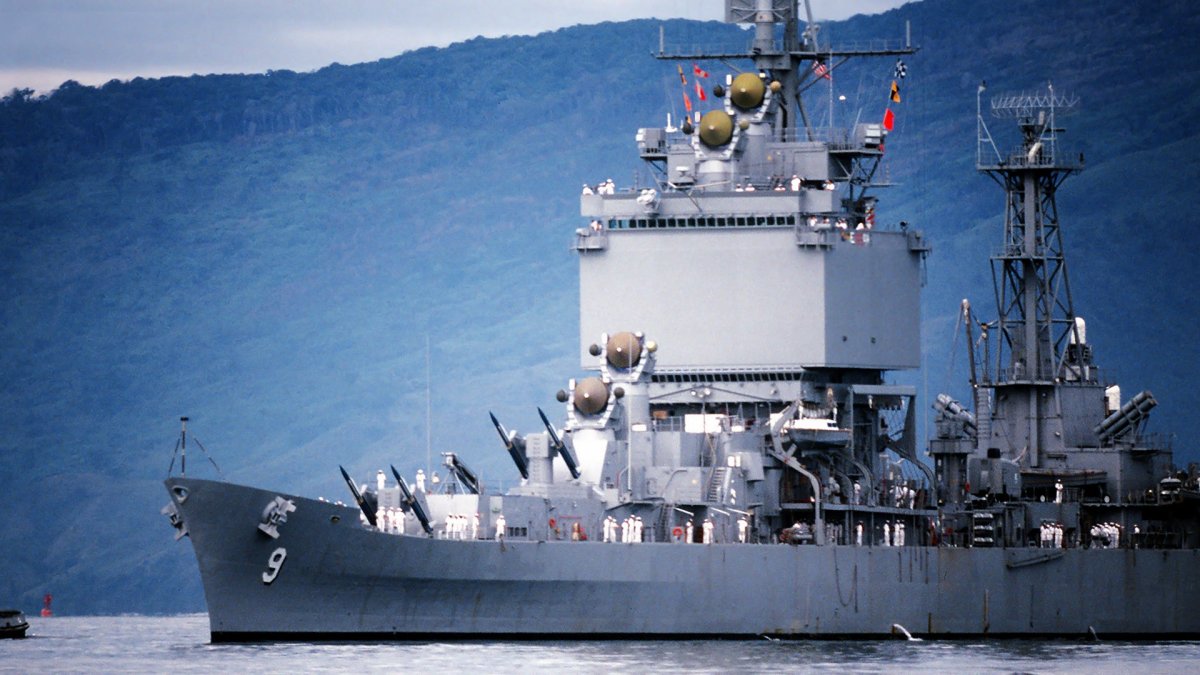
By Douglas Healey and Tyler Rogoway
Updated Dec 1, 2019 7:11 AM EST
One of the most enigmatic ships of the entire Cold War period is the one-off USS Long Beach (CGN-9). She was the U.S. Navy’s first nuclear-powered surface combatant and was absolutely packed with the latest and greatest gear America had to offer when she was commissioned into service on September 9th, 1961. She looked like no other ship the world had ever seen before and she definitely had her quirks. One man, in particular, served numerous tours aboard Long Beach throughout the 1970s and 1980s, with the ship acting as a 721 foot-long steel springboard that catapulted him through the ranks and eventually to the position of Force Master Chief for the Commander, Naval Surface Forces, U.S. Pacific Fleet. That man is Douglas Healey. So this is the story of a ship, but also of the journey of a man that built his reputation largely on the deck plates of that vessel during one of the most interesting times in the U.S. Navy’s history.
So without further adieu, in Master Chief Healey’s own words, let’s begin:
My dad was a career Navy man. He had enlisted in the Navy out of high school during World War II under a program known as a “kiddie cruise” which allowed 17-year-olds to serve up to just prior to their 21st birthday. He got out of the Navy but stayed a drilling reservist. After I was born, he went back on active duty. I remember him serving on USS Bigelow , a Forrest Sherman class destroyer homeported in Mayport, Florida from 1960 to 1965, then at the Navy Supply Corps School in Athens, Georgia from 1965 to 1967. After that, he served two back-to-back nine-month tours in Da Nang, Vietnam with the Seabees.
Following Vietnam, he was on the pre-commissioning crew of USS Gray (DE-1054), then director of Storekeeper Class C School at Naval Training Center (NTC) San Diego. He went back to sea duty on USS Dixie (AD-14) for three years and then his final tour was at Fleet Assistance Group, San Diego.
He died while on active duty during this tour. He was a Master Chief Storekeeper (E-9) at the time of his passing in April of 1980. I was an Electrician’s Mate-1 (E6) at the time, part of PCU (Pre-commissioning Unit) for USS
I graduated from high school in San Diego in June 1972 and attended Mesa Community College for a while, but wasn’t ready. So, I looked at what my best options were for receiving an education and training. After checking out both the Air Force and Navy, I decided to enlist in the Navy’s Nuclear Propulsion Program as I felt it offered me the most interesting and challenging training.
I’d had three years of Junior ROTC in high school so after about a week or so I was instructing my company in the manual of arms when I was abruptly ordered to report to the battalion commander’s office. When I arrived, I requested permission to enter and when I entered, my father was sitting there drinking coffee with the battalion commander. I was able to share a cup of coffee with them and remember thinking “this isn’t going to be too tough.”
Afterward, my company commander wanted to know why I hadn’t informed him that my father was a Senior Chief Petty Officer stationed at the NTC. I mistakenly told him “I didn’t think it was important.” That was a major error in judgment to say the least! I received some extra ‘military instruction’ that evening.
I finished boot camp as a company honor man and with scholastic honors.
SKCS Healey and EM3 Healey—father and son—both sailors in the U.S. Navy., Doug Healey
Harnessing naval power
Prior to Electrician’s Mate Class A school, I attended Basic Electricity/Electronics school at NTC San Diego. It was a self-paced course of 14 modules about electrical components, Ohm’s Law and other required knowledge for electricians and electronic technicians. I finished the course in just under a week.
In Electrician’s Mate Class A school we learned about motors generators, shipboard distribution and troubleshooting electrical systems. In order to continue on to Nuclear Power School at Mare Island, I had to finish in the upper 50 percentile of my class. If I correctly remember, I was number two or three.
At the end of Class A school, I was advanced to EM3 (E4). At Nuclear Power School we learned about the theory of reactor design and operation as well as learning about radiation and rudimentary chemistry.
At Nuclear Power Prototype Training, I was assigned to the S5G reactor prototype (designed as the USS Narwhal ‘s power plant) where we learned the ‘hands-on’ operation of a naval nuclear reactor. We learned operations and maintenance and we also learned how to react during simulated casualty operations. I was one of the first Electrician’s Mates to qualify at S5G. There were two other prototypes at the site, an A1W (the USS Enterprise prototype) and an S1W (the USS Nautilus prototype).
S5G reactor at Idaho National Engineering Laboratory. , USN
Welcome aboard America’s largest nuclear cruiser, USS Long Beach
After qualifying, I requested orders to a fast attack submarine (SSN) out of San Diego since my father-in-law (at the time) offered me enough furniture to fill an apartment if I could get stationed there. I received orders to a nuclear ballistic missile submarine (SSBN) in New London, Connecticut instead. A classmate received orders to USS Long Beach and wanted to go to New England so we asked our advisers to see if we could swap our orders. After the order swap was approved, the sub-qualified sailors at S5G facility gave me a hard time constantly.
I arranged with Long Beach’s Engineering Officer to report directly to Long Beach and then start my transfer leave in order to start my sea duty counter 30 days earlier. I wanted to apply for the Navy’s Enlisted Science Education Program (NESEP) which required a minimum of one year’s sea duty in order to be eligible. Unfortunately, when I reached the one year of sea duty point, the program requirements had changed and a full sea tour was required (four years in my case).
When I reported aboard Long Beach at NAS Coronado, I looked up at the ship in awe. Here was the last ‘true’ cruiser built by the Navy. At 721 feet long, over 17,000 tons displacement and a crew of over 1,100 Sailors and Marines (there was a Marine detachment embarked), she was a truly impressive ship!
My first impression as a crew member was of responsibilities of leadership. Supplies were being loaded and a ‘working party’ was called away. One of the division’s sailors failed to show up for the duty and the division-leading Petty Officer, an E6, was ordered to take the missing man’s place. The First Class Petty Officer was not the least bit happy and this impressed upon me to make absolutely sure that I did not disappoint my Leading Petty Officer!
Navy ships have unique smells, sounds, and sensations. Every time I set foot on a ship, the memories of shipboard life and the unique routine that goes along with it come back to me. My first job on Long Beach was to qualify on the reactor plant. This involved completing basic engineering qualifications, damage control qualifications and my electrical watch station qualifications, both as a roving electrician and for monitoring the ship’s electrical distribution system.
Long Beach had six 2500 kW turbine generators and two 1000 kW emergency diesel generators. After completing basic engineering qualifications, I was assigned to the electrical safety shop, ensuring the portable electrical tools were checked for safety prior to issuance. This was a challenging time in the Navy. It was going through the drawdown of the post-Vietnam era and there was a severe shortage of leadership personnel at the First and Second Class Petty Officer levels (E6 and E5). When the lighting shop needed a leading Petty Officer, the E Division Leading Petty Officer looked to the senior Second Class Petty Officers, but none wanted the position.
I was one of the most junior Second Class Petty Officers but I asked if I could take the position and I was appointed as the leading Petty Officer in charge of the 115-volt distribution outside of the propulsion plant with 13 sailors reporting to me in addition to standing my watches in the engineering plant.
USS Long Beach . Note the SCANFAR phased array radar system mounted on the sides of her ‘box’ superstructure. , USN
In a class of her own
Long Beach had two pressurized water reactors, two main engines, twin screws and twin rudders. For weapons, she had two twin rail launchers forward for Terrier missiles (and could carry over 100 of them), amidships she had an ASROC (anti-submarine rocket system) eight-cell launcher with reloading capability and two five-inch 38-caliber guns. Long Beach was originally designed without any guns and rumor has it that during sea trials someone asked one of the NAVSEA representatives what the ship would do if a patrol boat came up and shot at them and it was decided to install the five-inch guns.
On the fantail, Long Beach had the Talos missile system . The Talos missiles, which could be nuclear armed, were about the size of a telephone pole and would ‘sit’ on the launch rail building up thrust before taking off. I was told that while on station off of Vietnam, Long Beach shot down a North Vietnamese MiG with one.
My most prominent memory of Talos is from a missile exercise before our 1978 deployment. We were to launch one for some other ships to shoot at but the missiles were quite old at that point. After we launched the missile, a fin fell off and the missile pulled a three-G turn and came back at the ship! It spectacularly self-destructed as ordered from the launch console in Combat Information Center.
Long Beach firing a Talos., USN
In addition to the active measures for defense, the ship also carried chaff to confuse radars, SLQ-32 electronic warfare equipment and cryptologic equipment. Since she was built as a true cruiser, Long Beach had a flag bridge and quarters to carry an admiral and his staff. This almost got me in big trouble as I was told to move some 115-volt receptacles in the flag conference room. I hit my head while working under the conference table, swore and wondered what kind of idiot wanted so many outlets under the table. I looked around and saw khakis with shiny black shoes and heard “I only wanted one at the end of the table where I sit” from the admiral in charge of Cruiser-Destroyer Group 1 (we were the flagship).
In 1987, we were deployed to the Arabian Gulf area during the Iraq-Iran War. We had the Commander of the Joint Task Force Middle East embarked. We had picked him up at Diego Garcia in the Indian Ocean around Labor Day and were to transfer him and his staff to the group relieving us (with the USS Iowa ) but he didn’t want us to leave as no other ship had the flag spaces we had. Fortunately, he was over-ruled and we were allowed to leave the operation area after over 100 days continuously at sea.
Another unique thing is that Long Beach had an elevator that went from the main deck up to the 010 level (main bridge). It could stop on the 02 level (flag spaces), 03 level (CO’s in-port cabin) and the 04 level as well (flag bridge & flag plot, a mini CIC). During my 1st tour, the CO, Captain Schrader, had us secure power to it prior to getting underway. It was an electrician’s nightmare and broke down frequently. Every time we pulled into port in Subic Bay, we had workers over fiddling with it. On my second tour, I don’t remember a lot of problems with it but most of us wouldn’t ride in it because we didn’t want to get stuck in it.
As a side note, with an enlisted crew of about 1,000, there was only seating for about 300 sailors in the enlisted mess decks at one time. As a result, you learned to eat fast and get up so a shipmate could sit down and eat.
The best late 1950s Cold War technology money could buy
Long Beach had several very complex systems. The Talos missile system and the SCANFAR radar system were just a couple of them. I was told that one time they powered it up in port and garage doors were opening and closing throughout the greater San Diego area and that it interfered with air traffic control radar at the San Diego airport. Generally, we couldn’t turn it on until we were at least three miles away from an airport for safety reasons. It was one powerful radar system and we had a huge contingent of Navy Electronics Technicians (ETs) embarked aboard to maintain it.
When it was running it required two 200kW motor-generator sets running in parallel to provide the 400Hz power the radar demanded. We knew it as the AN/SPS-32/33 radar system. Supposedly when being built, Long Beach was ready before Enterprise and received the ‘billboard’ arrays intended for the Big E.
Long Beach under construction., USN
Besides 400Hz power, the system took a lot of 60Hz power and cooling water as well. Because of this, Long Beach also had plenty of chill water cooling available. The billboard arrays, and the big superstructure they were mounted on, made the ship a bit top heavy as well. Whenever Long Beach would make a turn, it would lean in the direction of the turn first and then lean a lot in the opposite direction. When this was done at dinner time we’d call it ‘having dinner rolls.’
For the longest time, the ship’s rumor mill had it that if Long Beach rolled to greater than 45 degrees to either port or starboard, the ship would capsize. In 1987 we were returning home to San Diego and because of the prevailing seas and our required course resulted in us taking seas on the port beam. One of the swells hit the ship just right and it heeled over to starboard for what seemed like a long time. The watch in Damage Control Central claimed he saw 47 degrees on the clinometer. You could hear stuff crashing in the galley and out on the mess decks. One of the juice machines came out of its mounting and crashed against a bulkhead.
Afterward, the crew took to ensuring equipment was secured for sea much more seriously.
My two sons made a couple of ‘Tiger Cruises’ on the ship and enjoyed it, although when we took a big roll they were a bit animated about it. A family friend also made one Tiger Cruise but he spent most of the time in his bunk seasick.
Even a slight sea would cause Long Beach to roll but you became used to it. I remember during that same trip home we were in swells with water breaking over the 01 level forward! Up on the bridge, which was on the 010 level, the ship’s rolling motions were amplified dramatically because of the height.
On the other hand, the ship didn’t pitch much (move up and down bow to stern). Additionally, Long Beach seemed to have a constant two to three-degree port list.
The major benefit to a nuclear-powered surface combatant, as opposed to a conventionally powered one, is the ability to stay on station for long periods without refueling. For nuclear-powered aircraft carriers, the lack of stack gases and their corrosive effect on aircraft is another major benefit.
There are several penalties of nuclear-powered surface combatants. First, there’s the high cost of training and keeping the crew. It takes almost two years of training before a nuclear-trained crew member reports to their first ship. Then there are the construction and maintenance costs. Construction of nuclear-powered surface ships is only done at Newport News Shipyard and the maintenance is only done at Pearl Harbor Naval Shipyard, Puget Sound Naval Shipyard, Norfolk Naval Shipyard, and the Portsmouth Naval shipyard, in addition to Newport News Shipbuilding.
There’s also the dealing with the nuclear material generated. The modern surface combatants like the Aegis cruisers and the Arleigh Burke class destroyers are gas turbine powered and require fewer crew members to operate. For example, USS Arkansas (CGN 41) had a crew of about 450 (comparable to a Belknap class cruiser) but the Ticonderoga class cruisers have a crew of only about 370.
Long Beach at her commissioning on September 9th, 1961. The ship was an absolute modern marvel of her time. Note the massive Talos missiles pointing skyward. , USN
First stop: Puget Sound Naval Shipyard
The first place I sailed to after joining Long Beach was Puget Sound Naval Shipyard (PSNS) in Washington. The ship would only go to PSNS for nuclear-related work combined with drydocking. The majority of the complicated work would be accomplished by the shipyard workers but the ship’s crew would have maintenance to accomplish as well.
During the yard period in question, the ship’s hull was scraped and repainted and the voltage regulators on the ship’s service generators were updated. Back then, the crew remained living on the ship or were moved onto a living barge but remained in the industrial area. Later in my career, when I was a senior chief (E8) on the COMNAVSURFPAC/COMNAVAIRPAC Nuclear Propulsion Mobile Training Team, I was instrumental in getting funds put into yard maintenance to move the crew ashore out of the industrial area.
Long Beach out at sea., Doug Healey
In 1976, when we were returning to San Diego from Bremerton, our Division Training Petty Officer came around asking what schools anyone wanted to attend. I figured more schooling couldn’t hurt so my first choice was motor rewind school (you learned how to rewind motors, Long Beach had that capability) and my second choice was 400 Hz motor-generator maintenance. The 400 Hz motor-generators were used to provide starting power for helos and power for radars.
400 Hz motor-generator maintenance school was six weeks long and in San Diego, so I would also get six weeks at home with my family. As one of a couple of 400 Hz maintenance techs onboard, it helped me advance in rate also.
An HH-3 Sea King on Long Beach’s flight deck., USN
On cruise as part of the Enterprise Battle Group
Long Beach left San Diego in September of 1976 on what was my first Western Pacific cruise (WESTPAC). We made a brief port call at Naval Station Pearl Harbor, Hawaii with a salute to the USS Arizona Memorial. Upon arriving, we were told that we’d only be in port for a few hours and that only crew members with official business would be allowed off of the ship.
Since E division was in charge of the movies for the ship, I went to the local Navy motion picture office to get new movies for the crew to watch. This also allowed me to make a quick phone call to my wife to let my family know we had arrived safely. This was long before the internet and email. Letters could take a couple of weeks to travel between the ship and home. Apparently, some of my shipmates went to the base enlisted club and got into a dust-up with some of the local sailors. When we left port after a few hours, the Engineering Officer (aka Cheng or Chief Engineer) had the supervisors go around and ensure the watch-standers hadn’t indulged in adult beverages.
As a side note, the drinking age was 18 at that time.
We left Pearl Harbor, once again saluting the Arizona Memorial, in company with Enterprise and the rest of our battle group. We headed down towards New Zealand. En-route, we crossed the international dateline at the equator enabling us ‘Pollywogs’ (newbies) to become ‘Golden Shellbacks’—a time-honored tradition.
It was a different ceremony than what’s conducted today , not better or worse, just different. You must remember, Long Beach’s crew was entirely male. Afterward, we had a ‘steel beach’ cookout with burgers, hot dogs, and other cookout fare, but no alcohol. American ships were still dry.
The Crossing The Line Ceremony goes way, way back. It has changed quite a bit over the years. Check out these sailors from one such ceremony back in 1953., Naval War College Museum
After a few days’ steaming, we arrived at Auckland, New Zealand. We anchored in the harbor after dodging a few protest boats. The unions shut down the town for a protest because of our arrival. They were not fond of the Navy’s policy on nuclear arms on its vessels, which officially was ‘we can neither confirm nor deny the presence of nuclear weapons on our ships.’ We pointed out to the Cheng that having an ‘Atomic Weapons Officer’ seemed counter that message.
Anyway, once we were briefed on the protests (we were told not to challenge them), we were allowed to go ashore (in our uniforms for one day at least!). A few of my shipmates and I went to one of the nearby pubs for an adult beverage. In the pub, we met some of the locals, including some of the protesters. Almost everyone was very friendly. Some of the protesters told me it wasn’t anything against us, our ship or America, they were getting well paid to protest and they’d protest their own mom for the right amount. A lot of the other locals told us they were just enjoying the unplanned holiday.
We wound up a few miles away from the town at a party. When it wound down, one of the locals asked if there were anyone who was sober and could drive a stick shift. I said yes to both and was tossed the keys to an MG 1100 to help ferry us back to town. It was interesting driving from the right-hand side of the car and driving on the ‘wrong’ side of the road! I thought that it would be funny if I were pulled over and showed the local cop my California driver’s license but we all made it safely back without meeting with the constables.
After three days’ port visit, we got underway and held and exercise with the Aussie and Kiwi navies called ‘Kangaroo Two.’ The Aussies still had their carrier, HMAS Melbourne , but even during the photo op, she wasn’t allowed too close to either the Enterprise or us because of her collision with the USS Frank E. Evans during the Vietnam War.
HMAS Melbourne is absolutely dwarfed by the Big E. , Australian Government/public domain
Our next port visit after the conclusion of the exercise was Melbourne, Australia. Once again, we were anchored out mainly due to being nuclear powered. The HMAS Melbourne was pier side in the port. Both ships were open for visitors. There was a line of well over a block to visit Long Beach and one could walk right up and go on the Melbourne .
I met some locals from the RAAF (the Royal Australian Air Force) and asked them to take me to their favorite local restaurant and we ended up at a KFC! I explained I wanted to try Aussie cuisine and then they took me to an out of the way diner and the food was great but not much different from home.
The majority of the cruise was without drama other than the Tu-95 Bear flybys with fighters from Enterprise escorting them off their wingtips. During this deployment, we also visited Subic Bay in the Philippines for a maintenance period, as well as Singapore (one of my favorite cities) and Pearl Harbor on the way home to San Diego.
Enterprise and Long Beach together., USN
Enterprise And Long Beach , closely related cousins born during the dawn of the nuclear Navy
Enterprise and Long Beach were linked for most of their careers. Enterprise was the first nuclear-powered aircraft carrier and Long Beach was the first nuclear-powered surface warship.
Long Beach was commissioned first, in September 1961, and Enterprise in November of the same year. They were both unique designs, each a kind of ‘one-off’ which generally doesn’t do well for ship designs.
Enterprise had eight reactors while Long Beach had two. Long Beach was originally considered for the installation of sea-launched ICBMs, but the boomers (SSBNs) worked out and have owned the sea-based nuclear ballistic missile deterrent mission ever since. Long Beach was also planned to have the Regulus cruise missile but that program was dropped also.
An early 1961 published rendering of Long Beach equipped with eight Polaris ballistic missiles. , Navy Rendering/Public Domain
In the end, Long Beach seemed to be designed around the reactor plants, the SPS-32/33 (SCANFAR) radar and the Terrier and Talos missiles. The reactor plants were similar between Enterprise and ‘The Beach’ but there were enough differences that they were considered separate designs.
Once the nuclear cruiser USS B a inbridge (CGN-25) was commissioned in 1962, the three ships were almost inseparable. At some point, Bainbridge required some maintenance and during my first tour on Long Beach , Truxtun had replaced Bainbridge as the third ship of the ‘nuclear trio.’ Having a nuclear-powered carrier battlegroup offered the fleet commander options that didn’t require constant refueling to remain on station.
It was interesting that when on Long Beach’s bridge, you actually looked down on a carrier’s flight deck! I’m sure that the air group’s pilots weren’t thrilled when Long Beach was on plane guard station (trailing the carrier in case of a mishap).
We had an impromptu exercise with a Soviet Kynda class cruiser when they took up plane guard during my first deployment. After flight ops, the battle group went up to 30 knots and after a couple of days, the Soviets had a replenishment ship come out and refuel the Kynda . While they refueled, Truxtun would take up the safety position returning the favor they had provided during Enterprise’s flight ops.
Once refueling was complete, we went back up to 30 knots! After a few days of this, the Soviets left our group.
I guess they were tired of refueling.
Bainbridge , Long Beach , and Enterprise, the first all nuclear-powered task force, sailed around the world in the summer of 1964. The group traveled over 30,000 miles in 65 days without the need for underway replenishment., USN
A refresh then back out on another cruise
After almost every deployment, ships go through what is called an ‘inter-deployment maintenance period’ due to the complexity of the systems on the ships and the normal wear and tear of use. It’s often a time when system updates and advancements are applied, as well.
After a certain number of deployment cycles, the ship would go to a maintenance facility for extensive upkeep and or repair. For a nuclear-powered warship based in San Diego, this usually meant a trip to Puget Sound Naval Shipyard in Bremerton, Washington.
Our 1978 WESTPAC cruise wasn’t greatly different from the one in 1976-1977. The major difference was the port visits. We didn’t go to New Zealand and our port visit in Australia was the city of Perth in the western part of the country. It was during this cruise that my orders to Class “C” School at NTC Great Lakes in Illinois came. I was scheduled to transfer from Long Beach in late October but because of a cyclone in the vicinity of the Philippines, I left the ship from Subic Bay as it was making preparations to get underway for storm evasion.
I was sitting in my shop when I received a call from the ship’s personnel officer and was told I had 10 minutes to pack my gear and get off the ship. After packing my seabag, I collected my records (medical, dental and pay) along with my transfer orders. I was told the base would provide my travel pay.
I was unaware that President Carter and Congress had a disagreement over the budget and there was no way I could be paid or get any travel pay. The travel office at Subic had a flight booked for me out of Clark Air Base and transportation to the air base. I had fewer than forty dollars since most of my pay went home to support my wife and son. I flew across the Pacific on a charter (Flying Tigers) to Travis Air Base near Sacramento, California. Fortunately for me, my wife had a sister who lived near the base and was able to pick me up. My wife arranged a flight from Sacramento to San Diego so we could drive to the base located near Chicago.
An interesting note is that when Long Beach pulled out, she left about 375 sailors behind who didn’t get back to the ship before it left to avoid the storm. One of my friends who was supposed to transfer around the same time as me, but was unable to get off the ship. He was a Talos missile Gunner’s Mate and they had a problem with the missile handling system so he was unable to leave the ship before they sailed from Subic.
Looking after from USS Long Beach as she rests pier-side in Subic Bay. , USN
Welcome aboard USS Arkansas !
Arkansas was a brand new and very good ship. It was the last nuclear-powered surface combatant the Navy built. It was also more compact than Long Beach and had fewer crew members, but it had better accommodations. Equipment wise, it had two twin arm mark 26 missile launchers fed by a rotary magazine but carried fewer Standard Missiles (the new name for the updated Terrier missiles) and it had the unmanned five-inch gun mounts like the Spruance class destroyers had.
Those of us who had been on Long Beach called Arkansas a ‘cruiser with a forged birth certificate’ since most of the official plans and manuals referred to the ship as a DLGN (nuclear powered guided missile destroyer), not a CGN (nuclear powered guided missile cruiser). However, her displacement of 11,000 tons equaled that of WWII cruisers.
Being a member of the initial crew of any ship is a great experience as you will get to know the ship better than any future crew members can. I was there before the reactors were placed in the ship. A lot of the structural bulkheads were not complete and it was relatively easy to go from one end of the unfinished hull to the other.
I even got to see Admiral Rickover ! He had a habit of going out on acceptance trials for all new nuclear-powered warships. He made an announcement on the ship’s announcing system which sounded like a slam on Newport News Shipbuilding. He stated “Newport News Shipbuilding used to have ‘commitment to quality’ on a rock at the entrance to the shipyard but now that rock is in a museum.”
All of the plank owners were given a certificate signed by the Arkansas governor Bill Clinton designating us as honorary Arkansas Travelers. The state of Arkansas also helped sponsor a commissioning party for the ship’s crew. It was an interesting time as we did a lot of system testing that is only performed during the acceptance of the ship by the Navy. As one of the experienced electricians assigned, I was on the space turn over crew which consisted of ensuring the spaces met the Navy’s specifications (you can read more about this tense process here ).
USS Arkansas sailing through San Francisco Bay. , Doug Healey
Arkansas vs Long Beach
Considering Arkansas and Long Beach each had essentially the same role in a battle group, I’ve always felt Long Beach was more capable.
Arkansas ‘ missile launcher and gun mount positions seemed poorly thought out to me. The missile launchers each created a large no-fire zone for the guns both forward and aft. Arkansas carried fewer missiles than Long Beach and lacked a separate ASROC launcher so some magazine space in the rotary mechanism had to be reserved for ASROC missiles.
Habitability wise, Arkansas was superior to Long Beach . The crew berthing areas did not have any passageways through them and each one had fewer bunks in it than on Long Beach . Arkansas had a bit less than one-half the number of Long Beach’s crew.
In a lot of aspects, the difference between the two is not unlike the difference between a 1960 family sedan and a 1979 model from the same manufacturer. They both can accomplish the same tasks without a huge difference in performance. The newer model takes less to operate but in my opinion, the older model is more stylish.
A close up of Arkansas bow area. Note the somewhat peculiar, if not entirely backward missile launcher-gun arrangement. , USN
Back to California, back to Long Beach
In order to get back to the west coast, I took a shore duty assignment as a recruiter in the Los Angeles Navy Recruiting District. It was an interesting time to be a recruiter. Recreational drug usage was high (no pun intended) among the target group for military enlistment, 17-25 year-old males. We actually had to get permission to send a female applicant to the processing station. There were a few reasons for this such as the ‘traditional’ jobs a lot of females wanted were overfilled with females (administrative and medical positions mainly) and at the time the sea duty slots for females were few and far between.
We were even told not to send a female applicant, as enlistment candidates were called, for processing unless they were willing to accept a ‘non-traditional’ position such as an engineering job. This caused a small problem for one female I had sent for processing. She had scored exceptionally high on the ASVAB (military entrance exam) and would have been eligible for almost any position if all were open to women, such as the nuclear propulsion field which was closed to women at that time. So I had prepared her to accept an engineering position such as HT (hull maintenance technician) which I’d been told was wide open for women.
The Chief Classifier, who had attended recruiting school with me, called and told me my applicant was not going to enlist for the position he’d offered her. This would have got me in hot water with the Chief Recruiter and the Enlisted Programs Officer at the district headquarters. I asked what he had offered her and was told it was a special air traffic controller school which was a rare offering. I asked to speak with my applicant and we talked about the position she’d been offered. She told me that she’d been interested in the HT position but after I explained the rarity of what she’d been offered, she agreed to take the air traffic controller training along with an advanced pay grade after boot camp.
After that experience, I was very reluctant to send a female applicant for processing until I was working a booth at the Long Beach Grand Prix and met a Reserve Second Class who was a female and she relayed to me that her recruiter had been the guy who was the Chief Recruiter!
I was selected for advancement to Chief Petty Officer (E7) during this tour. My regret was that my father had died from a heart attack while I was on the Arkansas and wasn’t there to witness my ‘pinning.’ As I mentioned earlier, my dad was on active duty as a Master Chief Storekeeper (supply & logistics) on shore duty in San Diego at the time of his death.
At the time the Navy had only two promotion cycles for advancement to Chief (due to a budget crunch), first and last increments. The only ones who advanced in the first increment were those with many years of Naval service and since I only had seven years of service I was in the last increment. This meant I wore the Chief’s uniform for eleven months before getting the pay of a Chief.
Around this time a vacancy opened at the recruiting station in Orange, California. It was a very competitive time for many reasons, not the least being you had to put four people in the Navy each month! I asked for and was assigned as Recruiter-In-Charge of Navy Recruiting Station (NRS) Orange, California.
There were two recruiters assigned, including me. We each had to put the aforementioned four people (mainly men) in the Navy each month. My partner at the recruiting station was an Engineman First Class originally from the Philippines. Since we were both engineers, we hit it off from the start. The district had one Saturday a month when they conducted enlistments otherwise it was a Monday through Friday operation, however, if you had not made ‘goal’ (put your four in the war we used to say), you were expected to work on Saturdays.
My partner and I aimed for goal by the 10th of each month so we wouldn’t have to work Saturdays unless our applicants couldn’t go for a physical and enlistment Mondays through Fridays. This didn’t necessarily please the zone supervisor, but he couldn’t say much as we were exceeding our goal each month.
During this time, it was decided the Navy needed more recruits from the Hispanic community. The area around my recruiting station did not have a significant number of Hispanic residents, however, the school district was very good and we were able to get a good number of applicants for the Navy’s Nuclear Propulsion program so our lack of Hispanic recruits was usually overlooked.
After about a year as Recruiter-In-Charge, I heard from my detailer that he needed nuclear-trained chiefs back at sea. I asked what billets were available and was told they were on California , Texas , Arkansas and Long Beach .
He told me to put a request through the district CO and if approved he’d give me a spot on the Long Beach . I submitted my request and it was approved all of the way up the chain. I believe, each one of my supervisors who gave their approval thought that someone above them would disapprove my request. They didn’t realize that although recruiting is important, naval reactors were even more influential and filling Chief billets at sea was a high priority!
Chief Healey, Doug Healey
Still having fond memories of the Long Beach , it was an easy choice for me to return to sea duty on her and this time as a Chief. It also helped that Long Beach was homeported in San Diego while the others were based in Alameda, California. I knew Long Beach’s capabilities and I also knew the Chief’s accommodations were a bit better on Lang Beach compared with the other ships, even though Arkansas was much newer. I was also aware that Long Beach had well over 60 Chiefs, Senior Chiefs and Master Chiefs in the mess and with my father gone, I needed someone I could learn about being a Chief from. Since there were more in the mess, I felt I had a greater likelihood of finding good and less good examples to model from.
We hadn’t yet learned to formalize the mentoring process in the Navy. I was correct in that there were more good examples to learn from on the Long Beach . Additionally, Long Beach still had a Marine Detachment and I was able to learn from the Marine First Sergeant and the Gunny.
I believe this learning process helped me greatly in my career. A quick example was the Command Master Chief when I reported back to Long Beach was a nuclear-trained Machinist Mate. I was able to learn a lot about being a Command Master Chief from him.
One quick story was when the ship was in a port for a visit, he had a group of the chiefs go out with him to check out the area. We went into one dive bar and didn’t stay long. On the way out, he pulled out a list of places that were ‘off limits’ from his pocket and crossed off the place we’d just left and announced: “now we know why that place is on the list!”
Aerial view of US Navy ships docked at Naval Station North Island. They are (clockwise from bottom): the battleship USS NEW JERSEY (BB-62), the aircraft carriers USS KITTY HAWK (CV-63) and USS RANGER (CV-61), the nuclear-powered guided missile cruiser USS LONG BEACH ( CGN- 9 ) and the guided missile destroyer USS CHANDLER (DDG-996). , USN
The Long Beach I returned to wasn’t greatly different from the ship I’d left before. The ‘billboard’ arrays of the AN/SPS-32/33 SCANFAR radar were gone and a new structure was erected over the aft superstructure to support the new AN/SPS-49 radar. A big AN/SPS-48 radar dish was also mounted on the forward mast.
Gone too was the Talos missile launcher and all of the equipment that supported it. Long Beach had the cradles for the Harpoon anti-ship missiles on the fantail now. Otherwise, the remainder of the weapon systems were unchanged outwardly. I believe this altered the way the ship rode in the water as it looked like the bow was a bit lower than the stern now and it also seemed like we had a slight port list now.
CGN-9 post refit., USN
Setting sail alongside the USS Kitty Hawk as the Cold War heated up
The 1984 deployment was different than my previous deployments on Long Beach from the start. On our way to Hawaii, at the start of the cruise, we burned up a bearing on the starboard shaft. The breakdown was caused by a watchstander’s failure to check the shaft alley hourly as required. This, I believe was caused at least in part by a shortage of Machinist Mates who would have normally been responsible for keeping track of the shaft bearings. As a result, a different division was assigned this responsibility, one they weren’t too thrilled about having.
The bearing lost all of the oil from its sump and got so hot it damaged the shaft. I believe it was reported by the berthing where the Operations Specialists (formerly called Radarmen) slept. They allegedly could hear the bearing screeching. Regardless, the damage required Long Beach to stay in Pearl Harbor longer than planned and also necessitated going into drydock to replace the starboard shaft.
Since we would be in Hawaii for a few extra days, my first wife and our sons came over and stayed with some friends of ours who were stationed there. While there, we noticed the Navy Exchange had t-shirts for sale calling USS Reeves (CG-24) ‘the only “real” cruiser in town.’ Needless to say, with Long Beach in port, no one was seen wearing those shirts!
When we left Hawaii we sailed through the ‘Bear Box’ with EMCON (electronic emissions control) set to see if the Russian Bear reconnaissance planes could find us. They had no idea where we were and as we gradually turned on different radars, they finally came flying right down to where we were.
We later rejoined the Kitty Hawk and made a port visit in Yokosuka, Japan. A group of took the opportunity to visit Tokyo Disneyland.
As we were entering the harbor where Yokosuka is located, the Cheng (Chief Engineer) gave the ship a history lesson on how we avoided severely damaging the Yokosuka Naval Base so the US Navy could use the facilities after the Second World War, especially the dry dock facilities where the Yamato was berthed during the war.
After a few days in port, we returned to sea with the entire Kitty Hawk Battlegroup. We went up into the northern Sea of Japan and while steaming in formation, a Russian Victor III submarine breached right in the middle of our formation. This wasn’t a surprise to those of us in the Engineering Department as we knew how noisy the ship was but we also had a Spruance class destroyer and a Perry class frigate in the group, both of which focus on anti-submarine warfare duties.
A friend and I were sitting on one of the bits on the port side when he pointed out a periscope about 30 yards of the port beam. The Senior Chief Sonarman dismissed the sighting but when the submarine breached, the Sonarman ran down to the Combat Information Center! My friend knew a periscope when he saw one because he’d been on the USS Seadragon previously but was transferred off because of kidney stones which disqualified him from further sub duty.
According to my friend, it can be very challenging maintaining periscope depth and if the sub is not trimmed correctly, it can easily breach (pop up to the surface). Since he’d been a qualified diving officer on his sub, I believed him.
Later that evening, the battlegroup had an exercise planned to try to fool any sub monitoring the group. Kitty Hawk went alongside the USS Wabash for an underway replenishment (UNREP). When she concluded she was scheduled to modify her acoustic signature and move away and Long Beach would modify her sound signature and lighting to try to sound and look like a carrier and move into place alongside Wabash .
Just as Kitty Hawk started to move away from Wabash , they passed a canex (cancel the exercise) call over ship-to-ship communications followed by “I think we (the Kitty Hawk ) hit something.”
Soon after we noticed the Victor III on the surface, dead in the water. We, Long Beach , offered assistance but were refused. The Battlegroup Commander left one of the frigates assigned behind to standby to provide assistance if needed but a Russian fleet tug eventually came out and towed the stricken Victor III away.
Victor III fast attack submarine., USN
We knew it was a Victor III because of the unique device on the stern vertical fin for the sub’s towed array sonar system. When we arrived in Subic Bay a few days later, they already had t-shirts proclaiming Kitty Hawk ‘the best ASW (antisubmarine warfare) platform in the Navy’ and others stating ‘ Kitty Hawk – 1, Victor III – 0!’
We were told by some of the repair personnel in Subic that a part of a blade from the sub’s screw was found embedded in the Kitty Hawk’s bottom. It was believed the Victor III was rolled through 360 degrees by the Hawk right after it struck her!
The rest of the cruise was fairly uneventful and we were able to return home.
Editor’s note: Stay tuned for part two of our USS Long Beach-Doug Healey series where we dive into Nuclear Cruiser and Battleship surface action group operations during the twilight of the Cold War, Desert Storm, the retirement of America’s nuclear-powered surface combatant fleet, life of a Command Master Chief, the Navy today, and so much more!
Contact the author: Tyler@thedrive.com
Comments couldn’t be loaded. Please refresh the page.
作者:道格拉斯·希利和泰勒·罗戈韦
更新于美国东部时间2019年12月1日上午7:11
冷战时期最神秘的舰艇之一,当属独一无二的“长滩”号(CGN-9)。作为美国海军首艘核动力水面作战舰艇,她在1961年9月9日服役时,配备了当时美国最先进的装备。她的外形与世人所见的任何其他舰艇都截然不同,而且她也确实有一些独特的怪癖。其中一位名叫道格拉斯·希利的军官,在20世纪70年代和80年代多次在“长滩”号上服役,这艘721英尺长的战舰如同一个钢铁跳板,助他一路晋升,最终成为美国太平洋舰队水面部队司令部的海军总军士长。因此,这不仅是一艘战舰的故事,也是一个男人在“长滩”号的甲板上,在美军历史上最激动人心的时期之一,建立起自己声誉的传奇故事。
那么,无需赘言,让我们用希利士长自己的话说,开始吧:
我父亲是一名职业海军军人。二战期间,他高中毕业后就应征入伍,参加了一项名为“少年巡航”的计划,该计划允许17岁的青少年服役至21岁生日前夕。他从海军退役后,仍然保留着预备役军官的身份。我出生后,他又重新回到现役部队。我记得他曾在“比格洛”号驱逐舰上服役,这是一艘福雷斯特·谢尔曼级驱逐舰,1960年至1965年以佛罗里达州梅波特为母港。之后,他于1965年至1967年在佐治亚州雅典的海军后勤兵学校进修。此后,他又在越南岘港的海军工兵部队连续服役了两个为期九个月的轮换。
越战结束后,他曾担任“格雷”号驱逐舰(DE-1054)的预备役人员,之后在圣地亚哥海军训练中心担任C级军需官学校的主任。随后,他回到海上服役,在“迪克西”号航空母舰(AD-14)上服役三年,最后在圣地亚哥舰队支援大队结束了他的服役生涯。
他在此次巡洋舰任务期间殉职。他于1980年4月去世时是一名一级军士长(E-9)。当时我是一名一级电工(E-6),隶属于美国海军“号”舰艇的PCU(预服役部队)。
1972年6月,我从圣地亚哥的高中毕业,之后在梅萨社区学院就读了一段时间,但感觉还没准备好。于是,我开始寻找接受教育和培训的最佳途径。在考察了空军和海军之后,我决定加入海军的核动力推进项目,因为我觉得它能提供最有趣、最具挑战性的训练。
我在高中参加了三年的预备役军官训练团(Junior ROTC),所以大约一周后,我正在给我的连队讲解武器操作规程,突然接到命令去营长办公室报到。我到了之后,请求允许进入,进去后发现我父亲正和营长坐在那里喝咖啡。我和他们一起喝了杯咖啡,记得当时我想:“这应该不会太难。”
事后,我的连长问我为什么没告诉他我父亲是驻扎在国家训练中心的高级士官长。我当时脱口而出:“我觉得这不重要。” 这绝对是个严重的判断失误!那天晚上,我接受了额外的“军事训练”。
我以连队荣誉学员和学业优异生的身份完成了新兵训练营。
SKCS Healey 和 EM3 Healey——父子二人——都是美国海军水兵。Doug Healey
驾驭海军力量
在参加A级电工技师培训之前,我曾在圣地亚哥NTC学院学习基础电工/电子学。这是一门自学课程,包含14个模块,内容涵盖电气元件、欧姆定律以及电工和电子技师所需的其他知识。我不到一周就完成了这门课程。
在A级电工学校,我们学习了电机、发电机、船舶配电以及电气系统故障排除。为了继续前往马雷岛核电学校深造,我必须在班级中名列前50%。如果我没记错的话,我当时是第二或第三名。
A级学校毕业后,我晋升为EM3(E4)。在核电学校,我们学习了反应堆设计和运行的理论,以及辐射和基础化学知识。
在核动力原型机训练期间,我被分配到S5G反应堆原型机(设计用于“独角鲸”号核潜艇的动力装置),在那里我们学习了海军核反应堆的实际操作。我们学习了操作和维护,也学习了如何在模拟事故中做出反应。我是S5G原型机首批获得资格认证的电工之一。当时现场还有另外两台原型机,分别是A1W(用于“企业”号航空母舰)和S1W(用于“鹦鹉螺”号核潜艇)。
美国海军爱达荷国家工程实验室的S5G反应堆。
欢迎登上美国最大的核动力巡洋舰“长滩”号。
完成资格认证后,我申请调往圣地亚哥的一艘快速攻击潜艇(SSN),因为我当时的岳父说,如果我能被派到那里,他愿意送我足够多的家具,把我的公寓都搬空。结果我却收到了去康涅狄格州新伦敦的一艘核动力弹道导弹潜艇(SSBN)的命令。一位同学收到了去“长滩”号潜艇的命令,但他想去新英格兰,所以我们请教了顾问,看看能不能互换一下。互换命令获批后,S5G设施里那些资格不符的水兵们就一直刁难我。
我与长滩的工程军官商定,先直接到长滩报到,然后开始我的调任休假,以便提前30天开始计算我的海上服役年限。我原本想申请海军士官科学教育计划(NESEP),该计划要求至少一年海上服役才能符合资格。不幸的是,当我达到一年海上服役年限时,该计划的要求发生了变化,现在需要完整的海上服役期(就我而言是四年)。
当我登上停泊在科罗纳多海军航空站的“长滩”号巡洋舰时,我仰望着这艘军舰,心中充满了敬畏。这是海军建造的最后一艘“真正意义上的”巡洋舰。它长721英尺,排水量超过17000吨,舰上配备了1100多名水兵和海军陆战队员(当时舰上还驻扎着一支海军陆战队分遣队),真是一艘令人印象深刻的军舰!
我作为船员的第一印象就是领导责任。当时正在装载物资,一个“工作小组”被召集起来。分队的一名水兵没有来值班,于是分队队长,一名E6级士官,奉命顶替他的位置。一级士官长对此非常不满,这让我下定决心,一定要确保自己不会让我的队长失望!
海军舰艇有着独特的气味、声音和感觉。每次踏上舰艇,舰上生活的记忆和独特的日常作息都会涌上心头。我在“长滩”号上的第一份工作是获得反应堆操作资格。这包括完成基础工程资格、损管资格以及电气值班资格,既要担任流动电工,又要负责监控舰艇的配电系统。
长滩海军基地有六台2500千瓦的涡轮发电机和两台1000千瓦的应急柴油发电机。完成基础工程资格培训后,我被分配到电气安全部门,负责确保便携式电动工具在发放前经过安全检查。那段时间海军处境艰难,正值越战后裁军时期,一级和二级士官(E6和E5)的领导人员严重短缺。照明部门需要一名高级士官时,E分队的高级士官长会考虑资深的二级士官,但无人愿意担任此职。
我当时是资历最浅的二等士官之一,但我请求担任该职位,并被任命为负责推进装置外 115 伏配电的首席士官,有 13 名水兵向我汇报工作,此外我还要在轮机装置值班。
“长滩”号航空母舰。请注意安装在其“箱型”上层建筑两侧的SCANFAR相控阵雷达系统。
她独树一帜,别具一格。
“长滩”号拥有两座压水反应堆、两台主发动机、双螺旋桨和双舵。武器方面,舰首设有两座双联装“猎犬”导弹发射架(可携带超过100枚),舰体中部装有一座可自行装填的ASROC(反潜火箭系统)八联装发射器,以及两门5英寸38倍径舰炮。“长滩”号最初的设计并未配备舰炮,据说在海试期间,有人询问海军海上系统司令部(NAVSEA)的一位代表,如果一艘巡逻艇靠近并向其开火,该舰将如何应对。最终,海军决定为其安装5英寸舰炮。
长滩号航母的尾部装有塔洛斯导弹系统。塔洛斯导弹可以携带核弹头,大小与电线杆相仿,发射前会“停”在发射导轨上积蓄推力。我听说,长滩号在越南附近海域执行任务时,曾用这种导弹击落了一架北越的米格战机。
我对“塔洛斯”号最深刻的记忆是1978年部署前的一次导弹演习。当时我们计划发射一枚导弹供其他舰艇射击,但那些导弹已经相当老旧了。导弹发射后,一个尾翼脱落,导弹以3G的过载旋转,然后飞回舰艇!最终,它按照作战信息中心发射控制台的指令,壮观地自毁了。
长滩号发射塔洛斯级导弹,美国海军
除了主动防御措施外,这艘舰艇还携带了干扰雷达的箔条、SLQ-32电子战设备和密码破译设备。由于“长滩”号是按照真正的巡洋舰建造的,因此配备了舰桥和舰员舱室,供海军上将及其参谋人员居住。这差点让我惹上大麻烦,因为我被派去移动旗舰会议室里的几个115伏插座。我在会议桌下干活时撞到了头,一边咒骂一边纳闷,到底是哪个白痴想在桌子底下装这么多插座。我环顾四周,看到有人穿着卡其裤,脚蹬锃亮的黑皮鞋,听到第一巡洋舰驱逐舰群(我们是旗舰)的指挥官——海军上将——说:“我只需要在我坐的桌子尽头装一个插座就行了。”
1987年,两伊战争期间,我们被部署到阿拉伯湾地区。中东联合特遣部队的指挥官当时就在我们船上。我们在劳动节前后在印度洋的迪戈加西亚岛接上了他,原本计划将他和他的参谋人员转移到接替我们的部队(由“爱荷华”号战列舰指挥),但他不想让我们离开,因为没有其他舰艇有我们那样的旗舰位置。幸运的是,他的反对被驳回了,在海上连续航行100多天后,我们获准离开作战区域。
另一个独特之处在于,“长滩”号配备了一部从主甲板直达010层(主驾驶室)的电梯。它还可以停靠在02层(旗位)、03层(舰长在港的舱室)以及04层(舰长驾驶室和旗位区域,一个小型指挥中心)。在我第一次服役期间,舰长施拉德船长要求我们在起航前确保电梯的电源供应。这简直是电工的噩梦,经常发生故障。每次我们停靠在苏比克湾港口时,都会有工人过来修理它。在我第二次服役期间,我不记得电梯出现过太多问题,但我们大多数人都不愿意乘坐它,因为我们不想被困在里面。
顺便提一下,这艘船上大约有1000名水兵,但水兵餐厅一次只能容纳大约300名水兵。因此,你得学会快速吃饭,并且要尽快起身,好让其他水兵坐下来用餐。
20世纪50年代末冷战时期最好的技术,有钱能买到。
长滩号上有几个非常复杂的系统。“塔洛斯”导弹系统和“扫描”雷达系统只是其中的几个例子。我听说有一次,他们在港口启动了这些系统,结果整个圣地亚哥地区的车库门都开始不停地开关,还干扰了圣地亚哥机场的空中交通管制雷达。通常情况下,出于安全考虑,我们必须在距离机场至少三英里以外的地方才能启动这些系统。这是一个功能强大的雷达系统,我们船上配备了一大批海军电子技师(ET)负责维护。
运行期间,它需要两台200千瓦的电机-发电机组并联运行,才能提供雷达所需的400赫兹电源。我们称之为AN/SPS-32/33雷达系统。据说,长滩号在建造时比企业号更早完工,并接收了原本为企业号准备的“广告牌”阵列雷达。
长滩正在建设中。美国海军
除了400赫兹的电力外,这套系统还需要大量的60赫兹电力和冷却水。因此,“长滩号”也配备了充足的冷水冷却系统。广告牌阵列以及它们所安装的大型上层建筑也使得这艘船重心偏高。每当“长滩号”转弯时,它都会先向转弯方向倾斜,然后再大幅度地向相反方向倾斜。如果这种情况发生在晚餐时间,我们就戏称之为“吃晚餐卷”。
很长一段时间以来,船上都流传着这样的说法:如果“长滩”号向左舷或右舷倾斜超过45度,就会倾覆。1987年,我们正返回圣地亚哥的途中,由于当时的海况和航线要求,我们迎着左舷涌浪航行。其中一个涌浪恰好击中了船体,船身向右舷倾斜,而且倾斜的时间似乎很长。损管中心的执勤人员声称,他用测斜仪测得的倾斜角度达到了47度。厨房和餐厅里都能听到东西碰撞的声音。一台榨汁机从支架上脱落,撞到了舱壁上。
之后,船员们更加认真地确保出海设备的安全性。
我的两个儿子在船上体验了几次“虎式巡航”,他们玩得很开心,虽然船翻滚的时候他们有点兴奋过头。一位朋友也体验了一次“虎式巡航”,但他大部分时间都晕船待在铺位上。
即使是轻微的海浪也会让“长滩号”摇晃,但你渐渐就习惯了。我记得在那次返程途中,我们遇到了巨浪,海水甚至拍打到了01层甲板的前方!在位于010层的驾驶室里,由于高度的原因,船的摇晃被显著放大。
另一方面,这艘船的纵摇幅度并不大(船头到船尾上下晃动)。此外,“长滩”号似乎始终向左舷倾斜两到三度。
与常规动力水面作战舰艇相比,核动力水面作战舰艇的主要优势在于无需补充燃料即可长时间驻守。对于核动力航空母舰而言,没有烟气排放及其对舰载机的腐蚀作用也是一大优势。
核动力水面作战舰艇存在诸多弊端。首先是训练和维持舰员的高昂成本。一名核动力舰员从入伍到正式服役,需要近两年的训练时间。其次是建造和维护成本。核动力水面舰艇的建造只能在纽波特纽斯造船厂完成,而维护工作则只能在珍珠港海军造船厂、普吉特海湾海军造船厂、诺福克海军造船厂和朴茨茅斯海军造船厂以及纽波特纽斯造船厂进行。
此外,还有如何处理产生的核材料的问题。像宙斯盾巡洋舰和阿利·伯克级驱逐舰这样的现代水面作战舰艇采用燃气轮机动力,所需的舰员人数较少。例如,阿肯色号(CGN 41)的舰员人数约为450人(与贝尔纳普级巡洋舰相当),而提康德罗加级巡洋舰的舰员人数仅为370人左右。
长滩号于1961年9月9日服役。这艘军舰在当时堪称现代奇迹。请注意指向天空的巨型塔洛斯导弹。(美国海军)
第一站:普吉特海湾海军造船厂
加入长滩号后,我航行的第一站是位于华盛顿州的普吉特海湾海军造船厂(PSNS)。这艘船只会在进行核动力相关工作以及干船坞维修时才会前往PSNS。大部分复杂的工作将由造船厂工人完成,但船员也需要进行一些日常维护工作。
在当时的船坞维修期间,舰体被刮除旧漆并重新喷漆,舰载发电机的电压调节器也进行了升级。那时,船员们要么继续住在船上,要么被转移到一艘生活驳船上,但仍然留在工业区内。后来,在我担任海军水面作战司令部/海军航空司令部太平洋分部核动力机动训练小组高级士官长(E8)期间,我曾积极争取资金用于船坞维修,以便将船员们从工业区转移到岸上居住。
长滩在海上。道格·希利
1976年,我们从布雷默顿返回圣地亚哥的途中,我们分队的训练士官长过来询问大家想参加哪些培训课程。我想多学点东西总没坏处,所以我的第一选择是电机重绕培训(学习如何重绕电机,长滩有这项技术),第二选择是400赫兹电机/发电机维护。400赫兹电机/发电机用于为直升机提供启动动力和为雷达供电。
400赫兹电机/发电机维修培训课程为期六周,地点在圣地亚哥,这样我还能在家陪家人六周。作为船上为数不多的几名400赫兹维修技师之一,这也有助于我提高工资。
一架HH-3“海王”直升机停在“长滩”号航母的飞行甲板上。(美国海军)
作为企业号战斗群的一部分执行巡航任务
1976年9月,长滩号离开圣地亚哥,开始了我的第一次西太平洋航行。我们在夏威夷珍珠港海军基地短暂停靠,并向亚利桑那号战列舰纪念馆致敬。抵达后,我们被告知只能停留几个小时,只有执行公务的船员才能下船。
由于E部门负责舰上的电影,我便前往当地海军电影办公室,为船员们准备一些新电影。这也让我有机会给妻子打个电话,告知家人我们已安全抵达。那时还没有互联网和电子邮件,信件从舰上寄回家可能需要几周时间。显然,我的一些战友去了基地士官俱乐部,并与一些当地水兵发生了冲突。几个小时后我们离开港口时,轮机长(也叫程或轮机长)让主管们巡视,确保值班人员没有饮酒。
顺便提一下,当时的饮酒年龄是 18 岁。
我们离开珍珠港,再次向亚利桑那号战列舰纪念馆致敬,与“企业”号和我们战斗群的其他舰艇一起。我们向新西兰方向驶去。途中,我们跨越了赤道上的国际日期变更线,使我们这些“蝌蚪”(新兵)变成了“金壳背”(老兵)——这是一项历史悠久的传统。
那场仪式和现在的不一样,说不上更好或更差,只是不同而已。你要记住,长滩号上的船员全是男性。仪式结束后,我们搞了个“钢铁海滩”烧烤,有汉堡、热狗和其他烧烤食品,但是没有酒。美国军舰上仍然禁酒。
“跨越界线”仪式历史悠久,多年来也发生了不少变化。来看看这些水兵在1953年参加此类仪式的照片吧。(海军战争学院博物馆)
经过几天的航行,我们抵达了新西兰奥克兰。我们躲过几艘抗议船只后,在港口抛锚。由于我们的到来,工会封锁了整个城镇进行抗议。他们对海军关于舰艇核武器的政策很不满意,海军的官方说法是“我们既不能证实也不能否认舰艇上是否存在核武器”。我们向程先生指出,设立“原子武器官”似乎与这一说法自相矛盾。
总之,在听取了关于抗议活动的简报(我们被告知不要与他们对抗)后,我们获准上岸(至少可以穿着制服上岸一天!)。我和几个战友去了附近一家酒吧喝点酒。在酒吧里,我们遇到了一些当地人,其中也包括一些抗议者。几乎每个人都很友好。一些抗议者告诉我,他们的抗议并非针对我们、我们的船或美国,他们只是因为报酬丰厚才来参加抗议,只要给够钱,他们甚至会去抗议自己的母亲。许多其他当地人则告诉我们,他们只是在享受这意外的假期。
我们在离镇子几英里远的地方参加了一个聚会。聚会快结束的时候,一个当地人问有没有人清醒而且会开手动挡。我两个条件都答应了,然后他就把一辆MG 1100的钥匙扔给了我,让我送我们回镇上。坐在驾驶座右侧,而且是在“错误”的一侧开车,感觉真有意思!我当时想,要是被警察拦下来,我拿出我的加州驾照,那场面肯定很滑稽。不过我们最后都安全到家了,也没遇到警察。
经过三天的港口访问后,我们起航,与澳大利亚和新西兰海军举行了一次名为“袋鼠二号”的联合演习。澳大利亚当时还有他们的航母“墨尔本”号,但即使在拍照环节,由于它在越南战争期间与美国海军“弗兰克·E·埃文斯”号驱逐舰相撞,也不允许它靠近“企业”号或我们。
HMAS Melbourne 号在“大E”号航母面前显得格外渺小。(澳大利亚政府/公共领域)
演习结束后,我们的下一个访问港口是澳大利亚墨尔本。和以往一样,我们停泊在外海,主要是因为我们使用的是核动力舰艇。澳大利亚皇家海军“墨尔本”号停泊在港口码头。两艘舰艇都对游客开放。参观“长滩”号的队伍排了一个多街区,而人们可以直接走到“墨尔本”号上登舰。
我遇到了一些澳大利亚皇家空军的当地人,请他们带我去他们最喜欢的当地餐馆,结果我们去了肯德基!我解释说我想尝尝澳大利亚菜,然后他们带我去了一家比较偏僻的餐馆,食物很棒,但和家乡的味道差别不大。
除了图-95“熊”式轰炸机在“企业”号航母战斗机的护航下低空掠过时,巡航的大部分时间都风平浪静。此次部署期间,我们还前往菲律宾苏比克湾进行维护保养,并在返回圣地亚哥的途中停靠新加坡(我最喜欢的城市之一)和珍珠港。
企业号和长滩号一起,美国海军
企业号和长滩号,这对关系密切的“表亲”诞生于核海军的黎明时期。
“企业”号和“长滩”号在其服役生涯的大部分时间里都紧密相连。“企业”号是第一艘核动力航空母舰,“长滩”号是第一艘核动力水面战舰。
“长滩”号于1961年9月率先服役,“企业”号则于同年11月服役。这两艘船的设计都独具匠心,都属于“一次性”设计,而这种设计通常对船舶设计不利。
企业号拥有八座反应堆,而长滩号只有两座。长滩号最初曾考虑部署海基洲际弹道导弹,但弹道导弹核潜艇(SSBN)最终胜出,并从此承担起海基核弹道导弹威慑任务。长滩号原本也计划装备“雷古勒斯”巡航导弹,但该计划最终也被取消。
这是1961年初发布的一张长滩号航母效果图,图中显示该航母装备了八枚北极星弹道导弹。(海军效果图/公共领域)
最终,“长滩”号的设计似乎围绕着反应堆、SPS-32/33(SCANFAR)雷达以及“猎犬”和“塔洛斯”导弹展开。虽然“企业”号和“长滩”号的反应堆结构相似,但两者之间仍存在足够的差异,因此被认为是两种不同的设计。
1962年核动力巡洋舰“班布里奇”号(CGN-25)服役后,这三艘舰艇几乎形影不离。后来,“班布里奇”号需要维修,在我第一次驻扎长滩期间,“特鲁克斯顿”号取代了“班布里奇”号,成为“核动力三巨头”中的第三艘。拥有核动力航母战斗群为舰队指挥官提供了无需频繁加油即可保持驻防的多种选择。
有趣的是,站在长滩号的舰桥上,你竟然可以俯瞰航母的飞行甲板!我敢肯定,当长滩号处于飞机警戒状态(尾随航母以防发生意外)时,航空大队的飞行员们肯定不会感到高兴。
在我第一次部署期间,苏联的“肯达”级巡洋舰为我们护航,我们和他们进行了一次即兴演习。飞行作业结束后,战斗群航速达到30节。几天后,苏联派出一艘补给舰为“肯达”号加油。在补给期间,“特鲁克斯顿”号担任安全岗位,以回报苏联在“企业”号飞行作业期间提供的帮助。
加油完毕后,我们又恢复了30节的航速!几天后,苏联人退出了我们的编队。
我猜他们是加油累了。
1964年夏天,由“班布里奇”号、“长滩”号和“企业”号组成的首支全核动力特遣舰队完成了环球航行。该舰队在65天内航行超过3万英里,期间无需进行海上补给。(美国海军)
稍作休息后,再踏上另一段邮轮之旅。
几乎每次部署结束后,舰艇都会经历所谓的“部署间维护期”,这是因为舰艇系统复杂,且正常使用会造成损耗。这段时间通常也会进行系统升级和改进。
经过一定次数的部署循环后,舰艇会前往维护设施进行全面保养或维修。对于一艘驻扎在圣地亚哥的核动力军舰来说,这通常意味着前往位于华盛顿州布雷默顿的普吉特海湾海军造船厂。
我们1978年的西太平洋航行与1976-1977年的航行并没有太大区别。主要区别在于停靠港口。我们没有去新西兰,在澳大利亚的停靠港口是位于该国西部的珀斯市。正是在这次航行期间,我收到了前往伊利诺伊州大湖海军训练中心(NTC Great Lakes)C级学校的调令。我原定于10月下旬从长滩港调往那里,但由于菲律宾附近出现了飓风,我在苏比克湾下船时,邮轮正在准备起航躲避风暴。
我当时正坐在店里,突然接到船上人事官的电话,说我只有十分钟时间收拾行李下船。收拾好水手包后,我拿上了我的档案(医疗、牙科和工资记录)以及调动令。他们告诉我基地会支付我的差旅费。
我当时并不知道卡特总统和国会在预算问题上存在分歧,所以我根本不可能拿到工资或任何差旅费。苏比克湾的旅行办公室已经帮我预订了从克拉克空军基地出发的航班以及前往基地的交通工具。由于大部分工资都寄回家供养妻子和儿子,我身上只剩下不到四十美元。我乘坐包机(飞虎队)飞越太平洋,抵达位于加州萨克拉门托附近的特拉维斯空军基地。幸运的是,我妻子有个妹妹住在基地附近,可以来接我。妻子又安排了从萨克拉门托飞往圣地亚哥的航班,这样我们就可以开车前往位于芝加哥附近的基地。
值得一提的是,长滩号撤离时,大约有375名水兵没能赶在舰艇离开前返回,因为舰艇为了躲避风暴而离开了。我的一个朋友原本应该和我差不多时间调动,但他却没能下船。他是塔洛斯导弹的炮手,由于导弹操控系统出现故障,他无法在舰艇离开苏比克湾之前离开。
美国海军“长滩”号航空母舰停靠在苏比克湾码头边,正在照看舰员。
欢迎登上阿肯色号战列舰!
阿肯色号是一艘崭新且性能优异的军舰,也是海军建造的最后一艘核动力水面作战舰艇。它比长滩号更紧凑,船员也更少,但居住条件更好。装备方面,它配备了两座双联装Mk 26导弹发射器,由旋转弹药库供弹,但携带的标准导弹(升级版“猎犬”导弹的新名称)数量较少,并且像斯普鲁恩斯级驱逐舰一样,配备了无人驾驶的5英寸舰炮。
我们这些在长滩待过的人都把“阿肯色”号戏称为“伪造出生证明的巡洋舰”,因为大多数官方图纸和手册都把这艘船称为DLGN(核动力导弹驱逐舰),而不是CGN(核动力导弹巡洋舰)。然而,她11000吨的排水量与二战时期的巡洋舰相当。
成为任何一艘船的首批船员都是一次绝佳的经历,因为你会比任何未来的船员都更了解这艘船。我当时在船上的时候,反应堆还没安装到位。很多结构隔舱都还没完工,所以从未完工的船体一端走到另一端相对容易。
我甚至还见到了里科弗海军上将!他有个习惯,就是所有新型核动力军舰都会亲自到现场进行验收试验。他在舰上的广播系统里发表了一番讲话,听起来像是对纽波特纽斯造船厂的抨击。他说:“纽波特纽斯造船厂以前在船厂入口处的一块石头上刻着‘致力于质量’,但现在那块石头已经被送进博物馆了。”
所有首批船员都获得了由阿肯色州州长比尔·克林顿签署的证书,授予我们“阿肯色旅行者”荣誉称号。阿肯色州还协助举办了为船员举行的服役仪式。那是一段有趣的时光,因为我们做了很多系统测试,这些测试只有在海军验收舰艇时才会进行。作为被指派的经验丰富的电工之一,我参与了舱室交接小组的工作,负责确保舱室符合海军的各项规范(您可以在这里阅读更多关于这个紧张过程的信息)。
阿肯色号战列舰驶过旧金山湾。,道格·希利
阿肯色州对阵长滩
考虑到“阿肯色”号和“长滩”号在战斗群中扮演的角色基本相同,我一直觉得“长滩”号更胜一筹。
在我看来,“阿肯色”号的导弹发射器和火炮炮位布局考虑不周。每个导弹发射器都会在舰首和舰尾形成大片的火炮禁射区。“阿肯色”号携带的导弹数量少于“长滩”号,而且没有独立的ASROC反潜导弹发射器,因此旋转炮塔内的部分弹匣空间不得不预留给ASROC导弹。
从居住舒适度来看,阿肯色号优于长滩号。船员舱室之间没有通道,而且每个舱室的铺位数量都比长滩号少。阿肯色号的船员人数略少于长滩号的一半。
在很多方面,这两款车的区别就像同一厂家生产的1960年款和1979年款家用轿车的区别一样。它们都能完成相同的任务,性能上也相差无几。新款操作起来更省事,但我觉得老款更有型。
阿肯色号舰艏区域的特写。请注意其略显奇特,甚至可以说是完全反向的导弹发射器-舰炮布置。(美国海军)
回到加州,回到长滩
为了回到西海岸,我接受了洛杉矶海军征兵区的一个岸上征兵任务。那段时间做征兵员挺有意思的。当时,17到25岁的男性——我们征兵的目标群体——吸食毒品的比例很高(此处并无双关之意)。我们甚至需要获得许可才能派女性申请人去处理站。原因有很多,比如很多女性想从事的“传统”工作(主要是行政和医疗岗位)女性人数过多,而且当时女性的海上服役名额也少得可怜。
我们甚至被告知,除非女性申请人(当时入伍候选人被称为女性)愿意接受“非传统”职位,例如工程类工作,否则不要送她们去办理入伍手续。这给我送去办理手续的一位女性造成了一点小麻烦。她在ASVAB(军事入学考试)中取得了非常高的分数,如果所有职位都对女性开放,她几乎可以胜任任何职位,例如当时不对女性开放的核动力推进领域。因此,我让她做好接受工程类职位(例如HT,即船体维护技师)的准备,因为我被告知这个职位对女性开放。
和我一起参加过征兵培训的首席分类员打电话告诉我,我的申请人不会接受他提供的职位。这让我很头疼,要是让他去见地区总部的首席征兵官和士官项目官,我肯定会很生气。我问他给她提供了什么职位,他说是一个特殊的空中交通管制员培训项目,非常难得。我要求和我的申请人谈谈,我们聊了聊她被提供的职位。她说她原本对HT职位感兴趣,但在我解释了这个职位的特殊性之后,她同意接受空中交通管制员培训,并在新兵训练结束后获得更高的薪级。
那次经历之后,我非常不愿意送女申请人去办理手续,直到我在长滩大奖赛的一个展位工作时,遇到了一位预备役二等兵,她是一位女性,她告诉我,她的招聘人员竟然是首席招聘官!
在这次服役期间,我被选拔晋升为一级军士长(E7)。遗憾的是,我父亲在我服役于“阿肯色”号期间因心脏病去世,没能亲眼见证我的晋升仪式。正如我之前提到的,父亲去世时正在圣地亚哥执行岸上任务,担任一级军士长(负责物资供应和后勤)。
当时海军晋升为总军士长只有两个晋升周期(由于预算紧张),分别是第一阶段和最后一阶段。只有服役多年的海军老兵才能在第一阶段晋升,而我只有七年的服役经历,所以只能在最后一阶段晋升。这意味着我穿了十一个月的总军士长制服才拿到总军士长的薪水。
大约就在这个时候,加利福尼亚州奥兰治的征兵站出现了一个空缺。当时竞争非常激烈,原因有很多,其中最主要的原因是每个月必须招到四个人入伍!我申请并被任命为加利福尼亚州奥兰治海军征兵站的负责人。
当时有两个征兵官,其中一个是我。我们每个人每个月都要招到前面提到的四个人(主要是男性)入伍。我在征兵站的搭档是一名来自菲律宾的一级轮机兵。因为我们都是工程师,所以一见如故。这个地区每个月会安排一个星期六进行征兵,其他时间都是周一到周五。但是,如果你没有完成“目标”(我们以前常说“招到四个人上战场”),你就得在星期六加班。
我和我的搭档的目标是每个月10号之前完成目标,这样我们就不用在周六工作,除非应聘者周一到周五无法进行体检和入伍。这让区域主管不太满意,但由于我们每个月都超额完成了目标,他也没什么好说的。
当时,海军决定需要从西班牙裔社区招募更多新兵。我所在的征兵站附近西班牙裔居民并不多,但是学区非常好,我们能够招到很多申请海军核动力推进项目的申请人,所以我们西班牙裔新兵数量不足的问题通常都被忽略了。
担任征兵主管大约一年后,我的分配员告诉我,他需要一些受过核动力训练的士官长重返海上。我询问有哪些职位空缺,得知有加利福尼亚州、德克萨斯州、阿肯色州和长滩的职位。
他让我通过地区指挥官提出申请,如果获得批准,他就会给我安排到长滩号上。我提交了申请,一路过关斩将,最终获得批准。我相信,每一位批准我的上级都认为他们的上级会否决我的申请。他们没有意识到,虽然招募人员很重要,但海军核反应堆的影响力更大,填补海上指挥官的职位空缺是当务之急!
希利警长,道格·希利
我对“长滩”号依然怀有美好的回忆,所以毫不犹豫地选择重返这艘军舰服役,而且这次是以士官长的身份。更巧的是,“长滩”号的母港在圣地亚哥,而其他军舰则驻扎在加利福尼亚州的阿拉米达。我了解“长滩”号的性能,也知道与其他军舰相比,“长滩”号的士官长待遇要好一些,尽管“阿肯色”号要新得多。我还知道,“长滩”号的餐厅里有超过60名士官长、高级士官长和特级士官长,父亲去世后,我需要有人指导我如何成为一名合格的士官长。餐厅里人多,我觉得更容易找到好的和不好的榜样来学习。
当时海军还没有建立起一套正式的导师制度。我的判断没错,长滩号上的确有更多值得学习的榜样。此外,长滩号上还有一支海军陆战队分遣队,我得以向海军陆战队的一级军士长和炮兵军士长学习。
我相信这段学习经历对我的职业生涯帮助极大。举个简单的例子,我回到长滩报到时,我的指挥军士长是一位接受过核动力训练的机械师。我从他身上学到了很多关于如何成为一名指挥军士长的知识。
有个小故事,有一次船停靠在港口,他带着几个大佬出去转转。我们进了一家小酒吧,没待多久。出来的时候,他从口袋里掏出一张“禁区”名单,把我们刚离开的那家酒吧划掉,然后宣布:“现在我们知道为什么那家酒吧在名单上了!”
从空中俯瞰停泊在北岛海军基地的美国海军舰艇。它们(从下顺时针方向)分别是:战列舰“新泽西”号(BB-62)、航空母舰“小鹰”号(CV-63)和“游骑兵”号(CV-61)、核动力导弹巡洋舰“长滩”号(CGN-9)以及导弹驱逐舰“钱德勒”号(DDG-996)。
我返回的“长滩”号与我之前离开的那艘船并没有太大变化。AN/SPS-32/33 SCANFAR雷达的“广告牌”阵列已经拆除,取而代之的是后部上层建筑上方新建的支架,用于支撑新型AN/SPS-49雷达。此外,前桅杆上还安装了一台大型AN/SPS-48雷达天线。
塔洛斯导弹发射器及其所有配套设备也都被拆除了。长滩号的舰尾现在安装了鱼叉反舰导弹的发射架。除此之外,其余武器系统的外观基本保持不变。我认为这改变了舰艇在水中的航行姿态,因为舰艏看起来比舰艉略低,而且似乎略微向左倾斜。
CGN-9改装后,美国海军
随着冷战升温,他们与“小鹰”号航空母舰一同扬帆起航
1984年的部署从一开始就与我之前在长滩的部署截然不同。在前往夏威夷的途中,巡航开始时,右舷轴上的一个轴承烧毁了。故障原因是值班人员未能按规定每小时检查一次轴道。我认为这至少部分是由于负责轴承维护的机械师人手短缺造成的。结果,这项职责被分配给了另一个部门,而他们对此并不乐意。
轴承油箱内的润滑油全部泄漏,过热导致轴损坏。据我所知,作战专家(以前称为雷达兵)所在的舱室报告了此事。据说他们能听到轴承发出刺耳的尖叫声。无论如何,这次损坏导致“长滩”号不得不比原计划在珍珠港停留更长时间,并且还需要进坞维修以更换右舷轴。
由于我们要在夏威夷多待几天,我的前妻和儿子们就过来,住在我们驻扎在那里的一些朋友家。在那里的时候,我们注意到海军商店里有T恤出售,上面写着“里夫斯号巡洋舰(CG-24)是城里唯一一艘‘真正的’巡洋舰”。不用说,长滩号停泊在港口的时候,根本没人穿这种T恤!
离开夏威夷时,我们开启了电磁辐射控制系统(EMCON),驶过“熊区”,看看俄罗斯的“熊”式侦察机能否发现我们。他们完全不知道我们的位置,随着我们逐步开启不同的雷达,他们最终还是飞到了我们所在的位置。
之后我们重新登上“小鹰”号,并在日本横须贺港停靠。部分乘客借此机会游览了东京迪士尼乐园。
当我们驶入横须贺港时,轮机长郑先生给船上的船员们讲了一堂历史课,讲述了二战后我们如何避免严重破坏横须贺海军基地,以便美国海军能够使用这些设施,特别是二战期间大和号停泊的干船坞设施。
在港口停留几天后,我们随“小鹰”号战列舰整个战斗群重返大海。我们驶入日本海北部,在编队航行时,一艘俄罗斯“维克托III”级潜艇突然从我们编队正中央跃出。对于我们轮机部的人来说,这并不意外,因为我们知道这艘潜艇噪音很大。而且,我们编队里还有一艘“斯普鲁恩斯”级驱逐舰和一艘“佩里”级护卫舰,这两艘舰艇都以反潜作战为主要任务。
我和朋友当时正坐在左舷的一块木板上,他指着左舷大约30码远的地方,说那里有个潜望镜。高级声呐兵一开始不以为意,但当潜艇破浪而出时,他却立刻跑到作战信息中心!我的朋友之所以认得潜望镜,是因为他之前在“海龙”号潜艇上服役过,但后来因为肾结石被调走了,不再适合在潜艇上工作。
据我朋友说,保持潜望镜深度非常具有挑战性,如果潜艇的配平不正确,很容易浮出水面。因为他曾是潜艇上的合格潜水员,所以我相信他。
当晚晚些时候,战斗群计划进行一次演习,以迷惑任何监视该战斗群的潜艇。“小鹰”号航母驶近“瓦巴什”号航空母舰进行海上补给。补给结束后,她将改变声学特征并驶离,“长滩”号航母则会改变声学特征和灯光,使其听起来和看起来都像一艘航母,然后驶近“瓦巴什”号。
就在“小鹰”号开始远离“瓦巴什”号时,他们通过舰对舰通信发出了取消演习的呼叫,随后又说:“我想我们(‘小鹰’号)撞到了什么东西。”
不久后,我们发现“维克托III”号浮出水面,失去动力。我们“长滩”号提出援助,但遭到拒绝。战斗群指挥官留下一艘护卫舰待命,以备不时之需,但最终一艘俄罗斯舰队拖船前来,将遇险的“维克托III”号拖走。
维克托III型快速攻击潜艇,美国海军
我们知道这是一艘维克托III型潜艇,因为其尾部垂直鳍上有一个独特的装置,那是潜艇拖曳阵列声呐系统使用的。几天后我们抵达苏比克湾时,那里已经出现了印有“小鹰”号是“海军最佳反潜作战平台”的T恤,还有一些T恤上写着“小鹰1,维克托III 0!”
苏比克湾的一些维修人员告诉我们,在“小鹰”号潜艇底部发现了潜艇螺旋桨叶片的一部分碎片。据信,“小鹰”号撞击“维克多三号”后,将其翻滚了360度!
剩下的航程相当平静,我们顺利返回了家。
编者按:敬请期待我们的“长滩号”-道格·希利系列报道的第二部分,我们将深入探讨冷战末期核动力巡洋舰和战列舰水面作战群的作战行动、沙漠风暴行动、美国核动力水面作战舰队的退役、指挥军士长的生活、当今的海军等等!
联系作者:Tyler@thedrive.com
评论加载失败,请刷新页面。