France nears rocket artillery decision, plans ballistic missile by 2035法国即将就火箭炮项目做出决定,计划在2035年前研制弹道导弹。
French defense leaders are treating the acquisition of a new rocket artillery weapon as priority for the land forces.
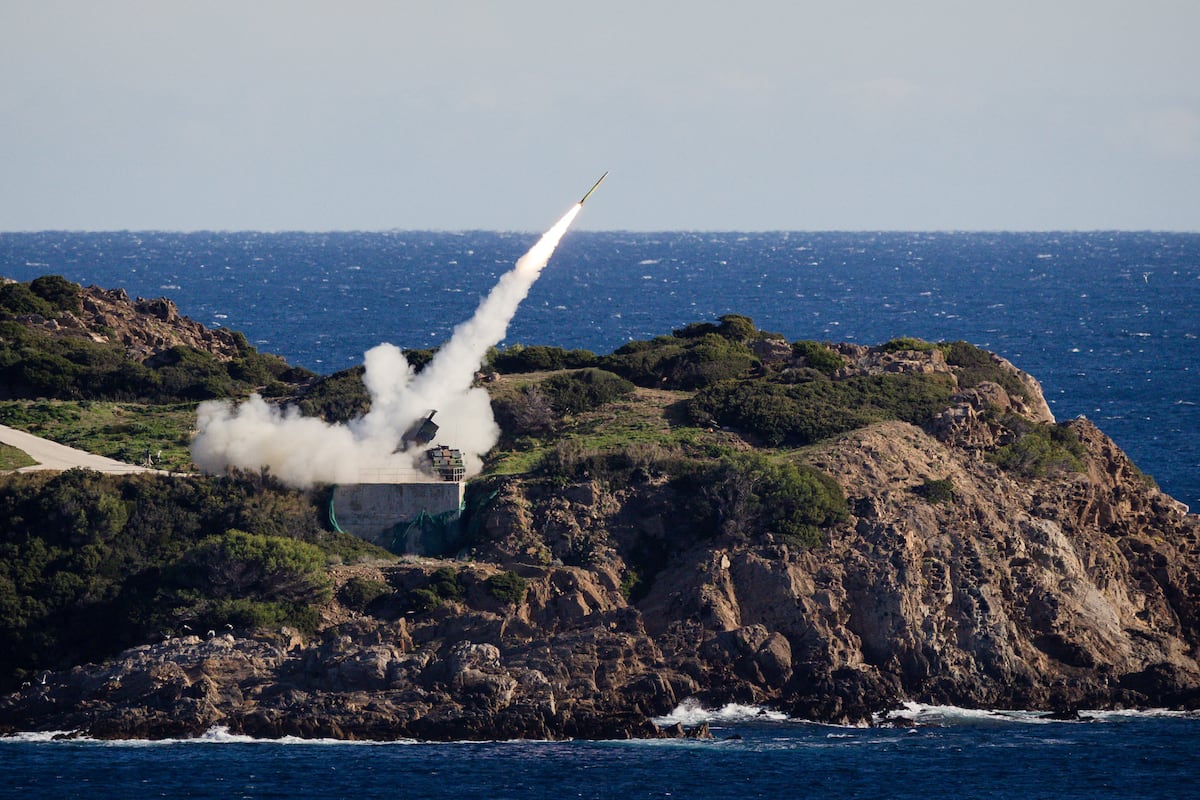
PARIS — France is moving closer to a decision on its future rocket artillery system, with the country testing domestically developed weapons this month that will allow for a comparison with foreign systems in a few weeks’ time, the head of the country’s armaments agency said.
The first tests of a French-developed rocket artillery system “went well” on Tuesday, with more testing planned for next week, Patrick Pailloux, the head of the Directorate General for Armament, said in a parliamentary hearing on Wednesday.
Safran and MBDA are one of the teams working on a French-made rocket artillery system , with Thales and ArianeGroup developing a competing offer. Foreign alternatives already in active service with other European forces include Hanwha Aerospace’s Chunmoo, the PULS system from Israel’s Elbit Systems and Lockheed Martin’s HIMARS.
“There is significant pressure from the Army, which considers this to be its absolute priority requirement in the event of a major engagement, because they’ll need to hold out during the first few days,” Pailloux said. “It is a capability they absolutely must have. So the question is, how much will it cost, what is the timeline, when will they be able to deliver?”
The French goal is to buy 26 systems with 300 munitions, and gradually equip a rocket artillery battalion by 2030, according to Pailloux. France is in a hurry to replace its nine remaining units of the Lance-Roquettes Unitaire, a modified version of the M270 multiple launch rocket system, set to reach the end of their service life in 2027.
“We’ll face a trade-off between sovereignty and speed, costs, timelines, and so on. We’ll have to make the best choice, or the least bad choice, given our needs.”
France is also working on a land-based ballistic missile with a range of 2,500 kilometers, with €1 billion ($1.2 billion) budgeted to start work on the system this year. The plan is for a ballistic missile tipped with a maneuverable hypersonic glide vehicle, with the DGA’s math showing “this is likely to offer the best cost-military performance ratio,” according to Pailloux.
While the published goal is for a ballistic missile in 2035, and France will have “no difficulty” to obtain a capability by then, “that is late, I admit,” Pailloux said. The DGA plans to accelerate the work to bring forward the date “as close as possible to 2030,” for example by having an initial version without anti-jamming measures, and those capabilities added later, according to the director.
The DGA aims to order more than €6 billion worth of munitions this year, with plans to buy SCALP cruise missiles, AASM guided bombs, Exocet anti-ship missiles, MICA and Mistral air-defense missiles and Meteor air-to-air missiles. The budget also includes €320 million to finance an industrial ramp-up where “necessary and useful,” according to Pailloux.
“We need to prepare for a major conflict by 2030, with the new understanding that we may find ourselves facing a war of attrition,” Pailloux said. “To put it very simply, a war of attrition is one where in the end, the side that still has ammunition left wins.”
Work on the future F5 standard of the Rafale fighter jet will start this year. With a budget of €3.4 billion for combat aviation, projects include a new Safran engine dubbed T-REX with a thrust of 9 tons, compared to the current M88 engine with 7 tons of thrust, and changing all the sensors, particularly the radar, according to Pailloux.
To upgrade the armament package of the Dassault Aviation fighter jet, the DGA is looking to accelerate work on MBDA’s Stratus RS high supersonic air-to-ground missile, and develop an air-to-air missile called Comet with longer range than the existing Meteor by 2030.
“It’s a new way of working, to develop a new air-to-air missile by 2030,” Pailloux said, describing the target date as “very ambitious.” He said the design brief fits on half a page, and basically boils down to “that the missile works and has a long range.”
This year’s projects also include the Chorus one-way drone, with a range of 3,000 kilometers and a 500 kilogram payload, with the goal to have the drone flying by the end of the year. The drones will be manufactured by carmaker Renault , with a unit costs of €120,000, which Pailloux called “expensive, but compared to other munitions, a lot less expensive.”
Rudy Ruitenberg is a Europe correspondent for Defense News. He started his career at Bloomberg News and has experience reporting on technology, commodity markets and politics.
巴黎——法国军备局局长表示,法国正朝着决定其未来火箭炮系统的方向迈进,该国本月将测试国产武器,以便在几周后与外国系统进行比较。
法国军备总局局长帕特里克·帕尤克斯周三在议会听证会上表示,法国研制的火箭炮系统周二的首次测试“进展顺利”,下周计划进行更多测试。
赛峰集团和MBDA公司是参与法国国产火箭炮系统研发的团队之一,泰雷兹集团和阿丽亚娜集团也在开发与之竞争的方案。其他欧洲国家军队已在使用的外国火箭炮系统包括韩华宇航公司的“天武”系统、以色列埃尔比特系统公司的PULS系统以及洛克希德·马丁公司的HIMARS系统。
“陆军方面施加了很大的压力,他们认为这是重大战役发生时绝对优先的需求,因为他们需要在最初几天坚守阵地,”帕尤克斯说。“这是他们绝对必须具备的能力。所以问题是,这需要多少成本,时间表是什么,他们什么时候能够交付?”
据帕尤克斯称,法国的目标是采购26套系统和300发弹药,并逐步在2030年前装备一个火箭炮营。法国正急于替换其剩余的9套“单管火箭炮”(Lance-Roquettes Unitaire)系统,该系统是M270多管火箭炮系统的改进型,预计将于2027年退役。
“我们将面临主权与速度、成本、时间表等等之间的权衡。我们必须根据自身需求做出最佳选择,或者说是坏处最小的选择。”
法国也在研发一种射程2500公里的陆基弹道导弹,预算为10亿欧元(约合12亿美元),计划今年启动该系统的研发工作。该计划旨在研制一种弹头带有可机动高超音速滑翔飞行器的弹道导弹。据帕尤克斯称,法国国防装备总局(DGA)的计算表明,“这很可能提供最佳的性价比”。
尽管官方公布的目标是在2035年研制出弹道导弹,而且法国届时“毫无困难”能够实现这一目标,但帕尤克斯承认,“这确实有点晚了”。据帕尤克斯透露,法国国防装备总局(DGA)计划加快研发进度,力争将目标日期“尽可能提前至2030年”,例如先推出不具备抗干扰能力的初始版本,之后再逐步添加这些功能。
德国国防装备总局(DGA)今年计划订购价值超过60亿欧元的军火,其中包括SCALP巡航导弹、AASM制导炸弹、飞鱼反舰导弹、MICA和西北风防空导弹以及流星空空导弹。据帕尤克斯称,预算中还包括3.2亿欧元,用于在“必要且有益”的领域扩大工业生产规模。
“我们需要为2030年之前的一场重大冲突做好准备,并认识到我们可能会面临一场消耗战,”帕尤克斯说。“简单来说,消耗战就是最终弹药充足的一方获胜的战争。”
未来阵风战斗机F5标准的研发工作将于今年启动。据帕尤克斯透露,该项目预算为34亿欧元,用于战斗机领域,其中包括研发一款推力达9吨的新型赛峰发动机(T-REX),而目前使用的M88发动机推力为7吨;此外,还将更换所有传感器,特别是雷达。
为了升级达索航空战斗机的武器装备,DGA 正在寻求加快 MBDA 公司的 Stratus RS 高超音速空地导弹的研发工作,并计划在 2030 年前开发出一种名为 Comet 的空空导弹,其射程比现有的 Meteor 导弹更远。
“这是一种全新的工作方式,目标是在2030年前研发出一种新型空空导弹,”帕尤克斯说道,并称这一目标日期“非常雄心勃勃”。他表示,设计概要只有半页纸,基本内容就是“导弹要能正常工作,并且射程远”。
今年的项目还包括Chorus单向无人机,其航程达3000公里,有效载荷达500公斤,目标是在年底前完成试飞。这些无人机将由汽车制造商雷诺生产,单价为12万欧元。帕尤克斯称其“价格昂贵,但与其他军火相比,价格要低得多”。
鲁迪·鲁伊滕贝格是《防务新闻》的欧洲记者。他的职业生涯始于彭博新闻社,拥有报道科技、大宗商品市场和政治方面的经验。