Australia refines its defense strategy and investment plan澳大利亚完善其国防战略和投资计划
The government has laid out an aim for defense spending to reach 3% of GDP by 2033-34.
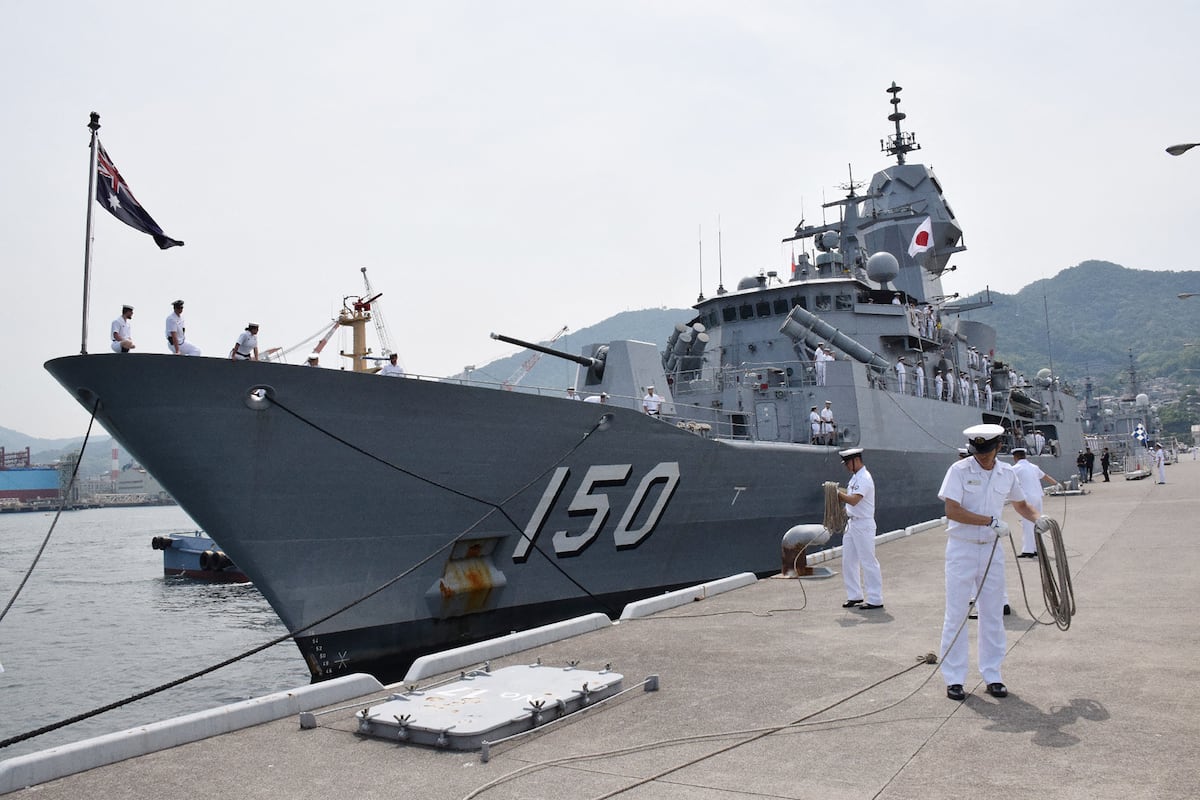
CHRISTCHURCH, New Zealand — Australia issued updates for two pivotal planning documents this week – its National Defence Strategy 2026 and Integrated Investment Program 2026 – while simultaneously promising a boost in defense spending.
Defence Minister Richard Marles pledged defense accounts would receive an additional A$14 billion (US$10 billion) over the next four years, and an extra A$53 billion over the coming decade.
The government is promising cumulative defense expenditure of A$887 billion over the coming decade. It also laid out an aim for defense spending to reach 3% of gross domestic product by 2033-34.
This is the National Defence Strategy’s first revision since it launched in 2024.
The document acknowledges that Australia has entered “a more dangerous and unpredictable era, characterized by a more overt struggle among states where thresholds against the use of force are being eroded.”
It warned, “The net effect is that Australia will face elevated levels of geopolitical risk over the coming decade, and our exposure to force projection and military coercion will reach levels not seen since the Second World War.”
As some countries doubt U.S. dependability, Canberra reaffirmed that “Australia-United States security arrangements, interoperability, intelligence sharing and industrial collaboration remain critical to Australia’s national security.”
The NDS set out five priorities, including developing greater self-reliance and prioritizing capability acquisition and sustainment plans. It also mentioned greater resilience for Australia’s sovereign defense industrial base, better coordination with regional partners, and improved national civil preparedness.
The latter point is significant, as the latest iteration of the NDS addresses a point of criticism of the previous document for being purely a military strategy. The 2026 version broadens national defense to include domains like civil preparedness, fuel security and economic security.
Meanwhile, the Integrated Investment Program – or IIP – allocates A$425 billion over the coming decade to accelerate capability improvements.
Among specific priorities for the Australian Defence Force (ADF) are undersea warfare, more lethal maritime capabilities and expanded long-range strike capabilities. The ADF will also increasingly adopt autonomous and uncrewed systems, as well as systems to counter those of adversaries.
Other specific acquisition priorities are a more resilient multi-orbit satellite communications network, as well as integrated air and missile defense. The document recognizes that Australia has serious air defense deficiencies. The IIP therefore mentions that a medium-range air defense “program will commence as a priority from 2026.”
Proportionately, little has changed from two years ago in terms of spending areas. Canberra will steer 41% of funds to maritime capabilities, 22% to enterprise and enabling (encompassing infrastructure and information technology), 17% to land, 14% to air, 5% to cyber and 2% to space.
Mick Ryan, senior fellow for military studies at the Lowy Institute and a former Australian Army major general, concluded: “The 2026 NDS is best understood as a continuation of the 2024 version rather than a departure from it. With the exception of modest increases in spending on drones and missile defense, it retains the previous strategy’s trajectory.”
Gordon Arthur is an Asia correspondent for Defense News. After a 20-year stint working in Hong Kong, he now resides in New Zealand. He has attended military exercises and defense exhibitions in about 20 countries around the Asia-Pacific region.
新西兰基督城——本周,澳大利亚发布了两项关键规划文件的更新版本——《2026 年国防战略》和《2026 年综合投资计划》——同时承诺增加国防开支。
国防部长理查德·马尔斯承诺,未来四年国防预算将额外获得 140 亿澳元(100 亿美元),未来十年将额外获得 530 亿澳元。
政府承诺未来十年累计国防开支将达到8870亿澳元,并设定目标,到2033-34财年,国防开支占国内生产总值(GDP)的3%。
这是自2024年启动以来,《国防战略》的首次修订。
该文件承认,澳大利亚已经进入“一个更加危险和不可预测的时代,其特点是各州之间更加公开的斗争,而对使用武力的限制正在被削弱”。
报告警告说:“最终结果是,未来十年澳大利亚将面临更高水平的地缘政治风险,我们面临的武力投射和军事胁迫风险将达到二战以来的最高水平。”
鉴于一些国家对美国的可靠性表示怀疑,堪培拉重申,“澳美安全安排、互操作性、情报共享和产业合作对澳大利亚的国家安全仍然至关重要。”
《国家国防战略》提出了五项优先事项,包括增强自主能力,优先制定能力获取和保障计划。该战略还提及提高澳大利亚主权国防工业基础的韧性,加强与区域伙伴的协调,以及提升国家民事应急准备水平。
后一点意义重大,因为最新版的《国防战略》回应了此前版本因过于注重军事战略而受到的批评。2026年版将国防的范畴扩大到民防、燃料安全和经济安全等领域。
与此同时,综合投资计划(简称 IIP)将在未来十年内拨款 4250 亿澳元,以加速能力提升。
澳大利亚国防军的重点发展领域包括水下作战、提升海上杀伤力以及增强远程打击能力。此外,澳大利亚国防军还将越来越多地采用自主和无人系统,以及用于对抗敌方系统的作战系统。
其他具体采购重点包括更具韧性的多轨道卫星通信网络,以及一体化防空和导弹防御系统。该文件承认澳大利亚的防空能力存在严重不足。因此,综合采购计划指出,中程防空“计划将从2026年起作为优先事项启动”。
从比例上看,支出领域与两年前相比变化不大。堪培拉将把41%的资金用于海上能力建设,22%用于企业和赋能(包括基础设施和信息技术),17%用于陆地,14%用于空中,5%用于网络安全,2%用于太空。
洛伊研究所军事研究高级研究员、前澳大利亚陆军少将米克·瑞安总结道:“2026年版《国防战略》最好被理解为2024年版的延续,而不是对其的偏离。除了在无人机和导弹防御方面的支出略有增加外,它保留了之前战略的发展轨迹。”
戈登·阿瑟是《防务新闻》的亚洲特派记者。在香港工作20年后,他现居新西兰。他曾到访亚太地区约20个国家,参加过军事演习和防务展览。