Iran to get Chinese shoulder-launched missile systems in weeks, sources say消息人士称,伊朗将在几周内获得中国产肩扛式导弹系统。
Iran is expected to receive within weeks a first shipment out of up to 400 Chinese-made shoulder-fired air defense missile launchers.
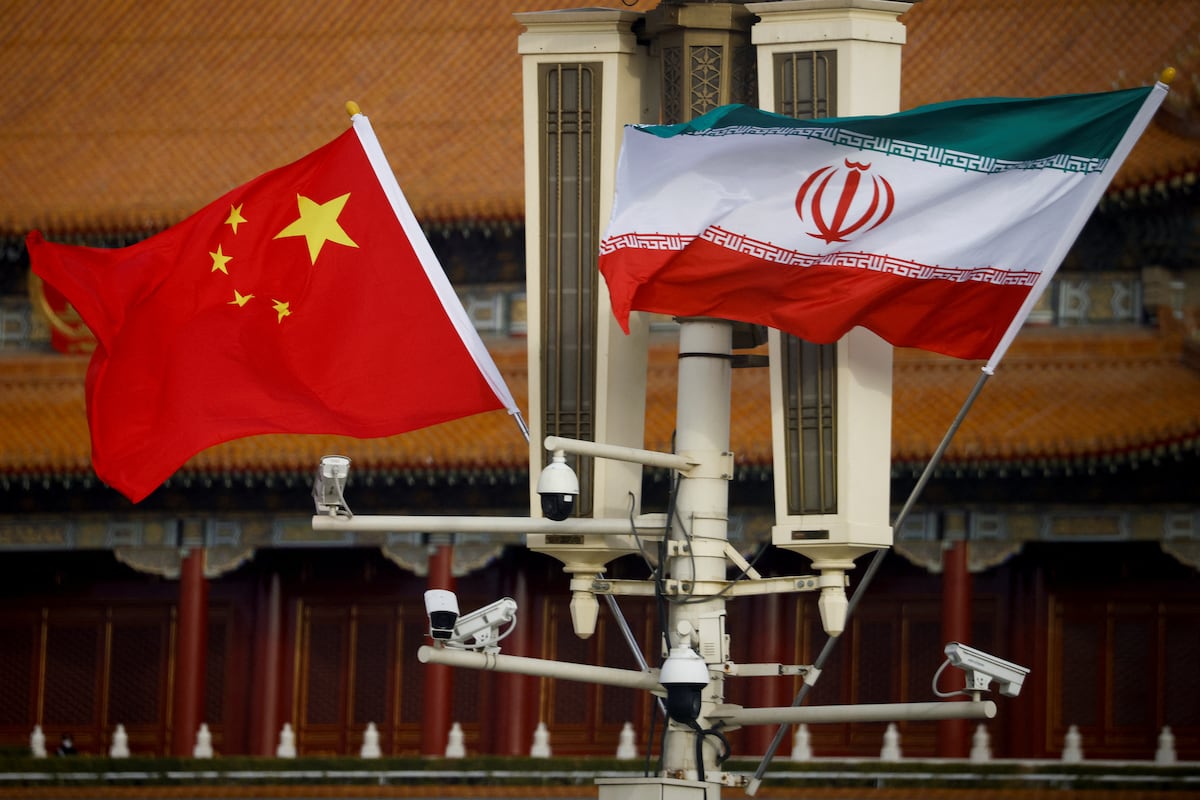
Iran is expected to receive within weeks a first shipment out of up to 400 Chinese-made shoulder-fired air defense missile launchers, three sources familiar with the deal told Reuters, as it rebuilds its defenses amid war with the United States .
The purchase, valued at $60-$70 million, is one of Tehran’s largest-known efforts to strengthen its short-range air defenses since the outbreak of its war with the U.S. and Israel, which exposed gaps in Iran’s ability to protect military sites and strategic infrastructure.
The contract covers the purchase of between 300 and 400 man-portable air defense systems , or MANPADS, including Chinese-made QW-12 and FN-16 missiles, the sources said.
The deal was signed with Zhongqing Baoshang International Investment, a Hong Kong-based company that the sources said was acting as an intermediary between the Iranian side and the Chinese supplier.
The sources spoke on condition of anonymity because of the sensitivity of the matter. Iran’s foreign ministry did not immediately reply to a request for comment.
“The relevant reports are completely groundless,” China’s Foreign Ministry said. “China has consistently played a role in promoting peace and ending the conflict.”
Queried about the deal at a regular press conference in Beijing on Thursday, Chinese defense ministry spokesperson Jiang Bin said he was “not familiar with the relevant situation”.
Beijing-based Zhong Qing Bao Shang Group, the parent company of Zhongqing Baoshang International Investment, did not immediately respond to an email request for comment on Tuesday.
Iran’s reported rearming efforts come after months of fighting in which the U.S. and Israel have struck facilities linked to its missile, drone and air defense programs, and Tehran responded with barrages of ballistic missiles and drones.
The conflict has highlighted the challenge of defending fixed military and strategic sites against advanced aircraft and precision-guided weapons.
Washington abruptly suspended two weeks of bombardment on Saturday, but President Donald Trump said strikes would resume if negotiations failed to end the five-month-old conflict, which has in theory been in a state of ceasefire since April.
Responding to this article, Trump said Iran receiving such equipment from China would be surprising given what he said were assurances from Chinese President Xi Jinping not to get involved in the war on Iran’s behalf.
“I mean, things like that happen, but that would be surprising. [Xi] told me very strongly he wouldn’t partake, but he knows I’d be quite disappointed,” Trump said on Wednesday in response to a question about this report.
The delivery of hundreds of MANPADS would significantly expand Iran’s inventory of short-range air defense weapons and underscore how military ties with China are deepening.
The sources cautioned that, although the agreement had been signed, delivery schedules, quantities and other implementation details could still change.
Under a plan agreed by the parties, deliveries will initially be by air from Urumqi in western China, then transiting through Pakistan to Iran, according to the sources, who did not clarify whether the transfers would take place by air or by road.
“Speculations of Pakistan being involved in supply of Air Defense weapons to Iran from China are absolutely concocted and false,” Pakistan’s military public relations wing ISPR said.
A spokesperson for the Pakistani Foreign Ministry did not respond to requests for comment.
While Iran has invested heavily in the past two decades in missiles, drones and radar, military experts say portable air defense systems are important because they can be dispersed quickly, operated by small teams and relocated frequently, making them less vulnerable than fixed air defense batteries.
A European security source said authorities in his country were aware of several contracts under discussion involving the possible sale of QW-series MANPADS to Iran, including QW-12, QW-18 and QW-19 systems.
A second security source, in the Middle East, said Iran had been seeking to purchase QW-12 and QW-18 missiles, but they were unaware that a deal had already been concluded.
The QW-12 and FN-16 are shoulder-fired, infrared-guided surface-to-air missile systems designed to engage low-flying aircraft, helicopters and drones. Their mobility allows them to be deployed rapidly around military installations, energy infrastructure and other sensitive sites.
Defense analysts regard the QW-12 as less capable than newer QW variants, including the QW-18 and QW-19, but say the systems can still provide an effective layer of short-range protection against drones and low-flying targets.
Two Western intelligence sources and an Iranian official said Tehran had also explored the use of overland routes to move Chinese military supplies and dual-use components more discreetly and reduce the risk of disruption.
The procurement highlights the Islamic Republic’s continuing reliance on a combination of domestic weapons production and foreign suppliers despite years of sanctions and restrictions on defense related imports.
Reuters previously reported that Iran was close to securing a separate agreement with China to acquire anti-ship cruise missiles, according to people familiar with those negotiations. Reuters could not determine whether the agreement went through.
据路透社报道,三位熟悉该交易的消息人士透露,伊朗预计将在几周内收到首批多达 400 套中国制造的肩扛式防空导弹发射器,伊朗正在与美国交战期间重建其防御力量。
此次采购价值 6000 万至 7000 万美元,是自伊朗与美国和以色列爆发战争以来,德黑兰为加强其短程防空能力而采取的最大规模的已知举措之一。这场战争暴露了伊朗在保护军事设施和战略基础设施方面的能力缺陷。
消息人士称,该合同涵盖购买 300 至 400 套便携式防空系统(MANPADS),其中包括中国制造的 QW-12 和 FN-16 导弹。
据消息人士称,该交易是与总部位于香港的中清宝商国际投资有限公司签署的,该公司充当伊朗方面和中国供应商之间的中间人。
由于事态敏感,消息人士要求匿名。伊朗外交部尚未对此事作出回应。
中国外交部表示,“有关报道完全没有根据。中国一贯为促进和平、结束冲突发挥了作用。”
周四在北京举行的例行记者会上,当被问及这笔交易时,中国国防部发言人江斌表示,他对有关情况“不熟悉”。
总部位于北京的中青宝商集团(中青宝商国际投资的母公司)周二没有立即回复记者的电子邮件置评请求。
据报道,伊朗的重新武装行动是在数月的冲突之后进行的。在冲突中,美国和以色列袭击了与伊朗导弹、无人机和防空计划相关的设施,而德黑兰则以大量的弹道导弹和无人机进行回应。
这场冲突凸显了防御固定军事和战略设施免受先进飞机和精确制导武器攻击的挑战。
华盛顿方面周六突然暂停了持续两周的轰炸,但唐纳德·特朗普总统表示,如果谈判未能结束这场持续五个月的冲突(理论上自四月份以来一直处于停火状态),空袭将会恢复。
针对这篇文章,特朗普表示,考虑到中国国家主席习近平曾保证不会代表伊朗卷入战争,伊朗从中国获得此类装备将令人惊讶。
“我的意思是,这种事确实会发生,但这会令人惊讶。[习近平]非常明确地告诉我他不会参与,但他知道我会非常失望,”特朗普周三在回答有关这份报道的问题时说道。
数百枚便携式防空导弹的交付将大大增加伊朗的短程防空武器库存,并凸显伊朗与中国的军事关系正在不断加深。
消息人士提醒说,虽然协议已经签署,但交付时间表、数量和其他实施细节仍有可能发生变化。
据消息人士透露,根据双方商定的计划,货物最初将从中国西部城市乌鲁木齐空运,然后经巴基斯坦转运至伊朗。但消息人士并未说明转运将通过空运还是陆运进行。
巴基斯坦军方公共关系部门(ISPR)表示:“有关巴基斯坦参与从中国向伊朗供应防空武器的猜测完全是捏造的,是错误的。”
巴基斯坦外交部发言人未回应置评请求。
虽然伊朗在过去二十年中对导弹、无人机和雷达进行了大量投资,但军事专家表示,便携式防空系统非常重要,因为它们可以快速分散,由小型团队操作,并经常重新部署,这使得它们比固定式防空阵地更不容易受到攻击。
一位欧洲安全消息人士称,他所在国家的当局已经注意到,有几份合同正在讨论中,涉及可能向伊朗出售 QW 系列便携式防空导弹系统,其中包括 QW-12、QW-18 和 QW-19 系统。
另一位来自中东的安全消息人士称,伊朗一直在寻求购买 QW-12 和 QW-18 导弹,但他们并不知道交易已经达成。
QW-12 和 FN-16 是肩扛式红外制导地对空导弹系统,设计用于攻击低空飞行的飞机、直升机和无人机。它们的机动性使其能够快速部署在军事设施、能源基础设施和其他敏感地点周围。
国防分析人士认为,QW-12 的性能不如 QW 的新型型号,包括 QW-18 和 QW-19,但表示该系统仍然可以提供有效的近程防护,抵御无人机和低空飞行目标。
两名西方情报人士和一名伊朗官员表示,德黑兰还探索了利用陆路路线更隐蔽地运输中国军事物资和两用部件,以降低中断的风险。
此次采购凸显了尽管多年来国防相关进口受到制裁和限制,伊朗伊斯兰共和国仍然继续依赖国内武器生产和外国供应商的组合。
路透社此前报道称,据知情人士透露,伊朗即将与中国达成一项单独的协议,采购反舰巡航导弹。路透社目前无法确定该协议是否最终达成。