A small town in Germany braces for end to decades of life with US troops德国一个小镇即将结束与美军长达数十年的生活。
A picturesque Bavarian town has hosted U.S. forces since the end of WWII and could bear the brunt of the U.S. military's withdrawal from Germany.
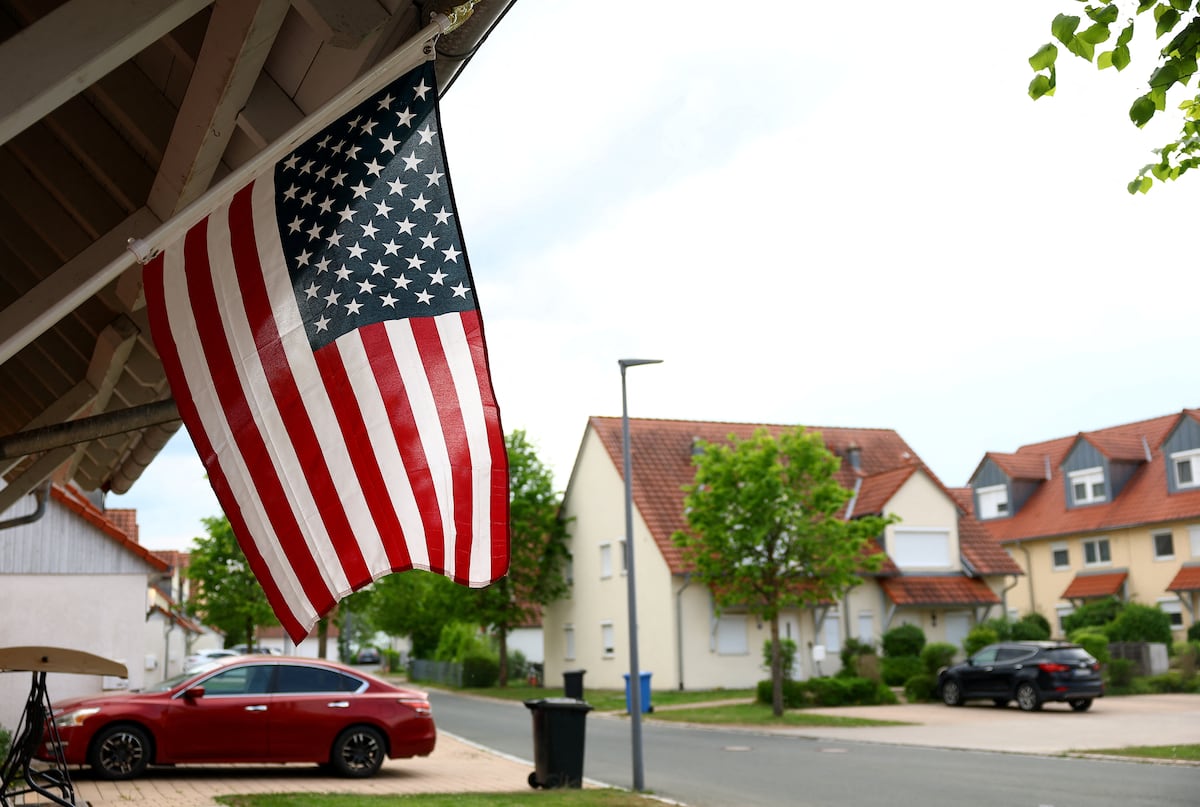
Vilseck, Germany — The picturesque Bavarian town of Vilseck has hosted U.S. forces since the end of World War Two and could bear the brunt of President Donald Trump’s decision to withdraw at least 5,000 troops from Germany.
Although details of the units affected by the order have not been confirmed, the 2nd Stryker Cavalry Regiment — the only permanent brigade combat team in Germany — based at Rose Barracks in Vilseck is expected to go.
“The consequences would be dramatic,” said the town’s new mayor, Thorsten Graedler, who took office this week facing the prospect of thousands of job losses in a rural area where the base is one of the biggest employers for miles around.
Over the years, he said, the presence of the base, with its thousands of well‑paying jobs for local people and steady stream of customers for local businesses, had produced a situation of dependence whose risks were now being felt.
“Our entire town of Vilseck relies largely on the military training area for its livelihood — pubs, restaurants, garages, supermarkets,” he said.
U.S. wants Europe to spend more on defense
The decision to withdraw troops came amid increasing pressure from Washington on European countries to raise defense spending, and accusations that reliance on U.S. forces had allowed them to neglect their own militaries.
During Trump’s first term there was already talk of withdrawing the 2nd Cavalry Regiment, a brigade‑sized combat formation built around Stryker wheeled armored vehicles, but the plans were reversed under former President Joe Biden.
“It’s important to say that it hasn’t been officially confirmed yet that the Strykers will actually be withdrawn. So I haven’t given up hope yet,” Graedler said.
The government in Berlin, which has sharply increased spending to rebuild the German military after years of underinvestment, said the announcement of a troop withdrawal came as little surprise.
Fatmir Fazliji, 40, owner of Friends Pizza, looks out the window of his diner in Vilseck, Germany, on May 4, 2026. (Lisi Niesner/Reuters)
But beyond the economic effects, the cultural shock from the news would be profound for a town whose 6,500 inhabitants are outnumbered by U.S. personnel and their families.
Although numbers have declined since the height of the Cold War — when as many as 250,000 U.S. troops, as well as tens of thousands of civilian staff, were deployed to face off against the Soviet Union — their presence was an enduring reality for generations of West Germans.
By the time the Berlin Wall came down in 1989, 60% of all U.S. overseas bases were in Germany, with hundreds of other sites, most in southwestern towns like Vilseck. Many were ‘little Americas’ with their own on‑base housing, stores and facilities, but their presence left a deep mark on local communities.
“I’ve never known Vilseck any other way than living side by side with the Americans,” Graedler said.
Many U.S. soldiers enjoy life in Germany
Only around 35,000 American troops now remain in Germany, the largest U.S. contingent in Europe. But even today, soldiers and their families leave a visible mark on Vilseck and nearby areas, eating at steak restaurants, shopping in local supermarkets and joining local sports and car clubs.
“I’ve been here since 2022, so about four years now. And there’s nothing to dislike about Germany,” said 31‑year‑old culinary sergeant Robert Moore, who lives about 20km north of Vilseck. He said people were friendly and respectful and “it’s very, very safe”.
Many in Vilseck said there would be an emotional sense of loss if the Americans left.
“When the Strykers arrived, we were worried they’d be a bunch of roughnecks, but they’re actually really nice,” said 66‑year‑old Albin Merkl, a pensioner who rents apartments to U.S. personnel.
“We’ve always done good business with the Americans,” he said, adding that trains to nearby Nuremberg were filled in the evenings with younger soldiers heading out for off‑duty entertainment.
U.S. Army soldiers share an evening dinner at the Casa do Brasil steakhouse, after they returned from a field exercise in Schlicht near Vilseck, Germany, on May 5, 2026. (Lisi Niesner/Reuters)
Vilseck resident Judith Georgiadis, 63, who worked in base administration for 17 years, said life grew quieter following the drawdown of U.S. forces after the Cold War.
“Back in the eighties, life here was brilliant. There was a lively nightlife, with bars and pubs,” she said. With the latest news, many were apprehensive. “People who work for the Americans are afraid. There is a lot of worry.”
“The city government should have taken action long ago to address our dependence on the Americans. When you’re young, you either work for the Americans or leave,” she said.
Local businesses that provide services to the base are also exposed.
“A lot of us here — business people, I mean — built our businesses around 100% American clients,” said 64‑year‑old Robert Grassick, whose company, Vilseck Military Auto Sales, sells cars to troops and their families.
For some older residents, however, the worry that the U.S. presence would eventually end is nothing new.
“Having grown up here, I can say it’s always been a talking point: ‘They’re leaving and closing down,’” said 61‑year‑old Brenda Hutchinson, whose parents were among the many mixed couples produced by decades of close contact.
“It was already a talking point back when my father was in the army,” she said.
德国维尔塞克——风景如画的巴伐利亚小镇维尔塞克自二战结束以来一直是美军的驻地,可能会受到唐纳德·特朗普总统从德国撤出至少 5000 名美军的决定的冲击。
虽然受该命令影响的部队的具体细节尚未得到确认,但驻扎在维尔塞克罗斯兵营的第2斯特赖克骑兵团(德国唯一的常驻旅级战斗队)预计将会撤离。
“后果将不堪设想,”该镇新任镇长托斯滕·格雷德勒说道。他本周上任,面临着在这个方圆数英里内最大的雇主之一的农村地区,数千人失业的前景。
他表示,多年来,该基地的存在,为当地居民提供了数千个高薪工作岗位,并为当地企业带来了稳定的客源,造成了一种依赖局面,而这种依赖的风险现在正在显现。
他说:“我们整个维尔塞克镇的生计很大程度上依赖于军事训练区——酒吧、餐馆、修车厂、超市。”
美国希望欧洲增加国防开支。
在华盛顿不断向欧洲国家施压,要求其增加国防开支,并指责它们依赖美国军队而忽视自身军队的背景下,撤军的决定出台了。
在特朗普的第一任期内,就已经有人提出要撤回第二骑兵团,这是一个以“斯特赖克”轮式装甲车为核心的旅级作战部队,但这些计划在前总统乔·拜登的领导下被推翻了。
格雷德勒说:“需要说明的是,目前还没有官方确认‘斯特瑞克’装甲车是否会被撤回。所以我还没有放弃希望。”
柏林政府表示,由于多年来对德国军队投资不足,已大幅增加军费开支以重建德国军队,因此,撤军的消息并不令人意外。
2026年5月4日,40岁的法特米尔·法兹利吉(Fatmir Fazliji)是德国维尔塞克“朋友披萨店”(Friends Pizza)的老板,他正从自家餐厅的窗户向外望去。(Lisi Niesner/路透社)
但除了经济影响之外,对于一个只有 6500 名居民,而美国军人和他们的家属人数远超这个城镇来说,这一消息带来的文化冲击将是巨大的。
尽管自冷战高峰时期(当时多达 25 万美军以及数万文职人员被部署到西德对抗苏联)以来,美军人数有所下降,但对于几代西德人来说,美军的存在是一个持久的现实。
到1989年柏林墙倒塌时,美国海外基地中有60%位于德国,此外还有数百个其他地点,大多位于西南部城镇,例如维尔塞克。许多基地就像“小美国”,拥有自己的营房、商店和设施,但它们的存在给当地社区留下了深刻的印记。
格雷德勒说:“我所认识的维尔塞克,一直都是和美国人一起生活。”
许多美国士兵在德国生活得很愉快。
目前仅剩约35,000名美军士兵驻扎在德国,这是美国在欧洲最大的驻军。但即使在今天,士兵及其家属仍然在维尔塞克及其周边地区留下了清晰可见的印记,他们在牛排餐厅用餐,在当地超市购物,并积极参与当地的体育和汽车俱乐部。
“我从2022年就住在这里了,到现在已经四年了。我对德国没有任何不满,”31岁的炊事兵罗伯特·摩尔说道,他住在维尔塞克以北约20公里处。他说这里的人们友善而尊重他人,“而且非常非常安全”。
维尔塞克的许多人表示,如果美国人离开,他们会感到情感上的失落。
“当‘斯特瑞克’装甲车抵达时,我们担心他们会是一群粗鲁的家伙,但他们实际上非常友善,”66岁的退休老人阿尔宾·默克尔说道,他把公寓租给了美国人员。
“我们一直和美国人做生意做得很好,”他说,并补充说,晚上开往附近纽伦堡的火车上挤满了外出休闲娱乐的年轻士兵。
2026年5月5日,美国陆军士兵在德国维尔塞克附近的施利希特完成野外演习后,在Casa do Brasil牛排馆共进晚餐。(Lisi Niesner/路透社)
现年 63 岁的维尔塞克居民朱迪思·乔治亚迪斯曾在基地行政部门工作了 17 年,她说,冷战结束后,随着美军撤离,生活变得越来越平静。
“八十年代的时候,这里的生活真是太棒了。夜生活丰富多彩,酒吧和酒馆林立,”她说。但最近的消息让许多人感到忧心忡忡。“为美国人工作的人都很害怕。大家都很担心。”
“市政府早就应该采取行动解决我们对美国人的依赖问题了。年轻的时候,要么为美国人工作,要么离开,”她说。
为基地提供服务的当地企业也面临风险。
“我们这里很多人——我是指商人——都是围绕着 100% 的美国客户建立起自己的业务的,”64 岁的罗伯特·格拉西克说道,他的公司 Vilseck Military Auto Sales 向军队及其家属出售汽车。
然而,对于一些年纪较大的居民来说,担心美国驻军最终会结束并非什么新鲜事。
“我在这里长大,可以说这始终是一个人们谈论的话题:‘他们要离开了,店铺要关门了,’” 61 岁的布伦达·哈钦森说道,她的父母是数十年来密切接触所结成的众多跨种族夫妇中的一对。
“在我父亲当兵的时候,这就已经是一个热门话题了,”她说。