The Secretive U-2 Spy Plane Missions Flown Out Of Norway’s Bodø Airbase从挪威博德空军基地起飞的神秘U-2侦察机任务
As Bodø closes as a fighter base, we look back at its Cold War legacy when it launched U-2 espionage flights aimed at the Soviet Union.
Updated Jan 6, 2022 5:14 PM EST
As the historic Norwegian airbase at Bodø , located within the Arctic Circle, closes down today as a fighter jet station, it’s a good time to look back at one of the more secretive aspects of the base. It played the role of a vital node in the early days of the U-2 spy plane. Ultimately, this little-known chapter in aerial espionage came to an end on May 1, 1960, when a U-2 flown by Francis Gary Powers was shot down by a surface-to-air missile deep over Soviet territory. Powers had been due to complete his flight by landing at Bodø, but the international incident that followed his shoot-down led to the abrupt termination of such deep-penetration missions.
Bodø, more formally Bodø Main Air Station, was for many years one of the most important fighter bases for the Royal Norwegian Air Force, or RNoAF, most recently operating F-16s . With the continued arrival of the F-35A stealth fighters , 52 of which are on order for Norway, the base today lost its fighter mission and the Joint Strike Fighter has assumed quick reaction alert (QRA) duties.
While the military use of the airfield at Bodø dates back to before World War II, the base really came into its own with the start of the Cold War, thanks to its strategic position close to the border with the Soviet Union. The distance from Bodø to Russia’s massive naval base and port at Murmansk is just 500 miles, and with Norway becoming a founder member of NATO in 1949, work soon began to expand the airbase as a springboard for alliance airpower on the Northern Front.
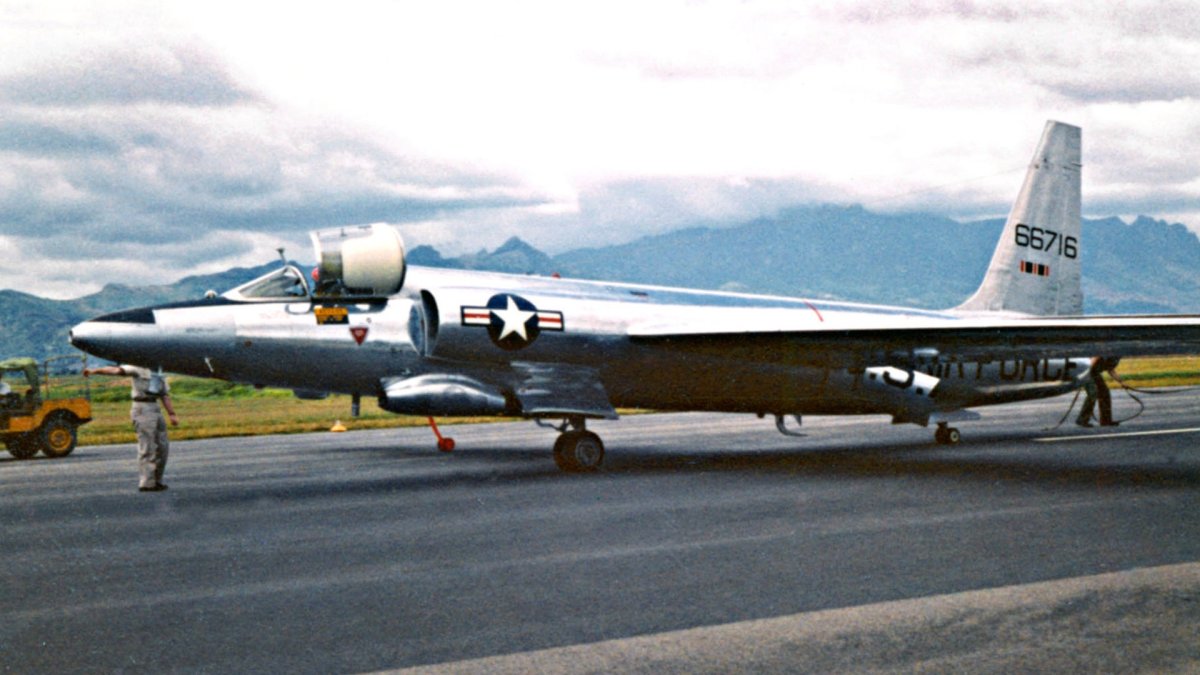
A CIA-operated U-2 carrying fictional National Advisory Committee for Aeronautics (NACA) insignia and numbers in an effort to conceal its true mission. This photo was released in May 1960 after Francis Gary Powers was shot down over the Soviet Union during a CIA spy flight. An accompanying press release provided a cover story about a U-2 conducting weather research that may have strayed off course after the pilot reported difficulties with his oxygen equipment. , NASA
Ultimately, a great deal of Bodø’s strategic value would come to be derived from its proximity to the Soviet Northern Fleet, which would eventually possess most of that country’s ballistic missile submarines and significant surface forces. Before then, however, the Soviet nuclear deterrent relied on manned bombers and early intercontinental ballistic missiles (ICBMs). Since the first Soviet ICBMs still lacked the range to reach all potential targets in the United States, they had to be located in the far north of the Soviet Union, from where they would be launched on a polar trajectory.
The first Soviet ICBM — in fact, the first anywhere in the world — was the R-7 Semyorka, known in the West as SS-6 Sapwood. It shared the same technology as the rocket that launched Sputnik 1, as well as the Vostok and Soyuz space-launch vehicles, among others . When the Soviets began to construct an operational launch site for SS-6 ICBMs at Plesetsk, near Arkhangelsk, the Central Intelligence Agency (CIA) was understandably eager to learn more.
A reconnaissance photograph taken by a U-2 showing an SS-6 Sapwood launch pad at the Tyuratum missile test center in Kazakhstan., National Security Archive
The CIA’s attention turned to gathering aerial espionage with overflights by its U-2s over the northern reaches of the Soviet Union, and they requested the use of Bodø for this new mission. Norway agreed on the basis that these flights would not penetrate Soviet airspace. The CIA provided this guarantee, but, with Presidential approval, its U-2s were still able to conduct clandestine overflights of the Soviet Union. For now, though, the Norwegians were kept in the dark.
As well as the ICBM base at Plesetsk, there were concerns that the Soviets were also rapidly improving their air defenses, which would make them better able to protect their northern frontiers against incursion by U.S. Air Force strategic bombers . A chief item of interest in this regard was the PRV-10M , or Patty Cake, a height-finding radar associated with the SA-2 Guideline surface-to-air missile.
In 1958, the still highly classified U-2 was determined to be the best platform to discover more about Plesetsk and developments in Soviet ground-based air defenses. In addition to its array of optical cameras, the aircraft carried electronic intelligence (ELINT) equipment that would be able to gather emissions from the Patty Cake system, while its high-altitude performance was expected to guarantee not only its safety but also more extensive coverage.
Technicians load a type A-2 camera set into a U-2’s equipment bay. This camera configuration was used on the first U-2 Soviet overflight on July 4, 1956., U.S. Air Force
Composite image showing elements of cameras similar to the A-2 set. Cameras used in the early U-2s were capable of photographing objects as small as two feet across from a height of more than 12 miles., U.S. Air Force
By May 1958 the CIA had decided on a two-track approach for the northern U-2 missions from Bodø. One route would take the aircraft across the Barents Sea for overflights of Plesetsk, requiring Presidential authorization, while the other was less sensitive and would see the aircraft operating over international waters in the Gulf of Finland. To provide a cover story for the Norwegians, the CIA asserted that the U-2 missions were related to atmospheric sampling in the wake of Soviet nuclear tests taking place at Novaya Zemlya. In any event, this would turn out to be partly true, although weather reconnaissance was an early cover story for U-2 operations.
It seems the Norwegians very likely understood that there was something more to the U-2 missions, despite reassurances they would not involve overflights. The head of military intelligence in Oslo, Col. Vilhelm Evang, was of the opinion that more information should be provided to explain any future such CIA missions. At the same time, the Americans also distrusted Evang, who some officials alleged was a communist.
Despite reservations, the CIA launched Operation Baby Face in August 1958. A month later, the first of three U-2s involved in the mission touched down at Bodø and soon began local training flights. As well as the U-2s, a total of 16 or 17 transport aircraft — mainly U.S. Air Force C-130s — were also involved as support assets.
Two operational flights took place over the Barents Sea in October 1958 but didn’t involve overflights. The first of these was genuinely used for sampling near Novaya Zemlya. The second was planned as an overflight, but had to be aborted after the CIA pilot noticed fuel was running low. However, by approaching close to Soviet airspace, the U-2 put Soviet air defenses on alert, with transmissions being picked up in turn by the Norwegians. Once again, Norwegian officials became concerned about the nature of the U-2 missions.
The pilot of an early U-2s wearing an MC-3 partial pressure suit, worn underneath a standard flying coverall., U.S. Air Force
By November, the weather was deteriorating, and the CIA decided to launch one last mission in the direction of Leningrad, with the aim of approaching as close to the city as was possible, while remaining in international airspace.
With CIA pilot John Shinn at the controls, the U-2 launched from Bodø on Nov. 6, 1958, fitted with long-range fuel tanks that would allow it to fly all the way to Incirlik Air Base in Turkey. The Norwegians were not informed of the departure. The spy plane was detected by Soviet radar when west of Pechenga on the Finnish-Soviet border. It then continued south through Finland, into the Gulf of Finland, and toward Leningrad. The U-2 then turned west again, through the Gulf of Finland and over the Baltic Sea.
A map of key locations involved in Operation Baby Face. , GOOGLE EARTH
Soviet air defense radar mistakenly identified the U-2 within its airspace in Estonia, leading to five MiG-19 Farmer interceptors being scrambled from their bases in Estonia and Latvia. The Soviet fighters topped out at 53,800 feet, leaving the U-2 unscathed at its perch of over 60,000 feet. The U-2 continued its mission, flying over West Germany, Italy, and Greece, before landing at Incirlik. The CIA later estimated that a total of 57 Soviet fighters were launched against Shinn’s aircraft at different points during the mission, providing a valuable ELINT windfall.
A Soviet MiG-19 fighter of the type that tried to intercept the U-2 flight from Bodø on Nov. 6, 1958., U.S. Army
While the November 6 flight brought good intelligence results, the fact that it was a CIA mission led to displeasure in the Air Force, which saw missions of this type and in this region as part of its remit. The Joint Chiefs of Staff agreed, even though Air Force U-2 missions were not permitted to overfly Soviet territory so were inevitably more limited in the intelligence they could target.
As it was, the November 6 flight was the last by a U-2 involving Bodø until the ill-fated Powers mission of May 1, 1960. As is well known, that U-2 flight was fated never to reach its Norwegian destination. It was, of course, an SA-2 Guideline — one of the systems that Operation Baby Face hoped to discover more about — that blasted Powers’ U-2 out of the sky over Sverdlov.
Francis Gary Powers (right) with U-2 designer Kelly Johnson in 1966 after Powers’ release by the Soviet Union. , U.S. Air Force
The U-2 crisis of May 1960 saw relations between Oslo and Washington sour. As soon as it became clear that the CIA was using Bodø to fly over the Soviet Union, Norwegian officials requested that U.S. personnel supporting the missions leave the base. Such was the hurry for the CIA team to leave the installation that they departed, together with their equipment, using an available U.S. Air Force C-130 Hercules with only three working engines.
Early U-2 testing at a remote dry lake in Nevada nicknamed “The Ranch.” Disassembled aircraft were airlifted in pieces from Lockheed’s Burbank, Calif., plant to the Ranch and assembled there. The Ranch is now known as Area 51., U.S. Air Force
While overflights of the Soviet Union came to an end, the U-2 remained engaged on vital intelligence-gathering missions elsewhere in the world, a role in which it continues to excel to this day , despite more than one effort to retire it.
In the years after the U-2 incident, Bodø served primarily as a fighter base for the Royal Norwegian Air Force, or RNoAF, although on at least two occasions it became an emergency landing site for SR-71 Blackbird spy planes . Successive generations of RNoAF fighters — F-84G Thunderjets, F-86 Sabres, F-104 Starfighters, F-5 Freedom Fighters — all served at the base, which would have been expected to host other NATO assets to protect the alliance’s northern flank in times of crisis.
NATO funded infrastructure improvements at Bodø, including dozens of underground hangars to protect aircraft against Soviet attack. Meanwhile, the resident fighters kept a near-constant watch on Soviet military activities in the Barents Sea and the Norwegian Sea, frequently intercepting aircraft and shadowing naval maneuvers.
Bodø’s fighter mission has now finally come to an end with the stand-down of the RNoAF’s F-16s at the base. From now on, air defense duties, including quick reaction alert (QRA), will be handled by the service’s F-35s. These will be stationed at Ørland, in central Norway, with a detachment at an advance base at Evenes in the north. In the future, Evenes will also host RNoAF P-8 maritime surveillance aircraft and will become a much more important installation as Norway continues to address the resurgent military threat posed by Russia. As for the F-16s, some of these have been snapped up by adversary air support contractor Draken International , while the Romanian Air Force has made moves to secure 32 of the others.
A RNoAF on quick reaction alert duty at Bodø., Forsvaret
From now on, the only regular military aircraft activities at Bodø will involve a small detachment of search-and-rescue Westland Sea King helicopters of the RNoAF. But with such a rich Cold War heritage behind it, and with the Norwegian Aviation Museum on the same site, the legacy of Bodø Air Base is unlikely to be forgotten.
With thanks to Robert S Hopkins III, whose forthcoming book, Crowded Skies: Cold War Reconnaissance over the Baltic , provides more details of the U-2 operations from Bodø.
Contact the author: thomas@thedrive.com
Comments couldn’t be loaded. Please refresh the page.
更新于美国东部时间2022年1月6日下午5:14
位于北极圈内的挪威历史悠久的博德空军基地今天正式关闭,不再作为战斗机基地使用。此时回顾该基地一段鲜为人知的历史,可谓恰逢其时。在U-2侦察机的早期发展阶段,博德曾扮演着至关重要的角色。这段鲜为人知的空中间谍活动最终于1960年5月1日落下帷幕。当时,弗朗西斯·加里·鲍尔斯驾驶的U-2侦察机在苏联领空深处被一枚地对空导弹击落。鲍尔斯原本计划在博德降落,完成他的飞行任务,但此次被击落事件引发的国际风波,导致此类深入敌后的侦察任务戛然而止。
博德(更正式的名称是博德主空军基地)多年来一直是挪威皇家空军(RNoAF)最重要的战斗机基地之一,最近曾装备F-16战斗机。随着F-35A隐形战斗机的不断交付(挪威已订购52架),该基地如今失去了战斗机任务,联合攻击战斗机(JSF)已承担起快速反应警戒(QRA)任务。
博德机场的军事用途可以追溯到二战前,但真正使其发挥重要作用的是冷战初期,这得益于其靠近苏联边境的战略位置。博德距离俄罗斯位于摩尔曼斯克的庞大海军基地和港口仅500英里,而挪威在1949年成为北约创始成员国后,很快便开始扩建该空军基地,使其成为北约在北方战线空中力量的跳板。
一架由中央情报局操控的U-2侦察机,机身涂有虚构的美国国家航空咨询委员会(NACA)标志和编号,以掩盖其真实任务。这张照片于1960年5月发布,此前,弗朗西斯·加里·鲍尔斯在执行中央情报局间谍任务时于苏联上空被击落。随附的新闻稿提供了一个掩盖真相的故事:一架U-2侦察机正在进行气象研究,飞行员报告氧气设备出现故障后,飞机可能偏离了航线。
最终,博德的战略价值很大程度上源于其毗邻苏联北方舰队的地理位置。该舰队最终将拥有苏联大部分弹道导弹潜艇和相当规模的水面舰艇力量。然而在此之前,苏联的核威慑力量主要依赖于有人驾驶轰炸机和早期的洲际弹道导弹(ICBM)。由于苏联早期的洲际弹道导弹射程尚不足以覆盖美国所有潜在目标,因此必须部署在苏联北部极地地区,并从那里沿极地弹道发射。
苏联第一枚洲际弹道导弹——事实上也是世界上第一枚洲际弹道导弹——是R-7“谢苗卡”导弹,西方称之为SS-6“树皮”。它与发射“斯普特尼克1号”卫星的火箭以及“东方号”和“联盟号”航天运载火箭等采用了相同的技术。当苏联开始在阿尔汉格尔斯克附近的普列谢茨克建造SS-6洲际弹道导弹的发射场时,美国中央情报局(CIA)自然非常渴望了解更多信息。
一张由U-2侦察机拍摄的侦察照片,显示了位于哈萨克斯坦图拉图姆导弹试验中心的SS-6“树皮”导弹发射台。(国家安全档案馆)
中央情报局的注意力转向利用U-2侦察机飞越苏联北部地区进行空中间谍活动,并请求挪威使用博德港执行这项新任务。挪威同意了,但前提是这些飞行不会侵入苏联领空。中央情报局做出了这一保证,但经总统批准,其U-2侦察机仍然可以秘密飞越苏联领空。不过,挪威方面对此毫不知情。
除了普列谢茨克洲际弹道导弹基地外,人们还担心苏联也在迅速改进其防空系统,这将使其更有能力保护北部边境免受美国空军战略轰炸机的入侵。在这方面,一个主要关注点是PRV-10M(又称“拍手游戏”),这是一种与SA-2“导引线”地对空导弹配套使用的测高雷达。
1958年,当时仍高度机密的U-2侦察机被认定为侦察普列谢茨克导弹防御系统及苏联地面防空发展情况的最佳平台。除了配备的光学相机外,该机还搭载了电子情报(ELINT)设备,能够收集“帕蒂蛋糕”系统发出的信号。其高空性能不仅能确保飞行安全,还能提供更广泛的侦察范围。
技术人员将一套A-2型相机装入U-2侦察机的设备舱。这种相机配置曾用于1956年7月4日U-2侦察机首次对苏联领空的飞行。(美国空军)
合成图像显示了与A-2型相机类似的部件。早期U-2侦察机使用的相机能够从12英里(约19公里)以上的高空拍摄小至两英尺(约60厘米)的物体。(美国空军)
到1958年5月,中央情报局决定对从博德起飞的北方U-2侦察任务采取双轨制方案。一条路线将使飞机飞越巴伦支海,飞越普列谢茨克上空,此举需要总统授权;另一条路线则敏感性较低,飞机将在芬兰湾的国际水域上空飞行。为了向挪威方面提供掩护,中央情报局声称U-2任务与苏联在新地岛进行核试验后进行的大气采样有关。无论如何,这最终被证明部分属实,尽管气象侦察是U-2行动早期的一个掩护理由。
尽管挪威方面一再保证U-2侦察机的飞行任务不会涉及飞越挪威领空,但挪威人似乎很可能察觉到其中另有隐情。奥斯陆军事情报局局长维尔赫姆·埃万格上校认为,如果中央情报局未来继续进行类似的任务,就应该提供更多信息进行解释。与此同时,美国人也对埃万格抱有怀疑,一些官员甚至指控他是共产主义者。
尽管有所顾虑,中央情报局还是在1958年8月启动了“娃娃脸行动”。一个月后,参与此次行动的三架U-2侦察机中的第一架降落在博德,并很快开始了当地的训练飞行。除了U-2侦察机外,还有16或17架运输机——主要是美国空军的C-130运输机——作为支援力量参与其中。
1958年10月,U-2侦察机在巴伦支海上空进行了两次作战飞行,但并未进行飞越。第一次飞行确实是在新地岛附近采集样本。第二次飞行原计划进行飞越,但由于中央情报局飞行员发现燃料不足而被迫中止。然而,由于U-2接近苏联领空,引起了苏联防空部队的警戒,挪威方面也截获了其无线电通讯。挪威官员再次对U-2任务的性质产生了疑虑。
一名早期U-2侦察机的飞行员身穿MC-3型部分压力服,外罩标准飞行服。(美国空军)
到了 11 月,天气开始恶化,中央情报局决定向列宁格勒方向发起最后一次任务,目标是在国际空域内尽可能靠近该市。
1958年11月6日,由中央情报局飞行员约翰·辛恩驾驶的U-2侦察机从博德起飞,机上装载着远程副油箱,足以使其直飞土耳其的因吉尔利克空军基地。挪威方面并未被告知此次起飞。这架侦察机在芬兰-苏联边境佩琴加以西被苏联雷达探测到。随后,它继续向南飞越芬兰,进入芬兰湾,朝列宁格勒方向飞去。之后,U-2再次转向西飞,穿过芬兰湾,飞越波罗的海。
“娃娃脸行动”关键地点地图。(谷歌地球)
苏联防空雷达误将U-2侦察机识别到其位于爱沙尼亚领空内,导致五架米格-19“农夫”战斗机从爱沙尼亚和拉脱维亚的基地紧急升空拦截。这些苏联战斗机飞行高度仅为53800英尺,而U-2则安然无恙地停留在60000英尺以上的高空。U-2继续执行任务,飞越西德、意大利和希腊,最终降落在因吉尔利克空军基地。中央情报局后来估计,在任务期间,共有57架苏联战斗机在不同阶段对辛恩的飞机发起攻击,这为苏联提供了宝贵的电子情报。
一架苏联米格-19战斗机,正是1958年11月6日试图从博德拦截U-2侦察机的那种型号。(美国陆军)
11月6日的飞行虽然取得了不错的情报成果,但由于这是中央情报局的任务,空军对此感到不满。空军认为,此类任务以及在该地区执行此类任务属于其职责范围。参谋长联席会议也认同空军的立场,尽管空军的U-2侦察机任务不允许飞越苏联领空,因此其可获取的情报必然受到更多限制。
事实上,11月6日的飞行是U-2侦察机最后一次飞越博德,直到1960年5月1日那次不幸的鲍尔斯任务。众所周知,那次U-2飞行注定无法抵达其挪威目的地。当然,正是SA-2“导引线”导弹——“娃娃脸行动”希望进一步了解的众多导弹系统之一——将鲍尔斯的U-2从斯维尔德洛夫上空击落。
1966年,弗朗西斯·加里·鲍尔斯(右)与U-2侦察机设计师凯利·约翰逊在鲍尔斯被苏联释放后合影。(美国空军)
1960年5月的U-2危机导致奥斯陆和华盛顿之间的关系恶化。当得知中央情报局利用博德基地飞越苏联领空后,挪威官员立即要求参与此次行动的美国人员撤离该基地。由于中央情报局小组急于离开,他们甚至带着所有设备,搭乘一架仅有三台发动机可用的美国空军C-130大力神运输机离开。
U-2早期测试在内华达州一个偏远的干涸湖泊进行,该湖泊被昵称为“牧场”。拆解后的飞机部件从洛克希德公司位于加利福尼亚州伯班克的工厂空运到牧场,并在那里组装。“牧场”现在被称为51区。(美国空军)
虽然对苏联的飞行已经结束,但 U-2 侦察机仍在世界其他地方执行重要的情报收集任务,尽管曾多次试图让它退役,但它至今仍在这一领域表现出色。
U-2事件后的几年里,博德主要作为挪威皇家空军(RNoAF)的战斗机基地,尽管它至少两次成为SR-71“黑鸟”侦察机的紧急着陆点。挪威皇家空军的各代战斗机——F-84G“雷霆”、F-86“佩刀”、F-104“星式”战斗机、F-5“自由战士”——都曾在此基地服役。在危机时期,该基地原本也应该驻扎其他北约资产,以保护联盟的北部翼。
北约资助了博德的基础设施建设,包括数十座地下机库,以保护飞机免受苏联的攻击。与此同时,驻扎在那里的战斗机几乎不间断地监视着巴伦支海和挪威海的苏联军事活动,经常拦截飞机并跟踪海军演习。
随着挪威皇家空军(RNoAF)的F-16战斗机从博德基地撤离,该基地的战斗机任务终于宣告结束。今后,包括快速反应警戒(QRA)在内的防空任务将由挪威皇家空军的F-35战斗机承担。这些F-35战斗机将驻扎在挪威中部的厄兰(Ørland)基地,并在北部的埃韦内斯(Evenes)前进基地部署一个分遣队。未来,埃韦内斯基地还将驻扎挪威皇家空军的P-8海上巡逻机,随着挪威持续应对俄罗斯重新崛起的军事威胁,该基地的重要性将显著提升。至于F-16战斗机,部分已被敌方空中支援承包商德拉肯国际公司(Draken International)收购,而罗马尼亚空军则已采取行动,试图获取其余32架。
一架 RNoAF 在福斯瓦雷特的博德执行快速反应警报任务
从今以后,博德空军基地唯一常规的军事飞机活动将仅限于挪威皇家空军的一小队搜救用韦斯特兰海王直升机。但由于其深厚的冷战历史底蕴,以及挪威航空博物馆也坐落于此,博德空军基地的历史遗产不太可能被遗忘。
感谢 Robert S Hopkins III,他即将出版的著作《拥挤的天空:冷战时期波罗的海上的侦察》提供了更多关于 U-2 从博德起飞的行动的细节。
联系作者:thomas@thedrive.com
评论加载失败,请刷新页面。