No clear plan for supporting Guam missile defense system, GAO finds美国政府问责局发现,没有明确的关岛导弹防御系统支持计划。
The Government Accountability Office warn a firmer plan for management of Guam's missile defense architecture is needed.
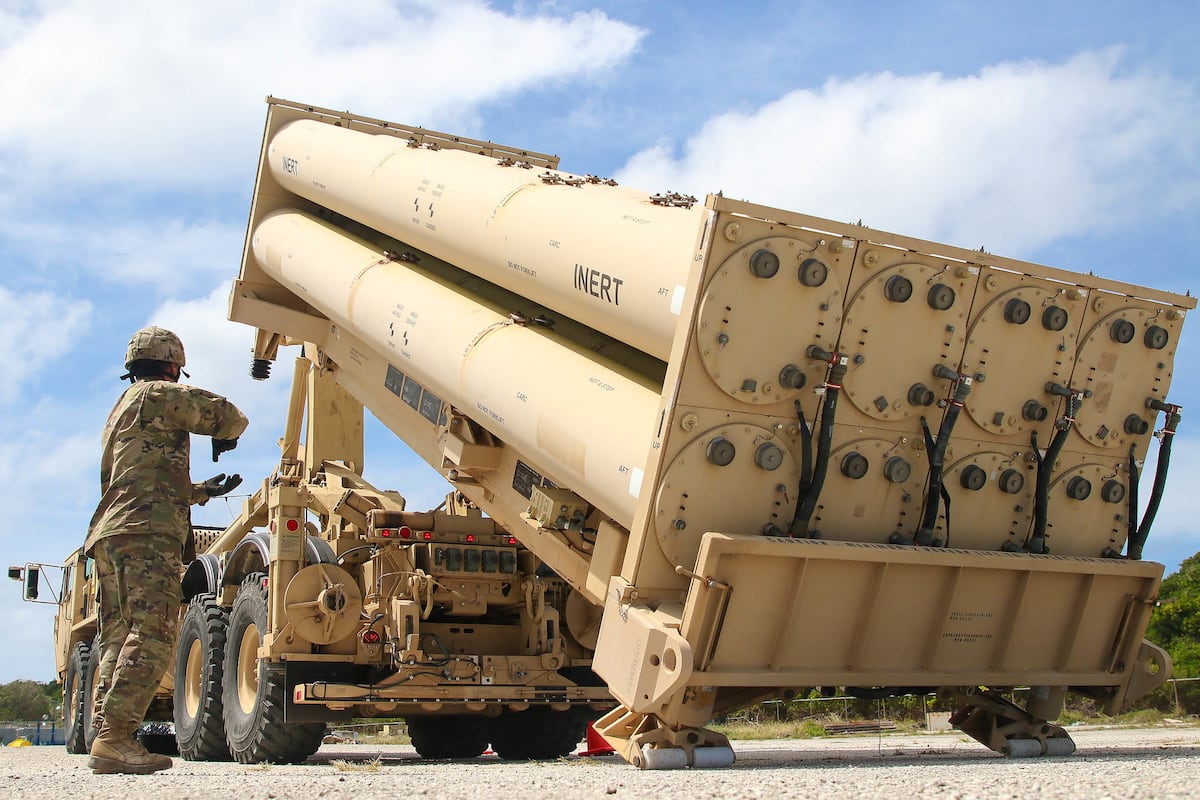
The Defense Department has yet to develop a clear strategy to guide the construction, deployment and long-term management of the missile defense architecture it is building on Guam , the Government Accountability Office has determined.
The office is concerned that without such a plan, the effort risks cost and schedule overruns and an infrastructure unready to accommodate the additional personnel required to operate the defensive shield.
In a report released May 22, the government watchdog notes that while the Pentagon has set up organizations to manage the Guam Defense System and has now designated lead services for sustaining and operating it, there is no strategy to transfer responsibilities from the Missile Defense Agency to the various service leads.
“As a result, DOD risks schedule delays for the deployment of GDS [Guam Defense System] elements and incomplete plans for organization, training, personnel levels, and facilities, among other things,” the report states.
The Army, which is leading the effort to establish the system on the strategic island in the Pacific, also faces hurdles to advocate for construction and installation support from the other military services well-established on Guam.
And the Defense Department has yet to come up with firm numbers for personnel required to operate and sustain the system and estimates of when they might arrive, according to the report.
“Without clear personnel requirements or deployment schedules, the services will not be able to adequately plan for necessary support systems, which will reduce service personnel readiness and may exacerbate existing infrastructure,” the watchdog states.
At the end of 2023, the Pentagon pointed to 2024 as critical for establishing the planned missile defense architecture on Guam . As the threat from China continues to grow, DOD pledged to deliver a foundational capability to help stave off a potential attack directed at Guam by the end of 2024. That schedule is already slipping.
Guam is an island of nearly 170,000 people that sits in a vulnerable position — it is closer to Beijing than it is to Hawaii. The island plays host to a significant amount of U.S. combat power and would therefore be an attractive target for China in the event of a war in the Taiwan Strait.
The Missile Defense Agency and the Army sought a combined $1.5 billion in the fiscal 2024 budget to begin preparing the island by moving assets into place and integrating capabilities.
The Pentagon designated the Army in 2023 as the lead service overseeing the acquisition and execution plan for defending Guam.
Competing for resources
The current plan, according to the report, is to distribute elements of the architecture across 16 sites on the island and establish a Guam command center. The Pentagon is planning for its first deployment to begin in fiscal 2027, with final GDS elements coming in fiscal 2032.
The architecture is a tall order, considering the Army’s previous experience establishing a Terminal High Altitude Area Defense, or THAAD, system on Guam in 2013.
The THAAD battery, known as Task Force Talon, was first deployed as expeditionary but became permanently stationed in June 2016 to defend against possible ballistic missile threats from North Korea.
Over a decade later, the report points out that the Army does not have sufficient installation support for the THAAD battery and has had trouble getting approvals from the Navy for construction to support the system. The Army’s status on the island leaves it without its own construction planners, forcing it to rely on other services.
For example, GAO reports that the THAAD unit did not receive approval to start environmental work until January 2024 to construct a temporary maintenance facility for equipment after a typhoon hit the island in May 2023.
GAO previously reported Guam’s limited housing is a concern as the Marines build up a presence there, and the Air Force and Navy both have construction priorities for their own bases that could compete for resources needed for the missile defense system’s establishment. (LCpl. Garrett Gillespie/U.S. Marine Corps)
The unit also has limited storage space for parts and has to leave some parts outside unprotected, resulting in continuous corrosion issues.
And austere conditions have resulted in “morale challenges,” GAO found. The THAAD unit had just installed a latrine with running water and an ice machine in 2023. There is still no drinkable water at the location.
The Army is going to require a much larger number of facilities to support the new missile defense architecture and wants to “make Guam a duty station of choice,” the report states.
The Army will continue to have to rely on installation support from the other services because it won’t be establishing its own base on the island, GAO said.
“The Army will likely face challenges in advocating for construction priorities and coordinating installation support across multiple locations.”
At the same time, the Pentagon is looking to move personnel to the island for the missile defense system. The Marine Corps is also relocating 1,700 Marines from Okinawa, Japan, to Guam. The plan is to move them all by 2029, the report notes.
The agency previously reported Guam’s limited housing is a concern as the Marines build up a presence there, and the Air Force and Navy both have construction priorities for their own bases that could compete for resources needed for the missile defense system’s establishment.
The Pentagon also struggled to determine which service would be responsible for operating and sustaining which elements of the Guam architecture. GAO indicated there were some internal disputes over the division of responsibilities for various aspects of the system.
Despite the deputy secretary of defense directing the Army in June 2023 to determine how many personnel would be required for GDS within 120 days, the service did not complete the task and still had not produced a number by August 2024, according to the report.
The Army told GAO it was waiting for the Pentagon to decide the lead organizations for operations and sustainment before determining personnel levels, facility needs and training plans.
The Pentagon has also not established a timeline for transferring responsibility, according to the report.
“DOD has proposed multiple military services to manage GDS, which makes developing a plan for operating and sustaining GDS particularly challenging,” the report states. “Specifically, DOD officials told us that this missile defense program will be the department’s largest and most complicated, presenting communication and planning challenges among the various DOD stakeholders.”
Without some prediction of personnel that will flow onto the island over what timeline, the Pentagon faces the prospect of “deploying personnel to Guam without adequate facilities or installation support services in place, including security of sites, fire protection and emergency management at bases operated by three different military services in Guam,” according to the report.
Some estimates state there will be a need for roughly 913 Army personnel in Guam by fiscal 2028, while another calculates a possible growth of 4,464 personnel by the same year.
Overall, the island’s population is estimated to grow from 17,917 personnel and dependents to 26,605 by fiscal 2034.
In its report, GAO recommends that the Pentagon develop a strategy with a timeline for transferring responsibilities to lead organizations and services for the various elements of the architecture.
The Army should also develop a “long-term strategy” for its organization as a supported command on the island.
And the defense secretary should determine personnel requirements needed for the architecture “to allow sufficient time for completing construction of necessary support facilities on Guam,” the report states.
Jen Judson is an award-winning journalist covering land warfare for Defense News. She has also worked for Politico and Inside Defense. She holds a Master of Science degree in journalism from Boston University and a Bachelor of Arts degree from Kenyon College.
美国政府问责局认定,国防部尚未制定明确的战略来指导其在关岛建设的导弹防御体系的建设、部署和长期管理。
该办公室担心,如果没有这样的计划,这项工作可能会出现成本和进度超支,而且基础设施也无法容纳操作防御盾所需的额外人员。
政府监督机构在 5 月 22 日发布的一份报告中指出,虽然五角大楼已经成立了管理关岛防御系统的机构,并且现在也指定了负责维护和运营该系统的牵头部门,但还没有将导弹防御局的职责转移到各个牵头部门的战略。
报告指出:“因此,国防部可能会面临关岛防御系统 (GDS) 各组成部分部署进度延误以及组织、训练、人员配备和设施等方面的计划不完善的风险。”
陆军正在牵头在太平洋这个战略岛屿上建立该系统,但同时也面临着争取其他在关岛驻扎良好的军种提供建设和安装支持的障碍。
报告称,国防部尚未给出操作和维护该系统所需的人员确切数字,以及他们何时可能抵达的估计。
监督机构表示:“如果没有明确的人员需求或部署计划,各军种将无法充分规划必要的支持系统,这将降低军人战备水平,并可能加剧现有基础设施的不足。”
2023年底,五角大楼指出2024年对于在关岛建立计划中的导弹防御体系至关重要。随着来自中国的威胁持续增长,美国国防部承诺在2024年底前交付基础能力,以帮助抵御可能针对关岛的攻击。然而,这一时间表已经开始延后。
关岛是一个拥有近17万人口的岛屿,地理位置十分脆弱——它距离北京比距离夏威夷更近。该岛驻扎着大量美国作战力量,因此一旦台海战争爆发,关岛将成为中国极具吸引力的目标。
导弹防御局和陆军在 2024 财年预算中寻求 15 亿美元的联合拨款,用于开始为该岛做准备,将资产转移到指定地点并整合各项能力。
五角大楼于 2023 年指定陆军为负责监督关岛防御采购和执行计划的牵头军种。
争夺资源
根据报告,目前的计划是将该架构的各个组成部分分布在关岛的16个地点,并建立一个关岛指挥中心。五角大楼计划于2027财年开始首次部署,最终的全球防御系统(GDS)组件将于2032财年完成部署。
考虑到陆军此前在 2013 年于关岛建立末段高空区域防御系统(THAAD)的经验,这种架构是一项艰巨的任务。
THAAD 系统,又称“利爪特遣队”,最初作为远征部队部署,但于 2016 年 6 月永久驻扎,以防御朝鲜可能发射的弹道导弹威胁。
十多年后,该报告指出,陆军缺乏足够的设施支持来维护“萨德”系统,并且在获得海军批准建设配套设施方面也遇到了困难。由于陆军在该岛的特殊地位,它没有自己的建设规划人员,只能依赖其他军种。
例如,美国政府问责局 (GAO) 报告称,在 2023 年 5 月台风袭击该岛后,THAAD 部队直到 2024 年 1 月才获得批准开始环境工作,以建造一个临时设备维护设施。
美国政府问责局此前曾报告称,关岛住房有限是一个令人担忧的问题,因为海军陆战队正在那里建立军事存在,而空军和海军也都有各自基地建设的优先事项,这可能会与导弹防御系统建设所需的资源产生冲突。(下士加勒特·吉莱斯皮/美国海军陆战队)
该装置的零件存储空间有限,不得不将一些零件放在室外没有保护的地方,导致持续的腐蚀问题。
美国政府问责局(GAO)发现,艰苦的条件导致了“士气低落”。萨德系统部队在2023年才刚刚安装了带自来水的厕所和制冰机,但至今该地仍然没有饮用水。
报告指出,陆军需要更多设施来支持新的导弹防御体系,并希望“将关岛打造成为首选的驻地”。
美国政府问责局表示,由于陆军不会在该岛上建立自己的基地,因此将继续依赖其他军种的设施支持。
“陆军在争取建设优先事项和协调多个地点的设施支持方面可能会面临挑战。”
与此同时,五角大楼正计划将导弹防御系统的人员调往关岛。报告指出,海军陆战队也正将1700名海军陆战队员从日本冲绳迁往关岛,计划在2029年前完成所有人员的调动。
该机构此前报道称,随着海军陆战队在关岛建立军事存在,关岛住房有限令人担忧,而空军和海军都有各自的基地建设优先事项,这可能会与导弹防御系统建设所需的资源发生冲突。
五角大楼也难以确定由哪个部门负责关岛系统架构的哪些部分运行和维护。美国政府问责局(GAO)指出,在系统各个方面的职责划分上存在一些内部争议。
报告称,尽管国防部副部长在 2023 年 6 月指示陆军在 120 天内确定 GDS 需要多少人员,但陆军并未完成这项任务,截至 2024 年 8 月仍未给出具体数字。
陆军告诉美国政府问责局,他们正在等待五角大楼决定作战和后勤保障的牵头机构,然后再确定人员数量、设施需求和训练计划。
报告还指出,五角大楼尚未制定责任移交时间表。
报告指出:“国防部提议由多个军种负责管理全球防御系统(GDS),这使得制定GDS的运行和维护计划变得尤为困难。具体而言,国防部官员告诉我们,这项导弹防御计划将是国防部规模最大、最复杂的计划,这将给国防部各利益相关方之间的沟通和规划带来挑战。”
报告称,由于无法预测人员将在何时陆续抵达关岛,五角大楼面临着“在关岛部署人员时,缺乏足够的设施或驻地保障服务,包括三个不同军种在关岛运营的基地的安全、消防和应急管理”的局面。
一些估计表明,到 2028 财年,关岛大约需要 913 名陆军人员,而另一些估计则认为,到同年,关岛的陆军人员数量可能会增加 4,464 人。
总体而言,预计到 2034 财年,该岛人口将从 17,917 名人员和家属增长到 26,605 人。
美国政府问责局在其报告中建议五角大楼制定一项战略,并设定时间表,将架构各个要素的责任移交给领导组织和服务部门。
陆军还应制定一项“长期战略”,以规范其作为岛上支援指挥机构的组织架构。
报告指出,国防部长应确定该架构所需的人员需求,“以便有足够的时间在关岛完成必要的支持设施的建设”。
珍·贾德森是一位屡获殊荣的记者,为《防务新闻》报道陆地战争。她也曾为《政治报》和《内幕防务》工作。她拥有波士顿大学新闻学硕士学位和凯尼恩学院文学学士学位。