NParks seizes 101 illegally kept wildlife in largest raid since 2021国家公园局在2021年以来最大规模的突击行动中查获101只非法饲养的野生动物。
Snakes, sugar gliders and turtles were among wildlife found. Read more at straitstimes.com.
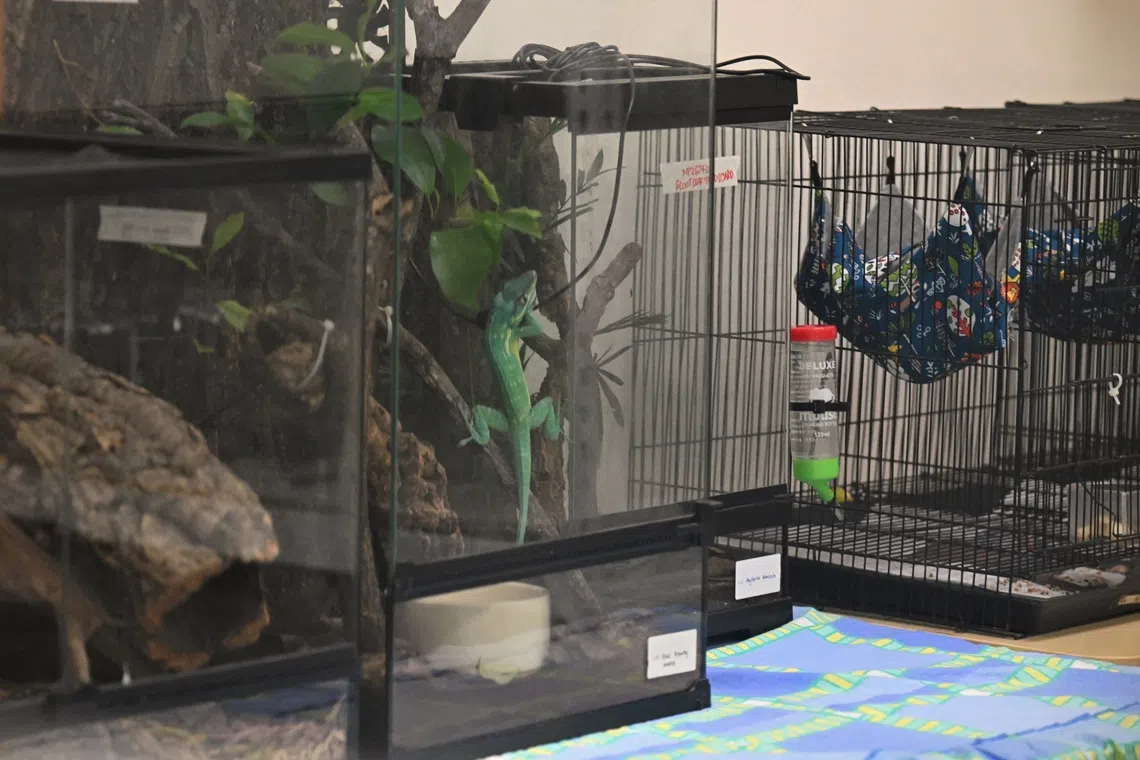
This marked its largest such operation since 2021, when about 120 illegally kept wild animals were seized.
ST PHOTO: KUA CHEE SIONG
Published Sep 16, 2026, 05:30 PM
Updated Sep 16, 2026, 05:31 PM
NParks seized 101 illegally kept wild animals, including snakes and sugar gliders, in the largest raid since 2021, with six people under investigation for illegal possession and sales.
Many animals were found in poor health or dead due to cramped and unsanitary conditions.
Illegal wildlife trade risks public health and native biodiversity, with severe penalties under Singapore law; NParks warns it fuels demand and threatens endangered species' survival.
SINGAPORE - A gecko with a ruptured and infected eye and a number of lethargic axolotls were among 101 wild animals seized by the National Parks Board (NParks) on Sept 14, during a raid conducted by its officers at six homes here.
This marked its largest such operation since 2021, when about 120 illegally kept wild animals were seized. Other animals found in the recent raids, which took place simultaneously across the island, include snakes, turtles and sugar gliders, all of which are not allowed to be kept as pets in Singapore.
Speaking to the media during a briefing on the case on Sept 16, NParks’ director for enforcement and investigation Joshua Teoh said six people are being investigated for illegally possessing and selling these animals on social media platforms.
Thirteen of the animals were found dead at the residential premises, possibly due to poor living conditions.
Many others were found in bad health. This included an emaciated leopard gecko that had to be euthanised after it was found to have a ruptured and infected eye, as well as the inability to shed its skin fully due to its weak state.
NParks said these symptoms showed that the animals were kept for a long time in captivity in poor conditions such as cramped containers, poor ventilation, as well as the lack of access to food and water.
Teoh said the seizures were not indicative of a trend of more wildlife being smuggled into Singapore or kept as pets.
Such raids are conducted based on whether NParks has collected enough information, he added.
Teoh said: “It is very premature for us to even comment whether (this operation involved) illegal breeding, or whether (the animals came from) illegal imports or if they had been given by friends.”
Erin Tan, o ne of three veterinarians at the Centre for Wildlife Rehabilitation, recounted how some of the axolotls and leopard geckos were extremely skinny and lethargic.
Given the scale of animals seized, it took staff roughly 12 hours to check and quarantine all the animals, which included tarantulas and scorpions, she noted.
The animals will have to be quarantined for between one and six months to make sure they do not carry any diseases that can spread to other animals.
After that, they will be evaluated for their suitability for repatriation or donation to animal establishments such as zoos, with euthanasia as the last resort, NParks said.
Under the Wildlife Act, those found to illegally sell or export any wildlife can be fined up to $50,000, jailed up to two years, or both.
Those who illegally import wildlife face a fine of up to $10,000, jailed up to a year, or both.
Several of the animals found were also protected under the Convention on International Trade in Endangered Species of Wild Fauna and Flora (CITES).
These included the armadillo girdled lizard, the ball python, the blue beauty anole and the rosy boa.
Under the Endangered Species (Import and Export) Act, the maximum penalties for those found guilty of illegally importing such specimens are a fine of $50,000 per specimen and an imprisonment term of four years.
Said Teoh: “I would like to take this opportunity to remind everyone that illegal wildlife trade has a serious and far-reaching consequence. So, when you purchase any illegally imported product, smuggled product, for example, it will fuel demand, and this will eventually drive endangered species to the brink of extinction.”
Senior director for Wildlife Trade Anna Wong noted that many smuggled animals also carry infections like salmonella and rabies, which can be transmitted to humans, posing a risk to public health.
When present in large numbers, illegally imported species can potentially threaten the survival of native biodiversity by competing for resources and upsetting the ecological balance, said NParks.
The statutory board uses a host of means to enforce against the illegal sale and possession of wildlife.
This includes working with partner agencies to conduct security checks at Singapore’s borders, monitoring physical and online marketplaces as well as sharing intelligence with international partners.
National Parks Board
这是自 2021 年以来规模最大的一次此类行动,当时查获了约 120 只非法饲养的野生动物。
《海峡时报》摄影:郭志雄
发布于2026年9月16日下午5:30
更新于2026年9月16日下午5:31
国家公园局在 2021 年以来规模最大的一次突击行动中,查获了 101 只非法饲养的野生动物,其中包括蛇和蜜袋鼯,另有 6 人因非法持有和贩卖野生动物而接受调查。
由于居住环境拥挤、卫生条件差,许多动物健康状况不佳或已经死亡。
非法野生动物贸易危害公众健康和本土生物多样性,新加坡法律对此有严厉的处罚;国家公园局警告称,非法野生动物贸易会助长需求,威胁濒危物种的生存。
新加坡——9月14日,国家公园局(NParks)官员突击搜查了本地六处民宅,查获了101只野生动物,其中包括一只眼睛破裂感染的壁虎和一些昏昏欲睡的墨西哥钝口螈。
这是自2021年以来规模最大的一次此类行动,当时查获了约120只非法饲养的野生动物。在最近于全岛同时开展的突击行动中,还发现了其他动物,包括蛇、龟和蜜袋鼯,这些动物在新加坡均不允许作为宠物饲养。
9月16日,国家公园局执法与调查主任张耀华在就此案举行的新闻发布会上对媒体表示,有六人因在社交媒体平台上非法持有和出售这些动物而正在接受调查。
在居民区内发现了13只死亡的动物,可能是由于生活条件恶劣造成的。
许多其他动物也被发现健康状况不佳。其中包括一只极度消瘦的豹纹守宫,它被发现眼睛破裂感染,并且由于身体虚弱而无法完全蜕皮,最终不得不被实施安乐死。
国家公园局表示,这些症状表明这些动物长期被囚禁在恶劣的环境中,例如狭小的容器、通风不良以及缺乏食物和水。
张先生表示,这些查获行动并不表明有更多野生动物被走私到新加坡或被当作宠物饲养。
他补充说,此类突击搜查是根据国家公园局是否收集到足够的信息来进行的。
Teoh表示:“现在评论(此次行动)是否涉及非法繁殖,或者(这些动物)是否来自非法进口,或者是否是朋友赠送的,都为时尚早。”
野生动物康复中心的三位兽医之一艾琳·谭(Erin Tan)讲述了一些墨西哥钝口螈和豹纹守宫非常瘦弱、精神萎靡的情况。
她指出,鉴于查获动物的数量庞大,工作人员大约花了 12 个小时来检查和隔离所有动物,其中包括狼蛛和蝎子。
这些动物必须被隔离一到六个月,以确保它们不携带任何可能传染给其他动物的疾病。
之后,将对它们进行评估,看是否适合遣返或捐赠给动物园等动物机构,安乐死是最后的选择,国家公园局表示。
根据《野生动物法》,任何被发现非法出售或出口野生动物的人,最高可被处以 5 万美元罚款、两年监禁,或两者并罚。
非法进口野生动物者将面临最高 10,000 美元的罚款、最高一年的监禁,或两者并罚。
发现的几种动物也受到《濒危野生动植物种国际贸易公约》(CITES)的保护。
其中包括犰狳蜥蜴、球蟒、蓝美人蜥蜴和玫瑰蟒。
根据《濒危物种(进出口)法》,非法进口此类标本者的最高处罚是每件标本罚款 50,000 美元,并处以四年监禁。
张先生说:“我想借此机会提醒大家,非法野生动物贸易会造成严重而深远的后果。因此,当你购买任何非法进口产品,例如走私产品时,就会刺激需求,最终将濒危物种推向灭绝的边缘。”
野生动物贸易高级主管Anna Wong指出,许多走私动物还携带沙门氏菌和狂犬病等传染病,这些传染病可以传染给人类,对公众健康构成威胁。
国家公园局表示,非法进口物种如果数量众多,可能会通过争夺资源和破坏生态平衡,威胁本土生物多样性的生存。
该法定机构采用多种手段来打击非法买卖和持有野生动物的行为。
这包括与合作伙伴机构合作,在新加坡边境进行安全检查,监控实体和在线市场,以及与国际合作伙伴共享情报。
国家公园管理局