Ukraine war undermining Russia’s Arctic plans, US intelligence says美国情报部门称,乌克兰战争正在破坏俄罗斯的北极计划。
Nonetheless, Russia still views the Arctic as vital to its security for a variety of political, economic and military reasons.
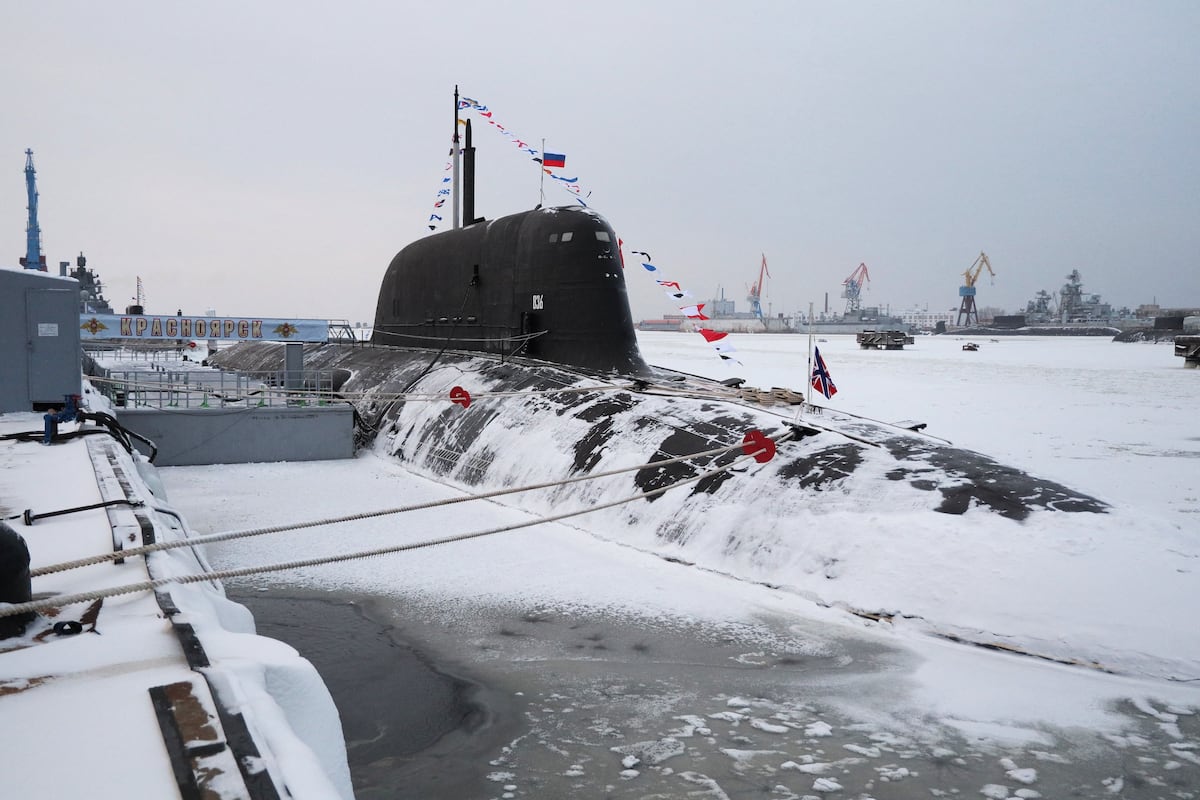
Russia’s efforts to assert its power in the Arctic are being undermined by the Ukraine war, according to U.S. intelligence.
“While Russia has enhanced its ability to operate in the Arctic by focusing on combat readiness and using dual-use technologies and facilities for defense, its war with Ukraine has limited its ability to fully achieve its Arctic ambitions,” according to the 2026 Annual Threat Assessment by the Office of the Director of National Intelligence released Wednesday.
Nonetheless, Russia still views the Arctic as vital to its security for a variety of political, economic and military reasons. “Russia has the largest Arctic coastline and views itself as part of the neighborhood,” the report noted. “Russia is our primary challenge in the Arctic as it aims to further its interests in the region as part of broader global balance-of-power competition.”
With control of about half the Arctic coastline, Russia wants to develop the region’s oil and gas reserves, as well as benefit from more maritime trade as receding polar ice creates new shipping routes.
The Arctic is also sensitive for another reason: It is seen as a safe zone for Russia’s nuclear ballistic missile submarines.
Much of Russia’s Arctic military forces are located in the Kola Peninsula, which hosts about two-thirds of the country’s second-strike nuclear capabilities, said the report, noting that the area is home to Russia’s Northern Fleet, including seven nuclear-armed ballistic missile strategic submarines.
Russia has reinforced the Northern Fleet with long-range missiles, as well as aerial and underwater drones. The Kola Peninsula also has at least three airbases that host fighters, surveillance and transport aircraft.
Another indicator of Moscow’s Arctic ambitions is Russia’s fleet of icebreakers, which is already the world’s largest, with eight nuclear-powered and 34 diesel-electric vessels. Russian President Vladimir Putin announced in January that the first nuclear-powered Leader-class icebreaker will be launched by 2030. These 70,000-ton vessels can cut through 4.3 meters of ice, according to Russian news agency TASS.
Meanwhile, the increasing U.S. focus on the Arctic has caught the Kremlin’s attention in an area that Russia views as its backyard.
“[Russia’s] activity is aimed at countering a perceived growing U.S. emphasis on expanding its influence and presence in the Arctic as a key national security strategic objective,” the report said.
A fallen superpower, Russia wants to reshape the global balance of power. The country, viewing itself as a geostrategic competitor of the U.S., “seeks a multipolar world order in which Russia reaches and maintains a privileged position, equal to that of the U.S. and other great powers, including China,” according to the report.
As for China , it also has Arctic ambitions.
“China describes itself as a polar power and is seeking to expand its presence in the Arctic including plans to incorporate the ‘Polar Silk Road’ into its Belt and Road Initiative as shipping lanes become more accessible and economically viable,” said the report.
“Beijing seeks to expand its Arctic presence using scientific research, investments, and commercial ventures along the Northern Sea Route,” according to the report, which notes that Russia and China have conducted joint patrols in the region.
Michael Peck is a correspondent for Defense News and a columnist for the Center for European Policy Analysis. He holds an M.A. in political science from Rutgers University. Find him at theuncommondefense.com. His email is mikedefense1@gmail.com.
美国情报部门表示,乌克兰战争正在削弱俄罗斯在北极地区确立自身影响力的努力。
根据美国国家情报总监办公室周三发布的《2026 年年度威胁评估报告》,“虽然俄罗斯通过专注于战备和利用军民两用技术及设施进行防御,增强了其在北极地区的行动能力,但其与乌克兰的战争限制了其全面实现北极野心的能力。”
尽管如此,出于政治、经济和军事等诸多原因,俄罗斯仍然将北极视为其安全的关键所在。报告指出:“俄罗斯拥有北极最长的海岸线,并将自身视为周边地区的一部分。俄罗斯是我们北极地区面临的主要挑战,因为它旨在进一步扩大其在该地区的利益,以参与更广泛的全球权力平衡竞争。”
俄罗斯控制着大约一半的北极海岸线,希望开发该地区的石油和天然气储备,并随着极地冰盖消融,开辟新的航运路线,从而从更多的海上贸易中获益。
北极地区之所以敏感,还有另一个原因:它被视为俄罗斯核动力弹道导弹潜艇的安全区。
报告称,俄罗斯北极地区的大部分军事力量位于科拉半岛,该地区拥有俄罗斯约三分之二的二次核打击能力。报告还指出,该地区是俄罗斯北方舰队的所在地,其中包括七艘携带核弹道导弹的战略潜艇。
俄罗斯已向北方舰队增配了远程导弹以及空中和水下无人机。科拉半岛也至少拥有三个空军基地,驻扎着战斗机、侦察机和运输机。
莫斯科在北极地区的雄心壮志还体现在俄罗斯庞大的破冰船队上,该船队目前已是世界规模最大的,拥有8艘核动力破冰船和34艘柴电破冰船。俄罗斯总统普京于今年1月宣布,首艘“领袖”级核动力破冰船将于2030年前下水。据俄罗斯塔斯社报道,这些排水量达7万吨的破冰船能够破开4.3米厚的冰层。
与此同时,美国对北极日益增长的关注引起了克里姆林宫的注意,因为俄罗斯将北极视为自己的后院。
报告称,“俄罗斯的行动旨在对抗美国日益重视扩大其在北极的影响力和存在,将其视为一项关键的国家安全战略目标。”
作为一个曾经的超级大国,俄罗斯希望重塑全球力量平衡。报告指出,俄罗斯将自身视为美国的地缘战略竞争对手,“寻求建立一个多极世界秩序,在这个秩序中,俄罗斯能够获得并保持与美国和其他大国(包括中国)同等的特权地位”。
至于中国,它也怀有北极野心。
报告称:“中国自诩为极地强国,并寻求扩大其在北极地区的影响力,包括计划将‘极地丝绸之路’纳入其‘一带一路’倡议,因为航道将变得更加便捷且经济可行。”
报告称,“北京寻求通过科学研究、投资和沿北方海航道的商业活动来扩大其在北极的影响力”,报告还指出,俄罗斯和中国已在该地区进行联合巡逻。
迈克尔·佩克是《防务新闻》的通讯员,也是欧洲政策分析中心的专栏作家。他拥有罗格斯大学政治学硕士学位。您可以在theuncommondefense.com找到他。他的邮箱是mikedefense1@gmail.com。