NATO to adopt first-ever counter-drone doctrine for member nations北约将为成员国制定首个反无人机理论
Development of the doctrine preceded Russia’s full-scale invasion of Ukraine, which began in February 2022.
MILAN — NATO is expected to adopt its first-ever counter-drone doctrine, which will in part advise member states on layered approaches to defend against unmanned aerial systems and the common training of operators.
The ambition of establishing a counter-UAS doctrine within the military alliance by the end of 2023 has been in the works for some time, according to Claudio Palestini, a senior adviser at NATO’s emerging security challenges division.
“The formal tasking to create this document was issued at the beginning of this year,” he told Defense News in an interview. “It will build on a handbook produced in 2019 that was more focused on outlining guiding principles on how to effectively counter drones.”
While some of the content between the doctrine and the handbook, which was never made public, will be similar, Palestini said the main difference will be within the level of formality and focus.
“The 2019 handbook was around 600 pages in length and served as a preliminary document,” he said. “The scope of this c-UAS doctrine will be NATO-wide and be much more coherent, condensed into 70-80 pages.”
While the precise tenets it will contain remain vague, one of its overarching goals will be to advise member states on the most effective ways to organize and carry out counter-drone operations in different operational environments.
The high-priority report will outline in part recommendations regarding how to operationalize c-UAS, the importance of multidomain and layered solutions, and setting common training standards for operators.
According to Palestini, the document will be sent in the next few weeks for ratification by a NATO committee in charge of developing military operational standards with the assistance of the NATO Standardization Office. Once all the requested changes are received, it is expected to be approved.
The hope is for the committee to ratify it before the end of the year, if all goes accordingly, he said.
The development of the doctrine preceded Russia’s full-scale invasion of Ukraine , which began in February 2022, Palestini said.
“What the Ukraine-Russia war did lead to is changing the evolution of the threat posed by drones as well as the operational environment where c-UAS can play a role in modern conflicts,” he said.
While NATO recognized some time ago the benefits of operating unmanned aircraft, it was only fairly recently that the majority of member states began to seriously build up their arsenal and defensive capabilities against these systems.
Previous initiatives included the establishment of a NATO c-UAS working group in 2019 and a number of studies carried out by the NATO Industrial Advisory Group on the shortcomings of some counter-drone systems as well as trials to test different technologies.
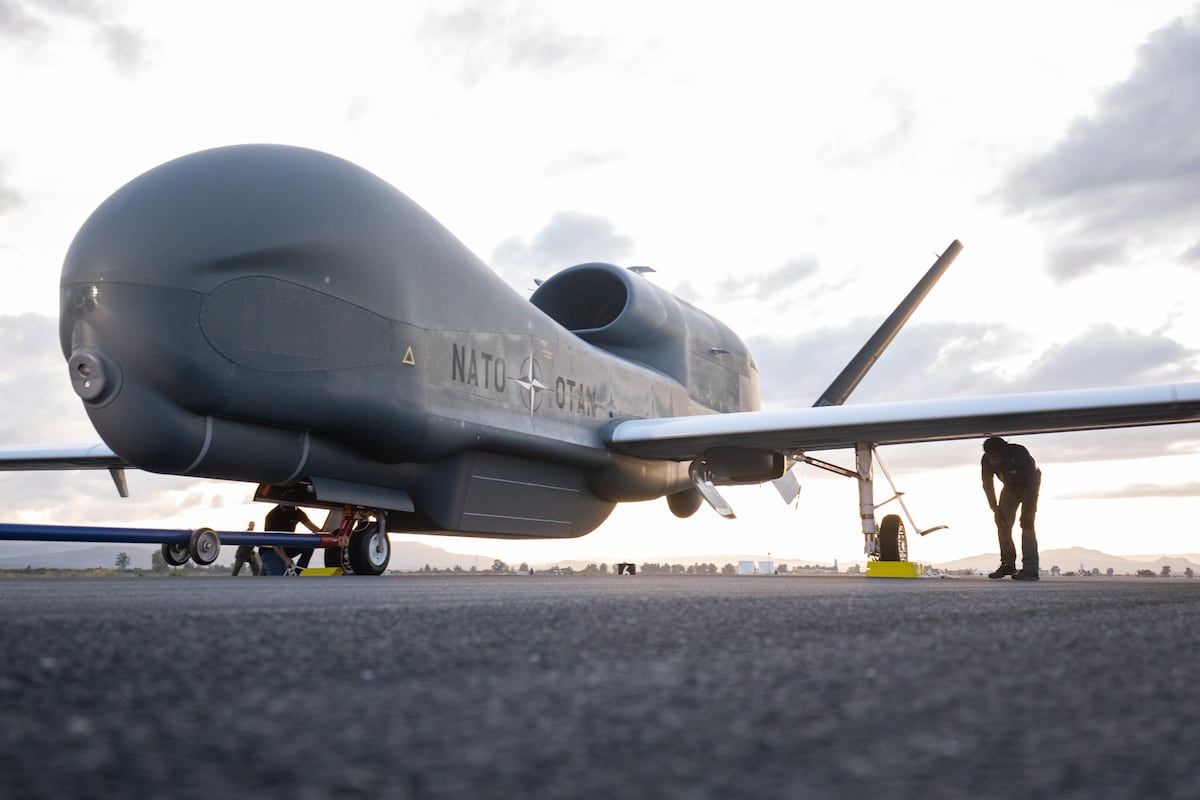
It remains unclear whether the document will allow for the eventual development of a NATO-owned and -operated c-UAS asset, similar to the Northrop Grumman RQ-4D drone, whose capabilities are available to all member states. The overall cost of the acquisition and maintenance of the remote piloted aircraft were covered by NATO.
Elisabeth Gosselin-Malo was a Europe correspondent for Defense News. She covers a wide range of topics related to military procurement and international security, and specializes in reporting on the aviation sector. She is based in Milan, Italy.
米兰——北约预计将采纳其首个反无人机理论,该理论将部分指导成员国采取分层方法防御无人机系统,并对操作人员进行共同培训。
北约新兴安全挑战部门高级顾问克劳迪奥·帕莱斯蒂尼表示,北约军事联盟计划在 2023 年底前建立反无人机系统理论,这一目标已经酝酿了一段时间。
“今年年初,我们正式下达了编写这份文件的任务,”他在接受《防务新闻》采访时表示。“这份文件将以2019年编写的一本手册为基础,该手册更侧重于概述如何有效应对无人机的指导原则。”
帕莱斯蒂尼表示,虽然教义和从未公开的手册中的一些内容相似,但主要区别在于正式程度和重点。
他说:“2019年的手册大约有600页,只是一份初步文件。这份反无人机系统(c-UAS)理论的范围将覆盖整个北约,内容将更加连贯,并精简到70-80页。”
虽然其具体原则仍不明确,但其总体目标之一是就如何在不同的作战环境中组织和开展反无人机行动向成员国提供最有效的建议。
这份高优先级报告将部分概述有关如何实施 c-UAS、多领域和分层解决方案的重要性以及为操作员制定通用培训标准的建议。
帕莱斯蒂尼表示,该文件将在未来几周内提交给北约负责制定军事作战标准的委员会批准,该委员会将在北约标准化办公室的协助下开展工作。一旦收到所有要求的修改,预计该文件将获得批准。
他表示,如果一切顺利,希望委员会能在年底前批准这项决议。
帕莱斯蒂尼表示,这一理论的发展早于俄罗斯对乌克兰的全面入侵,而这场入侵始于2022年2月。
他说:“乌克兰-俄罗斯战争确实改变了无人机构成的威胁的演变,以及反无人机系统在现代冲突中发挥作用的作战环境。”
虽然北约很早就认识到操作无人机的好处,但直到最近,大多数成员国才开始认真地加强其武器库和防御能力,以应对这些系统。
此前的举措包括 2019 年成立北约反无人机系统工作组,以及北约工业咨询小组对一些反无人机系统的不足之处进行的一些研究,以及对不同技术进行试验。
目前尚不清楚该文件是否最终会允许北约拥有并运营类似诺斯罗普·格鲁曼公司RQ-4D无人机的反无人机系统(c-UAS),该无人机的性能可供所有成员国使用。北约承担了该遥控驾驶飞机的采购和维护总费用。
伊丽莎白·戈斯林-马洛曾任《防务新闻》欧洲通讯员。她的报道涵盖军事采购和国际安全等广泛领域,尤其擅长航空领域的报道。她常驻意大利米兰。