The European Union votes to deepen defense industry ties with Ukraine欧盟投票决定深化与乌克兰的国防工业联系
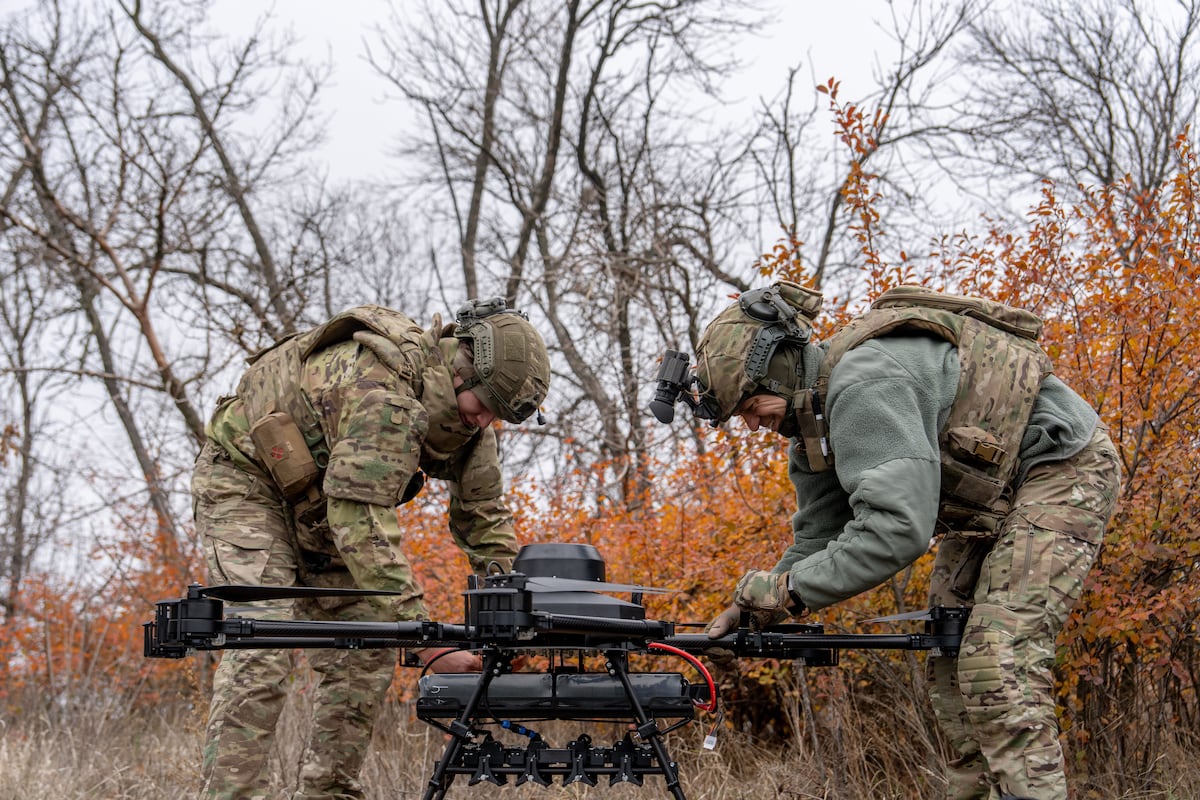
EU defense spending is expected to total around 392 billion euros (more than $450 billion) this year, almost double the amount of four years ago.
BRUSSELS (AP) — European Union lawmakers voted on Tuesday to deepen integration of the bloc’s defense industry with Ukraine as a U.S. peace plan remains in flux and Russia’s unconventional warfare operations rattle the 27-nation bloc.
European Parliament legislators voted 457-148, with 33 abstentions, to approve a 1.5-billion euro ($1.7 billion) program, with 300 million euros ($345 million) slated for the Ukraine Support Instrument.
Raphaël Glucksmann, an EU lawmaker from France’s S&D party, said that the defense program “will enable us to build a more resilient and sovereign Europe” through partnering with Ukraine to build a cutting-edge military industrial complex.
“This is key to making sure we can protect our democracies effectively and autonomously,” he said.
Ukraine’s defense industry “needs us,” EU Defense Commissioner Andrius Kubilius told EU lawmakers before the vote in Strasbourg, France, without mentioning the ongoing peace negotiations to end the war. “But we need Ukraine’s defense innovations even more.”
He said that allowing Ukrainian access to the EU’s Defence Investment Program “makes it possible to procure defense equipment in, with and for Ukraine.”
EU defense spending is expected to total around 392 billion euros (more than $450 billion) this year, almost double the amount of four years ago, before Russia launched its full-scale invasion of Ukraine on Feb. 24, 2022.
The Trump administration has signaled that it’s prioritizing U.S. security on its own domestic borders and in Asia. It has told Europeans that they must fend for themselves and Ukraine in the future.
Born out of the carnage of the two world wars, the EU started as a trading bloc designed to avert conflict. But Russia’s war in Ukraine has spurred a shift in the Brussels-based bloc, heightening its defense and security posture.
The European Commission, the EU’s executive branch, believes that about 3.4 trillion euros ($4 trillion) will probably be spent on defense over the next decade. To help, it intends to propose boosting the EU’s long-term budget for defense and space to 131 billion euros ($153 billion).
“We shall be powerful geopolitically if we shall be strong in our defense, and we shall be strong in defense if we shall be strong in our defense industry, and if we shall be strong in our defense industry, we shall be industrially independent, autonomous and much less fragmented,” Kubilius said.
EU member countries are being urged to buy much of their military equipment within the bloc, working mostly with European suppliers — in some cases with EU help to cut prices and speed up orders. Under the road map, EU nations should only purchase equipment from abroad when costs, performance or supply delays make it preferable.
Kubilius said that EU-based defense companies can apply for tax breaks and other financial incentives to fund so-called European defense projects of common interest that “no member state can ever build alone, but that will protect the whole of Europe,” like Eastern Flank Watch, Drone Defense Initiative or Space Shield.
Permitting Ukrainian companies to participate in these projects “allows us to inject Ukrainian military innovation in the European defense industry,” he said.
Last week, the European Commission rolled out a new defense package to allow tanks and troops to deploy more rapidly across Europe as well as the EU Defense Industry Transformation Roadmap, which aims to simplify and unify regulations on the EU’s defense industry, and corral investment into domestic production of weapons, vehicles, satellites, shells and bullets.
Before the vote, Kubilius said that the defense program is meant to make sure big nations cannot seize territories of weaker nations.
“My country Lithuania was really a victim of such previous policies prevailing in the European continent,” he said, referring to the Soviet occupation of Lithuania for 50 years. “That is why I am for a strong Europe and a strong European defense industry.”
布鲁塞尔(美联社)——由于美国的和平计划仍处于不确定状态,而俄罗斯的非常规战争行动令这个由 27 个成员国组成的集团感到不安,欧盟议员周二投票决定深化欧盟国防工业与乌克兰的一体化。
欧洲议会议员以 457 票赞成、148 票反对、33 票弃权,批准了一项 15 亿欧元(17 亿美元)的计划,其中 3 亿欧元(3.45 亿美元)将用于乌克兰支持工具。
来自法国社会民主党的欧盟议员拉斐尔·格鲁克斯曼表示,该国防计划“将使我们能够通过与乌克兰合作建设尖端军事工业综合体,来建设一个更具韧性和主权的欧洲”。
他说:“这是确保我们能够有效、自主地保护民主制度的关键。”
欧盟国防专员安德留斯·库比柳斯在法国斯特拉斯堡投票前对欧盟议员表示,乌克兰国防工业“需要我们”,但他只字未提正在进行的旨在结束战争的和平谈判。“但我们更需要乌克兰的国防创新。”
他表示,允许乌克兰参与欧盟国防投资计划“使得在乌克兰境内、与乌克兰合作以及为乌克兰采购国防装备成为可能”。
今年欧盟国防开支预计总计约 3920 亿欧元(超过 4500 亿美元),几乎是四年前的两倍,也就是在俄罗斯于 2022 年 2 月 24 日全面入侵乌克兰之前。
特朗普政府已表明,其优先考虑的是美国国内边境和亚洲的安全。它告诉欧洲人,未来他们必须自力更生,保卫乌克兰。
欧盟诞生于两次世界大战的浩劫之中,最初是一个旨在避免冲突的贸易集团。但俄罗斯在乌克兰的战争促使这个总部位于布鲁塞尔的集团发生了转变,提升了其国防和安全态势。
欧盟执行机构——欧盟委员会认为,未来十年欧盟国防开支可能约为3.4万亿欧元(4万亿美元)。为应对这一问题,欧盟委员会计划提议将欧盟国防和航天领域的长期预算增加至1310亿欧元(1530亿美元)。
库比留斯说:“如果我们国防强大,我们就能在地缘政治上强大;如果我们国防工业强大,我们就能在国防上强大;如果我们国防工业强大,我们就能在工业上独立自主,减少分裂。”
欧盟成员国被敦促尽可能在欧盟内部采购大部分军事装备,主要与欧洲供应商合作——在某些情况下,欧盟会提供帮助以降低价格并加快订单交付。根据该路线图,欧盟国家只有在成本、性能或供应延迟等因素使得从国外采购装备更为可取时,才应从国外采购。
库比柳斯表示,总部位于欧盟的国防公司可以申请税收减免和其他财政激励措施,为所谓的“欧洲共同利益防务项目”提供资金,这些项目“任何一个成员国都无法单独建设,但却能保护整个欧洲”,例如“东翼观察”、“无人机防御倡议”或“太空盾牌”。
他表示,允许乌克兰公司参与这些项目“使我们能够将乌克兰的军事创新注入欧洲国防工业”。
上周,欧盟委员会推出了一项新的国防方案,旨在让坦克和部队能够更快地在欧洲各地部署,同时还推出了欧盟国防工业转型路线图,该路线图旨在简化和统一欧盟国防工业的法规,并引导投资于武器、车辆、卫星、炮弹和子弹的国内生产。
投票前,库比柳斯表示,国防计划旨在确保大国不能侵占弱国的领土。
“我的祖国立陶宛确实是欧洲大陆过去那些政策的受害者,”他说道,指的是苏联对立陶宛长达50年的占领。“这就是为什么我支持一个强大的欧洲和一个强大的欧洲国防工业。”