Northrop eyes munitions supply work, Lockheed eyes funding: CEOs诺斯罗普公司着眼于军火供应业务,洛克希德公司着眼于融资:CEO们
“We are taking this opportunity to work with partners we have not worked with before, show them the products we have, and define what our path is to gaining share on those weapons,” CEO Kathy Warden told investors at the Morgan Stanley conference.
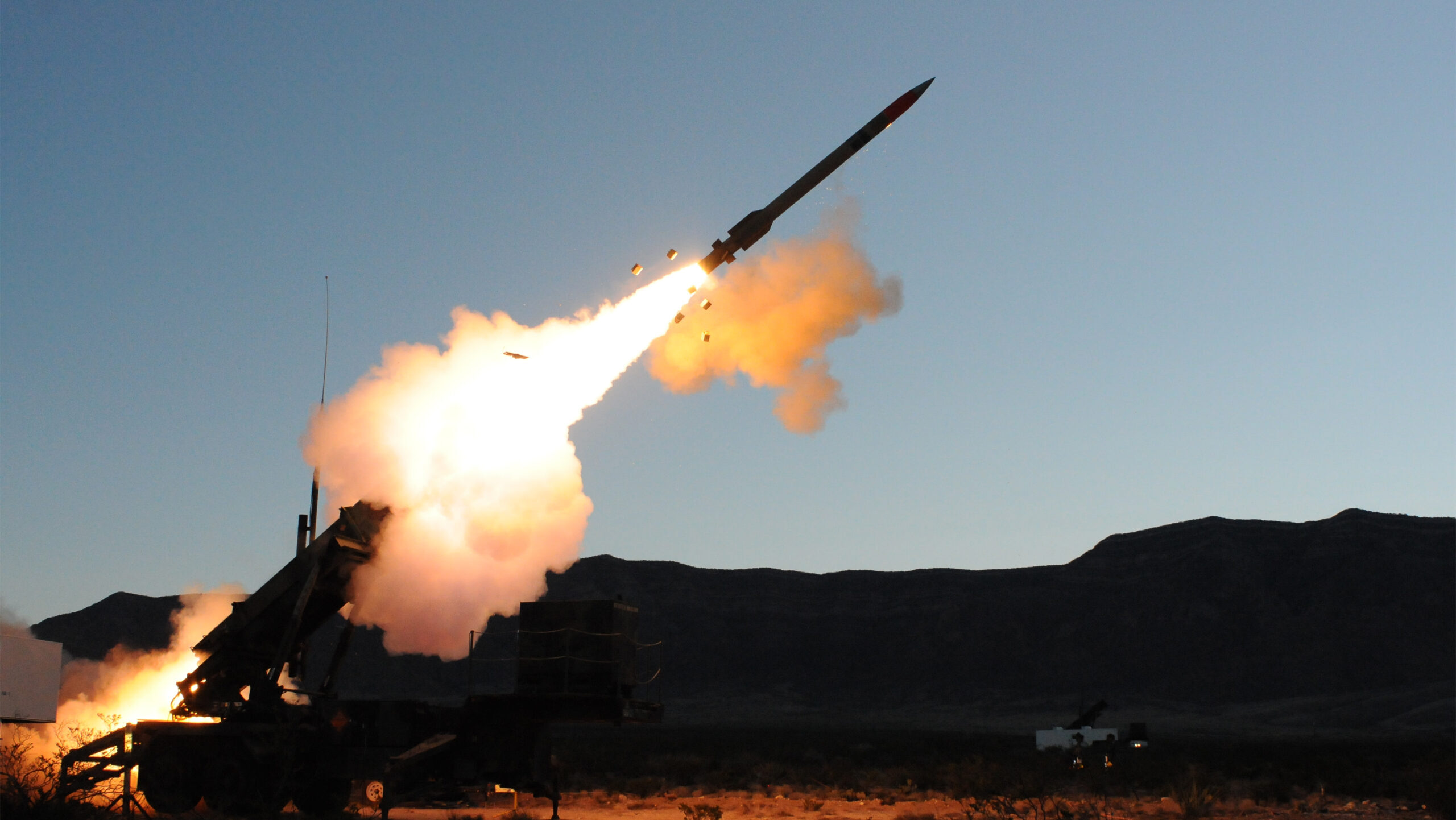
A PAC-3 MSE launches July 1, 2024. (Photo courtesy of US Army).
WASHINGTON — Northrop Grumman wants to expand i ts market share as a supplier to munitions providers, with ongoing discussions about increasing its work on eight different weapons programs, its chief executive said today.
“We are taking this opportunity to work with partners we have not worked with before, show them the products we have, and define what our path is to gaining share on those weapons,” Northrop CEO Kathy Warden told investors at the Morgan Stanley conference today. “There are 10 agreements — about eight weapons — that we are in active discussions with various primes on.”
Warden added that those discussions span from Northrop’s role as a provider of solid rocket motors to other components such as seekers, cases, nozzles and fuses.
The Pentagon has made boosting munitions production a key acquisition priority, while also pushing the defense industry to make larger investments in the facilities and equipment needed to scale up weapons manufacturing.
To induce those investments, the department has entered into roughly a dozen framework agreements with companies. Northrop announced its first such agreement with the Pentagon in August, which will see the company emerge as a second source of solid rocket motors for the Patriot’s PAC-3 missile as well as scaling up component production for PAC-3 and THAAD.
Northrop’s version of the PAC-3 solid rocket motor has been fully qualified and the company is “far along” in contract negotiations with Lockheed Martin , Warden said.
“Now we are in the process of ramping production and meeting increasingly higher targets for delivery,” she said. “We are feeling very good about how that’s progressing and simultaneously working our way through contract negotiations.”
Island surge: the Army’s Next Generation Command and Control in action
Lightning Surge exercises are turning soldier feedback on NGC2 into operational software changes in days, not years.
Beyond munitions, Warden pointed to the B-21 bomber program as one that could see expansion, noting that the Air Force is currently analyzing whether to expand the program of record for 100 B-21s.
That analysis is set to conclude this year, and involves evaluating whether the B-21 could be used for other missions aside from its original use as a strategic bomber, she said. The Air Force “look at this [B-21] as a multifunctional aircraft,” she said. Originally, “it was an aircraft that was designed to meet part of the nuclear triad mission, but it can do so much more.”
Much of the Pentagon’s munitions funding — along with other key priorities like Golden Dome, the department’s Drone Dominance program, and much of the planned F-35 procurement for fiscal 2027 — are tied up in its $350 billion reconciliation request, which has yet to be passed by Congress.
That’s not a major hindrance for Northrop, Warden said, which is seeing funding for most of its programs come through the base budget, with reconciliation funds seen by the company as “upside.”
“We do believe that there is room for some of the reconciliation and supplemental priorities to be funded in addition to the base budget,” she said, adding that, “We think that’s unlikely to happen in the near term.”
Warden also said she thinks its likely that Congress will fail to come to a budget agreement before the continuing resolution expires on Dec. 11, echoing comments made by Pentagon Comptroller Jules Hurst in a recent interview with Breaking Defense.
“[It’s] likely that the CR will be further extended,” she said. “It does cost the government more when we have these extended periods of continuing resolution. But at the end of the day, as we look at our programs, we have the funding we need to continue work and believe that’s the case even into early next year.”
Lockheed Investing, Despite Budget Uncertainty
Lockheed CEO Jim Taiclet, appearing earlier in the day, also touched on the question of the budget. And like Warden, he downplayed concerns, noting the timing of a budget agreement “[does] not affect our overall business that much” due to the lengthy backlog of orders at the world’s largest defense firm.
However, he added that congressional action is needed to fund the munitions production agreements, which for Lockheed includes deals for PAC-3, THAAD interceptors, the Precision Strike Missile and — as of today — the AIM-260 Joint Advanced Tactical Missile (JATM) .
“We do need Congress to come in for the full funding of the whole seven years, if you will,” he said. “They’ve already been doing two or three years so far on some of the programs we have under these long-term agreements. I do think Congress will see the value of this and the protections that we put in for the government and the upside they put in for industry, and I think they will get there.”
Lockheed announced this morning that GM Defense, the military subsidiary of American car manufacturer General Motors, delivered its first round of mission critical components for the PAC-3 missile. The deliveries occurred on Aug. 28, “less than one month after a formal contract between the two companies was signed” on Aug. 6, Lockheed said in a statement. The companies announced a partnership agreement in June at the Reindustrialize conference.
Taiclet also revealed that Lockheed is bankrolling initial production of GRIZZLY, the new low-cost containerized launch system it unveiled earlier this year .
“I said, ‘Build 1,000 of each of them right now, and we’ll figure out how to either sell them to the U.S. government or somebody else, or lease them out,’” Taiclet said. “This is the right technology solution. This is scalable, and we’re going to have a couple of hundred of these GRIZZLY’s ready to deploy by the end of the year.”
The company is also testing the GRIZZLY launcher aboard Saildrone autonomous ships, he said.
PAC-3 MSE 于 2024 年 7 月 1 日发射。(照片由美国陆军提供)
华盛顿——诺斯罗普·格鲁曼公司首席执行官今天表示,该公司希望扩大其作为军火供应商的市场份额,目前正在就增加其在八个不同武器项目上的工作进行讨论。
诺斯罗普·格鲁曼公司首席执行官凯西·沃登今天在摩根士丹利投资者会议上表示:“我们正借此机会与之前未曾合作过的伙伴携手,向他们展示我们的产品,并明确我们如何才能在这些武器领域获得市场份额。我们正在与多家主承包商积极洽谈10项协议——涉及约8种武器。”
沃登补充说,这些讨论涵盖了诺斯罗普公司作为固体火箭发动机供应商的角色,以及其他部件,如导引头、外壳、喷嘴和引信。
五角大楼已将提高弹药产量列为一项重要的采购优先事项,同时还敦促国防工业加大对扩大武器制造规模所需的设施和设备的投资。
为了吸引这些投资,国防部已与大约十几家公司签署了框架协议。诺斯罗普公司于8月宣布与五角大楼达成首份此类协议,根据该协议,该公司将成为“爱国者”导弹PAC-3固体火箭发动机的第二供应商,并扩大PAC-3和“萨德”反导系统的零部件生产规模。
沃登表示,诺斯罗普公司的 PAC-3 固体火箭发动机版本已经完全通过认证,该公司与洛克希德·马丁公司的合同谈判也“进展顺利”。
“目前我们正在逐步提高产量,并努力实现越来越高的交付目标,”她说道。“我们对目前的进展情况感到非常满意,同时也在积极推进合同谈判。”
岛屿突击:陆军下一代指挥控制系统的实战演练
“闪电突击”演习将士兵对 NGC2 的反馈转化为几天内(而不是几年内)的操作软件变更。
除了弹药之外,沃登还指出 B-21 轰炸机项目可能会得到扩展,并指出空军目前正在分析是否要扩大 100 架 B-21 的计划。
她表示,这项分析预计将于今年完成,主要内容是评估B-21除了最初作为战略轰炸机的用途外,是否还能用于其他任务。空军“将B-21视为一种多功能飞机”。她还说,最初“它的设计目的是为了满足核三位一体任务的一部分,但它的功能远不止于此。”
五角大楼的大部分军火经费——以及其他一些重点项目,如“金穹顶”计划、国防部的“无人机优势”计划,以及2027财年计划采购的大部分F-35战斗机——都包含在其3500亿美元的预算协调请求中,而该请求尚未获得国会通过。
沃登表示,这对诺斯罗普公司来说并非重大障碍,该公司的大部分项目资金都来自基本预算,而协调资金则被该公司视为“额外收入”。
“我们认为,除了基本预算之外,还有一些和解和补充优先事项需要资金,”她说道,“但我们认为这在短期内不太可能发生。”
沃登还表示,她认为国会很可能在12月11日临时拨款决议到期前无法达成预算协议,这与五角大楼主计长朱尔斯·赫斯特最近在接受《防务新闻》采访时发表的评论相呼应。
她表示:“[这项]临时拨款法案很可能会进一步延长。延长临时拨款法案的期限确实会增加政府的支出。但最终,当我们审视各项计划时,我们拥有继续开展工作所需的资金,并且相信即使到明年年初情况也是如此。”
尽管预算存在不确定性,洛克希德·马丁公司仍在进行投资。
洛克希德·马丁公司首席执行官吉姆·泰克莱特当天早些时候也谈到了预算问题。和沃登一样,他也淡化了各方担忧,指出由于这家全球最大的国防公司积压了大量订单,预算协议的达成时间“对我们的整体业务影响不大”。
但他补充说,需要国会采取行动来为弹药生产协议提供资金,洛克希德公司的协议包括 PAC-3、THAAD 拦截器、精确打击导弹以及——截至目前——AIM-260 联合先进战术导弹 (JATM)。
他说:“我们需要国会批准为期七年的全部拨款。根据这些长期协议,他们目前已经为一些项目投入了两三年的时间。我相信国会会看到这些项目的价值,以及我们为政府提供的保护措施和为行业带来的益处,我相信他们会同意的。”
洛克希德·马丁公司今天上午宣布,通用汽车旗下军工子公司通用防务公司已交付首批PAC-3导弹的关键任务部件。洛克希德·马丁在一份声明中表示,交付发生在8月28日,“距离两家公司于8月6日正式签署合同不到一个月”。两家公司于今年6月在“再工业化”大会上宣布了合作协议。
Taiclet 还透露,洛克希德公司正在资助 GRIZZLY 的初始生产,GRIZZLY 是该公司今年早些时候推出的新型低成本集装箱式发射系统。
“我说,‘现在就生产1000台,然后我们再想办法把它们卖给美国政府或其他机构,或者出租出去,’”泰克莱特说。“这是正确的技术解决方案。它具有可扩展性,到年底我们将有几百台GRIZZLY系统可以部署。”
他还表示,该公司正在Saildrone无人船上测试GRIZZLY发射器。