How the Marine Corps is testing a ‘narco-boat’ for resupply efforts美国海军陆战队正在测试一种用于补给的“毒品运输船”。
The semisubmersible unmanned vessel can deliver two Naval Strike Missiles for the Corps’ anti-ship missile system.
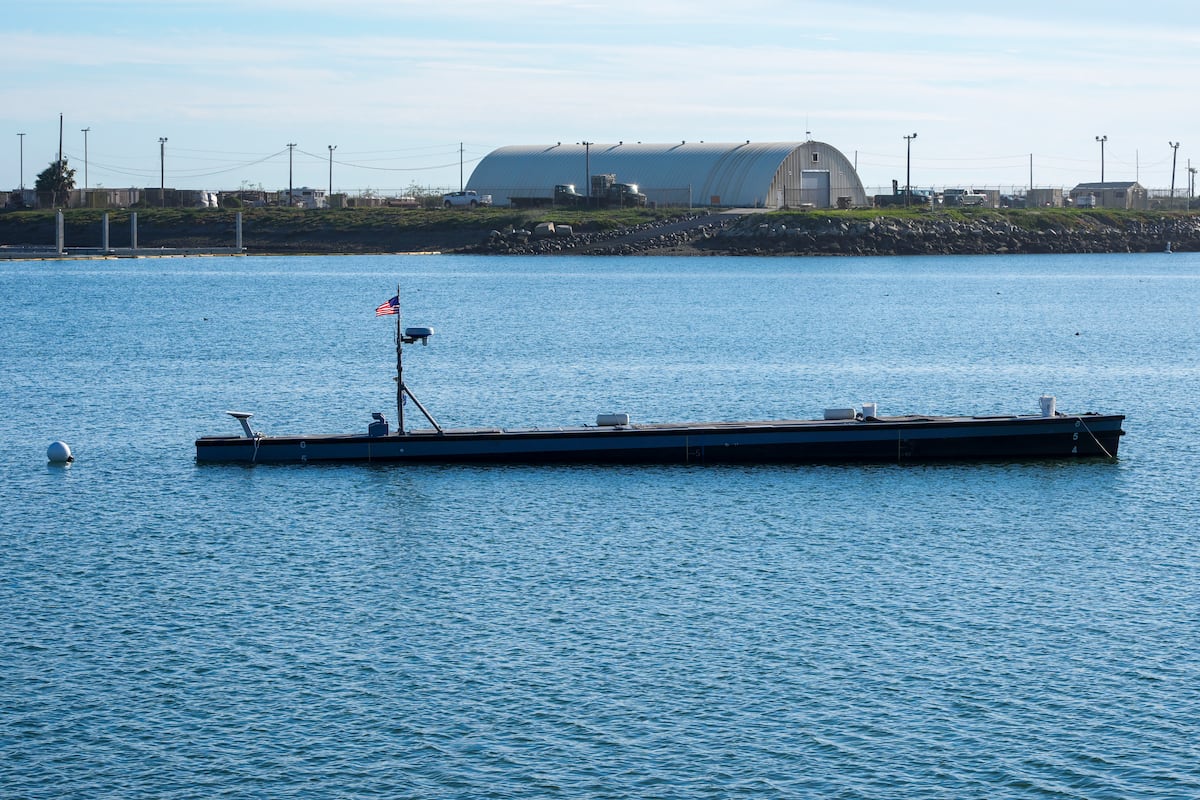
The U.S. Marine Corps is testing out an autonomous system inspired by a “narco-boat” to bolster resupply efforts, as the service focuses on island hopping and projecting power from land to sea, according to the head of the Marine Corps Warfighting Laboratory.
In addition to delivering two Naval Strike Missiles for the Corps’ anti-ship missile system, the autonomous low-profile vessel the Marine Corps is experimenting with also aims to better get critical supplies like food to forward deployed and distributed Marines, Marine Corps Brig. Gen. Simon Doran said at the Defense News Conference on Wednesday.
“Truth be told, this is just a narco-boat,” Doran said. “We stole the idea from friends down south. And so this is 55 feet long, completely autonomous. It’s able to go hundreds or thousands of miles. It’s able to carry weapon systems that we have that are new. … It can carry pretty much anything you want to put in it.”
Inspired by narco-boats, which are used by traffickers to smuggle illicit substances across bodies of water, the unmanned vessel remains close to the water-surface level to cut down on the likelihood of detection as it assists with logistics capabilities.
The service tested the logistics supply drone at the Army’s Project Convergence Capstone in February at Camp Pendleton, California, where the Marine Corps trained a cook in 21 days to operate the system off the islands of Japan.
The Army spearheads the Project Convergence to test out advanced technology and capabilities in modern warfare as part of a joint, multinational exercise.
The autonomous low-profile vessel is particularly important because it allows forces to resupply food, fuel and ammunition without jeopardizing the safety of Marines, Doran said.
“If you have that unit located inside a weapons engagement zone, contested logistics and the ability to maneuver in the littorals becomes key,” Doran said. “And for that, what we’re looking at is trying to acquire systems that we deem risk worthy, meaning that we don’t necessarily want to just waste them, but we’d rather put something in there that’s autonomous, that doesn’t have humans on it that can do some of these higher risk missions without having personnel put in that riskier situation.”
This system is something the Marine Corps wanted “yesterday,” but testing is ongoing, Doran said. The Marine Corps Warfighting Laboratory received two prototypes in 2023.
The vessel is expected to join the III Marine Expeditionary Force based in Okinawa, Japan, for further evaluation this fall, he said.
The service hopes to purchase the vessels in the next several years, Marine Corps leaders said at the 2023 Defense News Conference.
据美国海军陆战队作战实验室负责人称,美国海军陆战队正在测试一种受“毒品船”启发的自主系统,以加强补给工作,因为该部队正专注于岛屿跳跃作战和从陆地向海上投射力量。
海军陆战队准将西蒙·多兰周三在国防新闻发布会上表示,海军陆战队正在试验的这艘自主低矮舰艇,除了为海军陆战队的反舰导弹系统运送两枚海军打击导弹外,还旨在更好地向前沿部署和分散的海军陆战队员运送食品等关键物资。
“说实话,这不过是一艘运毒船,”多兰说道。“我们是从南方的朋友那里偷来的点子。这艘船长55英尺,完全自主航行。它能航行数百甚至数千英里。它能携带我们新研制的武器系统……几乎你想往里面放什么它都能放。”
受贩毒分子用来跨水域走私非法物质的毒品船的启发,这种无人船保持靠近水面航行,以降低被发现的可能性,同时还能协助后勤保障工作。
今年 2 月,美国海军陆战队在加利福尼亚州彭德尔顿营地的陆军“融合顶点计划”中测试了后勤补给无人机。当时,海军陆战队在 21 天内训练了一名厨师在日本岛屿附近操作该系统。
陆军牵头开展“融合计划”,旨在通过联合多国演习,测试现代战争中的先进技术和能力。
多兰表示,这种自主式低矮船只尤为重要,因为它可以让部队在不危及海军陆战队员安全的情况下补充食物、燃料和弹药。
多兰说:“如果部队部署在武器交战区内,那么在近岸海域的机动能力和后勤保障就至关重要。因此,我们正在考虑采购一些我们认为值得冒险的系统,这意味着我们并不想浪费这些系统,而是更倾向于部署一些自主系统,这些系统不需要人员操作,就能执行一些高风险任务,而无需将人员置于危险境地。”
多兰表示,海军陆战队“早就”想要这套系统了,但测试仍在进行中。海军陆战队作战实验室于2023年接收了两套原型机。
他表示,该舰预计将于今年秋季加入驻扎在日本冲绳的第三海军陆战队远征部队,接受进一步评估。
海军陆战队领导人在 2023 年国防新闻发布会上表示,该军种希望在未来几年内采购这些舰艇。