How Submarines Regularly ‘Fight To The Death’ Off The Bahamas潜艇如何在巴哈马附近海域频繁上演“殊死搏斗”?
Just like how Navy planes have vast instrumented ranges for aerial wargames, submarines have one too, and it is arguably even more impressive.
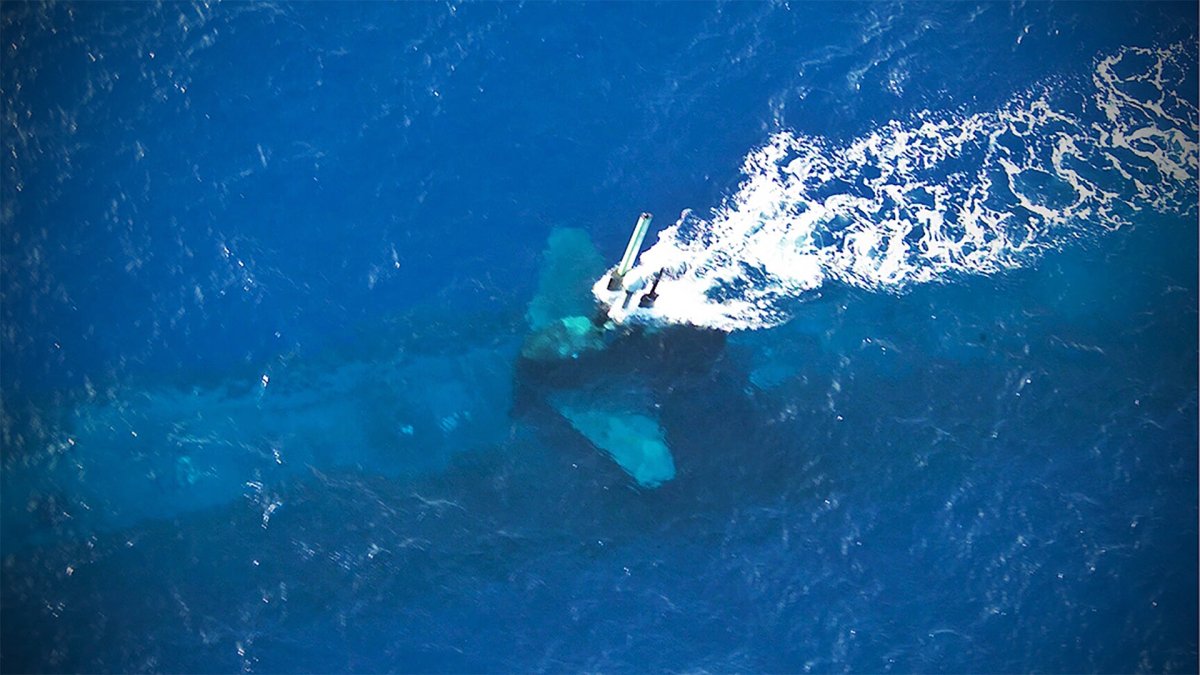
Updated Apr 20, 2020 8:06 PM EDT
The Bahamas are home to white beaches, sun-scorched tourists, towering cruise ships, and the United States Navy’s most advanced weapons and sensor testing range. Beneath the revealing party goers dancing on the lido deck, submarines sail quietly through the Northeast Providence Channel into a secure area called the Atlantic Undersea Test and Evaluation Center, or AUTEC .
Just like how Navy aircraft fight mock aerial wars over instrumented ranges where each player’s every move is tracked, those that deal in the shadowy art of submarine and anti-submarine warfare have a similar place in AUTEC. Here the Navy develops submarine-related tactics and weapons, validates the signatures of their own boats, and of course, fights mock undersea battles, pushing submariners to their limits.
In 1963, the United States entered a joint agreement with the United Kingdom to develop the Ranges of Andros Island in the Bahamas on the condition that the Royal Navy would have access, as well. Shore facilities were under construction for three years, operated and maintained by the RCA Corporation. The Electric Boat Division of General Dynamics built two deep-sea submersibles to install the hydrophone ranges. In 1966, the Andros Ranges were officially renamed the Atlantic Undersea Test and Evaluation Center, or AUTEC for short.
Delivered around 1968, AUTEC I and II submersibles were built by the Electric Boat Division of General Dynamics and were designated Turtle and Sea Cliff by the US Navy., Via cyberneticzoo.com
The Bahamas achieved full independence from the United Kingdom in 1973 and the U.S. State Department negotiated a new agreement to use the range. After 1988, the U.S. Government agreed to lease the land (and water space) annually from the Bahamian Government.
AUTEC’s main operating base on Andros Island. , Wikited/wikicommons
Located 100 miles southeast of Florida, AUTEC Site 1 is based on Andros Island. The topography just off the east coast of Andros plummets to about 1,000 fathoms—roughly 6,000 feet—in a north to south corridor called “The Tongue of the Ocean.” In this 500 square mile hockey stick-shaped area, the Navy tests some of its most advanced sensors, weapons, and tactics.
The test range is surrounded by shoals and islands limiting the amount of ambient noise. This makes the range very quiet and perfect for testing submarines and associated weaponry.
Two ranges are used for submerged testing: Shallow Water Mine Field near Berry Islands and Deep Water Testing Range ( formerly STAFAC ) southeast of Andros.
Large fields of sound-sensitive hydrophones monitor the submerged tests. High gain measurement systems (HGMS) are used to ensure sound silencing standards are met after a submarine’s maintenance period because changes to existing equipment and installation of new equipment can significantly change a submarine’s sound signature.
During a signature profile measurement, a submarine slowly drives between a pair of submerged arrays that measure mechanical and flow noise. This is a very slow process as the sub must be configured with different equipment line ups between recordings. The result is an exact sound measurement level of the submarine performing a variety of evolutions. You can read all about this critical technology and its uses in this past War Zone feature.
The deep-water testing range is broken into two zones, North Range and South Range. They can support multiple simultaneous tests and mini-war game events—when you get two or more submarines on the range, there’s going to be a mock battle. Both crews want to test their skill against the other and this tactical interaction is good for morale and qualifications.
Site 1 on Andros Island. , Google Earth
Close-up of Site 1. , Google Earth
These little skirmishes between nuclear fast attack submarines (SSNs) are not only encouraged, they are scheduled. The Undersea Warfighting Development Center is responsible for formulating, improving, and testing submarine tactics. Some of this is done at AUTEC. Two or more submarines would be fitted with Noise Augmentation Units (NAU) and meet down on the range for a ‘mini-war.’
The NAU allowed American submarines to sound like any other submarine, from a Soviet-era Victor III to a Chinese Han nuclear-powered attack submarine. Scenarios involving anti-submarine warfare (ASW) aircraft and NATO submarines would hunt the ’red force’ adversary sub playing the bad guy for days using new tactical approaches. These real-world tests were recorded in a 3D model in the AUTEC command building and analyzed for effectiveness. From these ‘mini-wars,’ NATO submarine tactical doctrine is molded and improved upon.
A helicopter passes over the nuclear-powered attack submarine USS Pittsburgh (SSN-720) shortly after the vessel surfaced off the coast of Andros, The Bahamas during an emergency surface drill., National Archives
The Fleet Operational Readiness Accuracy Check Site (FORACS) coordinates all tests on these versatile ranges. They are responsible for measuring the performance of sensors and navigation equipment installed on surface ships, submarines, and aircraft. With radar sites around the island and multiple fields of seafloor-moored hydrophones, the Range Safety Officer can watch every vessel and aircraft on the range in real-time. He is in constant voice communication with all aircraft, range craft, ships, and submarines via radio and underwater communication systems.
Submarines from eight NATO countries come to verify their performance in a real-world environment, too. It is common for a United States Navy sub to be paired with a Royal Navy sub for equipment tests and sound measurements. If there are no delays, there is usually time at the end of the test schedule for the two vessels to go head-to-head in an undersea mock battle. This is when both crews can demonstrate their tactical prowess against an equal foe.
Some of the support assets that make AUTEC a highly unique training destination and weapons and tactics development proving ground. , USN
During a mock battle, the surface range craft leave the area and the submarines are allowed to enter the same water space, but are limited to different depth zones to prevent a collision. Battlestations are maintained for hours as two submarines slowly maneuver around each other in their quietest posture.
When two of the world’s quietest submarines spar, it results in very close encounters. Sonar teams listen and scan for any noise that might give their opponent away. When detection is recognized, the sonar operator designates it “sierra one” (designation for an assigned sonar contact). The sonar supervisor calls out bearing, estimated course, and range based on only a few seconds of data. The approach officer, usually the commanding officer, initiates “firing point procedures sierra one, tube two,” referring to what torpedo tube to shoot).
The conn aboard the USS Seawolf (SSN-21). , USN
The weapons officer designates sierra one as the system contact and enters a target solution into the console. This data is sent to the exercise weapon in torpedo tube two. The weapon is powered on, torpedo gyros rapidly spin up, an internal system check is run, and the fire control solution data is set in memory. “Solution set!” is confirmed at fire control.
The flooded torpedo tube is equalized to current depth pressure and the outer door is opened. “Weapon ready!” is announced by the weapons officer. The diving officer declares “Ship ready!” The captain authorizes launch with a short command, “Shoot tube two.” Torpedo launch is confirmed with the rumble of thousands of pounds of air forcing several hundred gallons of seawater into and through the torpedo tube. “Weapon startup” is confirmed from sonar when a new trace appears at the top of the display. “Wire clearance maneuver complete, weapon running normally.” Is verified by the sonar team.
This entire frequently drilled performance is done in under 45 seconds.
Because the target submarine is expected to counter fire. The command wire is cut leaving the torpedo to execute its orders within preset parameters and torpedo evasion begins. Countermeasures are launched and the submarine races away from contact. The target submarine will not have time to evade a well-placed shot at this short range.
Exercise torpedoes will not actually hit a target as this can be extremely dangerous and would destroy the weapon. After a successful hit is confirmed by the weapon’s logic circuit, it will shut itself down and float to the surface. To become a warshot, a training torpedo must have multiple successful attacks at AUTEC.
Mk46 exercise torpedo being recovered. , USN
After each encounter, the torpedo retriever range craft drives in and picks up the floating exercise torpedo. This can take an hour or more and gives each crew a chance to debrief the attack and evasion in the control room. A more thorough reconstruction is done later with AUTEC’s range information showing exactly what happened during the event. This post maneuver evaluation is used to identify key moments of the engagement and results in better tactical performance in the future.
AUTEC’s secure location makes it ideal for weapons testing. The Mk 46, Mk 48 ADCAP , and Mk 50 torpedoes are tested here. Intermediate maintenance facilities for torpedoes and the Mk 30 target are located on Andros Island. Anti-Torpedo technology that is currently in development and supported by Site 1.
A Sikorsky S-61N helicopter, attached to Atlantic Undersea Test and Evaluation Center, recovers a Mk 54 recoverable exercise torpedo during a submarine command course in the Atlantic Ocean, Nov. 10, 2018. Abraham Lincoln Carrier Strike Group (CSG) cruiser-destroyer (CRUDES) units are completing a Surface Warfare Advanced Tactical Training exercise (SWATT). SWATT is led by the Naval Surface and Mine Warfighting Development Center and is designed to increase warfighting proficiency, lethality and interoperability of participating units. , USN
The range’s highly accurate positioning data can identify if a weapon is not performing as expected. The main site also has research, development, test and evaluation facilities called Range User Buildings that can support military contractor projects. This provides the contractor teams the ability to rapidly correct and modify devices during their onsite test time.
A more recent addition to the north end of the range is a shallow water minefield near Berry Island . With a growing demand for littoral operations, submarine crews are spending more time near minefields, deploying special forces, and operating in shallow water. The shallow water minefield was key in developing the Navy’s submarine mine detection equipment and crew proficiency. The AN/BQS-15 and AN/BSY-1 sonar systems performed at a 60%-90% mine detection rate. Improved training and equipment upgrades in the ARCI phase IV sonar system resulted in greater than 90% mine detection.
VADM John J. Grossenbacher lecture on AUTEC capabilities
Military contractors like SeaTrepid provide Remote Operated Vehicles that are used to practice Mine Countermeasures (MCM). These tethered vehicles swim out over 100 meters from the SSN and detect mines. ROVs and Unmanned Underwater Vehicles (UUV) significantly extend the sensor capabilities of today’s submarines, in general.
AUTEC is also home to an advanced Electronic Warfare Threat Simulator . This system provides a real-time, dynamic and complex electromagnetic environment for the range. 21st-century battlespace is more complex than ever before. Jamming and spoofing targets are part of the fight. This capability adds another layer of realism to performance testing.
A Tomahawk Land Attack Missile (TLAM) is launched from the USS Florida (SSBN-728), during Giant Shadow, a Naval Sea Systems Command (NAVSEA)/Naval Submarine Forces Experiment, conducted off the coast of the Bahamas., USN
All the test planning and coordination are done by the AUTEC offices in West Palm Beach, Florida. This is where teams prepare their test plan, assemble their personnel and take a short flight to the island. Access to the island is limited to a daily flight from West Palm Beach airport or a charter flight.
Site 1 is more than just a proving ground, it is an operational naval base. Andros island supports drug enforcement Operation Bahamas, Turks and Caicos ( OPBAT ) with the U.S. Coast Guard. AUTEC was the primary logistic location after Hurricane Dorian decimated the Bahamas in September 2019. Andros airport and Site 1’s 12 helicopter pads were a key part of life-saving operations.
USS Alexandria SSN-757 operating off of Andros Island. , USN
AUTEC is the U.S. Navy’s premier submarine warfare proving ground. Crews who train here experience the most realistic warfighting training possible in a peacetime environment. The lessons learned at AUTEC change how America’s submarine and anti-submarine forces fight, ensuring that they can win any battle now or in the foreseeable future.
Aaron Amick is a retired U.S. Navy submarine sonarman. He served in both Atlantic and Pacific Oceans on 688 Los Angles Class Fast Attack and Ohio class ballistic missile submarines. He has published two audiobooks on Cold War-era submarines, Akula SSN Project 971 Sub Brief and USS Nautilus SSN-571 Sub Brief . Now, Aaron manages a small Patreon page and contributes to The War Zone.
Contact the editor: Tyler@thedrive.com
Comments couldn’t be loaded. Please refresh the page.
更新于美国东部时间2020年4月20日晚上8:06
巴哈马群岛拥有洁白的沙滩、被阳光晒得黝黑的游客、高耸入云的游轮,以及美国海军最先进的武器和传感器测试场。在露天甲板上翩翩起舞的狂欢者下方,潜艇正静静地驶过东北普罗维登斯海峡,进入一个名为大西洋海底测试与评估中心(AUTEC)的安全区域。
就像海军飞机在配备仪器的靶场上进行模拟空战,每个玩家的每一个动作都会被追踪一样,那些从事潜艇和反潜作战的人员在AUTEC中也扮演着类似的角色。在这里,海军研发与潜艇相关的战术和武器,验证自身潜艇的特征信号,当然,还会进行模拟水下战斗,挑战潜艇兵的极限。
1963年,美国与英国达成一项联合协议,共同开发巴哈马群岛安德罗斯岛的靶场,条件是英国皇家海军也应享有使用权。岸上设施历时三年建成,由美国无线电公司(RCA)负责运营和维护。通用动力公司的电船分部建造了两艘深海潜水器,用于安装水听器靶场。1966年,安德罗斯靶场正式更名为大西洋海底测试与评估中心,简称AUTEC。
AUTEC I 和 II 型潜水器于 1968 年左右交付,由通用动力公司电船分部建造,并被美国海军分别命名为“海龟号”(Turtle)和“海崖号”(Sea Cliff)。(来源:cyberneticzoo.com)
巴哈马于1973年脱离英国完全独立,美国国务院随后与巴哈马政府谈判达成一项新的协议,以使用该靶场。1988年后,美国政府同意每年向巴哈马政府租赁该土地(及水域)。
AUTEC 的主要运营基地位于安德罗斯岛。 , 维基百科/wikicommons
AUTEC 1 号基地位于佛罗里达州东南 100 英里处,坐落在安德罗斯岛上。安德罗斯岛东海岸附近的地形陡然下降至约 1000 英寻(约 6000 英尺),形成一条被称为“海洋之舌”的南北走向通道。在这片 500 平方英里、形似曲棍球棒的区域内,美国海军测试着一些最先进的传感器、武器和战术。
试验场周围环绕着浅滩和岛屿,有效降低了环境噪音。这使得试验场非常安静,是测试潜艇及相关武器的理想场所。
用于水下测试的两个靶场:贝里群岛附近的浅水雷区和安德罗斯岛东南部的深水测试靶场(以前称为 STAFAC)。
大面积的声敏水听器用于监测水下测试。高增益测量系统(HGMS)用于确保潜艇维护期结束后仍符合消声标准,因为现有设备的改动和新设备的安装会显著改变潜艇的声学特征。
在进行声学特征测量时,潜艇会缓慢地驶过两组水下阵列,这些阵列用于测量机械噪声和流噪声。由于每次测量之间都需要对潜艇进行不同的设备配置,因此这是一个非常缓慢的过程。最终结果是精确测量潜艇在执行各种操作时的声级。您可以在之前的“战区”专题报道中了解这项关键技术及其应用。
深水试验场分为南北两个区域。它们可以同时进行多项试验和小型战争演习——当两艘或两艘以上的潜艇进入试验场时,就会进行模拟战斗。双方艇员都希望检验彼此的技能,这种战术互动有利于提升士气和检验资质。
安德罗斯岛上的1号地点。(谷歌地球)
地点 1 的特写,谷歌地球
这些核动力快速攻击潜艇(SSN)之间的小规模冲突不仅受到鼓励,而且还被列入了计划。水下作战发展中心负责制定、改进和测试潜艇战术。部分工作在水下作战测试中心(AUTEC)进行。两艘或多艘潜艇将配备噪声增强装置(NAU),并在靶场进行“小型战争”。
北约潜艇演习单元(NAU)使美国潜艇能够发出与其他潜艇相同的声音,从苏联时代的维克托III型潜艇到中国的汉级核动力攻击潜艇。演习场景包括反潜战(ASW)飞机和北约潜艇,它们将使用新的战术方法,对扮演“坏人”的“红方”假想敌潜艇进行数天的追击。这些实战测试被记录在AUTEC指挥大楼的3D模型中,并进行有效性分析。北约潜艇战术理论正是在这些“小型战争”中不断完善和改进的。
一架直升机从核动力攻击潜艇“匹兹堡”号(SSN-720)上方飞过,当时该潜艇正在巴哈马群岛安德罗斯岛附近海域进行紧急水面演习,刚刚浮出水面不久。(美国国家档案馆)
舰队作战准备精度检查站(FORACS)负责协调这些多功能靶场的所有测试。他们负责测量安装在水面舰艇、潜艇和飞机上的传感器和导航设备的性能。岛屿周围设有雷达站,并部署了多处海底系泊水听器,靶场安全官可以实时监控靶场上的每艘舰艇和飞机。他通过无线电和水下通信系统与所有飞机、靶场巡逻艇、舰艇和潜艇保持持续的语音通信。
来自八个北约国家的潜艇也会前来验证其在真实环境中的性能。美国海军的潜艇通常会与英国皇家海军的潜艇结对进行设备测试和声学测量。如果没有延误,测试计划的最后通常会安排两艘潜艇进行水下模拟战斗。届时,双方艇员都可以向势均力敌的对手展示各自的战术能力。
AUTEC之所以成为独一无二的训练基地和武器战术研发试验场,部分原因在于其拥有一些配套设施。(美国海军)
在模拟战斗中,水面舰艇离开该区域,潜艇获准进入同一水域,但被限制在不同的深度区域,以防止碰撞。两艘潜艇保持战斗姿态数小时,以最安静的姿态缓慢地绕行。
当两艘世界上最安静的潜艇进行对抗时,会发生非常近距离的遭遇。声呐小组会监听并扫描任何可能暴露对手位置的声响。一旦探测到目标,声呐操作员会将其标记为“塞拉一号”(指定声呐目标的编号)。声呐主管会根据短短几秒钟的数据报出方位、估计航向和距离。通常由艇长担任的接近官会启动“塞拉一号,二号发射管”的发射程序,指示使用哪个鱼雷发射管进行攻击。
“海狼”号核潜艇(SSN-21)上的指挥塔。
武器操作员指定“塞拉一号”为系统联系人,并将目标解算结果输入控制台。该数据被发送至二号鱼雷发射管内的训练武器。武器启动,鱼雷陀螺仪迅速旋转,进行内部系统检查,并将火控解算结果数据存储到内存中。“解算结果已设置!”火控中心确认。
鱼雷发射管注水后,水压与当前深度压力平衡,外舱门打开。“武器准备就绪!”武器官宣布。潜水官宣布“舰艇准备就绪!”舰长简短下令“发射二号发射管”。随着数千磅空气将数百加仑海水压入鱼雷发射管并穿过发射管的轰鸣声,确认鱼雷发射成功。“武器启动”通过声呐确认,显示屏顶部出现新的声呐信号。“清除电缆操作完成,武器运行正常。”声呐小组确认。
整个经常演练的表演过程只需不到 45 秒即可完成。
由于预计目标潜艇会进行反击,因此切断了鱼雷的指令线,使其在预设参数范围内执行指令,鱼雷规避随即开始。反制措施启动,潜艇迅速脱离接触。在如此近的距离上,目标潜艇没有时间躲避精准的攻击。
训练鱼雷不会实际击中目标,因为这极其危险,而且会损坏武器。当武器的逻辑电路确认击中目标后,它会自动关闭并浮出水面。一枚训练鱼雷必须在AUTEC进行多次成功攻击才能成为实战鱼雷。
回收Mk46训练鱼雷。(美国海军)
每次交战结束后,鱼雷回收艇都会驶入并回收漂浮的训练鱼雷。这可能需要一个小时或更长时间,期间每个艇员都有机会在控制室进行战后总结,回顾攻击和规避过程。之后,利用AUTEC的测距信息进行更全面的重建,从而精确展现事件发生的具体情况。这种战后评估用于识别交战的关键时刻,并有助于未来提升战术表现。
AUTEC 的安全位置使其成为武器测试的理想场所。Mk 46、Mk 48 ADCAP 和 Mk 50 鱼雷均在此进行测试。鱼雷的中期维护设施和 Mk 30 靶标位于安德罗斯岛。反鱼雷技术目前正在研发中,并由 1 号基地提供支持。
2018年11月10日,一架隶属于大西洋水下测试与评估中心的西科斯基S-61N直升机在大西洋进行潜艇指挥课程期间回收了一枚Mk 54可回收训练鱼雷。亚伯拉罕·林肯号航母打击群(CSG)的巡洋舰-驱逐舰(CRUDES)部队正在完成一项水面作战高级战术训练演习(SWATT)。SWATT由海军水面和水雷作战发展中心牵头,旨在提高参演部队的作战能力、杀伤力和互操作性。
该靶场的高精度定位数据能够识别武器是否运行异常。主靶场还设有研发、测试和评估设施,称为靶场用户大楼,可为军事承包商的项目提供支持。这使得承包商团队能够在现场测试期间快速纠正和改进设备。
靶场北端新增的浅水雷区位于贝里岛附近。随着近岸作战需求的日益增长,潜艇艇员在雷区附近活动、部署特种部队以及在浅水区作战的时间也越来越长。这片浅水雷区对于海军潜艇水雷探测设备和艇员技能的提升至关重要。AN/BQS-15 和 AN/BSY-1 声呐系统的水雷探测率在 60% 至 90% 之间。通过改进训练和升级 ARCI 第四阶段声呐系统,水雷探测率提升至 90% 以上。
海军中将约翰·J·格罗森巴赫就AUTEC能力发表演讲
像SeaTrepid这样的军工承包商提供遥控潜水器(ROV),用于演练水雷对抗(MCM)。这些系留式潜水器可从攻击型核潜艇(SSN)游出100多米,探测水雷。总的来说,遥控潜水器和无人水下航行器(UUV)显著扩展了当今潜艇的传感器能力。
AUTEC 还配备了先进的电子战威胁模拟器。该系统为靶场提供实时、动态且复杂的电磁环境。21 世纪的战场比以往任何时候都更加复杂。干扰和欺骗目标已成为战斗的一部分。这项能力为性能测试增添了更多真实性。
在巴哈马群岛附近海域进行的“巨型阴影”演习中,一枚战斧陆攻导弹(TLAM)从“佛罗里达”号弹道导弹核潜艇(SSBN-728)上发射。此次演习是美国海军海上系统司令部(NAVSEA)和海军潜艇部队联合开展的一项实验。
所有测试计划和协调工作均由位于佛罗里达州西棕榈滩的AUTEC办公室负责。各团队在此制定测试计划、召集人员,然后搭乘短途航班前往岛上。前往该岛的交通方式仅限于从西棕榈滩机场出发的每日航班或包机。
1号基地不仅仅是一个试验场,它还是一个作战海军基地。安德罗斯岛与美国海岸警卫队合作,支持巴哈马、特克斯和凯科斯群岛缉毒行动(OPBAT)。2019年9月飓风“多里安”重创巴哈马后,安德罗斯岛海军航空技术中心(AUTEC)成为主要的后勤保障中心。安德罗斯机场和1号基地的12个直升机停机坪在救援行动中发挥了关键作用。
美国海军“亚历山大”号核潜艇(SSN-757)在安德罗斯岛附近海域执行任务。
AUTEC是美国海军首屈一指的潜艇作战试验场。在这里接受训练的艇员能够在和平时期的环境下体验最接近实战的训练。AUTEC积累的经验将改变美国潜艇和反潜部队的作战方式,确保他们能够在现在以及可预见的未来赢得任何战斗。
亚伦·阿米克是美国海军退役潜艇声纳兵。他曾在大西洋和太平洋服役,先后在洛杉矶级快速攻击潜艇(688型)和俄亥俄级弹道导弹潜艇上服役。他出版了两本关于冷战时期潜艇的有声读物:《阿库拉号核潜艇971项目简报》和《鹦鹉螺号核潜艇571项目简报》。如今,亚伦运营着一个小型Patreon页面,并为《战区》网站撰稿。
联系编辑:Tyler@thedrive.com
评论加载失败,请刷新页面。