What difference will Polish, Slovakian fighter jets make to Ukraine?波兰和斯洛伐克的战斗机对乌克兰会有什么影响?
Other NATO allies will now be under increased pressure to offer Ukraine their own, Western-designed aircraft.
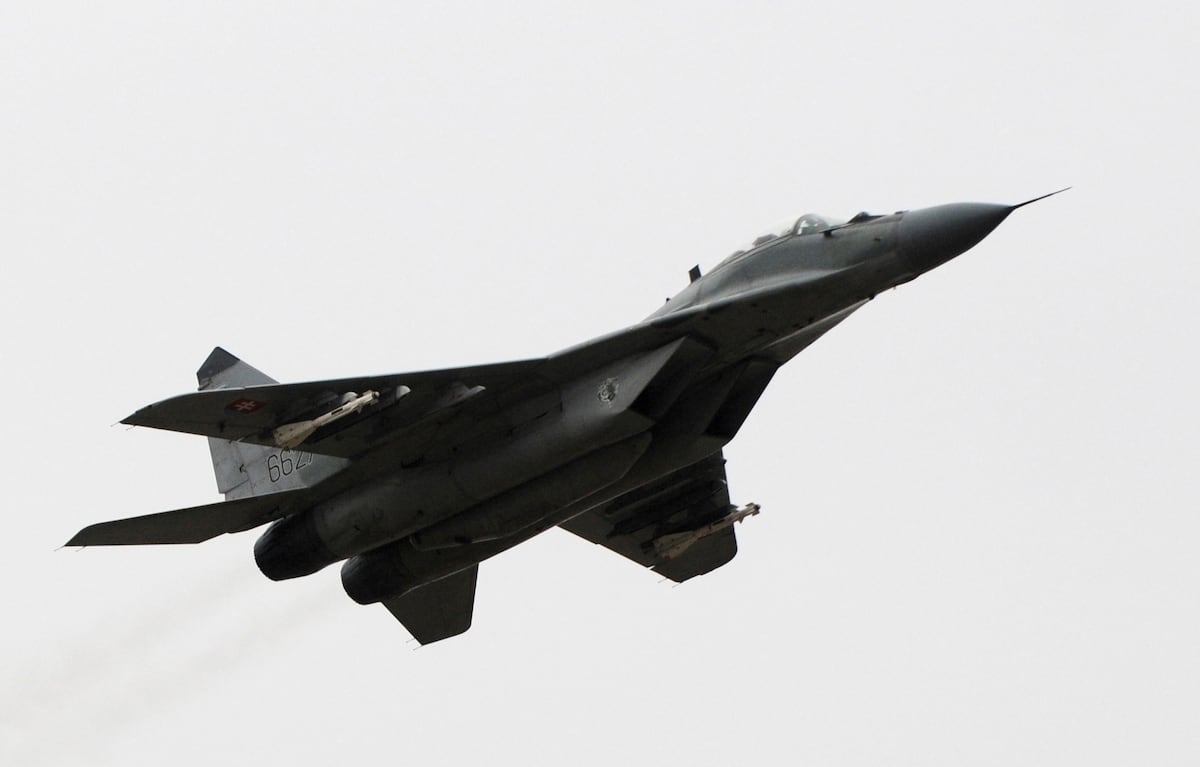
The news that Poland and Slovakia are to deliver MiG-29 fighter jets to Ukraine — some of which have reportedly arrived — signals their departure from the long-standing stance of the international community, which had hitherto resisted Kyiv’s calls for more combat aircraft to help fight off Russia’s invasion . While this donation will be welcomed in Ukraine, it could raise political and practical issues the West must address to maximize the benefits — and mitigate the risks — of this latest move to bolster Ukraine’s defenses.
Poland is expected to deliver four MiG-29s and Slovakia has pledged 13 from its own inventory . This number is expected to include some that are no longer operational and thus would be cannibalized for spare parts, rather than donated in flying order.
Alone, these fighters will be useful to Ukraine’s Air Force, which currently has more pilots than working aircraft after a year of heavy losses. They will help to keep up air operations in the face of a persistent threat from Russian ground-based air defenses and combat aircraft, as well as to support any ground offensives the Ukrainians mount in the spring and summer.
But in current numbers, the envisaged donations will likely neither make a decisive battlefield impact nor fundamentally alter the strategic calculus or the imbalance between the sizes of the Russian and Ukrainian air forces . Instead, the biggest immediate impact of this decision is political.
The willingness to break ranks from the previous consensus against donating fighters underscores the influential role that Poland, Slovakia and other smaller NATO front-line states have played in driving international support for Ukraine. Though the largest donor of military aid is, by a huge margin, the United States, followed by the U.K., many of the Eastern European states have been giving a much larger portion of aid as a percentage of their respective gross domestic product. This reflects how seriously they take the Russian threat as well as their solidarity with Ukrainians, with whom Eastern European countries have especially close social, cultural and economic ties.
Conveniently, these countries have stockpiles of old Soviet-designed equipment — types already used by the Ukrainians and thus can be quickly put into service.
With this politically bold move, then, leaders in Warsaw and Bratislava may be hoping to galvanize wider international action in solidarity with Ukraine. Setting a precedent calls the bluff of Russia’s supposed “red lines” against such donations, and ups the diplomatic and domestic pressure on other governments to follow suit, especially as Russia courts China to bolster its own depleted stockpiles of arms and ammunition. We have already seen how the U.K.’s small but symbolic pledge of Challenger 2 tanks unlocked bigger (and rather more practical) donations from Germany, the U.S. and others.
Other NATO allies will now be under increased pressure either to offer Ukraine their own, Western-designed aircraft directly (as Ukrainian President Volodymyr Zelenskyy is calling for, with his repeated ask for American-made F-16s ), or to use these to backfill the stockpiles of those countries that still have Soviet-designed MiGs to transfer to the Ukrainians.
Following Warsaw’s decision, a U.K. defense minister announced Britain would be ready to deploy its own jets to Poland to fill any temporary gaps in air defenses arising from such donations.
On the practical front, integrating any Western-designed fighters that end up being donated alongside Polish and Slovakian MiG-29s could require addressing a raft of operational issues in terms of training, basing, equipment familiarization and integration with ground forces.
Multinational coordination and a credible implementation plan may also be required, alongside the provision of support to training, maintenance and tactical planning. Avoiding fratricidal or “ blue on blue ” incidents could also need attention; without considerable training and rehearsal, using unfamiliar equipment for complex tasks such as close air support can be a sizable risk. The training pipeline for pilots , ground crew and others involved in embedding new systems of this complexity would usually stretch into years, and while some shortcuts can always be found, there are limits on how far this can be pushed in terms of safety and training capacity.
In short, if the West is going to follow Poland and Slovakia’s lead with further donations of other Soviet- or Western-designed fighters, a credible, long-term package of training, maintenance and other support could be essential to turn this from a symbolic gesture to a decisive impact on the battlefields of Ukraine.
James Black is the assistant director of the defense and security research group at Rand Europe, a unit of the U.S.-based think tank Rand.
波兰和斯洛伐克将向乌克兰交付米格-29战斗机的消息——据报道部分战机已经抵达——标志着两国改变了国际社会长期以来的立场。此前,国际社会一直抵制基辅方面提出的增援战机以帮助乌克兰抵御俄罗斯入侵的呼吁。虽然乌克兰将欢迎此次捐赠,但这可能引发一些政治和实际问题,西方必须解决这些问题,才能最大限度地发挥此次加强乌克兰防御举措的益处,并降低其风险。
波兰预计将交付四架米格-29战斗机,斯洛伐克则承诺从其库存中提供13架。这13架飞机中预计包含一些已无法使用的机型,因此将被拆解用作备件,而不是以可飞行状态捐赠。
仅就这些战斗机而言,它们对乌克兰空军就十分有用。乌克兰空军在经历了一年的惨重损失后,目前飞行员数量多于可用飞机。面对俄罗斯地面防空系统和作战飞机的持续威胁,这些战斗机将有助于乌克兰维持空中作战能力,并支援乌克兰在春夏两季发起的任何地面攻势。
但就目前的数量而言,这些预期的捐赠不太可能在战场上产生决定性影响,也不会从根本上改变战略考量或俄乌两国空军规模的不平衡。相反,这项决定最大的直接影响是政治性的。
波兰、斯洛伐克和其他一些较小的北约前线国家愿意打破此前反对向乌克兰派遣战斗人员的共识,这凸显了它们在推动国际社会支持乌克兰方面发挥的重要作用。尽管美国是最大的军事援助捐助国,其次是英国,但许多东欧国家提供的援助占其国内生产总值的比例要高得多。这反映出它们对俄罗斯威胁的重视程度,以及它们与乌克兰人民的团结一致——东欧国家与乌克兰有着尤为密切的社会、文化和经济联系。
巧合的是,这些国家储备了大量苏联时期设计的旧装备——这些装备乌克兰人已经使用过,因此可以迅速投入使用。
因此,华沙和布拉迪斯拉发的领导人或许希望通过这一政治上大胆的举动,动员更广泛的国际社会声援乌克兰。此举树立了先例,无异于挑战俄罗斯所谓“红线”的虚张声势,并加大了其他国家政府效仿的外交和国内压力,尤其是在俄罗斯正积极拉拢中国以补充其日益枯竭的武器弹药储备之际。我们已经看到,英国象征性地承诺捐赠少量“挑战者2”坦克,是如何促成德国、美国和其他国家捐赠更多(也更实际)的物资的。
现在,其他北约盟国将面临越来越大的压力,要么直接向乌克兰提供他们自己设计的西方飞机(正如乌克兰总统泽连斯基多次要求美国制造的F-16战斗机那样),要么用这些飞机来补充那些仍然拥有苏联设计的米格战斗机的国家的库存,以便将其转让给乌克兰。
在华沙做出决定后,英国国防大臣宣布,英国准备向波兰部署自己的战机,以填补此类捐赠造成的防空力量的任何临时缺口。
从实际层面来看,将最终捐赠给波兰和斯洛伐克的米格-29战斗机与西方设计的战斗机整合起来,可能需要解决一系列作战问题,包括训练、基地建设、装备熟悉以及与地面部队的整合。
除了为训练、维护和战术规划提供支持外,可能还需要多国协调和制定可信的实施计划。避免误伤或“蓝对蓝”事件也需要重视;如果没有大量的训练和演练,使用不熟悉的设备执行近距离空中支援等复杂任务可能存在相当大的风险。飞行员、地勤人员和其他参与部署此类复杂新系统的人员的培训通常需要数年时间,虽然总能找到一些捷径,但在安全性和培训能力方面,这些捷径的推进是有限度的。
简而言之,如果西方要效仿波兰和斯洛伐克,进一步捐赠其他苏联或西方设计的战斗机,那么一个可信的、长期的训练、维护和其他支持方案对于将此举从象征性姿态转变为对乌克兰战场的决定性影响至关重要。
詹姆斯·布莱克是兰德欧洲(美国智库兰德公司的一个部门)国防与安全研究小组的助理主任。