Chinese scientists find first evidence of ancient nose-chopping punishment for cattle thieves中国科学家首次发现古代对偷牛贼处以割鼻刑罚的证据
BEIJING: Stealing someone's cattle is a serious crime, and in many places, the thief would end up in jail. However, ancient Chinese justice could result in a truly horrific form of mutilation: the amputation of the nose.
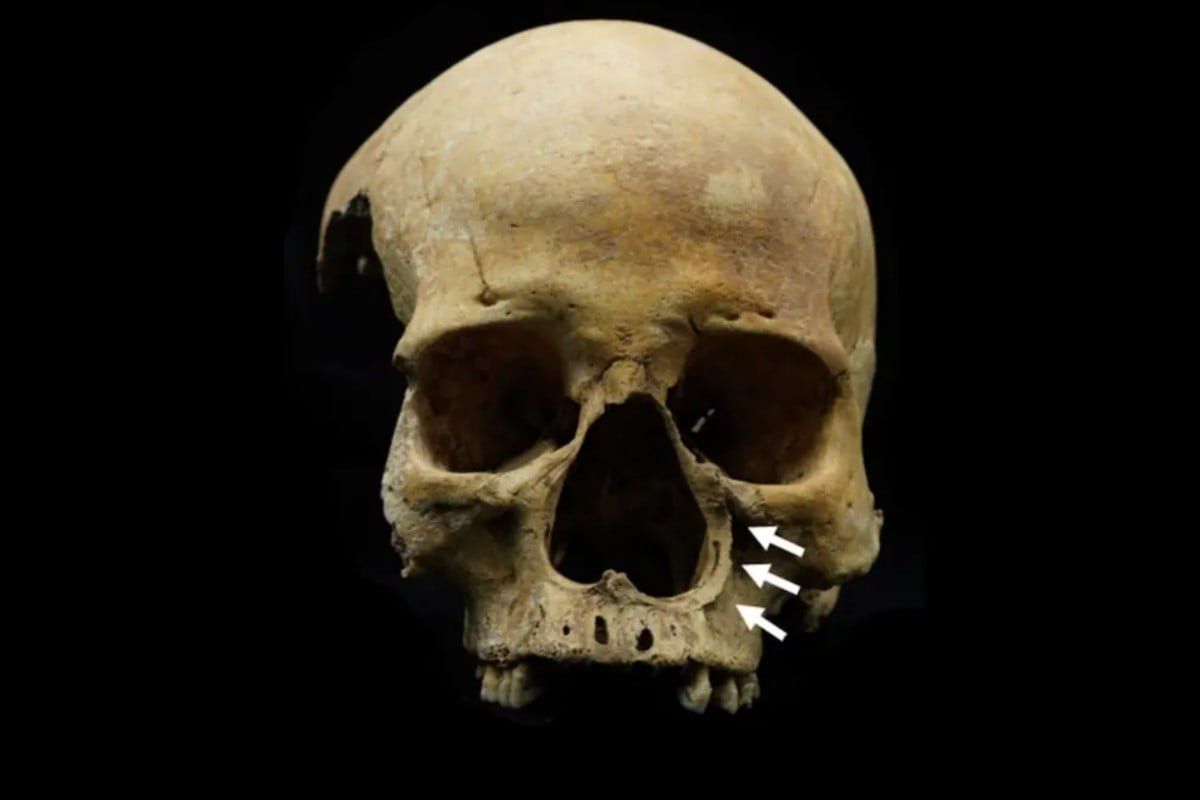
The skull above exhibits features consistent with nasal amputation. Archaeologists in China have uncovered the first physical evidence of nose-chopping, a historically documented punishment for cattle thieves. - Yawei Zhou et al via SCMP
BEIJING: Stealing someone’s cattle is a serious crime, and in many places, the thief would end up in jail. However, ancient Chinese justice could result in a truly horrific form of mutilation: the amputation of the nose.
This harsh consequence has been well-documented by historians as one of the infamous “five punishments” from the penal system of the Xia dynasty (2070 BC–1600 BC). Until now, no physical evidence of this punishment had been discovered.
Thank you for your report!
140th Canton Fair in south China to draw over 32,000 exhibitors
China's high-tech FDI surges in first 8 months of 2026
Japan’s Natuna port proposal highlights Indonesia’s balancing act on China
上图所示的头骨特征与鼻部切除相符。中国考古学家首次发现了割鼻的实物证据,这种刑罚在历史上曾有记载,用于惩罚偷牛贼。——周亚伟等,引自《南华早报》
北京:偷窃他人的牛是重罪,在许多地方,窃贼最终会被送进监狱。然而,中国古代的司法制度却可能导致一种极其骇人的残害:割鼻。
这种严厉的刑罚已被历史学家详细记载,是夏朝(公元前2070年—公元前1600年)刑罚制度中臭名昭著的“五刑”之一。此前,尚未发现任何此类刑罚的实物证据。
感谢您的报告!
第140届广交会将在中国南方举办,预计将吸引超过32000家参展商。
2026年前8个月,中国高科技领域外商直接投资激增
日本的纳土纳港提案凸显了印尼在对华关系上的平衡策略。