F-15 Strike Eagles Over Saudi Arabia: Then And NowF-15“攻击鹰”战斗机飞越沙特阿拉伯:过去与现在
Richard Crandall compares the Strike Eagle he flew 25 years ago in Desert Storm to those screaming over the Kingdom today.
Updated Jul 2, 2020 3:17 PM EDT
Richard Crandall started his Air Force flying career in the F-111 Aardvark, but found himself in the cockpit of the mighty F-15E Strike Eagle, the service’s newest jet, during Operation Desert Storm . Although F-15C/D Eagles were already a staple in the Royal Saudi Air Force by the time Desert Storm kicked off, the Strike Eagle would eventually find its way into the Kingdom’s aerial arsenal in the form of the F-15S. Today, Saudi Arabia flies around 70 of these jets, and soon they will receive 84 F-15SAs, the most advanced Strike Eagle derivative ever produced.
Now Crandall serves as a contractor with the Royal Saudi Air Force, where he puts his experiences flying and fighting in the F-15E “Mud Hen” to use. Below, read Crandall’s perspective detailing how the Strike Eagle first arrived in Saudi Arabia, how they were baptized by fire during Desert Storm, and how they differed from the Strike Eagles flown today.
Cockpit view of a division of Strike Eagles., USAF
Strike Eagles arrive in the Kingdom
Saudi Arabia has flown the F-15 Eagle for a very long time. The Kingdom bought the Eagle and started flying them long before Desert Storm in 1991. Royal Saudi Air Force pilots flying the F-15Cs even shot down two Iraqi fighters during the war.
Iraq invaded Kuwait on August 2, 1990. In that same month, the USAF’s newest and most potent strike fighter, F-15E Strike Eagle, landed in Saudi Arabia for the first time, but its stay was brief. The jets were only on the ground for a few hours at King Abdulaziz Air Base in Dharan. They were refueled and immediately departed for Thumrait, Oman.
At the time, their presence in the Kingdom was considered too offensive, and some worried it might result in Iraq immediately crossing the border into Saudi Arabia. The only way to stop them was deploying the Saudi Army and the 82nd Airborne. The 82nd Airborne would have fought valiantly, but its anti-armor capability wasn’t there, and it would have been a speed bump under Saddam Hussein’s armored forces.
For the next six months, the USAF’s first operational F-15E unit, the 336th Fighter Squadron “Rocketeers,” flew from Oman, while the great military buildup leading up to Desert Storm—called Desert Shield—went on in Saudi Arabia and around the region. Finally, in December, the word came down that the “World Famous Fighting Rocketeers” and their mighty F-15Es would deploy to Al Kharj Air Base (which we called Al’s Garage).
There we would join up there with the 335th Fighter Squadron “Chiefs” which also hailed from Seymour Johnson AFB. The Chiefs proudly claimed to be “The World’s Largest Distributor of MiG Parts” from back when they flew the F-86 during the Korean War, and they had an impressive kill record.
F-15E Eagle fighter aircraft of the 4th Tactical Fighter Wing, Seymour Johnson Air Force Base, N.C., are parked on an air field during Operation Desert Shield., DoD
The Genesis of the Strike Eagle
The Strike Eagle was an adaptation of an incredible Air-to-Air machine, the F-15A/B/C/D, and it still has the best kill-to-loss ratio of any fighter aircraft ever (debatably, 98 to 1). It was designed and first flew in the early 1970s. It thrives at medium-altitude, with a complex airfoil that gave it outstanding maneuverability unmatched by any other aircraft. It was so big that many classes at Luke AFB had their class photos shot with the entire class standing on top of the airplane in tennis outfits—it became known as the “flying tennis court.” As for its large visual signature, real fighter pilots aren’t afraid of being seen: We kill you as we spit in your face.
During the late 70s and early 80s, the F-111 was getting old, although I almost laugh at that now, since the oldest flying F-15s are approaching 40. In 1980’s, when the USAF started to pursue what became the Strike Eagle, the oldest F-111 was only about 20 years old.
The F-111 was a great penetration low-level day/night bomber but it had almost no air-to-air capability. I loved flying it, but it could be out-turned by everything . Low and fast it excelled marvelously. It was, however, an absolute maintenance nightmare. I think from my days on the staff at Air Combat Command at Langley AFB (if a judge told me to choose to serve on the staff in a non-flying job or go to prison—not sure what I’d do…) that the F-111 was 9% of the Tactical Air Force, but took up 25% of the budget. With this in mind, the USAF held a competition between a really cool looking delta-winged F-16XL and a heavily modified F-15D. The air-to-ground optimized Eagle was chosen.
(Author’s note: Israel was actually the first to put the concept of an air-to-ground F-15 to use operationally. Read all about it here .)
The first production F-15E., USAF
What made the “Mud Hen” special
The multi-role F-15E retained 100% of the capabilities of the “not a pound for air-to-ground” F-15C, sort of. They added two conformal fuel tanks (CFTs) on the sides of the fuselage that gave it a lot more gas, about an extra 8,500lbs of go-juice to be exact, but they also added weight and drag.
The CFTs could also carry up to 6,000lbs of weapons per side, or two 2,000lb weapons per side. Thus, a clean F-15E with CFTs up against an F-15C with two wing tanks would be hard pressed to win, especially as all that the F-15C driver did was live, eat, breathe air-to-air. We in the Strike Eagle community did 90% air-to-Ground and about 10% air-to-air. That ratio has varied over the years, but for us who went to Saudi Arabia so long ago, we were focused on bombs. The light grey guys (the F-15C wears a lighter paint scheme) can’t even say the word bombs, they call it “the B word” they hate it so much. They may be able to kill them one by one, but we can do that too plus we take the bad guys out by the hundreds with our payloads.
The best thing about the F-15E? It worked. You turned the radar on and it stayed on. You didn’t lose the INS ( Inertial Navigation System ) if you hiccupped. The TFR (Terrain Following Radar) always worked. Plus we had an IR (infrared) picture in our wide-screen HUDs that the light grey types lusted after, the massive HUD not the IR. Their’s was tiny and shriveled in comparison.
We had a WSO (Weapons Systems Officer). The light grey guys hate the idea of having company in the cockpit. That was life for us. Personally I found that when I worked with a good WSO I could fight better than by myself. I think I would have been a better pilot if forced to do it all by myself but when you put me with a WSO, we as a crew were better than I ever could have been with me by myself. Plus a huge advantage here, when I screwed up and was called into the boss’s office to be screamed at it hurt less as he was screaming at two of us instead of me alone. Misery loves company.
Ground crews prepare to attach a CFT to an F-15E., USAF
The F-15E had a fantastic advance know as Synthetic Aperture Radar (SAR). Basically a bunch of nerdy skinny guys with coke bottle eyeglasses and pocket protectors found that if they had the radar sweep back and forth a couple of times and then analyzed all of the pictures, checked them twice to see if we were naughty or nice, and then took the cube root of the square of the phase of the moon, that they could give us a picture of the ground that looked like it was taken from a satellite. It was incredible. Fences looked like fences. Buildings were square instead of blobs. Radar scope interpretation became much-much easier and bombing accuracy became much better.
To use the Synthetic Aperture Radar we had to move sideways to the target for a couple of sweeps. The greater the angle off the nose the area was we wanted to look at the faster the picture and the more accurate the radar picture was. This totally changed our target area behavior. In the F-111 you flew straight at the target as the WSO used the radar to find it. In the Strike Eagle we would fly at an angle to the target and turn direct only after the WSO found and designated it.
This was not that big of a deal really. We had to maneuver anyway to get minimum safe distance between each striking aircraft so we just integrated the need to map the target into our plan to attack from different directions at different times.
We would run in low. The F-15E could fly TFR down to 100 feet though I only used 200 feet to my eternal regret. Woulda-coulda-shoulda gone down to 100 feet at night just to say I did it. The lowest I ever flew at night in the F-111 was 500 feet, though I flew at 200 feet when flying under visual flight rules (VFR) conditions all the time.
Anyway, run in low then turn off when inside around 20 miles or so. This gave us our best resolution on the radar and I think the numbers were something like we could see objects as separate if they were a bit less than 10 feet apart. So, if you have two cars five feet apart they show up as one blob. If they were 15 feet apart they would show up as two blobs.
If the radar did not have enough grazing angle to see the target the WSO would direct us to climb. Once he had the picture we would turn target direct and drop back down to our attack altitude that was dictated by the bomb fuse combination that we were carrying.
F-15E’s massive holographic HUD with LANTIRN nav pod FLIR imagery projected onto it at night., USAF
Putting the Strike Eagle’s arsenal to work during Desert Storm
The standard for the start of the war was the MK-20 Rockeye cluster bomb which if I remember right had a timer fuse on it. A certain time after being dropped the MK-339 timer fuse would fire. The bomb would spin after release from the fins popping out at the back at an angle. When the fuse fired, the case split open, and the bomblets inside spread out due to centripetal acceleration. If you released too high the pattern was wider and if too low the pattern was narrower.
The bombs were dual purpose. If they hit something hard they would form a shape charge of plasma and burn through armor. If they hit something soft they would go off like a hand grenade and generate shrapnel. I loved Rockeye, great stuff, carried it the first few nights of the war and took out several Scud missiles with it.
By the end of the war we were primarily dropping CBU-87s, bigger at 1,000lbs than the 750lb Rockeye. That was nice because it had more bomblets. It was not nice because we could not carry 12 of them on the CFT’s, 6 per side, and carry wing-tanks as well, the top three bombs on each side were too close to the tanks. Thus we either carried less, six to be exact, or we carried less gas, a center line tank instead of up to 3 tanks, 2 on the wing plus the centerline tank.
The CBU-87 had a radar proximity fuse. As a result if I released it on or above the minimum altitude I got the exact same dispersion of the bomblets. This came into play after the second night of the war when we started dropping from what we used to consider the stratosphere, the mid-teens to high twenties (thousands of feet). We could still cover a huge area on the desert with a carpet of white fire. These were the best dumb bombs we used for the vast majority of targets we attacked during Desert Storm.
Laser Guided Bombs (LGBs) are visual flight rules only weapons. The laser is attenuated by visible moisture. Sometime you could use a ground laser beneath a cloud deck, the aircraft could drop the bomb ballistically and the guy on the ground would guide it in by illuminating the target with his laser.
At the start of the war we had Paveway II LGBs in 500lb (GBU-12) and 2000lb (GBU-10) configurations. It didn’t matter to the aircrew which he carried as they were identical in employment. We did not start using them until a bit into Desert Storm as we only had nine LANTIRN targeting pods for 48 aircraft. We were up to 24 pods by the end of the war. Because of this, we always used them from medium altitude in one of two ways.
If the aircraft was lasing (painting a target with a laser) for itself, it would drop the bomb and immediately crank off about 45 to 60 degrees while continuing to lase the target. I think usually we would use a “delay-lase” tactic though, where we would not turn the laser back on after release until 15 seconds or so to impact. This was to keep the bomb falling ballistically. If you had the laser on full time then as soon as the laser was seen by the seeker it would point straight at the target and cause the bomb to come in at a slightly shallower angle than it would with a delayed laser operation. Steeper meant faster and more energy to maneuver to steer to the laser spot. I have actually seen slow motion footage of bombs hitting short with the bomb at a very nose-high angle of attack as the seeker struggled to keep on target and the bomb got too slow.
By cranking sideways the laser spot would remain on the same side of the target as the bomb, usually. Even when you are lasing the target at almost 90 degrees you would usually have enough laser “splattering” for the bomb to see it. Round oil storage tanks could be tough though. Also, you could end up lasing the side of a building the bomb couldn’t see so it took a bit of artistry to know the right run-in angle and crank-off angle.
The other advantage of cranking-off was avoiding the very disorienting roll of the seeker head as it passes through the vertical. Not only that, but since the LANTIRN targeting pod had the seeker head on the front of the pod’s body, the ability to see to the rear was extremely limited. I have seen a lot of targeting pod video from the war and several times you can see where the laser stops prior to bomb impact due to this. With good crew coordination the pilot could quickly turn back toward the target and roll back out allowing the pod’s laser to stay on target.
Another tactic we used was buddy lasing. In this case the poor wingman (always me as I was a wingman the entire war) who had no targeting pod would drop the bomb ballistically so that his flight lead could have all the fun and be the hero in taking the target out. I kind of felt like the sparring partner for the heavyweight fighter. I did a lot of work with little satisfaction. I know, yes I would like some crackers and cheese to go with my whine.
The flight lead would fly several miles behind the wingman and be able to fly straight towards the target the entire time. This actually gives the bomb the absolute best laser spot as it is more in line with the flight path of the bomb the entire time.
So how big is the laser spot? We had some footage taken out at the Utah test range that actually filmed our LANTIRN targeting laser on the target as we dropped bombs. If I remember right it was a 2 story target building. The laser spot covered most of the entire building when the bombs hit! We were several miles away and it showed how even lasers diverge over distance. The seeker on the bomb tracks the center of the spot so even though it was a big spot we still got good guidance with it.
We also carried the standard MK-82 500lb bombs and another favorite of mine, the MK-84 2,000 pounder. I had one mission against a cloverleaf in the desert of Kuwait with five 2,000lb bombs. We could see the shock-wave as they blew up, even on the darkest night.
Strike Eagles pushing it up at dusk., USAF
We used the FLIR (forward-looking Infrared) in the LANTIRN Navigation pod to fly formation at night. Thus in a two ship or more we would fly a train with each wingman being two to four miles behind the aircraft in front. This allowed the radars to be in scan mode rather than remaining locked on to the aircraft in front of it.
I think most flight leads preferred to fly in black-hot on their HUD. I preferred white hot as it was easier to see the aircraft as a white dot than a black dot for me. Our leads tended to criticize us but most of us just shrugged and continued to do what we wanted to as it was our choice and we were the ones who would be embarrassed if we didn’t stay in position. Remember the wingman’s creed – “ two, joker, bingo, mayday, and Lead you’re on Fire.” Other than that shut up and color. Be in position and do what you’re trained to do. That way the formation is strong. A weak wingman is worthless.
At that time we had no data-link. Big weakness. All targets passed to the Strike Eagle after takeoff were done verbally. We worked with E-8 JSTARS a lot. They had a SAR radar like ours but theirs could take detailed pictures from much greater ranges. They would then try to talk us onto targets.
They would give us the coordinates, oh yeah also no GPS in the F-15E back then, so coordinates could be up to a half mile or more off. They would then verbally describe the targets they were seeing. “A group of six tanks in a crescent moon oriented towards the northwest.” Sadly many times we would just find some returns near the coordinates they gave and drop our bombs on them.
This was really a problem when we were buddy lasing. Making sure we were on the same target took a lot of time. Of the few buddy lase missions I flew I would usually bring back several of the LGBs. We just ran out of gas before lead dropped all of his and then started to talk us onto a target to drop ours.
I don’t remember if the original LANTIRN targeting pod had the ability to see another laser. This is a huge benefit now. The A-10 had this way back when it first flew with the Pave Penny system . Another aircraft or a ground controller could put a laser out on a target and a pilot would get an indication on his HUD showing where the laser-spot is and thus would be able to find the target immediately. This didn’t matter much for us during Desert Storm as I don’t think we flew with more than one targeting pod in a formation for the entire war.
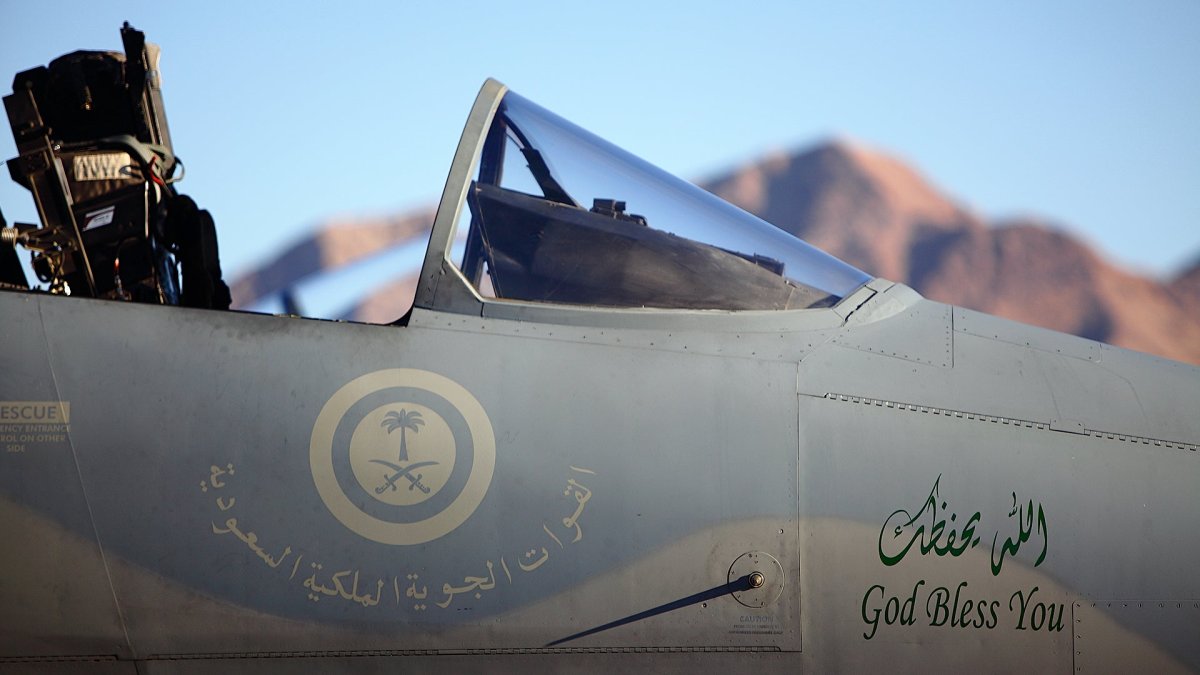
Modernized Saudi F-15S., Tyler Rogoway
The Strike Eagle ages beautifully
Starting in 1996 Saudi Arabia bought their version of the F-15E, the F-15S. It was downgraded slightly from the USAF’s version. I think originally they weren’t going to get the weapons stations on the CFTs and were going to use BRUs (bomb racks) and MERs (multiple ejector racks) on the wing. They have the weapons stations on the CFTs now, although I just do not know if they had them originally. I will talk though about the F-15S today – the F-15 I wish I would have had 25 years ago.
GPS. Enough said. Hard to imagine living without it.
With GPS comes JDAM (Joint Direct Attack Munition), a dumb bomb made smart with a GPS guidance kit. Wow. That bomb alone is the difference between fighting in the Stone Age and now. All weather accuracy without the need for post target lasing. True launch-and-leave capability.
JDAM offers a much larger effects footprint. One pass, multiple Desired Mean Point of Impacts (DMPIs). I only attacked one target per pass in Desert Storm. Now, with JDAM, I could attack 12 or more targets on one pass. That is a game changer.
F-15E’s dropping bunker busting BLU-109s with JDAM kits., USAF
Data-link. I never ever had it but always wanted it. No more “bogey, Manny, 090 for 65 Westbound.” Okay, now I have to know where Manny is, then where am I in relation to Manny. Then take that information I just heard and mentally plot it out and do a fix-to-fix in my head to figure out where he is relative to me. Hmmm. Angle of the something or other squared times… Remember the movie Mars Attacks when the Country Western music is played and the Martians’ heads explode?
Now with the data-link you look down at your display and see exactly where Manny and pretty much everything else is, in color, and relative to your own position. Remember when your teacher told you how nice it was to share? Now you get to share all sorts of stuff, radar, pictures, home movies, the list goes on. Data-link is as much a game changer as GPS.
Targeting Pod mechanized for air-to-air combat. My neighbor back in the 90s at Seymour Johnson was Ziggy Dahl, an instructor WSO in the Chiefs. He used the targeting pod to do air-to-air back before it was optimized to do it. As like most modern fighters of the day we had pulse doppler radar and everyone knows that if you fly perfectly perpendicular to the air-to-air radar locked onto you then you will disappear. Klingon cloaking device on! Our radar could only look to 60 degrees back then, later a bit more, but still way less than 90 degrees. Solution, use the targeting pod which gave you +/- 1 degree accuracy. It worked like a champ but was hard to do.
I understand now that the targeting pod cues to expected position of the target without a ton of work on the WSO’s part (Author’s note: this technology is now being fully integrated also on American ANG F-15Cs equipped with SNIPER targeting pods). Do a hard turn and blank out the targeting pod and it will track where the bogey should be and return to that point in space when you un-blank the pod. Back when I flew it the pod would go stupid if it broke-lock and was blanked out.
AIM-120 AMRAAMs on the wing rails above the fuel tanks. All we had during Desert Storm was the AIM-9L Sidewinder. Great missile but it is a pistol in a rifle fight with the Mig-29s we were facing. To carry the AIM-7 Sparrow we would have to give up bombs on the conformal fuel tanks. In hindsight we would have killed five or more MIGs during the first night if we would have had the flight leads go in with one conformal carrying six MK-20 Rockeyes and one conformal carrying two Aim-7Ms. Oh well.
Now the Strike Eagle always has claws on every flight. Long-range claws. Approach at your own risk claws.
F-15E with AIM-9 Sidewinder, USAF
Perspective time. Last year I returned to that small government school in central Colorado for delinquent boys and girls called the United States Air Force Academy for my 35th reunion. This was the first reunion I attended. It was a great time with great friends.
35 years prior to my graduation in 1980 was 1945. Jets were rare then with the Lockheed P-80 shooting star designed in 1943 and that was it, and it was not used in WWII. The Germans had a couple, the British had the Glouster Meteor, etc. Still, the piston engine was king. The Spitfire, the Mustang, the B-29 and so on. In 1980, 35 years later, the USAF was flying the A-10, the F-16, the F-15C, and the B-52. Now in 2016, 36 years after 1980, the USAF is flying the A-10, the F-16, the F-15C, and the B-52. Hmmmm.
The difference? GPS and data-link, as well as persistent ISR (Information, Surveillance, Reconnaissance) for the combatant commander and individual warriors. We now have constant ISR on the battlefield. The only ISR we had in Desert Storm was JSTARS and Compass Cal l, and maybe Rivet Joint , but that was classified way above my head. U-2 and SR-71 too but not for us at the operational level. Today the coverage of the MQ-1 and MQ-9 and other UAVs on the battlefield gives incredible situational awareness available to the average pogue that was not available 25 years ago.
We could destroy every single target hit during the entire Desert Storm with one squadron of F-15Es or F-15Ss today. Precision attacks on multiple targets per aircraft per pass, day, night and in any weather.
Would we? Doubtful. We have more capability today but are hitting far less targets due to the fear of collateral damage – but that is another discussion for another day.
Modern day F-15E blasts off for a mission., Tyler Rogoway
A huge thanks for Richard Crandall for sharing his incredible experiences and perspectives with us. Stay tuned for the second installment where he details his time flying General Dynamics swing-wing bomber, the iconic F-111, at the height of the Cold War.
Contact the editor Tyler@thedrive.com
Comments couldn’t be loaded. Please refresh the page.
更新于美国东部时间2020年7月2日下午3:17
理查德·克兰德尔的空军飞行生涯始于F-111“土豚”战斗机,但在“沙漠风暴”行动期间,他驾驶了当时空军最新型的F-15E“攻击鹰”战斗机。尽管在“沙漠风暴”行动开始之前,F-15C/D“攻击鹰”战斗机已经是沙特皇家空军的主力装备,但最终沙特还是以F-15S的形式将其纳入了空军的空中力量。如今,沙特阿拉伯拥有约70架F-15S战斗机,并且很快还将接收84架F-15SA——迄今为止最先进的“攻击鹰”衍生机型。
克兰德尔目前是沙特皇家空军的承包商,他将自己驾驶F-15E“泥母鸡”战斗机的经验运用到实际工作中。以下是克兰德尔的叙述,详细介绍了F-15E“攻击鹰”战斗机最初是如何抵达沙特阿拉伯的,它们如何在“沙漠风暴”行动中经受战火的洗礼,以及它们与如今服役的F-15E“攻击鹰”战斗机有何不同。
美国空军“攻击鹰”战斗机分队的驾驶舱视角。
攻击鹰抵达王国
沙特阿拉伯使用F-15“鹰”式战斗机已有很长时间。早在1991年“沙漠风暴”行动之前,沙特王国就已购买并开始使用“鹰”式战斗机。沙特皇家空军的F-15C飞行员甚至在战争期间击落了两架伊拉克战斗机。
1990年8月2日,伊拉克入侵科威特。同月,美国空军最新、最强大的攻击战斗机F-15E“攻击鹰”首次降落在沙特阿拉伯,但停留时间很短。这些战机仅在达兰的阿卜杜勒阿齐兹国王空军基地停留了几个小时,加油后便立即飞往阿曼的图姆赖特。
当时,伊拉克军队在沙特王国的存在被认为过于冒犯,一些人担心这会导致伊拉克立即越境入侵沙特阿拉伯。阻止伊拉克的唯一办法是部署沙特军队和第82空降师。第82空降师本可以英勇作战,但其反装甲能力不足,在萨达姆·侯赛因的装甲部队面前,它只能算是个绊脚石。
接下来的六个月里,美国空军首支作战型F-15E战斗机部队——第336战斗机中队“火箭兵”——从阿曼起飞执行任务,与此同时,在沙特阿拉伯及周边地区,大规模的军事集结——即所谓的“沙漠盾牌”行动——也在如火如荼地进行,为“沙漠风暴”行动做准备。最终,在十二月,命令下达,“世界闻名的战斗火箭兵”及其强大的F-15E战斗机将部署到哈尔吉空军基地(我们戏称其为“阿尔的车库”)。
在那里,我们将与同样来自西摩·约翰逊空军基地的第335战斗机中队“酋长”会合。“酋长”中队曾自豪地宣称自己是“世界上最大的米格战斗机零件分销商”,这源于他们在朝鲜战争期间驾驶F-86战斗机的经历,而且他们拥有令人瞩目的击落记录。
在“沙漠盾牌行动”期间,隶属于北卡罗来纳州西摩·约翰逊空军基地第4战术战斗机联队的F-15E“鹰”式战斗机停放在机场跑道上。(美国国防部)
攻击鹰的起源
“攻击鹰”战斗机是在性能卓越的空对空战机F-15A/B/C/D的基础上改进而来,至今仍保持着战斗机史上最高的击落损失比(或许高达98比1)。它于20世纪70年代初设计并首飞。凭借其复杂的翼型,它在中空飞行时表现出色,拥有其他任何飞机都无法比拟的卓越机动性。它的体型非常庞大,以至于卢克空军基地的许多班级都穿着网球服站在飞机顶部拍摄毕业照——它也因此被称为“飞行网球场”。至于它醒目的外观,真正的战斗机飞行员并不害怕被人发现:我们会在你面前吐口水的同时干掉你。
在 20 世纪 70 年代末和 80 年代初,F-111 已经老旧了,虽然我现在几乎要笑出声来,因为当时仍在飞行的最老的 F-15 也快 40 岁了。到了 20 世纪 80 年代,当美国空军开始研发后来被称为“攻击鹰”的战斗机时,最老的 F-111 也只有大约 20 年的历史。
F-111是一款优秀的低空昼夜轰炸机,但几乎没有空对空作战能力。我很喜欢驾驶它,但它的转弯性能实在太差了。低空高速飞行时,它的表现堪称卓越。然而,它的维护保养却是个彻头彻尾的噩梦。我记得当年在兰利空军基地空战司令部工作时(如果法官让我选择在非飞行岗位上继续任职还是去坐牢——我真不知道自己会怎么想……),F-111虽然只占战术空军的9%,却占用了25%的预算。考虑到这一点,美国空军在外形酷炫的三角翼F-16XL和经过大幅改装的F-15D之间展开了一场竞标。最终,以空对地作战为核心的F-16XL胜出。
(作者注:以色列实际上是第一个将空对地F-15概念投入实战的国家。点击此处阅读详情。)
美国空军首架量产型F-15E战斗机
是什么让“泥母鸡”如此特别
多用途的F-15E保留了F-15C的全部性能,但又不完全如此。F-15C“一磅重量都不用于对地攻击”。F-15E在机身两侧加装了两个保形油箱(CFT),使其拥有更大的燃油容量,确切地说是增加了约8500磅的燃油,但同时也增加了重量和阻力。
保形油箱(CFT)每侧最多可携带6000磅武器,或者每侧携带两枚2000磅武器。因此,一架配备保形油箱的干净的F-15E与一架挂载两个副油箱的F-15C对决,很难取胜,尤其考虑到F-15C飞行员的全部精力都投入在空对空作战上。我们F-15E“攻击鹰”部队90%的任务是空对地攻击,空对空作战约占10%。这个比例多年来有所变化,但对于我们这些很久以前去过沙特阿拉伯的人来说,我们的重点是投掷炸弹。那些涂装浅灰色的家伙(F-15C的涂装较浅)甚至连“炸弹”这个词都说不出口,他们称之为“炸弹”,可见他们对这个词有多么厌恶。他们或许能逐个击落敌人,但我们也能做到,而且我们还能用有效载荷一次性消灭数百个敌人。
F-15E 最棒的地方是什么?它真的管用。你打开雷达,它就一直开着。就算你打个嗝,惯性导航系统(INS)也不会失灵。地形跟踪雷达(TFR)也始终有效。而且,我们的宽屏平视显示器(HUD)上还有红外图像,那些穿浅灰色制服的人垂涎三尺,他们想要的不是红外图像,而是巨大的HUD。相比之下,他们的HUD又小又皱。
我们当时有个武器系统官(WSO)。那些穿浅灰色制服的飞行员最讨厌驾驶舱里有人陪伴。这就是我们的日常。就我个人而言,我发现和优秀的武器系统官一起工作比单打独斗效率更高。我想如果被迫单枪匹马,我或许会成为更优秀的飞行员,但如果我和武器系统官一起工作,我们整个机组的表现会比我单打独斗时好得多。而且,这还有一个很大的优势:当我犯错被叫到上司办公室挨训时,因为他是在训斥我们两个人而不是我一个人,所以感觉没那么难受。真是同病相怜啊。
美国空军地勤人员准备将保形油箱(CFT)安装到F-15E战斗机上。
F-15E战斗机搭载了一项名为合成孔径雷达(SAR)的卓越技术。简单来说,就是一群戴着厚底眼镜、胸前别着笔套的瘦削书呆子发现,只要让雷达来回扫描几次,然后分析所有图像,再仔细检查两遍以确认我们是否操作正确,最后计算月相平方的立方根,就能得到一张如同卫星拍摄的地面图像。这简直不可思议。栅栏看起来就像栅栏,建筑物不再是模糊的色块,而是方方正正的。雷达图像的判读变得容易得多,轰炸精度也大大提高。
为了使用合成孔径雷达,我们必须侧向移动到目标附近进行几次扫描。我们想要查看的区域与机头的夹角越大,雷达图像的更新速度就越快,精度也越高。这彻底改变了我们对目标区域的操控方式。在F-111战斗机上,我们会直接飞向目标,武器系统操作员(WSO)会利用雷达来定位目标。而在F-100“攻击鹰”战斗机上,我们会以一定角度飞向目标,只有在武器系统操作员发现并指示目标后,我们才会转向直飞。
这其实不算什么大事。反正我们都要进行机动以确保每架攻击机之间保持最小安全距离,所以我们只是把绘制目标地图的需求融入到从不同方向、不同时间发起攻击的计划中。
我们会低空飞行。F-15E 可以在临时飞行限制区 (TFR) 飞行至 100 英尺,但我只用过 200 英尺,这让我后悔不已。真应该晚上飞到 100 英尺,就为了体验一下。我驾驶 F-111 夜间飞行的最低高度是 500 英尺,不过在目视飞行规则 (VFR) 条件下,我一直都以 200 英尺的高度飞行。
总之,先用低速档跑,跑到离地面大约20英里左右就关掉。这样雷达分辨率最高,我记得大概是说,如果物体之间的距离略小于10英尺,我们就能分辨出来。所以,如果两辆车相距5英尺,它们在雷达上会显示成一个光斑。如果它们相距15英尺,就会显示成两个光斑。
如果雷达掠射角不足以探测到目标,武器系统操作员会指示我们爬升。一旦他获取到目标图像,我们就会转向目标,然后下降到由我们所携带炸弹引信组合决定的攻击高度。
F-15E战斗机巨大的全息平视显示器(HUD)在夜间投射LANTIRN导航吊舱的前视红外(FLIR)图像。(美国空军)
在“沙漠风暴”行动中充分发挥“攻击鹰”战斗机的武器库。
战争初期使用的标准集束炸弹是MK-20“石眼”集束炸弹,如果我没记错的话,它带有定时引信。投放一段时间后,MK-339定时引信会引爆。炸弹投放后,尾翼会以一定角度弹出,炸弹会旋转。引信引爆时,弹体裂开,内部的子炸弹会因向心加速度而散布开来。投放高度过高,散布范围更广;投放高度过低,散布范围更窄。
这些炸弹是双用途的。如果击中坚硬目标,它们会形成等离子体聚能装药,烧穿装甲。如果击中较软目标,它们会像手榴弹一样爆炸,产生弹片。我非常喜欢“岩眼”炸弹,真是好东西,战争最初几个晚上我都带着它,用它击落了好几枚飞毛腿导弹。
战争末期,我们主要投放的是CBU-87集束炸弹,这种炸弹重达1000磅,比750磅的“岩眼”集束炸弹要大得多。好处是它能携带更多子炸弹。坏处是,我们无法在保形油箱(CFT)上携带12枚CBU-87(每侧6枚),同时还要携带副油箱,因为每侧最上面的三枚炸弹离副油箱太近了。因此,我们要么减少携带的炸弹数量(确切地说是6枚),要么减少携带的燃油数量(只携带一个中线副油箱,而不是最多三个副油箱,两个在机翼上,加上中线副油箱)。
CBU-87 配备了雷达近炸引信。因此,如果我在最低投放高度或更高高度投放,子炸弹的散布范围就完全相同。这在战争的第二个夜晚之后尤为重要,当时我们开始从以前被认为是平流层的高度——十几千英尺到二十几千英尺——投放炸弹。即便如此,我们仍然能够用白色火毯覆盖沙漠中的大片区域。这些是我们“沙漠风暴”行动中攻击绝大多数目标时使用的最佳非制导炸弹。
激光制导炸弹(LGB)是目视飞行规则武器。激光会被可见的水汽衰减。有时可以在云层下方使用地面激光器,飞机可以弹道投掷炸弹,地面人员则用激光照射目标进行引导。
战争初期,我们装备了500磅(GBU-12)和2000磅(GBU-10)两种规格的铺路二型激光制导炸弹。对机组人员来说,携带哪种炸弹都无所谓,因为它们的用途完全相同。直到“沙漠风暴”行动后期,我们才开始使用它们,因为我们当时只有9个LANTIRN目标指示吊舱,却要为48架飞机服务。到战争结束时,我们才拥有24个吊舱。正因如此,我们始终采用以下两种方式之一,在中等高度使用这些吊舱。
如果飞机使用激光瞄准(用激光照射目标)进行自瞄准,它会投下炸弹后立即将飞机姿态调整约45到60度,同时继续用激光瞄准目标。不过,我们通常会采用“延迟激光”战术,即在投弹后大约15秒再重新开启激光。这样做是为了保证炸弹的弹道下落。如果激光一直开启,那么一旦导引头探测到激光,它就会直接指向目标,导致炸弹的入射角度比延迟激光瞄准时略小。角度越小,意味着速度越快,需要更多的能量进行机动才能对准激光照射点。我曾经看过一些慢镜头录像,显示炸弹以非常高的迎角落点过近,这是因为导引头难以保持指向目标,导致炸弹速度过慢。
通常情况下,通过侧向旋转,激光光斑会始终保持在目标与炸弹同一侧。即使以接近90度的角度照射目标,通常也会产生足够的激光“散射”,使炸弹能够识别。不过,圆形油罐可能比较难对付。此外,激光照射到建筑物炸弹无法看到的侧面也可能发生,因此需要一定的技巧才能掌握合适的入射角和离射角。
另一个优势是,关闭瞄准器可以避免导引头在垂直方向上翻滚时产生的令人极度眩晕的侧倾。不仅如此,由于LANTIRN瞄准吊舱的导引头位于吊舱前端,后方视野极其有限。我看过很多战争时期的瞄准吊舱视频,多次可以看到激光束在炸弹命中目标前就因这个原因而停止移动。如果机组人员配合默契,飞行员可以迅速转向目标并向后翻滚,从而使吊舱的激光束继续锁定目标。
我们还用过另一种战术,就是僚机激光瞄准。在这种情况下,可怜的僚机(总是我,因为我整个战争期间都是僚机)没有目标指示吊舱,只能弹道式地投弹,这样他的长机就可以独享打击目标的乐趣,成为英雄。我感觉自己就像重量级拳击手的陪练。我做了很多工作,却没什么成就感。我知道,没错,我抱怨的时候也想吃点饼干和奶酪。
领航机将落后僚机数英里飞行,并能全程直线飞向目标。这使得炸弹能够获得最佳的激光瞄准点,因为其始终与炸弹的飞行轨迹保持在同一条直线上。
那么激光光斑到底有多大呢?我们在犹他州靶场拍摄了一些视频,记录了我们投弹时LANTIRN瞄准激光照射目标的过程。如果我没记错的话,目标建筑是一栋两层楼。炸弹命中时,激光光斑几乎覆盖了整栋建筑!我们当时距离目标有好几英里远,这段视频也说明了即使是激光也会随着距离而发散。炸弹上的导引头会追踪光斑的中心,所以即使光斑很大,我们仍然能获得良好的制导。
我们还携带了标准的MK-82型500磅炸弹,以及我最喜欢的另一种炸弹——MK-84型2000磅炸弹。我曾执行过一次任务,用五枚2000磅炸弹攻击科威特沙漠中的一座三叶草形跑道。即使在最黑暗的夜晚,我们也能看到炸弹爆炸产生的冲击波。
黄昏时分,攻击鹰战斗机将其推起。(美国空军)
我们使用LANTIRN导航吊舱中的前视红外(FLIR)雷达进行夜间编队飞行。因此,在两架或更多架飞机编队飞行时,我们会组成一个编队,每架僚机都位于前方飞机后方两到四英里处。这样,雷达就可以处于扫描模式,而不是始终锁定前方飞机。
我觉得大多数长机都喜欢在HUD上用黑点模式飞行。我更喜欢白点模式,因为对我来说,白点比黑点更容易把飞机看清。我们的长机经常批评我们,但我们大多数人只是耸耸肩,继续按自己的想法飞行,因为这是我们自己的选择,如果我们不保持位置,丢脸的是我们自己。记住僚机的信条——“二、小丑、宾果、遇险呼叫、长机着火”。除此之外,闭嘴,做好你的飞行任务。保持位置,做好你受训要做的事情。这样编队才能强大。一个软弱的僚机毫无价值。
当时我们没有数据链,这是个很大的弱点。所有目标信息在起飞后都只能通过口头传达给“攻击鹰”战斗机。我们和E-8联合监视目标攻击雷达系统(JSTARS)合作很多。他们的合成孔径雷达(SAR)和我们的类似,但他们的雷达能够从更远的距离拍摄到更清晰的图像。然后他们会尝试引导我们锁定目标。
他们会给我们提供坐标,哦对了,那时候的F-15E还没有GPS,所以坐标误差可能达到半英里甚至更远。然后他们会口头描述他们看到的目标。“六辆坦克呈新月形排列,朝向西北方向。” 可悲的是,很多时候我们只是在他们提供的坐标附近找到一些回波,然后就把炸弹投了过去。
这在我们进行伙伴激光制导任务时确实是个问题。确保我们瞄准同一个目标非常耗时。在我执行的为数不多的几次伙伴激光制导任务中,我通常都能带回好几枚激光制导炸弹。我们总是在领队投完所有炸弹之前就耗尽燃料,然后领队就开始指挥我们瞄准目标投弹。
我不记得最初的LANTIRN瞄准吊舱是否具备识别其他激光的能力。现在看来,这确实是一项巨大的优势。A-10早在首次搭载“铺路便士”(Pave Penny)系统时就具备这项功能。另一架飞机或地面控制人员可以向目标发射激光,飞行员的平视显示器(HUD)上会显示激光光点的位置,从而能够立即找到目标。但在“沙漠风暴”行动期间,这项功能对我们来说意义不大,因为我记得整个战争期间,我们编队飞行时最多只携带过一个瞄准吊舱。
现代化沙特F-15S战斗机,泰勒·罗格威
Strike Eagle 随着时间的推移会呈现出优美的姿态
从1996年开始,沙特阿拉伯采购了他们自己的F-15E版本——F-15S。它比美国空军的版本略有降级。我记得最初他们并不打算在保形油箱(CFT)上安装武器挂架,而是计划在机翼上使用炸弹挂架(BRU)和多管弹射挂架(MER)。现在他们的保形油箱上已经安装了武器挂架,但我并不确定他们最初是否就配备了。今天我想聊聊F-15S——如果25年前我就能拥有它,我会多么希望自己拥有它。
GPS。无需多言。很难想象没有它该怎么生活。
GPS的出现带来了JDAM(联合直接攻击弹药),这是一种通过GPS制导套件实现智能化的普通炸弹。哇!单凭这枚炸弹,战争方式就与石器时代截然不同。它无需后续激光瞄准,即可实现全天候精准打击,真正具备发射后即撤离的能力。
JDAM的杀伤范围更大。一次飞行,就能造成多个目标落点。在“沙漠风暴”行动中,我每次飞行只能攻击一个目标。现在有了JDAM,我一次飞行就能攻击12个甚至更多目标。这彻底改变了游戏规则。
美国空军F-15E战斗机正在投放装有JDAM套件的BLU-109钻地弹。
数据链。我从来没用过,但一直想要。再也不用听到“Bogey,Manny,090,65号西行线”这种话了。好吧,现在我得知道Manny在哪儿,然后我相对于Manny的位置。接着,把刚才听到的信息在脑子里规划一下,然后逐个计算,才能算出他相对于我的位置。嗯……角度的平方乘以……还记得电影《火星人玩转地球》里,乡村音乐响起,火星人的脑袋爆炸的那段吗?
现在有了数据链,你只需低头看看显示屏,就能以彩色显示曼尼以及几乎所有其他物体的确切位置,并了解它们与你自身位置的相对关系。还记得老师教你分享是多么美好的事吗?现在你可以分享各种各样的东西了,雷达数据、照片、家庭录像等等,不胜枚举。数据链带来的变革堪比GPS。
用于空战的机械化目标指示吊舱。90年代我在西摩·约翰逊空军基地的邻居是齐格·达尔,他是“酋长”号航空母舰的武器系统官教官。在目标指示吊舱尚未针对空战进行优化之前,他就用它进行空战。和当时大多数现代战斗机一样,我们使用的是脉冲多普勒雷达,大家都知道,如果你与锁定你的空空雷达保持完全垂直的飞行方向,你就会消失。就像开启了克林贡隐形装置!当时我们的雷达只能探测到60度的方位角,后来有所增加,但仍然远小于90度。解决办法是使用目标指示吊舱,它可以提供±1度的精度。它的确非常有效,但操作起来却很困难。
我现在明白了,瞄准吊舱无需武器系统操作员进行大量操作就能自动定位到目标的预期位置(作者注:这项技术目前也已全面集成到配备“狙击手”瞄准吊舱的美国国民警卫队F-15C战斗机上)。进行一次急转弯并关闭瞄准吊舱,它就能追踪目标的预期位置,并在你解除关闭后返回到该位置。我以前驾驶这架飞机时,如果吊舱脱离锁定状态并被关闭,它就会出现故障。
机翼油箱上方的挂架上原本挂载着AIM-120 AMRAAM导弹。但在“沙漠风暴”行动期间,我们只有AIM-9L“响尾蛇”导弹。这导弹性能优异,但在面对米格-29这样的对手时,它就像手枪一样威力不足。如果要挂载AIM-7“麻雀”导弹,我们就不得不放弃在保形副油箱上挂载炸弹。事后看来,如果我们当时让领航机分别携带一个装有六枚MK-20“石眼”导弹和两个装有两枚AIM-7M导弹的保形副油箱,那么在第一晚我们就能击落五架甚至更多的米格战机。唉,可惜了。
如今,攻击鹰每次飞行都带着利爪。远程利爪。靠近它们,后果自负。
美国空军F-15E战斗机,配备AIM-9“响尾蛇”导弹
是时候回顾一下了。去年,我回到位于科罗拉多州中部那所专门收容问题少年男女的小型公立学校——美国空军学院,参加我的35周年同学聚会。这是我第一次参加同学聚会。和老朋友们一起度过了美好的时光。
在我1980年毕业前的35年是1945年。那时喷气式飞机还很罕见,只有洛克希德P-80“流星”战斗机是1943年设计的,仅此而已,而且它并没有在二战中使用。德国有几架,英国有格洛斯特“流星”战斗机等等。尽管如此,活塞式发动机仍然是主流。喷火式战斗机、野马式战斗机、B-29轰炸机等等。到了1980年,也就是35年后,美国空军已经装备了A-10、F-16、F-15C和B-52。而现在到了2016年,也就是1980年之后的36年,美国空军仍然装备着A-10、F-16、F-15C和B-52。嗯……
区别在哪儿?GPS和数据链,以及为作战指挥官和单兵提供的持续性ISR(信息、监视和侦察)。我们现在在战场上拥有不间断的ISR。在“沙漠风暴”行动中,我们只有联合监视目标攻击雷达系统(JSTARS)和指南针呼叫系统(Compass Call),或许还有铆钉联合系统(Rivet Joint),但那都是机密,我根本无从知晓。U-2和SR-71也算在内,但作战层面上我们无法使用。如今,MQ-1、MQ-9和其他无人机在战场上的覆盖范围,为普通士兵提供了25年前根本无法企及的惊人态势感知能力。
如今,我们只需一个中队的F-15E或F-15S战斗机就能摧毁整个“沙漠风暴”行动中击中的每一个目标。无论白天黑夜,无论任何天气,每架飞机每次飞行都能对多个目标进行精确打击。
我们会吗?恐怕不会。我们如今拥有更强大的能力,但由于担心附带损害,我们打击的目标却少得多——但这又是另一个话题了。
现代版F-15E战斗机执行任务升空。——泰勒·罗格威
非常感谢理查德·克兰德尔与我们分享他精彩的经历和独到的见解。敬请期待第二部分,他将在节目中详细讲述他在冷战高峰时期驾驶通用动力公司标志性的F-111可变后掠翼轰炸机的经历。
联系编辑:Tyler@thedrive.com
评论加载失败,请刷新页面。