NATO’s task in Vilnius is simple: Transform European defense北约在维尔纽斯的任务很简单:改革欧洲防务
European forces are not fit for purpose to conduct the collective defense missions that now drive NATO’s military and force planning.
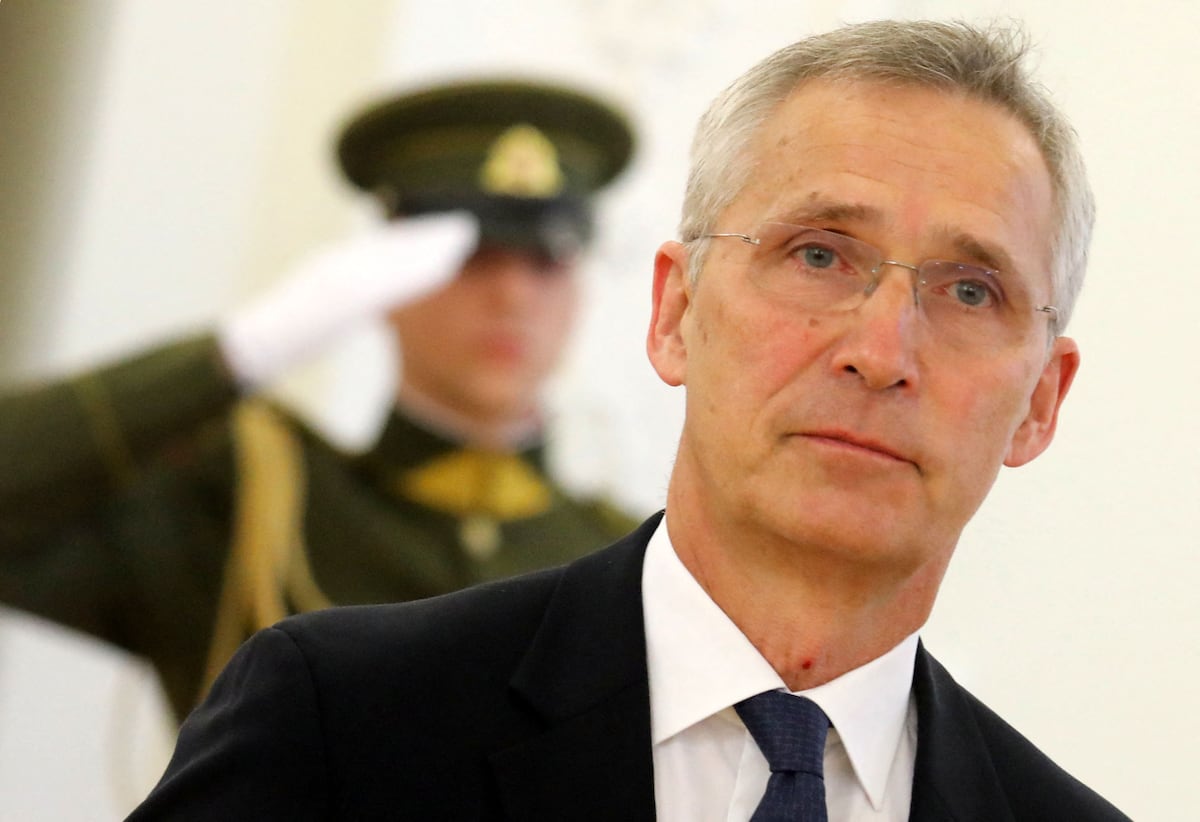
NATO’s leaders will gather next week for a summit in Vilnius, Lithuania. While the war in Ukraine will dominate their agenda , another crucial task for NATO leaders will be to transform European defense: no small feat.
European defense is vital to NATO. A strong European pillar gives NATO more forces to deter and defeat aggression on home soil and reduces the burden on the U.S. of defending Europe. Fair burden-sharing has been in NATO’s DNA since its first strategic concept in 1949 stated that “each nation’s contributions should be in proportion” to its means. Upholding this principle is even more important in a new era of global competition where the primary focus of U.S. policy is on China.
Yet, European defense is in a shockingly poor state . After two-decades of underinvestment and a focus on expeditionary operations, European forces are not fit for purpose to conduct the collective defense missions that now drive NATO’s military and force planning.
European forces suffer from significant gaps in naval forces , air enablers , air defense , and “ battle-decisive ammunition ” (artillery munitions and missiles). For example, while European defense spending rose by 38% from 2013 to 2022 — Central and Western Europe spent a cumulative $345 billion last year — this has led to a mere a 4% increase in combat battalions among some of Europe’s largest armies ( from 218 to 227 battalions ).
While the scale of Europe’s military assistance to Ukraine is impressive, it has also put European militaries in a hole, as they need to backfill their own stocks while continuing to support Ukraine for “as long as it takes.”
To strengthen European security while in Vilnius, NATO leaders should take bold steps in four areas: spending, cooperation, industrial capacity and resilience. They should capture these in a “Vilnius Declaration” to strengthen the European pillar of NATO.
First and foremost, transforming European defense requires raising defense spending. After the Cold War, Europe rebalanced spending on “guns vs. butter” from an average of around 6% of national gross domestic product on defense to 1.6% in 1995 and 1.3% in 2021 . While Russia’s aggression catalyzed a marked increase in European defense spending since 2014, only seven NATO allies currently meet its 2% target.
The task of NATO’s leaders in Vilnius is to forge a new alliancewide “guns vs. butter” consensus that reflects reality. This task is not limited to Vilnius: The European Union’s Stability and Growth Pact requires the majority of NATO’s members (23 of 31 allies) to reconcile increased defense spending with a potential new period of government austerity. EU finance ministers must get with the program, too.
Second, transforming European defense will require boosting cooperation within Europe. Although European nations are spending more on defense, they are cooperating less . Cooperation among EU nations dropped from 21% of total defense procurement in 2016 to 11% in 2020, despite several initiatives designed to encourage cooperation. NATO can improve these prospects in Vilnius by making cooperation a political priority — just as it did in 2012 when the Chicago Summit issued the dedicated Declaration on Defence Capabilities and created the “Smart Defence” initiative.
In contrast, neither the Madrid declaration nor the new Strategic Concept agreed last year mentioned the importance of multinational cooperation for NATO’s future capabilities. This is also in contrast to the EU’s “Versailles Declaration,” agreed in the wake of Russia’s invasion, which championed collaboration and joint procurement.
NATO can also help transform Europe’s defense-industrial base. As Estonian Prime Minister Kaja Kallas pointed out , “a capable technological and industrial base remains a prerequisite” for a “combat-effective Europe.” Yet, Europe’s defense industry cannot keep up with Ukraine’s demand. NATO defense ministers recognized this problem in February and committed to a Defence Production Action Plan in Vilnius. The plan should include multiyear procurements to allow industry to invest in the long term in ramping up production, and to meet Ukraine’s needs while boosting NATO’s own stocks to strengthen deterrence.
The EU’s Act in Support of Ammunition Production — or ASAP — initiative to ramp up production of artillery shells is a good example. But the EU needs to scale up its own efforts. As Kallas also highlighted, if the EU managed to find more than €800 billion (U.S. $869 billion) for pandemic recovery and €750 billion (U.S. $815 billion) to mitigate the energy crisis , it should be able to fund more of its own defense. A call from NATO leaders in Vilnius for the EU to step up would be powerful.
Finally, NATO can also help transform Europe’s defense against nonmilitary hybrid threats, which are emphasized in the new concept and since 2016 included within NATO’s Article 5 collective defense guarantee. Since conventional deterrence does not work against hybrid attacks, deterrence by denial through enhancing resilience across Europe is critical. As NATO’s new concept states , “national and collective resilience are an essential basis for credible deterrence and defence and the effective fulfilment of the Alliance’s core tasks.” NATO already agreed a “ Strengthened Resilience Commitment ” in 2021, which now requires implementing. A collective resilience planning process would be a good start. EU coordination is important here, too, given it has many relevant regulatory, fiscal and policy tools, which NATO does not. The EU-NATO task force on critical infrastructure resilience is a good template that should be applied to cyber defense, too.
When NATO leaders meet in Vilnius next week, supporting Ukraine will be the most urgent agenda item, but transforming European defense is arguably more important in the long run. Strengthening Europe’s defense and industrial capacity supports Ukraine directly, through military assistance, and indirectly, enabling allies to assist without fear of reprisal.
To help Ukraine and themselves, NATO’s leaders should take bold steps on spending, cooperation, industry and resilience, capturing their commitments in a “Vilnius Declaration” to transform European defense. Each step should be coordinated across the European defense landscape, especially with the EU, which has a growing toolbox to complement NATO’s strengths. The “Vilnius Declaration” should be reviewed next year when the trans-Atlantic alliance returns to the birthplace of the Washington Treaty, 75 years on.
Max Bergmann is the director of the Stuart Center and the Europe, Russia, and Eurasia Program at the Center for Strategic and International Studies. He previously served as a senior adviser at the U.S. State Department. Sean Monaghan is a visiting fellow in the CSIS program.
北约领导人将于下周在立陶宛维尔纽斯举行峰会。虽然乌克兰战争将是他们议程的主要内容,但北约领导人面临的另一项关键任务是改革欧洲防务:这绝非易事。
欧洲防务对北约至关重要。强大的欧洲支柱赋予北约更多力量来威慑和击败本土侵略,并减轻美国保卫欧洲的负担。自1949年北约首个战略构想提出“各国贡献应与其能力相称”以来,公平分担责任就已融入北约的基因。在全球竞争日益激烈、美国政策重心转向中国的新时代,坚持这一原则显得尤为重要。
然而,欧洲的国防状况却糟糕得令人震惊。由于过去二十年投资不足,且过于注重远征作战,欧洲军队已无法胜任目前北约军事和部队规划所关注的集体防御任务。
欧洲军队在海军力量、空中支援力量、防空力量和“决定性弹药”(炮弹和导弹)方面存在显著差距。例如,尽管2013年至2022年间欧洲国防开支增长了38%——中欧和西欧去年累计支出达3450亿美元——但这仅使欧洲一些规模最大的军队的作战营数量增加了4%(从218个营增加到227个营)。
虽然欧洲对乌克兰的军事援助规模令人印象深刻,但也使欧洲军队陷入困境,因为他们需要在继续支持乌克兰“直到达成目标”的同时,补充自己的库存。
为加强欧洲安全,北约领导人在维尔纽斯峰会期间应在四个领域采取大胆举措:增加开支、加强合作、提升工业能力和增强韧性。他们应将这些举措纳入《维尔纽斯宣言》,以强化北约的欧洲支柱。
首先,欧洲国防转型需要提高国防开支。冷战结束后,欧洲调整了国防开支在“枪炮与黄油”之间的比例,从平均约占国内生产总值的6%降至1995年的1.6%和2021年的1.3%。尽管自2014年以来,俄罗斯的侵略行为促使欧洲国防开支显著增长,但目前只有七个北约盟国达到了2%的目标。
北约领导人在维尔纽斯的任务是达成一项反映现实的、全联盟范围内的“枪炮与黄油”共识。这项任务不仅限于维尔纽斯:欧盟的《稳定与增长公约》要求北约大多数成员国(31个盟国中的23个)在增加国防开支的同时,应对可能出现的新一轮政府财政紧缩。欧盟各国财政部长也必须积极响应。
其次,欧洲防务转型需要加强欧洲内部合作。尽管欧洲各国在国防上的支出不断增加,但合作却有所减少。欧盟成员国之间的合作占国防采购总额的比例从2016年的21%下降到2020年的11%,尽管欧盟已推出多项旨在促进合作的举措。北约可以通过将合作作为政治优先事项,在维尔纽斯会议上改善这一现状——正如2012年芝加哥峰会发布《国防能力宣言》并提出“智能防御”倡议时所做的那样。
相比之下,《马德里宣言》和去年达成的新战略概念均未提及多国合作对北约未来能力的重要性。这与欧盟在俄罗斯入侵后达成的《凡尔赛宣言》也形成鲜明对比,后者倡导合作和联合采购。
北约还可以帮助欧洲改造其国防工业基础。正如爱沙尼亚总理卡娅·卡拉斯所指出的,“拥有强大的技术和工业基础仍然是打造一个‘作战有效的欧洲’的先决条件”。然而,欧洲的国防工业无法满足乌克兰的需求。北约国防部长们在今年2月认识到了这个问题,并在维尔纽斯承诺制定一项国防生产行动计划。该计划应包括多年采购,以便相关行业能够进行长期投资,提高产量,满足乌克兰的需求,同时增强北约自身的储备,从而强化威慑力。
欧盟的《支持弹药生产法案》(简称ASAP)旨在提高炮弹产量,就是一个很好的例子。但欧盟自身也需要加大投入。正如卡拉斯所强调的,如果欧盟能够筹集超过8000亿欧元(约合8690亿美元)用于疫情后的经济复苏,以及7500亿欧元(约合8150亿美元)用于缓解能源危机,那么它应该有能力为自身国防提供更多资金。北约领导人在维尔纽斯会议上呼吁欧盟加大投入,这将具有强大的影响力。
最后,北约还可以帮助欧洲转变其应对非军事混合威胁的防御能力。这些威胁在新概念中得到强调,并自2016年起被纳入北约第五条集体防御保障条款。由于传统威慑无法应对混合攻击,因此通过增强欧洲整体韧性来实现拒止威慑至关重要。正如北约新概念所述,“国家和集体韧性是可信威慑和防御以及有效履行联盟核心任务的重要基础。”北约已于2021年达成“加强韧性承诺”,现在需要落实该承诺。建立集体韧性规划流程将是一个良好的开端。鉴于欧盟拥有许多北约所缺乏的相关监管、财政和政策工具,欧盟的协调在此也至关重要。欧盟-北约关键基础设施韧性工作组是一个很好的范例,也应应用于网络防御领域。
下周北约领导人在维尔纽斯举行会议时,支持乌克兰将是首要议题,但从长远来看,改革欧洲防务或许更为重要。加强欧洲的国防和工业能力,既能通过军事援助直接支持乌克兰,也能间接地使盟国能够在无需担心报复的情况下提供援助。
为了帮助乌克兰和北约自身,北约领导人应在国防开支、合作、产业和韧性方面采取大胆举措,并在《维尔纽斯宣言》中明确其对欧洲防务转型的承诺。每一步都应在整个欧洲防务领域内协调一致,尤其要与欧盟协调,因为欧盟拥有日益丰富的工具来补充北约的优势。“维尔纽斯宣言”应于明年进行审查,届时跨大西洋联盟将重返《华盛顿条约》的诞生地,距该条约签署已过去75年。
马克斯·伯格曼是战略与国际研究中心斯图尔特中心主任兼欧洲、俄罗斯和欧亚项目主任。他曾任美国国务院高级顾问。肖恩·莫纳汉是战略与国际研究中心项目的访问学者。