China’s ties to Cuba, growing presence in Latin America raise concerns中国与古巴的关系以及在拉丁美洲日益增长的影响力引发了人们的担忧
China’s participation in law enforcement activities in these countries erodes the U.S. position as the region’s preferred security partner.
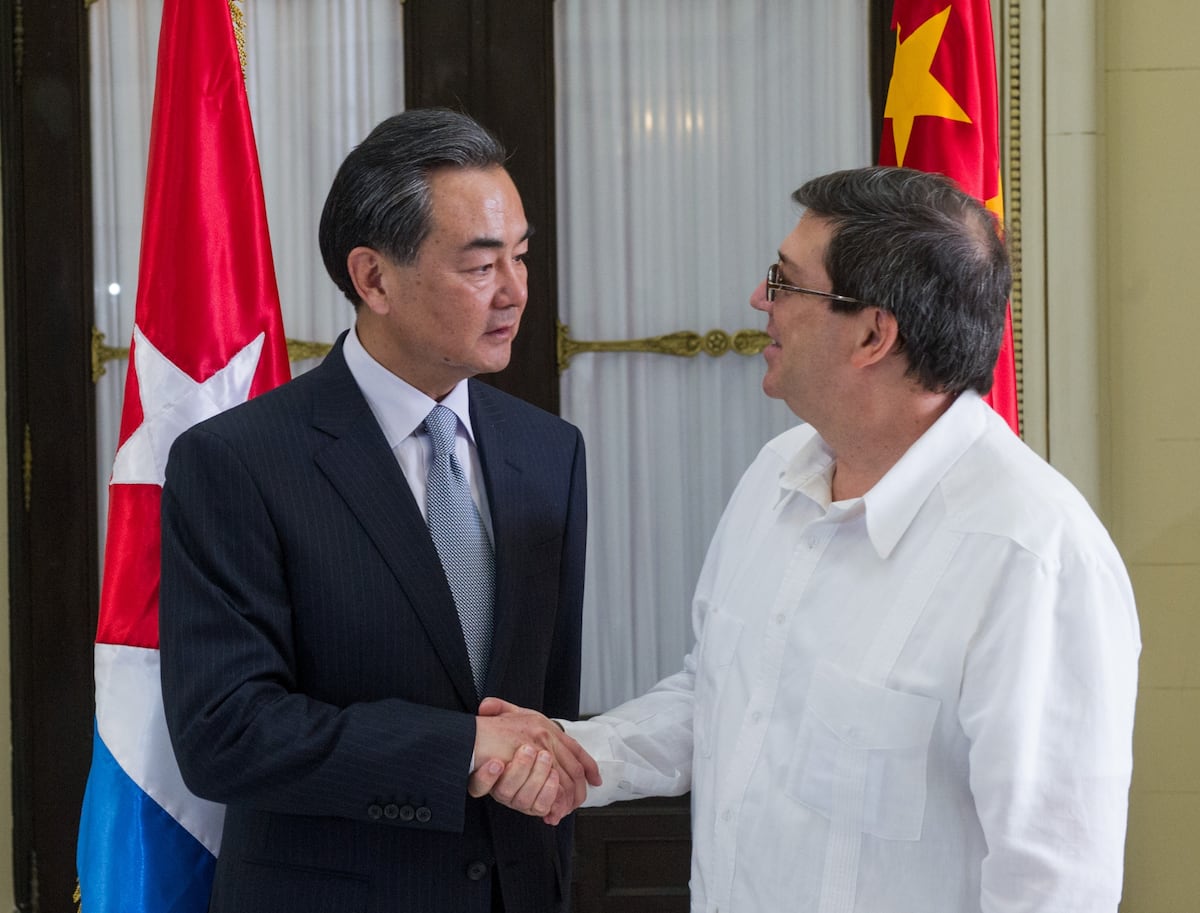
There is a push by leaders in Washington and Beijing to get U.S.-China relations back on track. U.S. Secretary of State Antony Blinken met with President Xi Jinping in China in June 2023 to reopen the lines of communication between the countries. And Treasury Secretary Janet Yellen is spending four days in China, which began July 6, 2023, to try to stabilize U.S.-China economic ties.
But work to steady security issues between the two countries, a longtime point of contention, may have a longer horizon.
In fact, the U.S. military’s decision to shoot down a suspected Chinese spy balloon that had been flying over the country in February 2023 derailed the scheduled diplomatic trip Blinken planned for China earlier in the year.
Now there are news reports that China made deals with Cuba to set up an electronic eavesdropping station on the island nation, just 90 miles from Florida — something Cuban government officials have denied – and to build a military training facility there. Such moves reflect efforts by China to grow its influence in Latin America and the Caribbean .
A Biden administration official in June said China’s spying from Cuba is an ongoing issue that predates the president’s time in office and that U.S. intelligence knew China had upgraded existing espionage facilities in Cuba in 2019.
As a researcher of China-Latin America relations and a former U.S. government official, I have seen firsthand China’s growing influence in Latin America and the Caribbean, and am concerned about its far-reaching implications for U.S. national security.
China’s planned spy base and military training facility in Cuba would be located near the U.S. naval station in Guantanamo Bay, home to several U.S. military facilities like U.S. Southern Command in Miami and U.S. Central Command and U.S. Special Operations Command both in Tampa, along with their various component commands.
The facility would allow Chinese intelligence officers to better intercept sensitive military information transmitted between U.S. military commands, track senior U.S. diplomatic and military leaders as they travel across the region, monitor U.S. naval and commercial ship movement, and gain details about U.S. military exercises, conferences and training with various Latin American and Caribbean countries.
The facility could also bolster China’s use of telecommunications networks to spy on U.S. citizens.
U.S. officials have long suspected Chinese telecommunications companies Huawei and ZTE of setting up servers and network equipment around the world, including in Cuba, to help the Chinese government collect sensitive information about local government leaders and private citizens.
Chinese companies such as China Harbour Engineering Co. have constructed dozens of deep-water port projects in Latin American and Caribbean countries, where Chinese intelligence agencies could track U.S. commercial or naval ship movements around important sea lanes like the Panama Canal, which could help China understand where to restrict U.S. maritime routes during a potential military conflict.
Chinese companies have also either built or operate 12 space research facilities in South America that can be used for legitimate space research. But U.S. and other officials have voiced concern that these same sites could be used to spy on U.S. satellites and intercept sensitive information.
Chinese police forces are a growing presence as well. In April 2023, the FBI arrested two Chinese citizens for allegedly operating an illegal police station in New York City’s Chinatown. According to The New York Times, the men allegedly harassed Chinese dissidents living in the U.S.
China allegedly operates 100 of these police outposts around the world. Fourteen of them are in eight Latin American and Caribbean countries.
China has also been stepping up its law enforcement engagement in Latin American and the Caribbean, donating anti-bullet vests, helmets and vehicles to local security forces, and Latin American and Caribbean law enforcement officers have gone to China to receive training.
Chinese technology companies Huawei, ZTE, Dahua and Hikvision have donated surveillance cameras and facial recognition technology to city governments in Argentina, Brazil, Bolivia, Ecuador, Guyana and Suriname.
While these Chinese companies deploy these technologies to help Latin American and Caribbean governments reduce crime, they could also use them to spy on U.S. government personnel living in these countries. In fact, the U.S. has banned some of these companies out of concern they spy for the Chinese government.
China’s participation in law enforcement activities in these countries erodes the U.S. position as the region’s preferred security partner.
Meanwhile, a major source of conflict between the U.S. and China is the supply of the drug fentanyl . In April 2023, the Biden administration declared fentanyl an emerging threat to U.S. national security. The fentanyl global supply chain often ends on U.S. streets, but it begins in various pharmaceutical company labs in China.
The U.S. Treasury and Justice departments have sanctioned or charged several Chinese companies and individuals for knowingly selling fentanyl precursors to Mexican cartel operatives, who then produce the deadly fentanyl and sell it to Americans.
The China-Cuba connection is just one example of how the Chinese government and Chinese companies have been expanding their influence on America’s doorstep for decades — not just through trade and investment, but also through espionage, military and law enforcement activities. Such activities will greatly affect U.S. national security for years to come.
This article is republished from The Conversation. Click here to read the original article.
Leland Lazarus is the associate director of national security at the Florida International University. Lazarus is also a term member of the Council on Foreign Relations, a nonresident fellow at the Atlantic Council’s Global China Hub, and a board member of the Fulbright Association.
华盛顿和北京的领导人正努力推动美中关系重回正轨。美国国务卿安东尼·布林肯于2023年6月在中国会见了中国国家主席习近平,旨在重启两国间的沟通渠道。此外,美国财政部长珍妮特·耶伦也于2023年7月6日开始在中国进行为期四天的访问,力图稳定美中经济关系。
但稳定两国间长期存在的安全问题,可能需要更长远的努力才能实现。
事实上,2023 年 2 月,美国军方击落了一个疑似中国间谍气球,该气球当时正在中国上空飞行,这一决定打乱了布林肯原定于当年早些时候对中国进行的访问。
现在有新闻报道称,中国与古巴达成协议,将在该岛国(距佛罗里达州仅90英里)设立一个电子窃听站——古巴政府官员否认了这一说法——并在那里建造一个军事训练设施。这些举动反映出中国正努力扩大其在拉丁美洲和加勒比地区的影响力。
拜登政府一位官员在 6 月份表示,中国从古巴进行间谍活动是一个持续存在的问题,早于总统的任期,而且美国情报部门知道中国在 2019 年升级了古巴现有的间谍设施。
作为一名研究中国与拉美关系的学者和美国前政府官员,我亲眼目睹了中国在拉丁美洲和加勒比地区日益增长的影响力,并对其对美国国家安全的深远影响感到担忧。
中国计划在古巴建立间谍基地和军事训练设施,该基地将位于美国关塔那摩湾海军基地附近。关塔那摩湾驻扎着多个美国军事设施,例如位于迈阿密的美国南方司令部、位于坦帕的美国中央司令部和美国特种作战司令部,以及它们的各个下属司令部。
该设施将使中国情报人员能够更好地截获美国军事指挥部之间传输的敏感军事信息,跟踪美国高级外交和军事领导人在该地区旅行的行踪,监控美国海军和商船的动向,并获取有关美国与拉丁美洲和加勒比海各国举行的军事演习、会议和训练的详细信息。
该设施也可能加强中国利用电信网络监视美国公民的行为。
美国官员长期以来一直怀疑中国电信公司华为和中兴通讯在世界各地(包括古巴)设立服务器和网络设备,以帮助中国政府收集有关地方政府领导人和普通公民的敏感信息。
中国港湾工程有限责任公司等中国企业在拉丁美洲和加勒比海国家建造了数十个深水港项目,中国情报机构可以跟踪美国商船或海军舰艇在巴拿马运河等重要航道附近的活动,这有助于中国了解在潜在的军事冲突期间应该限制美国的海上航线。
中国企业还在南美洲建造或运营了12座可用于合法太空研究的航天设施。但美国和其他国家的官员担心,这些设施可能被用来监视美国卫星并截获敏感信息。
中国警察部队在纽约的影响力也在不断增强。2023年4月,美国联邦调查局逮捕了两名中国公民,他们涉嫌在纽约唐人街非法设立派出所。据《纽约时报》报道,这两名男子涉嫌骚扰居住在美国的中国异见人士。
据称中国在全球设有100个此类警察哨所,其中14个位于8个拉丁美洲和加勒比海国家。
中国也一直在加强与拉丁美洲和加勒比地区的执法合作,向当地安全部队捐赠防弹背心、头盔和车辆,拉丁美洲和加勒比地区的执法人员也前往中国接受培训。
中国科技公司华为、中兴、大华和海康威视已向阿根廷、巴西、玻利维亚、厄瓜多尔、圭亚那和苏里南的市政府捐赠了监控摄像头和人脸识别技术。
虽然这些中国公司利用这些技术帮助拉丁美洲和加勒比海地区的政府降低犯罪率,但它们也可能利用这些技术监视居住在这些国家的美国政府人员。事实上,美国已经禁止其中一些公司开展业务,因为担心它们为中国政府从事间谍活动。
中国参与这些国家的执法活动削弱了美国作为该地区首选安全伙伴的地位。
与此同时,芬太尼的供应是美中之间冲突的一个主要根源。2023年4月,拜登政府宣布芬太尼对美国国家安全构成新兴威胁。芬太尼的全球供应链最终往往流入美国街头,但其源头却是中国多家制药公司的实验室。
美国财政部和司法部已对多家中国公司和个人进行制裁或起诉,原因是他们明知故犯地向墨西哥贩毒集团出售芬太尼前体,而这些贩毒集团随后生产致命的芬太尼并将其出售给美国人。
中古关系只是中国政府和中国企业数十年来不断扩大其在美国周边地区影响力的一个例证——这种影响力不仅体现在贸易和投资方面,还体现在间谍活动、军事活动和执法活动方面。这些活动将在未来数年内对美国国家安全产生重大影响。
本文转载自The Conversation。点击此处阅读原文。
利兰·拉扎勒斯是佛罗里达国际大学国家安全副主任。拉扎勒斯同时也是外交关系委员会的定期成员、大西洋理事会全球中国中心的非常驻研究员以及富布赖特协会的理事会成员。