US Air Force has a $14 billion supply hole, service officials say美国空军官员称,美国空军存在140亿美元的物资缺口。
As the force grapples with supply chain and maintenance issues, sustainment funding to fill the $14 billion gap is becoming increasingly necessary.
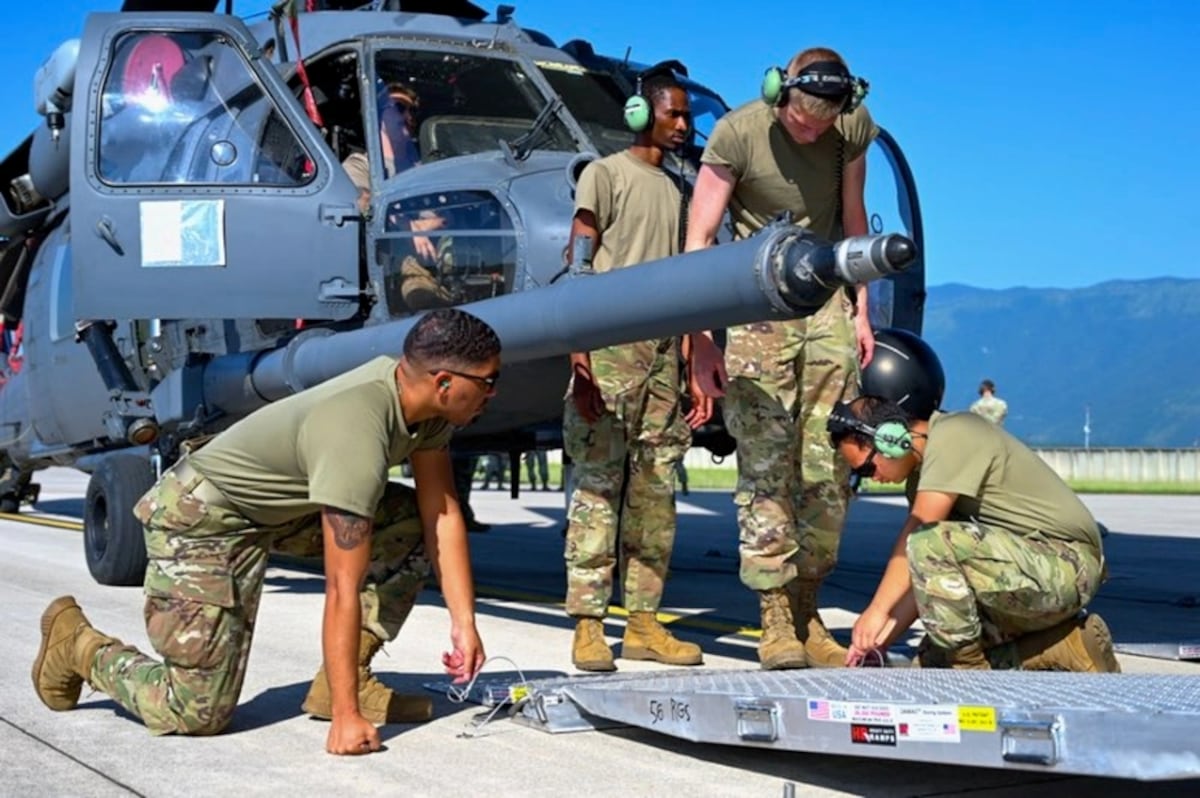
The U.S. Air Force has a $14 billion hole in supply for aircraft parts , affecting how the service acquires parts and looks at sustainment funding, service leaders said Wednesday.
As the force grapples with supply chain and maintenance issues as well as long aircraft service lives , sustainment funding is becoming increasingly necessary to bridge the gap, service officials said in a panel at the Air & Space Forces Association’s 2026 Air, Space & Cyber Conference .
“If I can throw a number out there right now, we have a $14 billion hole in supply,” Commander of Air Force Materiel Command Lt. Gen. Linda Hurry said during a panel titled “Flying and Fixing to Fight and Win.”
“Let that sink in for a minute,” she continued. “I know we’re not going to get it all at once, but when we get it, we’re going to have to execute. We’re going to have to execute smartly so we can move the needle.”
Hurry said that the service is managing the fleet more globally through partnerships, looking at parts with the Defense Logistics Agency and individual pieces that the force can get from the depot back in the field.
“From a supply perspective, our increase in the supply rate, or the number of aircraft that are down from a supply perspective, has increased 87% over the last seven years,” Hurry said.
On average, around 53% of the force’s fleet is over 30 years old, with 55% of the fleet over its “useful” service life, she said.
Hurry added that the force is working to receive additional funding for spare parts through advocating for the budget request to pass. In the fiscal year 2027 budget, the Department of the Air Force requested a record $338.8 billion , with $4.2 billion allotted for the Consolidated Sustainment Activity Group, or CSAG, that manages spare parts and maintenance backlogs, according to budget documents .
“But once we get even a penny, we have to be ready to execute it,” Hurry said.
Hurry also said that the service is striving to improve its “forecasting accuracy” to better understand where the needs are and where to position those assets globally by using artificial intelligence models and additive manufacturing.
On top of those measures, the service is putting long-term contracts in place that build stability in the collective supply chain and multiple sources of supply.
“Gone are the days of monopolies; we can’t just have one person producing the one critical part,” she said. “I need five [industry partners] producing them because if we get down to the crunch, we’re going to have to have a healthy shelf so that we can fight globally.”
The officials touted the North Star Readiness Campaign , which is meant to increase the number of mission-capable B-52 Stratofortress and B-1 Lancer aircraft by accelerating the delivery of parts, engineering support and depot maintenance.
The campaign has been the “number one driver” of improving readiness in the bomber fleet because of the supply increase the force has received, Gen. Stephen L. Davis, commander of the Air Force Global Strike Command, said during the panel.
Specifically, Davis said that the campaign has increased B-52 readiness by 40%.
“As a commander, you don’t want everything to be a money problem to solve it, but this I think is a money problem,” he said. “We need more money for parts. It’s absolutely the case.”
Cristina Stassis is a reporter covering stories surrounding the defense industry, national security, military/veteran affairs and more. She previously worked as an editorial fellow for Defense News in 2024 where she assisted the newsroom in breaking news across Sightline Media Group.
美国空军领导人周三表示,美国空军在飞机零部件供应方面存在 140 亿美元的缺口,这影响了空军获取零部件的方式以及对维护资金的考量。
空军官员在空军与太空部队协会 2026 年航空、航天与网络会议上的一个小组讨论中表示,随着空军面临供应链和维护问题以及飞机使用寿命延长等挑战,维持资金变得越来越必要,以弥补资金缺口。
“如果我现在能说出一个数字,那就是我们在物资供应方面存在 140 亿美元的缺口,”空军装备司令部司令琳达·赫里中将在题为“飞行和维修以赢得战斗和胜利”的小组讨论会上说道。
“好好想想,”她继续说道,“我知道我们不可能一下子就得到所有想要的东西,但当我们得到的时候,就必须执行。我们必须明智地执行,这样才能有所进展。”
赫里表示,该部队正在通过合作,以更全球化的方式管理其机队,与国防后勤局合作,研究部队可以从仓库获得的各个部件,以便部队能够将部件运回前线。
“从供应角度来看,过去七年里,我们的供应率(或者说从供应角度来看,飞机数量的减少)增长了 87%。”赫里说。
她说,平均而言,该部队约 53% 的车辆车龄超过 30 年,55% 的车辆已超过其“有效”使用寿命。
赫里补充说,空军正在努力争取更多资金用于备件采购,为此他们积极游说,争取预算申请获得通过。根据预算文件,在2027财年预算中,空军部申请了创纪录的3388亿美元,其中42亿美元分配给了负责管理备件和维修积压的综合保障活动组(CSAG)。
“但即便我们只拿到一分钱,我们也必须做好执行的准备,”赫里说道。
赫里还表示,该服务正努力提高其“预测准确性”,以便更好地了解需求所在以及在全球范围内如何部署这些资产,方法是使用人工智能模型和增材制造技术。
除了这些措施之外,该服务还制定了长期合同,以建立集体供应链的稳定性和多种供应来源。
“垄断的时代已经过去了;我们不能只让一个人生产一个关键部件,”她说。“我需要五个(行业合作伙伴)来生产,因为如果到了关键时刻,我们需要充足的库存,才能在全球范围内竞争。”
官员们大力宣传“北极星战备行动”,该行动旨在通过加快零部件交付、工程支持和基地维护,增加可执行任务的 B-52 同温层堡垒和 B-1 枪骑兵轰炸机的数量。
空军全球打击司令部司令斯蒂芬·L·戴维斯将军在小组讨论中表示,由于轰炸机部队获得了更多物资供应,此次行动已成为提高轰炸机部队战备水平的“首要驱动力”。
具体来说,戴维斯表示,该行动使 B-52 的战备水平提高了 40%。
“作为指挥官,你当然不希望所有问题都变成用钱解决,但我认为这确实是个钱的问题,”他说。“我们需要更多钱来购买零部件。情况绝对是这样。”
克里斯蒂娜·斯塔西斯是一位记者,主要报道国防工业、国家安全、军事/退伍军人事务等领域的新闻。她曾于2024年在《防务新闻》担任编辑助理,协助Sightline媒体集团旗下新闻编辑室处理突发新闻。