Thailand’s Royal Navy announces ambitious South Korean deal to build next frigate partly at home泰国皇家海军宣布与韩国达成一项雄心勃勃的协议,将在国内部分建造下一代护卫舰。
Thailand turns to South Korea for a ฿16.73 billion missile-packed frigate as the Navy plans eight warships by 2037, shifts up to 30% of construction… Read More ›
新闻视频
September 20, 2026 at 1:07 pm
in Economy , Living , Media , Politics , Thailand
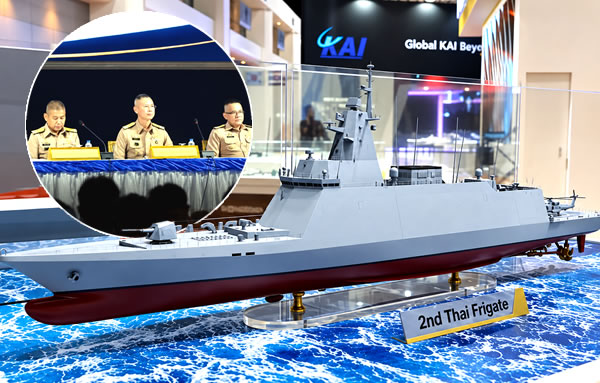
Thailand has picked South Korea’s Hanwha Ocean for a ฿16.73 billion, 4,000-tonne frigate as the Royal Thai Navy launches a far bigger drive to rebuild its fleet and eventually construct front-line warships at home. The heavily armed vessel will bring advanced missile, anti-submarine and air-defence capabilities, while at least 20% of its structural work must be carried out in Thailand. That share rises to 30% if a second ship follows. Crucially, the deal also brings technology transfers, naval designs and combat-system expertise as Thailand targets eight high-performance frigates by 2037. It deepens defence ties with South Korea while giving Thai shipyards their biggest opportunity yet to move from patrol vessels towards sophisticated modern frigates.
Thailand picks Hanwha Ocean for a ฿16.73 billion frigate, with up to 30% built at home as the Navy targets eight ships and transfers South Korean technology to Thai yards. ( Source: Thai PBS )
Thailand is moving to strengthen its naval firepower while pushing more warship construction into Thai yards. The Royal Thai Navy has selected South Korea’s Hanwha Ocean to build its next high-performance frigate.
The ฿16.73 billion deal covers a modern 4,000-tonne warship, combat systems, training and logistical support. Crucially, however, the contract reaches far beyond buying another foreign-built frigate.
Thailand wants technology, design expertise and direct construction experience from the programme. At least 20% of the first ship’s structural work must take place domestically. For a second vessel, that minimum rises to 30%. The Navy ultimately requires four additional high-performance frigates under its long-term force plan. Therefore, later ships could provide further opportunities to expand Thai participation.
Hanwha wins ฿16.73 billion frigate deal after Navy defends requirements and the procurement process
Navy commander-in-chief Admiral Pairoj Fueangchan announced Hanwha’s selection on Friday, September 18. The announcement came during an 11 am press conference at the Royal Thai Navy auditorium in Bangkok. Rear Admiral Parat Rattanachaiphan, the Navy spokesman, also outlined the procurement and its wider objectives.
The programme carried a ฿17 billion budget ceiling. Hanwha’s successful offer came ฿270 million below that limit. Yet the price includes considerably more than construction of the ship itself. The package covers onboard systems, equipment, spare parts, tools and technical documentation. It also includes testing, acceptance, training, logistical support, warranties, transport and insurance.
Operationally, the frigate must cover several major combat roles. It will conduct surface warfare, anti-submarine warfare and air defence. In addition, it must strike land targets and counter unmanned aerial threats. Modern command, control and networked operations form another requirement. The Navy says these capabilities reflect operational missions and anticipated threats.
The Navy also insists the requirements were not constructed around any particular company or warship design. Initially, 11 shipyards and organisations from several countries were invited under the terms of reference. However, the competition subsequently generated complaints from unsuccessful participants. Four competitors reportedly challenged Hanwha’s selection.
Hanwha frigate brings heavy missile armament as final weapons and sensor package remains unsettled
In response, the Navy has defended the procurement process. It says Hanwha remained the only bidder with a fully compliant proposal and supporting documentation. The South Korean company therefore emerged as the successful bidder after the evaluation process.
The selected ship is expected to displace approximately 4,000 tonnes. Hanwha’s proposal has generally been identified with its OCEAN-40F design. Displayed configurations point to a heavily armed, multi-role surface combatant built around modern air, surface and anti-submarine warfare capabilities.
Notably, Hanwha has displayed a 16-cell vertical-launch system aboard its proposed frigate. The configuration has been associated with MBDA VL MICA NG surface-to-air missiles. Exocet MM40 Block 3c missiles have also appeared in the proposed weapons package. Those weapons provide anti-ship capability and can also strike targets ashore.
Separately, a 76mm main gun has appeared in displayed configurations. Two 30mm guns would provide additional close-range firepower. SIMBAD RC short-range air-defence launchers have also been displayed. Meanwhile, proposed sensors have included the TRS-4D radar, alongside electronic warfare and fire-control equipment.
However, the complete contractual weapons and sensor package has not been publicly detailed. Equipment previously displayed with Hanwha’s proposal should therefore not automatically be treated as the final configuration. The precise combat package will become clearer as the programme advances.
South Korean frigate deal deepens naval ties as Thailand plans eight high-performance ships by 2037
The contract also deepens an established Thai-South Korean naval relationship. Hanwha Ocean already has an important connection with the Royal Thai Navy. Its predecessor, Daewoo Shipbuilding & Marine Engineering, built HTMS Bhumibol Adulyadej after winning the contract in 2013.
That frigate was delivered in 2018 and entered Royal Thai Navy service in 2019. It became one of Thailand’s most sophisticated surface combatants. Thus, Thailand is not placing its latest order with an unfamiliar builder. Training, maintenance and operational experience already connect the Navy with the Korean shipbuilding group.
This time, though, Bangkok wants considerably greater industrial participation. The Navy intends to use the frigate programme to strengthen Thailand’s domestic shipbuilding base. Its wider fleet requirement provides the framework for that effort.
The Navy ultimately wants eight high-performance frigates by 2037. Four would serve primarily in the Gulf of Thailand, while another four would cover the Andaman Sea. Currently, only four ships count towards that requirement. Consequently, Thailand needs another four frigates under its long-term force plan.
However, purchasing four sophisticated warships simultaneously would place a heavy burden on the defence budget. The Navy is therefore approaching the requirement through separate budget cycles. The Hanwha frigate represents the first vessel. A second ship has already been discussed for the 2028 fiscal year.
Thai construction rises from 20% to 30% as Hanwha offset package pushes work into domestic shipyards
Further purchases would still require government approval and future budgets. Nevertheless, the staggered programme creates an opportunity to increase Thai participation with each vessel. The first two stages already contain specific domestic construction requirements.
At least 20% of structural work on the first frigate must occur in Thailand. For a second ship, that requirement increases to at least 30%. Thai yards must therefore undertake substantial physical construction rather than simply receive training. That work should also expose Thai engineers and shipbuilders to construction methods used on a modern front-line combatant.
Beyond construction, Hanwha’s offset package adds another industrial layer. Its proposal contains offset activities with an actual value of ฿7,254,744,788.66. That represents 43.36% of the frigate project’s value. Importantly, the figure does not represent cash handed to the Thai government.
Instead, it measures qualifying investment and economic activity generated through the offset programme. A separate offset credit value exceeds ฿53.65 billion. Again, that figure is not a direct financial payment. It is calculated using multipliers assigned to qualifying offset activities.
Those activities include investment, research, development and technology transfers. Workforce development and joint production can also qualify. Likewise, use of Thai labour, materials, products and services forms part of the programme. The industrial package therefore extends well beyond structural work on the first frigate.
Hanwha transfers patrol and unmanned vessel designs as Thailand targets advanced naval integration
Hanwha will also provide Thailand with an offshore patrol vessel design. The transfer is intended to strengthen domestic ship design and construction knowledge. Furthermore, Thailand will receive a design for an unmanned surface vessel. Both could broaden the Navy’s domestic construction options beyond the frigate programme.
On another front, the package covers technical knowledge involving a tactical data link. Development rights connected with a combat management system are also included. Those transfers move beyond physical shipbuilding into the more difficult field of naval systems engineering.
That distinction is central to Thailand’s longer-term objective. Building a modern frigate involves much more than constructing its steel hull. Weapons, sensors, communications and propulsion systems must operate together reliably. Radar must work alongside sonar, communications and electronic warfare equipment.
At the same time, missiles and guns require reliable links with sensors and fire-control systems. Navigation and tactical communications must also operate within the wider architecture. Above these systems sits the combat management system, which combines information for the ship’s crew.
Accordingly, systems integration represents one of the hardest parts of modern warship construction. Thailand wants experience in both physical construction and integration. Still, the Navy is not claiming immediate independence from overseas suppliers.
Thailand targets domestic frigate construction but key engines, weapons and sensors will stay imported
Complete domestic construction has instead been described as a long-term strategic objective. Moreover, building a frigate in Thailand would not mean every component was manufactured domestically. Even countries possessing much larger naval industries frequently use imported systems.
Thailand would likewise remain dependent on foreign suppliers for sophisticated equipment. Large marine diesel engines or gas turbines could remain imported. Missiles and advanced radar components would probably also come from overseas. Sonar and electronic warfare equipment present similar challenges.
Specialist communications equipment, weapons and fire-control systems could also remain foreign-supplied. Marine gearboxes and other complex machinery create further industrial hurdles. The Navy itself has acknowledged that machinery, weapons and sensors would still require imports.
Domestic construction therefore differs from complete domestic manufacture. Thailand could build, outfit and test a frigate while still installing major foreign systems. Imported engines, weapons and sensors could be integrated into a ship constructed inside Thailand.
Over time, Thai engineers could also take greater responsibility for design modifications and systems integration. That would represent a major advance from purchasing completed warships overseas. However, the Navy has not announced when it expects to reach that stage.
Thailand brings proven shipbuilding experience from Krabi and Prachuap Khiri Khan into frigate push
Thailand does enter the programme with substantial shipbuilding experience. It has previously constructed large military vessels using transferred foreign technology. HTMS Krabi provides the clearest example of that approach.
In 2009, Thailand signed a technology-transfer agreement with Britain’s BAE Systems for a 90-metre offshore patrol vessel design. The design was subsequently adapted to Royal Thai Navy requirements. HTMS Krabi was then constructed at the Mahidol Adulyadej Naval Dockyard in Thailand.
British engineers worked alongside Bangkok Dock and Thai personnel during the programme. Importantly, the arrangement transferred design, engineering and construction knowledge. Krabi’s keel was laid in August 2010, and the vessel was launched around 15 months later. It entered Royal Thai Navy service in 2013.
Krabi was considerably more substantial than a small coastal patrol craft. The 90-metre vessel carries naval weapons and an integrated combat system. Its armament includes a 76mm gun. The project therefore gave Thai workers experience constructing and outfitting a significant military vessel.
Thailand then repeated the process. HTMS Prachuap Khiri Khan was based on the Krabi design and was also constructed domestically. The Navy explicitly connected that programme with self-reliance and greater capability to build large naval vessels.
Thai naval yards and private shipbuilders provide a domestic base for larger warship construction
That experience provides a clear precedent for the Hanwha strategy. Thailand first obtained a foreign design and received technology transfers. Thai workers then constructed the vessel domestically. Afterwards, a second Thai-built ship extended that experience and retained skills inside the country.
Thailand has also designed and constructed smaller naval craft itself. The T.994 patrol craft is one example. The Royal Thai Navy’s dockyard built the vessel from a Naval Dockyard Department design. Construction used modular blocks before propulsion, electrical and other systems were installed.
Electronic, navigation and weapons systems were also fitted in Thailand. Consequently, the country already possesses experience extending from small indigenous craft to large foreign-designed patrol vessels.
Private industry adds another layer. Thai shipbuilder Marsun says it has delivered more than 422 vessels, including military craft. Its products include fast patrol craft and fast attack missile craft. Its yard can outfit and launch vessels weighing approximately 3,000 tonnes.
Moreover, Marsun has designed and constructed military vessels for the Royal Thai Navy. Those include a 58-metre patrol gunboat. Thailand therefore already possesses shipyards, naval architects, engineers and skilled construction workers.
Thailand faces tougher technology demands as Hanwha deal deepens wider defence links with South Korea
The challenge is moving those capabilities into a much higher technological category. A modern 4,000-tonne frigate represents that step. Its engineering demands greatly exceed those of an offshore patrol vessel.
For instance, weapons supplied by different manufacturers must communicate through common combat systems. Radar and communications equipment must also function without unacceptable electromagnetic interference. A front-line warship must additionally control acoustic and electronic signatures.
Software integration presents another demanding field. Weapons integration, trials, certification and combat-system testing add further complexity. For that reason, Hanwha’s technology transfers could prove as important as the physical shipbuilding work.
South Korea itself developed its naval industry through a long expansion of domestic capability. The country previously depended heavily on foreign naval technology and licensed production. Its shipbuilding industry subsequently expanded into increasingly sophisticated vessels.
Today, South Korea ranks among the world’s major commercial and naval shipbuilding countries. Hanwha Ocean constructs destroyers, frigates and submarines. It also maintains extensive commercial shipbuilding operations.
Against that background, the frigate strengthens broader Thai-South Korean industrial ties. Defence cooperation between the two countries already extends beyond ships. In 2024, Thai Defence Industry reached an agreement with Hanwha Aerospace involving the K200 infantry fighting vehicle.
Thai-South Korean defence ties widen as transferred naval technology could support future ship exports
The Thai operation is linked with Thailand’s Defence Technology Institute. Thai defence manufacturer Chaiseri was also involved in the project. Significantly, the stated ambitions included potential production for customers outside Thailand.
Economic relations have been developing in parallel. Bangkok and Seoul have worked towards a broader comprehensive economic partnership agreement. Both governments also describe their bilateral relationship as a strategic partnership. The frigate contract now adds a major naval-industrial component.
Transferred technology could also strengthen Thailand’s existing naval export industry. Thai companies already possess experience supplying smaller vessels. Exporting sophisticated frigates, however, would represent a much greater step.
Major foreign shipbuilders already compete aggressively for those contracts. South Korean, Chinese, Turkish, French and Spanish companies are established competitors. By contrast, smaller naval vessels could provide Thailand with a more immediate export opportunity.
Here, Hanwha’s offshore patrol vessel design could become particularly important. Thai yards could construct such ships using transferred engineering knowledge. Imported weapons and electronics could then be fitted according to customer requirements.
Such vessels could serve navies and coastguards requiring patrol ships rather than advanced front-line frigates. Future exports, however, would partly depend on intellectual property rights transferred under the Hanwha agreement.
Intellectual property rights will shape Thailand’s freedom to modify, build and export future warships
That issue matters because modern warships contain technology belonging to numerous manufacturers. Hanwha can transfer rights covering designs and technology it controls. It cannot automatically transfer unrestricted rights belonging to other companies.
Missile manufacturers retain their own intellectual property. Radar, sonar, propulsion and electronic warfare suppliers do the same. Consequently, detailed contractual arrangements will shape Thailand’s freedom to modify or eventually export derived designs.
Access to engineering data will be one important measure. Another will be Thailand’s ability to alter designs without continuing foreign engineering assistance. Rights to construct additional vessels will also matter.
Likewise, combat-system interfaces and development rights will influence future Thai integration work. Export rights could become important if Thailand later markets ships derived from transferred designs.
For now, the programme establishes several concrete industrial steps. Thailand gets a new 4,000-tonne high-performance frigate for ฿16.73 billion. At least 20% of its structural work must take place domestically.
If a second ship follows, that minimum rises to 30%. Alongside this, Hanwha’s offset package contains ฿7.25 billion of actual qualifying activity. Thailand also receives offshore patrol vessel and unmanned surface vessel designs.
Thailand seeks combat-system expertise as four-ship frigate plan opens path to greater domestic work
Technical transfers additionally extend into tactical data links and combat management systems. Taken together, the package combines an immediate naval purchase with a longer industrial programme.
Thailand has already demonstrated that it can construct large offshore patrol vessels domestically. It has also designed and built smaller naval craft. Nevertheless, a modern frigate represents a much harder technological undertaking.
The Navy has not announced when a largely domestically constructed frigate could become reality. It has spent about two years assessing Thai shipyards and companies. Its assessment found several areas where domestic capabilities still require improvement.
Even so, the planned four-ship requirement provides repeated opportunities to increase Thai involvement. Those vessels will be required as older warships retire. By 2037, the Navy wants eight high-performance frigates in service.
Eight-frigate target splits future fleet between Gulf and Andaman as Thai construction share increases
Four are intended for the Gulf of Thailand. Another four are planned for the Andaman Sea. The first Hanwha vessel now starts that replacement programme while shifting part of construction into Thailand.
The first ship remains a South Korean-led project. Yet one-fifth of its structural work must already be performed domestically. A second vessel would increase that Thai requirement again.
In parallel, Hanwha must deliver technology, designs and industrial cooperation alongside the frigate. Thailand previously used that route to build offshore patrol vessels at home. This time, however, the technological target is far higher.
The immediate purchase is a ฿16.73 billion South Korean frigate. Behind it stands a broader Royal Thai Navy objective. Thailand wants the industrial capability to build increasingly sophisticated major warships inside the kingdom.
Shell from cannon fired from one naval frigate into another as they docked at Sattahip Naval base on Thursday
Move by Navy Chief puts Chinese sub back in the water as he seeks legal clarity on the contract
Thailand cancels Chinese sub, wants credit for a new frigate. Tense talks that could yet go legal
Chinese nuclear-powered sub disaster, 55 dead in the Yellow Sea, a wakeup call for Thailand
Navy may accept Chinese engine in new ฿13.5 billion sub if it gets an older one thrown in for free
Sub call due soon but closer ties between Chinese and Thai navies signalled by top-level visit
War with China is a rising spectre that must be confronted as US General predicts conflict by 2025
Heat turned up over the Sukhothai naval tragedy with 19 thought to have perished and 10 missing
Former Pheu Thai finance minister expresses unease about US regional moves to counter China’s rise
Joseph Anthony is an expat from Ireland who has lived in Thailand for the last decade. He has worked extensively in the media including editorial positions in Ireland and Thailand. He is focused on economic and business stories in Thailand as well as the expat lifestyle.
All posts by Joseph O' Connor
United Nations process begins with hearing in Singapore. Thai Foreign Minister took a bold, hard line September 15, 2026 Thailand and Cambodia face off in Singapore over
From stalls to smartphones, Thai Revenue pulls in a growing cohort of online traders in new economy September 15, 2026 Thailand’s taxman chases the smartphone economy as
Tighter ‘bottleneck’ regime on money transfers in force across financial system per central bank orders September 15, 2026 Bank of Thailand Governor Vitai Ratanakorn orders
PM Anutin accompanies King and Queen on a historic visit to Vietnam for three days hours before verdict September 14, 2026 King and Queen begin historic Hanoi State Visit as
Election Commission creates more questions than answers as it refers 77 people to the Supreme Court September 14, 2026 Senate scandal heads for court as EC targets 77
Gauntlet thrown down to the Election Commission before it votes on explosive Senate collusion scandal cases September 14, 2026 Monday’s Senate showdown could open a new political
Police raids on nightlife venues in Bangkok’s Wang Thonglang area as clandestine foreign control grows September 14, 2026 Bangkok police swoop on 17 venues in Wang
TH AI plan runs into problems and bottlenecks. New AIS deal offering cheap 29 baht per month internet September 13, 2026 Thailand’s flagship ฿1.6 billion AI scheme hits
Prime Minister scrambles to get data centre sector back on track after energy and regulatory hiatus September 13, 2026 Thailand’s data centre boom hits a regulatory wall
Mystery Chinese man used lost phone to lure Thai woman into trap at his condo and sexually attack her September 12, 2026 Pattaya woman Beam Mukassara claims a Chinese man
Former Ayutthaya abbot and his mistress sent to jail as court denies them bail as police probe finances September 12, 2026 Sex, cash and gold engulf a royal Ayutthaya temple as
Rising concerns in tourist hotspots about unruly tourists from Middle Eastern countries refusing to pay September 12, 2026 Foreign tourist mocks a Phuket motorcycle rider and
American wanted for sex offences against female minors arrested at Chiang Mai Buddhist retreat September 11, 2026 Thai police infiltrate a Chiang Mai meditation retreat
PM Anutin’s mission to Oslo to represent Thailand at the funeral of King Harald V amid budget scrutiny by the opposition September 11, 2026 Royal mission puts Anutin among monarchs and world
Bank of Thailand warns economic potential is falling with a severe crisis in the small business sector September 11, 2026 Thailand faces a widening economic split as exports
Masked man stages armed robbery in Pathum Thani netting 1.5 million baht before torching getaway car September 10, 2026 Gunman seals six people inside a Talat Thai bank,
Police officer bursts into tears as he surrenders to police led by son a day after murdering his wife September 10, 2026 Kindergarten killing ends in a dramatic dawn surrender
Partnership between Nestlé and the billionaire Mahagitsiri family descends into all out legal warfare September 15, 2026
Four bodies removed Tuesday from a Jewish cemetery in Chachoengsao in new crackdown on illegal burials September 15, 2026
Election Commission exposed based on Monday’s sweeping decisions and judgments warns opposition September 15, 2026
Chinese man arrested after he fled to Thailand in 1991. Firm’s capital raised weeks before his shock downfall September 14, 2026
Thailand’s K-shaped economy sees a large number of people cut back on food and meals to make ends meet September 14, 2026
Opinion poll shows public concern about Israeli misbehaviour in Thailand amid a febrile political mood September 14, 2026
Ex Pheu Thai minister warns Commission members that soon they could be judged as crunch vote looms September 13, 2026
Sex and financial scandal at famous monastery rocks Thailand. Abbot and girlfriend amassed huge wealth September 13, 2026
Thailand hailed as a haven for retirees and digital nomads but officials breed doubt and uncertainty September 12, 2026
Commerce Minister Suphajee responds to Sondhi Limthongkul’s attack on new liberal investment rules September 12, 2026
Pressure movement against Israel in Thailand gains momentum as it combines with street protests September 12, 2026
Bank bandit arrested at a Bangkok resort. 54 year old Saifa Kasemut has a history of armed robbery crime September 12, 2026
Former Prime Minister and Democrat Party leader cites a lack of public trust in the Election Commission September 11, 2026
Foreign nominee companies down by 81.77% as government seizes or freezes assets of over 20 billion September 11, 2026
Ayutthaya abbot disrobes as top temple official is arrested by police who worked undercover for months September 10, 2026
Veteran protest leader and media boss Sondhi begins his street protest campaign at Israel’s Embassy September 10, 2026
Substantial US Thai trade deal ready to be finalised by a call between Anutin and Trump says Minister September 10, 2026
Pattaya police officer clinically executed his wife at a kindergarten and was later surrounded at home September 9, 2026
Thailand gets ready to enter the age of nuclear power with plans for two small modular reactors by 2037 September 9, 2026
Petrol and diesel rise as inflation for August comes in at 2.53%. However confidence is also seen rising September 9, 2026
Nationwide probe targeting over 36K foreigner linked firms with land and a further 7k which own condos September 8, 2026
Sex network boss arrested in shock police home raid on Sunday after probe exposed child porn racket September 8, 2026
© 2026 Thai Examiner. All rights reserved.
2026年9月20日下午1点07分
经济、生活、媒体、政治、泰国
泰国已选定韩国韩华海洋造船厂建造一艘价值167.3亿泰铢、排水量4000吨的护卫舰。泰国皇家海军正大力推进舰队重建,并最终实现本土建造一线战舰的目标。这艘装备精良的护卫舰将具备先进的导弹、反潜和防空能力,且至少20%的结构建造工作必须在泰国完成。如果后续建造第二艘,这一比例将上升至30%。至关重要的是,该协议还包含技术转让、海军设计以及作战系统方面的专业知识,因为泰国计划到2037年建造八艘高性能护卫舰。此举不仅深化了泰国与韩国的防务关系,也为泰国造船厂提供了迄今为止最大的机遇,使其能够从建造巡逻舰转向建造先进的现代化护卫舰。
泰国海军选定韩华海洋公司建造价值167.3亿泰铢的护卫舰,其中高达30%的部件将在泰国本土建造。泰国海军计划建造8艘护卫舰,并将韩国技术转让给泰国船厂。(来源:泰国公共电视台)
泰国正致力于增强海军火力,同时推动更多军舰在泰国本土船厂建造。泰国皇家海军已选择韩国韩华海洋造船厂建造其下一艘高性能护卫舰。
这份价值167.3亿泰铢的合同涵盖一艘4000吨级的现代化战舰、作战系统、训练和后勤支持。但至关重要的是,这份合同的意义远不止于购买另一艘外国建造的护卫舰。
泰国希望从该项目中获得技术、设计专长和直接建造经验。首舰至少20%的结构工作必须在泰国国内完成。第二艘舰艇的最低要求是30%。根据泰国海军的长期兵力规划,最终还需要四艘高性能护卫舰。因此,后续舰艇的建造可能会为泰国进一步扩大参与该项目提供机会。
在海军捍卫其需求和采购流程后,韩华赢得了价值167.3亿泰铢的护卫舰订单。
海军总司令派罗·富昂灿海军上将于9月18日星期五宣布韩华公司中标。该消息是在曼谷皇家泰国海军礼堂上午11点举行的新闻发布会上宣布的。海军发言人帕拉特·拉达纳猜潘海军少将也概述了此次采购及其更广泛的目标。
该项目预算上限为170亿泰铢。韩华的中标报价比上限低了2.7亿泰铢。然而,这笔费用远不止船舶建造本身。它涵盖了船上系统、设备、备件、工具和技术文档,还包括测试、验收、培训、后勤支持、保修、运输和保险。
在作战方面,护卫舰必须承担多项主要作战任务,包括水面作战、反潜作战和防空作战。此外,它还必须打击陆地目标并应对无人机威胁。现代化的指挥、控制和网络化作战能力也是其另一项必备条件。海军表示,这些能力体现了作战任务和预期威胁。
海军方面也坚称,这些要求并非围绕任何特定公司或军舰设计而制定。最初,根据招标书,来自多个国家的11家造船厂和机构受邀参与。然而,竞标过程随后引发了落选者的不满。据报道,有四家竞争对手对韩华的中标结果提出了质疑。
韩华护卫舰将配备重型导弹武器,但最终的武器和传感器配置尚未确定。
对此,海军方面为采购流程进行了辩护。海军称,韩华是唯一一家提交了完全符合要求的方案和相关证明文件的投标方。因此,这家韩国公司在评估流程后脱颖而出,成为中标方。
选定的舰艇预计排水量约为4000吨。韩华的方案通常被认为是其OCEAN-40F设计。已公布的配置表明,这将是一艘配备重型武器、具备多用途水面作战能力的舰艇,其核心在于现代化的空中、水面和反潜作战能力。
值得注意的是,韩华在其拟建的护卫舰上展示了一套16单元垂直发射系统。该系统与MBDA VL MICA NG舰空导弹配套使用。此外,拟建武器系统中还出现了飞鱼MM40 Block 3c导弹。这些武器具备反舰能力,也能打击岸上目标。
此外,展出的配置方案中还包括一门76毫米主炮。两门30毫米炮将提供额外的近程火力。SIMBAD遥控短程防空导弹系统也已亮相。同时,拟配备的传感器包括TRS-4D雷达以及电子战和火控设备。
然而,完整的武器和传感器合同方案尚未公开。因此,此前韩华方案中展示的装备不应被视为最终配置。随着项目的推进,具体的作战方案将会更加清晰。
韩国护卫舰交易加深两国海军关系,泰国计划到2037年建造八艘高性能舰艇。
该合同也进一步深化了泰韩两国业已存在的海军合作关系。韩华海洋与泰国皇家海军早已有着密切的联系。其前身大宇造船海洋工程公司在2013年赢得合同后,建造了“普密蓬·阿杜德”号巡洋舰。
那艘护卫舰于2018年交付,并于2019年正式加入泰国皇家海军服役,成为泰国最先进的水面作战舰艇之一。因此,泰国此次订购并非选择一家陌生的造船厂。此前,泰国海军已与这家韩国造船集团在培训、维护和作战方面积累了丰富的经验。
不过,这一次曼谷希望工业界参与度大幅提高。海军计划利用护卫舰项目来加强泰国国内造船业的基础。其不断扩大的舰队需求为此提供了框架。
泰国海军最终目标是在2037年前拥有八艘高性能护卫舰。其中四艘将主要部署在泰国湾,另外四艘将负责安达曼海的巡逻任务。目前,只有四艘舰艇符合这一需求。因此,根据泰国的长期兵力规划,还需要再建造四艘护卫舰。
然而,同时采购四艘先进战舰将给国防预算带来沉重负担。因此,海军正分阶段分预算来满足这一需求。韩华级护卫舰是第一艘。第二艘护卫舰的建造计划已在讨论中,预计将于2028财年启动。
韩华集团的补偿方案推动泰国国内造船厂承建工程,泰国建筑业占比从20%上升至30%。
后续采购仍需政府批准和未来预算。尽管如此,分阶段实施的计划为提高泰国参与每艘船舶的程度创造了机会。前两个阶段已包含具体的国内建造要求。
首艘护卫舰至少20%的结构工程必须在泰国完成。第二艘护卫舰的这一比例则至少提高到30%。因此,泰国船厂必须承担大量的实际建造工作,而不仅仅是接受培训。这项工作也应使泰国工程师和造船工人接触到现代一线作战舰艇的建造方法。
除了建设之外,韩华的补偿方案还涵盖了另一个产业层面。其方案包含的补偿活动实际价值为7,254,744,788.66泰铢,相当于护卫舰项目总价值的43.36%。值得注意的是,该数字并非支付给泰国政府的现金。
相反,它衡量的是通过抵消计划产生的合格投资和经济活动。单独的抵消信用额超过536.5亿泰铢。再次强调,该金额并非直接的现金支付,而是根据分配给合格抵消活动的乘数计算得出的。
这些活动包括投资、研究、开发和技术转让。劳动力发展和联合生产也符合条件。同样,使用泰国劳动力、材料、产品和服务也是该计划的一部分。因此,该产业方案的范围远远超出了首艘护卫舰的结构工程。
韩华向泰国转让巡逻艇和无人艇设计方案,助力泰国推进先进的海军一体化建设
韩华还将向泰国提供近海巡逻舰的设计方案。此次转让旨在加强泰国国内的船舶设计和建造技术。此外,泰国还将获得一种无人水面舰艇的设计方案。这两项技术都可能拓展泰国海军在护卫舰项目之外的本土造船选择。
另一方面,该方案涵盖了战术数据链相关的技术知识,以及与作战管理系统相关的开发权。这些转让超越了实体造船领域,进入了更为复杂的海军系统工程领域。
这一区别对泰国的长期目标至关重要。建造一艘现代化护卫舰远不止建造钢制船体那么简单。武器、传感器、通信和推进系统必须可靠地协同工作。雷达必须与声呐、通信和电子战设备协同作战。
同时,导弹和火炮需要与传感器和火控系统建立可靠的连接。导航和战术通信也必须在更广泛的系统架构内运行。在这些系统之上是作战管理系统,它整合信息供舰员使用。
因此,系统集成是现代军舰建造中最困难的环节之一。泰国希望在舰艇建造和系统集成方面都积累经验。不过,泰国海军并未声称能够立即摆脱对海外供应商的依赖。
泰国计划发展国产护卫舰,但关键的发动机、武器和传感器仍将依赖进口。
相反,完全自主建造护卫舰被视为一项长期战略目标。此外,在泰国建造护卫舰并不意味着所有部件都由泰国制造。即使是拥有规模更大的海军工业的国家,也经常使用进口系统。
同样,泰国在精密设备方面仍将依赖外国供应商。大型船用柴油发动机或燃气轮机可能仍需进口。导弹和先进雷达组件也可能来自海外。声呐和电子战设备也面临着类似的挑战。
专用通信设备、武器和火控系统可能仍需依赖外国供应。船用齿轮箱和其他复杂机械设备也构成进一步的工业难题。海军自身也承认,机械设备、武器和传感器仍然需要进口。
因此,国内建造与完全国产化有所不同。泰国可以在建造、舾装和测试护卫舰的同时,安装主要的外国系统。进口的发动机、武器和传感器可以集成到泰国境内建造的舰艇上。
随着时间的推移,泰国工程师也将承担更多设计修改和系统集成方面的责任。这将标志着从购买海外成品军舰到自主研发军舰的重大进步。然而,海军尚未宣布预计何时能够达到这一阶段。
泰国将甲米和巴蜀府成熟的造船经验应用于护卫舰的研发。
泰国在参与该项目时拥有丰富的造船经验。此前,泰国曾利用外国转让的技术建造过大型军舰。“甲米”号就是这种做法最鲜明的例证。
2009年,泰国与英国BAE系统公司签署了一项技术转让协议,引进英国BAE系统公司90米近海巡逻舰的设计方案。该设计方案随后根据泰国皇家海军的需求进行了调整。之后,泰国皇家海军在玛希隆·阿杜德海军造船厂建造了“甲米”号巡逻舰。
在项目期间,英国工程师与曼谷船坞和泰国人员并肩工作。重要的是,这种合作模式实现了设计、工程和建造知识的转移。“甲米”号于2010年8月铺设龙骨,约15个月后下水,并于2013年正式加入泰国皇家海军服役。
“甲米”号远比小型近海巡逻艇要大得多。这艘90米长的舰艇配备了海军武器和一体化作战系统,其武器装备包括一门76毫米舰炮。因此,该项目使泰国工人积累了建造和装备大型军舰的经验。
泰国随后也复制了这一过程。“巴蜀府”号(HTMS Prachuap Khiri Khan)以“甲米”号的设计为基础,同样在国内建造。泰国海军明确将该项目与自主建造大型舰艇的能力提升联系起来。
泰国海军造船厂和私营造船厂为大型军舰的建造提供了国内基础。
这一经验为韩华的战略提供了清晰的先例。泰国首先获得了外国的设计方案和技术转让,然后由泰国工人在国内建造了船舶。之后,第二艘泰国建造的船舶进一步拓展了这一经验,并将技术保留在了国内。
泰国也曾自行设计和建造小型海军舰艇,T.994巡逻艇便是其中之一。该艇由泰国皇家海军船坞根据海军船坞部的设计图纸建造而成。建造过程中采用模块化结构,在安装推进系统、电气系统和其他系统之前,先将各个模块分段建造。
泰国也为其安装了电子、导航和武器系统。因此,该国已积累了从小型国产舰艇到大型外国设计巡逻舰艇的丰富经验。
私营企业也为这一领域增添了新的维度。泰国造船企业玛森(Marsun)表示,已交付超过422艘船舶,其中包括军用舰艇。其产品包括快速巡逻艇和快速攻击导弹艇。玛森船厂能够舾装并下水排水量约为3000吨的舰艇。
此外,Marsun公司还为泰国皇家海军设计和建造了军用舰艇,其中包括一艘58米长的巡逻炮艇。因此,泰国已经拥有造船厂、船舶设计师、工程师和熟练的建筑工人。
随着韩华交易加深与韩国更广泛的防务联系,泰国面临更严格的技术要求。
真正的挑战在于如何将这些能力提升到一个更高的技术水平。一艘现代化的4000吨级护卫舰正是这一步的体现。它的工程要求远远超过近海巡逻舰。
例如,不同制造商提供的武器必须通过通用作战系统进行通信。雷达和通信设备也必须在不受不可接受的电磁干扰的情况下正常工作。此外,一线战舰还必须控制其声学和电子特征。
软件集成是另一个极具挑战性的领域。武器集成、试验、认证和作战系统测试则进一步增加了复杂性。因此,韩华的技术转让可能与实际的造船工作同等重要。
韩国的造船业是通过长期提升国内能力而发展起来的。此前,韩国严重依赖外国海军技术和特许生产。随后,其造船业发展壮大,建造出越来越复杂的舰艇。
如今,韩国已跻身世界主要商用和海军造船国之列。韩华海洋造船厂建造驱逐舰、护卫舰和潜艇,并拥有庞大的商用造船业务。
在此背景下,这艘护卫舰进一步加强了泰韩两国更广泛的工业联系。两国间的防务合作早已超越舰艇领域。2024年,泰国国防工业公司与韩华航空航天公司就K200步兵战车项目达成协议。
泰韩防务关系拓展,海军技术转让或将支持未来舰船出口
泰国的这项业务与泰国国防技术研究院有关。泰国国防制造商柴塞里也参与了该项目。值得注意的是,该项目公开的目标包括为泰国以外的客户生产产品。
经济关系一直在同步发展。曼谷和首尔致力于达成更广泛的全面经济伙伴关系协定。两国政府也将双边关系描述为战略伙伴关系。此次护卫舰合同的签订,为双方关系增添了重要的海军工业元素。
技术转让也有助于增强泰国现有的海军出口产业。泰国公司在供应小型舰艇方面已经积累了丰富的经验。然而,出口先进的护卫舰则意味着更大的飞跃。
外国大型造船企业已在这些合同的争夺中展开激烈竞争。韩国、中国、土耳其、法国和西班牙的公司都是实力雄厚的竞争对手。相比之下,小型海军舰艇或许能为泰国提供更直接的出口机会。
在此,韩华的近海巡逻舰设计可能显得尤为重要。泰国船厂可以利用转让的工程技术建造此类舰艇。之后,可以根据客户需求安装进口武器和电子设备。
此类舰艇可为需要巡逻舰而非先进前线护卫舰的海军和海岸警卫队提供服务。然而,未来的出口在一定程度上取决于根据韩华协议转让的知识产权。
知识产权将决定泰国未来军舰的改装、建造和出口自由。
这个问题至关重要,因为现代军舰融合了众多制造商的技术。韩华可以转让其控制的设计和技术的相关权利,但不能自动转让其他公司拥有的不受限制的权利。
导弹制造商保留其自身的知识产权。雷达、声呐、推进系统和电子战供应商也同样如此。因此,详细的合同安排将决定泰国修改或最终出口衍生设计的自由度。
获取工程数据将是一项重要衡量标准。另一项标准是泰国在无需继续依赖外国工程援助的情况下修改设计的能力。建造更多舰艇的权利也至关重要。
同样,作战系统接口和开发权将影响泰国未来的一体化工作。如果泰国日后将基于转让设计制造的舰艇推向市场,出口权可能变得至关重要。
目前,该计划确立了几个具体的工业步骤。泰国将以167.3亿泰铢的价格获得一艘4000吨级的高性能护卫舰。该舰至少20%的结构工程必须在泰国国内完成。
如果后续建造第二艘船,最低比例将提高到30%。此外,韩华的补偿方案还包括价值72.5亿泰铢的实际合格活动。泰国还将获得近海巡逻舰和无人水面舰艇的设计方案。
泰国寻求作战系统方面的专业知识,四艘护卫舰计划为扩大国内合作铺平道路。
技术转让还涵盖战术数据链和作战管理系统。总而言之,该方案结合了海军的即时采购和一项长期的工业化项目。
泰国已经证明其有能力在国内建造大型近海巡逻舰。它也设计并建造过一些小型海军舰艇。然而,建造一艘现代化的护卫舰在技术上要困难得多。
海军尚未宣布何时才能建成主要由国产建造的护卫舰。海军已花费约两年时间对泰国造船厂和公司进行评估。评估发现,泰国国内在某些方面的能力仍需提升。
即便如此,计划中的四艘舰艇需求仍为泰国加大参与力度提供了诸多机会。随着老旧军舰的退役,这些舰艇的需求将日益增长。到2037年,泰国海军希望八艘高性能护卫舰投入使用。
八艘护卫舰的建造计划将未来舰队的重心分散在海湾和安达曼海地区,泰国建造份额增加
其中四艘将部署在泰国湾,另外四艘计划部署在安达曼海。韩华造船厂的首艘船舶现已启动替换计划,同时部分建造工作也已转移到泰国进行。
第一艘舰艇仍由韩国主导项目。然而,其五分之一的结构工程必须由泰国国内完成。第二艘舰艇的建造将进一步增加泰国国内对结构工程的要求。
与此同时,韩华必须在建造护卫舰的同时,提供技术、设计和产业合作。泰国此前曾利用这种方式在国内建造近海巡逻舰。然而,这一次的技术目标要高得多。
泰国海军的当务之急是斥资167.3亿泰铢购买一艘韩国护卫舰。但这背后是泰国皇家海军更为宏大的目标:泰国希望拥有在国内建造日益精密的大型军舰的工业能力。
周四,两艘海军护卫舰停靠在萨塔希普海军基地时,一艘护卫舰上的炮弹击中了另一艘护卫舰。
海军司令此举让中国潜艇重返水域,同时他正寻求对合同的法律解释。
泰国取消中国潜艇采购计划,却要求承认建造新护卫舰的功劳。紧张的谈判仍有可能演变为法律诉讼。
中国核动力潜艇沉没事故,55人丧生于黄海,给泰国敲响警钟
如果海军能免费获得一台旧潜艇,他们可能会接受在新造的价值135亿泰铢的潜艇上使用中国产发动机。
潜艇即将启航,但高层互访表明中泰海军关系将更加紧密。
美国一位将军预测,到2025年,与中国的战争阴影正在日益逼近,必须正视这一威胁。
素可泰海军沉船事故引发广泛关注,据信19人遇难,10人失踪。
泰国前为泰党财政部长对美国为遏制中国崛起而采取的地区举措表示不安
约瑟夫·安东尼是一位来自爱尔兰的侨民,过去十年一直居住在泰国。他曾在爱尔兰和泰国的媒体行业担任过编辑职务,拥有丰富的媒体从业经验。他主要关注泰国的经济和商业新闻,以及侨民的生活方式。
约瑟夫·奥康纳的所有帖子
联合国程序在新加坡启动听证会。泰国外交部长于2026年9月15日采取强硬立场,泰国和柬埔寨在新加坡就此问题展开对峙。
从摊位到智能手机,泰国税务部门正积极监管新兴经济中的新一代在线交易者(2026年9月15日) 泰国税务部门正追寻智能手机经济的足迹
根据泰国央行2026年9月15日发布的命令,金融系统将实施更严格的资金转移“瓶颈”机制。泰国央行行长维泰·拉达那空下令
阿努廷总理陪同国王和王后对越南进行为期三天的历史性访问,就在2026年9月14日判决公布前几个小时。国王和王后开始了对河内的历史性国事访问。
选举委员会将77人移交最高法院,引发更多疑问而非解答(2026年9月14日) 参议院丑闻将诉诸法庭,选举委员会将目标对准77人
在选举委员会就爆炸性的参议院勾结丑闻案进行投票之前,各方已向其发出挑战。2026年9月14日星期一,参议院的摊牌可能会开启新的政治局面。
2026年9月14日,曼谷警方突击搜查旺通朗区夜生活场所,外国势力暗中控制该地区的现象日益严重。警方突击搜查了旺通朗区的17家场所。
泰国人工智能计划遭遇困境和瓶颈。新的AIS协议提供每月29泰铢的低价互联网服务,预计于2026年9月13日生效。泰国耗资16亿泰铢的旗舰人工智能计划遭遇挫折。
泰国总理紧急采取措施,力图在能源和监管停滞后重振数据中心行业(2026年9月13日) 泰国数据中心热潮遭遇监管壁垒
2026年9月12日,芭堤雅女子Beam Mukassara称,一名神秘中国男子利用丢失的手机将一名泰国女子诱骗至其公寓并对其进行性侵。
前阿瑜陀耶寺住持及其情妇因涉嫌财务纠纷被法院拒绝保释并送入监狱(2026年9月12日) 性、现金和黄金充斥着阿瑜陀耶皇家寺庙
旅游热点地区日益关注来自中东国家的游客拒付车费等不文明行为。2026年9月12日,一名外国游客在普吉岛嘲笑一名摩托车骑手。
2026年9月11日,一名因性侵未成年女性而被通缉的美国男子在清迈佛教静修中心被捕。泰国警方渗透了清迈的一处冥想静修中心。
2026年9月11日,在反对党对预算进行审查之际,阿努廷总理将代表泰国前往奥斯陆参加哈拉尔五世国王的葬礼。此次皇家访问使阿努廷与君主和世界各国领导人齐聚一堂。
泰国央行警告称,小企业部门面临严重危机,经济潜力正在下降(2026年9月11日) 随着出口下滑,泰国面临日益扩大的经济分化
2026年9月10日,一名蒙面男子在巴吞他尼实施武装抢劫,劫走150万泰铢后焚毁了逃跑车辆。同日,一名持枪男子将六人困在一家泰泰银行内。
2026年9月10日,一名警官在儿子带领下向警方投降,他痛哭流涕,此前一天他刚刚杀害了自己的妻子。幼儿园枪击案以黎明时分的戏剧性投降告终。
雀巢与亿万富翁马哈吉西里家族的合作关系于2026年9月15日演变为全面法律战。
2026年9月15日,在打击非法埋葬的新一轮行动中,四具遗体于周二从北柳府一处犹太人墓地被移走。
反对派警告:根据周一的一系列决定和判决,选举委员会的真面目暴露无遗 2026年9月15日
一名中国男子于1991年逃往泰国后被捕。该公司在他于2026年9月14日突然倒闭前几周筹集了资金。
泰国经济呈K型波动,许多人为了维持生计不得不减少食物和餐饮开支。(2026年9月14日)
民意调查显示,在当前紧张的政治氛围下,公众对以色列在泰国的不当行为感到担忧 2026年9月14日
前为泰党部长警告欧盟委员会成员,关键投票即将到来,他们可能很快就会受到评判(2026年9月13日)
泰国著名寺院爆出性丑闻和财务丑闻。住持及其女友聚敛巨额财富。2026年9月13日
泰国被誉为退休人士和数字游民的天堂,但官方却散布疑虑和不确定性 2026年9月12日
商务部长苏帕吉回应桑迪·林通库对新自由投资规则的抨击 2026年9月12日
泰国针对以色列的施压运动与街头抗议活动相结合,势头强劲 2026年9月12日
一名银行劫匪在曼谷一家度假村被捕。54岁的赛法·卡塞穆特曾有持械抢劫前科。2026年9月12日
前总理兼民主党领袖指出公众对选举委员会缺乏信任 2026年9月11日
2026年9月11日,由于政府查封或冻结超过200亿美元的资产,外国代理公司数量下降了81.77%。
阿瑜陀耶寺住持脱去僧袍,此前警方秘密潜伏数月后逮捕了寺庙高级官员 2026年9月10日
资深抗议领袖兼媒体大佬桑迪于2026年9月10日在以色列大使馆前发起街头抗议活动。
泰国部长阿努廷表示,美泰实质性贸易协议有望在阿努廷与特朗普通话后最终敲定(2026年9月10日)
2026年9月9日,芭堤雅一名警察在幼儿园内残忍地枪杀了妻子,随后在家中被警方包围。
泰国准备进入核电时代,计划在2037年前建成两座小型模块化反应堆(2026年9月9日)
受8月份通胀率2.53%的影响,汽油和柴油价格上涨。然而,市场信心预计在2026年9月9日也会上升。
全国范围内的调查目标是超过3.6万家与外国人有关联的土地公司和另外7000家拥有公寓的公司 2026年9月8日
2026年9月8日,一名性交易网络头目因涉嫌儿童色情犯罪活动于周日被警方突袭逮捕。
© 2026 Thai Examiner。版权所有。