US close to sending $2 billion in security aid across the Indo-Pacific美国即将向印太地区提供20亿美元的安全援助。
The numbers aren’t yet final, since the administration is still briefing Congress, and lawmakers are allowed input.
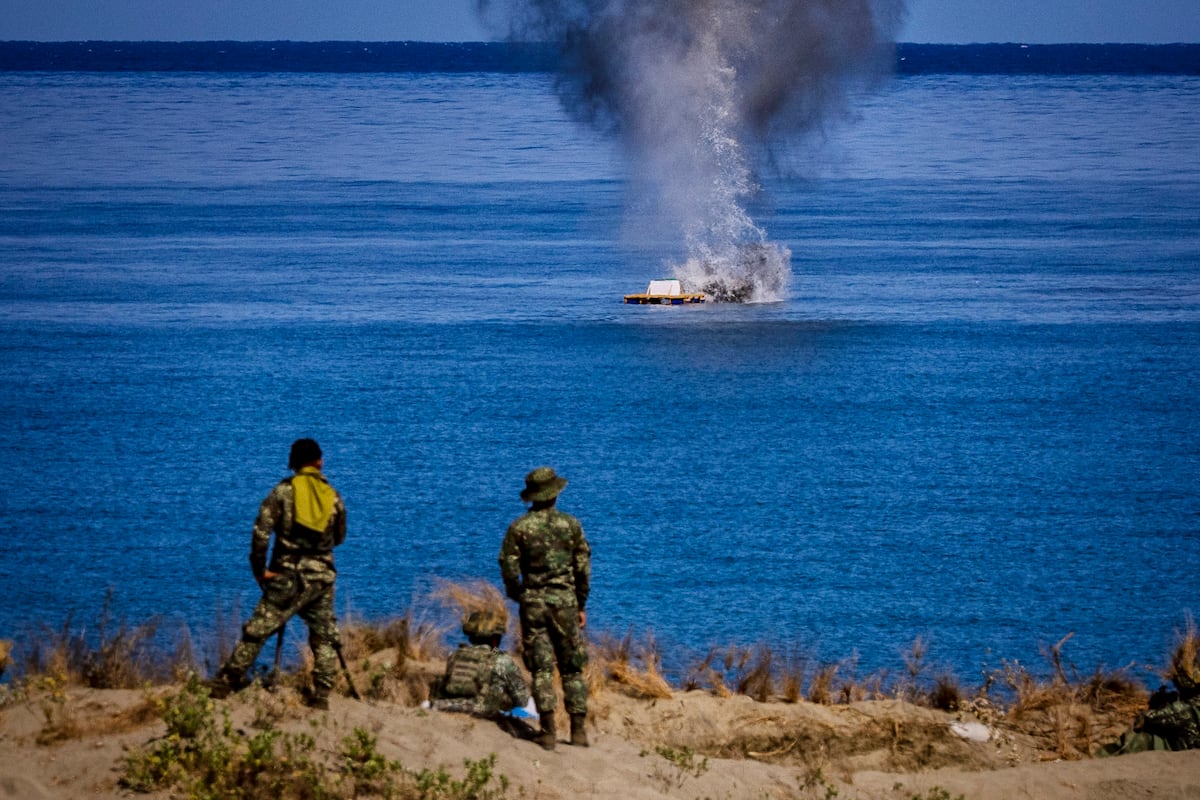
The U.S. is in the final stages of approving nearly $2 billion in security aid to the Indo-Pacific, one part of a broader effort to help countries defend against an increasingly aggressive China.
The package includes $1.2 billion for Taipei, $500 million for Manila and around $300 million to spread around other partners, such as Vietnam, parts of South Asia and island nations in the Pacific. The numbers aren’t yet final, since the administration is still briefing Congress, and lawmakers are allowed input. But the intent is to spend almost all of the $2 billion in Foreign Military Financing — or security assistance funded by the U.S. — passed for the region this April, said a senior State Department official.
To discuss the plans for this aid, which hasn’t yet been reported, Defense News spoke with Congressional aides, the State official and other people familiar with the discussions. Several were granted anonymity, either because they weren’t allowed to speak to the press or because of the sensitivity of the topic. Together, they described a moment of urgency for the U.S. on multiple fronts.
The first is to fortify its partners. At the start of the summer, China launched large military drills around Taiwan as a “punishment” for a presidential address that Beijing considered too pro-independence . Weeks later, members of the Chinese Coast Guard intercepted Filipino ships on their way to resupply a naval outpost and injured eight sailors. The attack toed a “red line” on what Manila would consider an act of war.
It’s also part of an effort to strengthen this administration’s work in Asia during the last six months of President Joe Biden’s first, and perhaps only, term. A bevy of U.S. officials — from the chairman of the Joint Chiefs to top members of the National Security Council — are visiting the region this week to discuss security ties. America’s Secretary of Defense and Secretary of State will soon follow for meetings in Tokyo and Manila, where they plan to announce the $500 million in aid for the Philippines.
“The urgency has grown as the [People’s Republic of China] threat has grown,” the State official said.
While Foreign Military Financing, or FMF, can take years to deliver, the official said their goal was for aid to arrive within six to 12 months. For Taiwan, the assistance will go to the new administration’s “porcupine” style defense strategy, aimed at making the island harder to invade. This includes training for the Taiwanese military and maritime capabilities, the State official said.
Top of the list for the Philippines will be equipment to help defend against China’s bullying in the South China Sea. The official wouldn’t say what specific weapons either nation would purchase, though a Congressional aide said both would likely be for “asymmetric” systems, which often means missiles, drones or commercial-style arms.
Neither the Philippines’ nor Taiwan’s embassy in Washington would comment for this story.
Largely because of threats from China, both Taipei and Manila are rushing to upgrade their militaries. Taiwan is already waiting on the delivery of $19 billion in other American arms it purchased — much of it F-16 fighter jets. The Philippines, meanwhile, is bulking its force to take on larger missions , like defending territory rather than countering terrorism.
“We need to really pump it up as quickly as we can,” Jose Romualdez, Manila’s ambassador to Washington, told reporters in late June.
The $500 million in support is also a huge vote of confidence from the U.S. Last year, the Philippines only received $40 million in such aid , and officials in Washington have before been skeptical that the country’s military is ready for more.
“There have been longstanding concerns about how much the Philippines can absorb,” said Bonnie Glaser, an expert on the region at the German Marshall Fund think tank.
A group of U.S. officials traveled to Manila in early June, shortly before the crisis in the South China Sea, where they discussed how the Philippines would spend the money and what support it needed, according to the Congressional aide and State official. Both sides ended up agreeing to different steps.
At the same time, America and the Philippines are also agreeing to a shared set of priorities, which the State official said they will likely announce during the summit later in July. This “roadmap” will help guide Manila’s military modernization for the next five to 10 years. The idea is to finish much of this logistical work ahead of time so that the Philippines can move faster once it gets the funding, the official said.
Romualdez, the ambassador, wouldn’t say whether his country also wanted weapons directly shipped from U.S. stocks, a much faster route. The Pentagon has $1.9 billion to replace any inventories sent to partners in the Pacific, though most of that will go to Taiwan , America’s top priority in the region.
“The Department of Defense supports the Administration’s efforts to utilize the significant funding for the Indo-Pacific region provided in the National Security Supplemental that Congress passed this spring,” a Pentagon spokesperson said in a statement, without confirming the aid package. “We also welcome continued actions by U.S. allies and partners in the Indo-Pacific region to invest in their own capabilities, their defense ties with each other and their relationships with the United States.”
The new administration in Taiwan is only two months into office and trying to reform its military: making exercises less scripted and giving more authority to junior officers, similar to the American system. But they’re doing so as the threat from China continues to evolve, particularly in the “gray zone,” or military actions that fall short of war.
“Most of our weapons are aimed at providing munitions so that they can stop the [People’s Liberation Army] from landing on the beach,” said Glaser, at the German Marshall Fund. “But that’s not helping them to deal with the growing [Chinese] coast guard threat.”
Nor will more arms sales please Beijing.
China’s Ministry of Foreign Affairs announced this week that it was suspending arms control talks with the United States due to objections over American weapons sales to Taiwan, though Glaser said the discussions were cut soon after Taiwan’s new president spoke in May.
Taiwan’s political leaders are reeling this week after an interview with Bloomberg in which former President Donald Trump said that Taiwan needs to pay America for any military protection.
Zack Cooper, an Asia expert at the American Enterprise Institute, saw the comments as an omen. A second Trump administration may keep selling weapons to Taiwan, he said, but isn’t likely to fund any with American dollars.
“This is the beginning of a ramp up for the Philippines but it may be the last significant tranche for Taiwan,” Cooper said. “And we just started FMF for Taiwan.”
The administration plans to divide the remaining $300 million in aid for the region among other U.S. partners, according to the congressional aide and State official. Among the goals are to help wean countries off Russian military equipment, help island nations monitor their surrounding waters and perhaps also have others partner with the U.S. to build arms.
A small portion will be leftover, but the official expected Congress would approve the “vast majority” of the FMF funding in around the next two weeks.
Both the congressional aide and multiple people familiar with the deliberations said that the administration debated at first whether to use more of the funding to counter Russian arms. While there was always agreement that most of the money should help countries defend against China, the amount slated for the Philippines wasn’t always so high. The visit by U.S. officials to Manila in June helped ease those concerns.
“There was a lot of political pressure within the bureaucracy to support the Philippines,” said the congressional aide.
That pressure extends to Capitol Hill. This April, a bipartisan pair of senators introduced a bill to give Manila $500 million a year in Foreign Military Financing for the next five years. Sen. Chris Coons, D-Del., a member of the Senate Foreign Relations Committee, visited the Philippines in late May and later told Defense News that the country should be the second priority for American aid in the region.
And just this week, the top Republicans on the Senate Armed Services and Foreign Relations Committees sent a letter to the Biden administration urging a show of support for the Philippines after last month’s standoff with China.
The administration will soon have the FMF aid to show.
“I can’t imagine a partner that needs greater investment in their military modernization than than the Philippines, and a partner that is more willing and able to work with us on this,” the State Department official said. “They see what’s at stake.”
Noah Robertson is the Pentagon reporter at Defense News. He previously covered national security for the Christian Science Monitor. He holds a bachelor’s degree in English and government from the College of William & Mary in his hometown of Williamsburg, Virginia.
美国即将批准向印太地区提供近 20 亿美元的安全援助,这是帮助各国抵御日益咄咄逼人的中国的更广泛努力的一部分。
该方案包括向台北提供12亿美元,向马尼拉提供5亿美元,以及向越南、南亚部分地区和太平洋岛国等其他伙伴国家提供约3亿美元。由于政府仍在向国会汇报情况,议员们可以提出意见,因此最终数字尚未确定。但一位国务院高级官员表示,此举旨在将今年4月通过的、用于该地区的20亿美元对外军事融资(即美国资助的安全援助)几乎全部用于援助。
为了探讨这项尚未公开报道的援助计划,《防务新闻》采访了国会助理、国务院官员以及其他知情人士。其中一些人要求匿名,原因或是他们未被授权接受媒体采访,或是话题过于敏感。他们共同描述了美国在多个方面都面临着紧迫的形势。
首先,中国此举旨在加强与合作伙伴的关系。今年夏天伊始,中国在台湾周边地区举行大规模军事演习,以此“惩罚”台湾方面发表的总统讲话,北京方面认为该讲话过于支持台独。数周后,中国海警拦截了前往菲律宾海军基地补给的船只,造成八名菲律宾水手受伤。此次袭击触及了马尼拉认定的“红线”,构成战争行为。
这也是本届政府在拜登总统第一个(或许也是唯一一个)任期最后六个月加强亚洲工作举措的一部分。本周,包括参谋长联席会议主席和国家安全委员会高级成员在内的众多美国官员正在访问该地区,讨论安全关系。美国国防部长和国务卿也将很快前往东京和马尼拉,计划在会上宣布向菲律宾提供5亿美元的援助。
“随着中华人民共和国威胁的加剧,紧迫性也随之增加,”这位国务院官员表示。
尽管对外军事融资(FMF)可能需要数年才能到位,但这位官员表示,他们的目标是在6到12个月内落实援助。对于台湾而言,这笔援助将用于新政府的“豪猪式”防御战略,旨在增强台湾的防御能力,使其更难被入侵。这位国务院官员表示,这包括对台湾军队和海上力量的训练。
菲律宾的首要采购目标是用于防御中国在南海的霸凌行为的装备。这位官员拒绝透露两国将具体采购哪些武器,但一位国会助理表示,两国采购的武器很可能是“非对称”系统,通常指的是导弹、无人机或商用武器。
菲律宾和台湾驻华盛顿大使馆均拒绝就此事发表评论。
很大程度上是由于来自中国的威胁,台北和马尼拉都在加紧升级各自的军事力量。台湾已在等待交付其购买的价值190亿美元的美国武器——其中大部分是F-16战斗机。与此同时,菲律宾正在扩充军力,以承担更重大的任务,例如保卫领土,而非仅仅打击恐怖主义。
“我们需要尽快加大力度,”马尼拉驻华盛顿大使何塞·罗穆亚尔德斯在六月下旬告诉记者。
这 5 亿美元的援助也是美国对菲律宾投下的巨大信任票。去年,菲律宾只获得了 4000 万美元的此类援助,而华盛顿的官员此前一直怀疑该国军方是否做好了接受更多援助的准备。
“长期以来,人们一直担心菲律宾能够吸收多少资源,”德国马歇尔基金会智库的地区问题专家邦妮·格拉泽说。
据一位国会助理和国务院官员透露,6月初,也就是南海危机爆发前不久,一群美国官员前往马尼拉,讨论菲律宾将如何使用这笔资金以及需要哪些支持。双方最终就不同的措施达成了一致。
与此同时,美国和菲律宾也正在就一系列共同优先事项达成一致,一位国务院官员表示,双方可能会在7月下旬的峰会上宣布这些事项。这份“路线图”将指导马尼拉未来五到十年的军事现代化进程。这位官员说,这样做的目的是提前完成大部分后勤工作,以便菲律宾在获得资金后能够更快地推进相关工作。
大使罗穆亚尔德斯拒绝透露他的国家是否也希望武器直接从美国库存发货,这条路线速度更快。五角大楼已拨款19亿美元用于替换运往太平洋伙伴国的武器库存,但其中大部分将流向台湾——美国在该地区的首要目标。
五角大楼发言人在一份声明中表示:“国防部支持政府利用国会今年春季通过的《国家安全补充拨款法案》中为印太地区提供的巨额资金。”但该发言人并未证实这项援助计划。“我们也欢迎美国在印太地区的盟友和伙伴继续加大对自身能力、彼此间的防务联系以及与美国关系的投资。”
台湾新政府上任仅两个月,便着手改革军队:减少演习的程式化,赋予基层军官更多权力,效仿美国体制。但与此同时,来自中国的威胁也在不断演变,尤其是在“灰色地带”,即那些尚未演变为战争的军事行动中。
德国马歇尔基金会的格拉泽说:“我们的大部分武器都是为了提供弹药,以便阻止(中国人民解放军)在海滩上登陆。但这并不能帮助他们应对日益增长的(中国)海警威胁。”
更多军售也不会让北京满意。
中国外交部本周宣布,由于反对美国向台湾出售武器,中方暂停与美国的军控谈判。不过,葛来仪表示,台湾新任总统在5月份发表讲话后不久,相关讨论就中断了。
本周,台湾政治领导人因前总统唐纳德·特朗普接受彭博社采访时表示台湾需要为任何军事保护向美国付费而感到震惊。
美国企业研究所的亚洲问题专家扎克·库珀认为这些言论是一个不祥之兆。他表示,特朗普连任后可能会继续向台湾出售武器,但不太可能用美国资金来资助这些军售。
库珀说:“这对菲律宾来说只是逐步扩大规模的开始,但对台湾来说可能是最后一笔重要的款项。而且我们才刚刚开始在台湾开展FMF项目。”
据国会助理和国务院官员透露,美国政府计划将剩余的3亿美元援助资金分配给该地区的其他美国伙伴。援助目标包括帮助这些国家摆脱对俄罗斯军事装备的依赖,帮助岛国监测周边水域,并可能促成其他国家与美国合作生产武器。
还会剩下一小部分,但这位官员预计国会将在未来两周左右批准FMF资金的“绝大部分”。
国会助理和多位知情人士均表示,政府最初曾就是否将更多资金用于对抗俄罗斯武器展开辩论。虽然各方始终一致认为大部分资金应该用于帮助各国防御中国,但拨给菲律宾的金额并非一直如此之高。美国官员6月访问马尼拉有助于缓解这些担忧。
“官僚机构内部存在着很大的政治压力,要求支持菲律宾,”这位国会助理说。
这种压力也延伸到了国会山。今年四月,两位来自两党的参议员提出一项法案,拟在未来五年内每年向马尼拉提供五亿美元的对外军事援助。特拉华州民主党参议员、参议院外交关系委员会成员克里斯·库恩斯于五月下旬访问了菲律宾,之后他告诉《防务新闻》,菲律宾应该是美国在该地区援助的第二优先对象。
就在本周,参议院军事委员会和外交关系委员会的共和党高层致信拜登政府,敦促其在菲律宾上个月与中国发生对峙后,对菲律宾表示支持。
政府很快就会公布FMF援助的成果。
“我无法想象还有哪个伙伴比菲律宾更需要加大军事现代化投入,也无法想象还有哪个伙伴比菲律宾更愿意、更有能力与我们在这方面合作,”这位国务院官员说。“他们明白其中的利害关系。”
诺亚·罗伯逊是《防务新闻》的五角大楼记者。他此前曾为《基督教科学箴言报》报道国家安全新闻。他拥有弗吉尼亚州威廉斯堡威廉与玛丽学院的英语和政治学学士学位。