‘America First’ weapons-sales policy favors arming Taiwan quickly — in theory“美国优先”的武器销售政策理论上倾向于迅速武装台湾。
But experts say the new U.S. strategy is unlikely to raise or lower the odds of Washington actually coming to help Taiwan if China attacks.
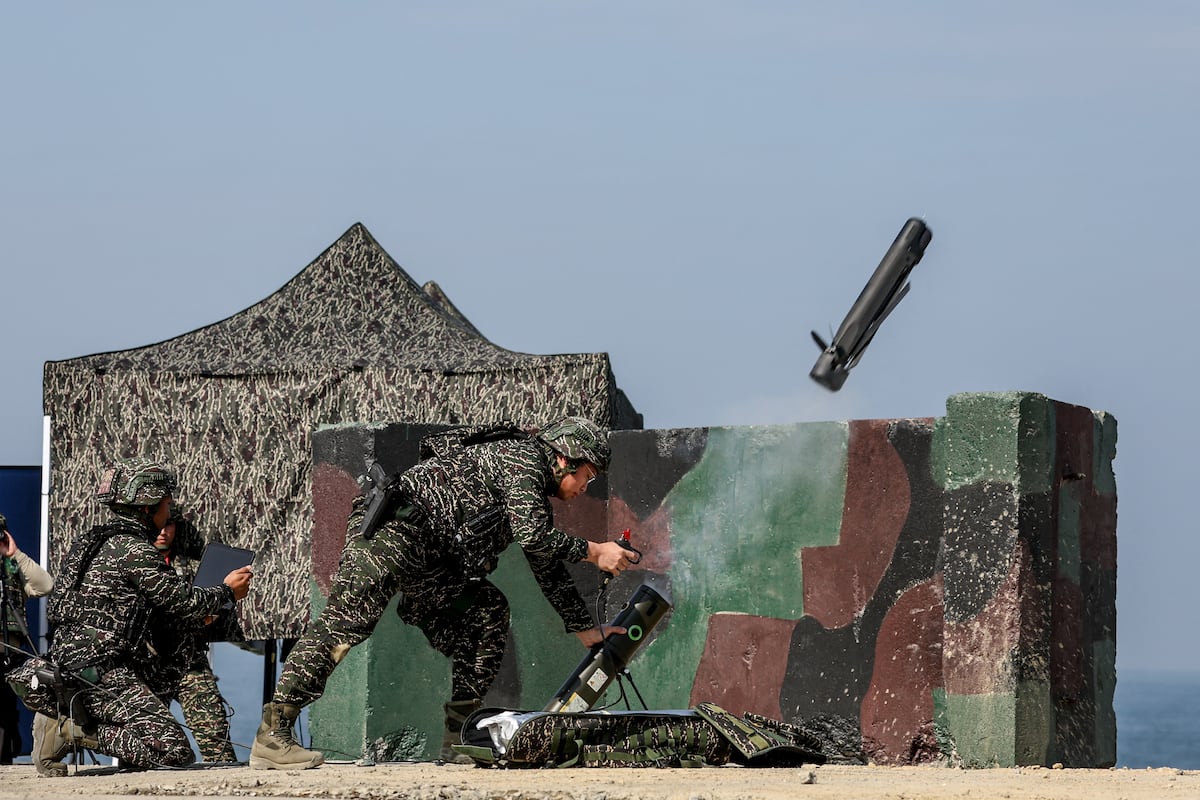
NEW TAIPEI CITY, Taiwan — A U.S. strategy aimed at prioritizing foreign arms sales to recipients that vigorously support themselves and have geopolitical value to Washington should help Taiwan receive advanced weapons faster than usual, according to defense analysts.
While it does not call out any country or contain granular details for evaluating them for weapon sales, experts said the America First Arms Transfer Strategy ordered by U.S. President Donald Trump on Feb. 6 probably applies to Taiwan because it fits the strategy’s overall intent.
“The basic logic is that the United States will only prioritize military assistance to countries that contribute their own defense rigorously, and Taiwan would fit itself into that category at least for the time being,” said Alexander Huang, a Taiwanese university professor and chairman of the Council of Strategic and Wargaming Studies in Taipei.
The White House developed its strategy to “ensure” that future arms sales generate capital to build up American weapons production and that the United States has capacity to support allies and partners, “especially as we increase burden-sharing.”
It calls for avoiding arms sales backlogs that would impact allies or partner readiness and for prioritizing sales and transfers to partners that have “invested in their own self-defense and capabilities, have a critical role or geography in United States plans and operations, or contribute to our economic security.”
Scholars say Taiwan has a “critical role” as an informal yet staunch ally in a chain of Western Pacific U.S. allies. Those allies, particularly Japan and the Philippines, are often seen together as a bulwark against Beijing’s maritime expansion.
“The strategy shifts from first-come delivery to prioritization based on strategic relevance and defense investment,” said Nathan Attrill, a senior China analyst at the Australian Strategic Policy Institute. “Given Taiwan’s geography, that could mean faster delivery of key systems and fewer bottlenecks, which is operationally significant.”
Today’s deliveries take time that invites strong backlashe from China, said Denny Roy, senior fellow at the East-West Center think tank in Hawaii. China sees self-ruled Taiwan as part of its territory and has not ruled out the use of force, if needed, to unify the two sides. It resents the United States for helping arm Taiwan.
“The current process is slow, cumbersome and draws maximum PRC attention, increasing the likelihood of an intensified reaction from Beijing driven by nationalistic public opinion,” Roy said.
Washington’s arms sales to Taiwan date back to 1979, and Taipei said in December it would buy an unusually large $11.1 billion U.S. package including HIMARS rocket systems. Beijing strongly condemned the sale.
Experts say the new U.S. arms-sales strategy is unlikely to raise or lower the odds of Washington actually coming to help Taiwan if China attacks. The U.S. has long remained vague about how it would respond. China for its part has stepped up naval and air drills near Taiwan since August 2022.
“The American First Arms Transfer Strategy does not make Trump’s adoption of strategic ambiguity more clear,” said Chen Yi-fan, assistant professor in the Diplomacy and International Relations Department at Taiwan’s Tamkang University.
Chen believes the U.S. government already considers Taiwan a lower priority than Ukraine, Israel, North Atlantic Treaty Organization (NATO) countries and Asian allies Japan , South Korea , and the Philippines .
“If it accelerates delivery of munitions and strengthens Taiwan’s capabilities, (the strategy) could improve deterrence by denial by making a rapid Chinese victory less plausible,” Attrill said. “But the decision to intervene would still depend on presidential judgement and escalation risks.”
The strategy’s focus on sales that fortify the American defense industry could backfire in Taiwan if it “strengthens the narrative by the Chinese government and by some (Taiwan opposition) politicians that U.S. arms sales to Taiwan are self-serving and exploitative,” Roy added.
A media liaison for Taiwan’s Ministry of National Defense said in late February the ministry had not announced any reaction to Trump’s strategy and declined further comment. The Department of Defense in Washington also did not answer a request for information.
台湾新台北市——据国防分析人士称,美国的一项战略旨在优先向那些能够自力更生且对华盛顿具有地缘政治价值的国家出售武器,这应该有助于台湾比以往更快地获得先进武器。
虽然该战略没有点名任何国家,也没有提供评估向其出售武器的具体细节,但专家表示,美国总统唐纳德·特朗普于2月6日下令的“美国优先武器转让战略”可能适用于台湾,因为它符合该战略的总体意图。
“基本逻辑是,美国只会优先向那些认真履行自身防务义务的国家提供军事援助,而台湾至少在目前看来符合这一条件,”台北市战略与兵棋推演研究委员会主席、台湾大学教授黄国强表示。
白宫制定了这项战略,旨在“确保”未来的武器销售能够产生资金,以发展美国的武器生产,并确保美国有能力支持盟友和伙伴,“尤其是在我们增加负担分担的情况下”。
它呼吁避免出现可能影响盟友或伙伴战备的武器销售积压,并优先向“已投资于自身自卫和能力、在美国计划和行动中扮演关键角色或地理位置重要,或为我们的经济安全做出贡献的伙伴”出售和转让武器。
学者们指出,台湾作为美国在西太平洋地区一系列盟友中非正式但坚定的伙伴,扮演着“至关重要的角色”。这些盟友,特别是日本和菲律宾,通常被视为共同抵御北京海上扩张的堡垒。
澳大利亚战略政策研究所高级中国分析师内森·阿特里尔表示:“战略从先到先得转向基于战略相关性和国防投资的优先排序。考虑到台湾的地理位置,这意味着关键系统的交付速度可能更快,瓶颈更少,这在作战层面意义重大。”
夏威夷东西方中心高级研究员丹尼·罗伊表示,今天的物资交付耗时较长,这势必会招致中国的强烈反弹。中国视自治的台湾为其领土的一部分,并且不排除在必要时使用武力统一两岸。中国对美国帮助台湾武装的做法感到不满。
罗伊表示:“目前的进程缓慢、繁琐,而且会引起中国政府的最大关注,这增加了北京在民族主义民意的驱动下采取更强烈反应的可能性。”
美国对台军售始于1979年,台北方面去年12月宣布将购买价值111亿美元的美国军售方案,其中包括HIMARS高射炮系统。北京强烈谴责了这笔军售。
专家表示,美国新的军售战略不太可能提高或降低华盛顿在台湾遭受中国攻击时出手相助的可能性。长期以来,美国对其应对措施一直含糊其辞。而中国方面,自2022年8月以来,已加强了在台湾附近海域的海空演习。
“美国优先武器转让战略并没有让特朗普采取的战略模糊策略更加清晰,”台湾淡江大学外交与国际关系系助理教授陈义凡表示。
陈认为,美国政府已经将台湾的优先级低于乌克兰、以色列、北大西洋公约组织(北约)国家以及亚洲盟友日本、韩国和菲律宾。
阿特里尔表示:“如果这项战略能够加快军火交付速度并增强台湾的作战能力,就能通过降低中国迅速取胜的可能性来加强拒止威慑。但是否进行干预的决定仍然取决于总统的判断以及局势升级的风险。”
罗伊补充说,如果该战略侧重于加强美国国防工业的销售,那么它可能会“强化中国政府和一些(台湾反对派)政客的说法,即美国对台军售是自私自利和剥削性的”,从而在台湾产生反作用。
台湾国防部一位媒体联络员在二月下旬表示,国防部尚未就特朗普的战略发表任何回应,并拒绝进一步置评。华盛顿的国防部也未回应置评请求。