Singapore retrenchments rise sharply in Q2 amid falling vacancies and fewer laid-off workers finding jobs由于职位空缺减少和失业人员难以找到工作,新加坡第二季度裁员人数大幅上升。
While the labour market continued to expand from April to June 2026, some indicators pointed to "signs of softening", said the Manpower Ministry.
While the labour market continued to expand from April to June 2026, some indicators pointed to "signs of softening", said the Manpower Ministry.
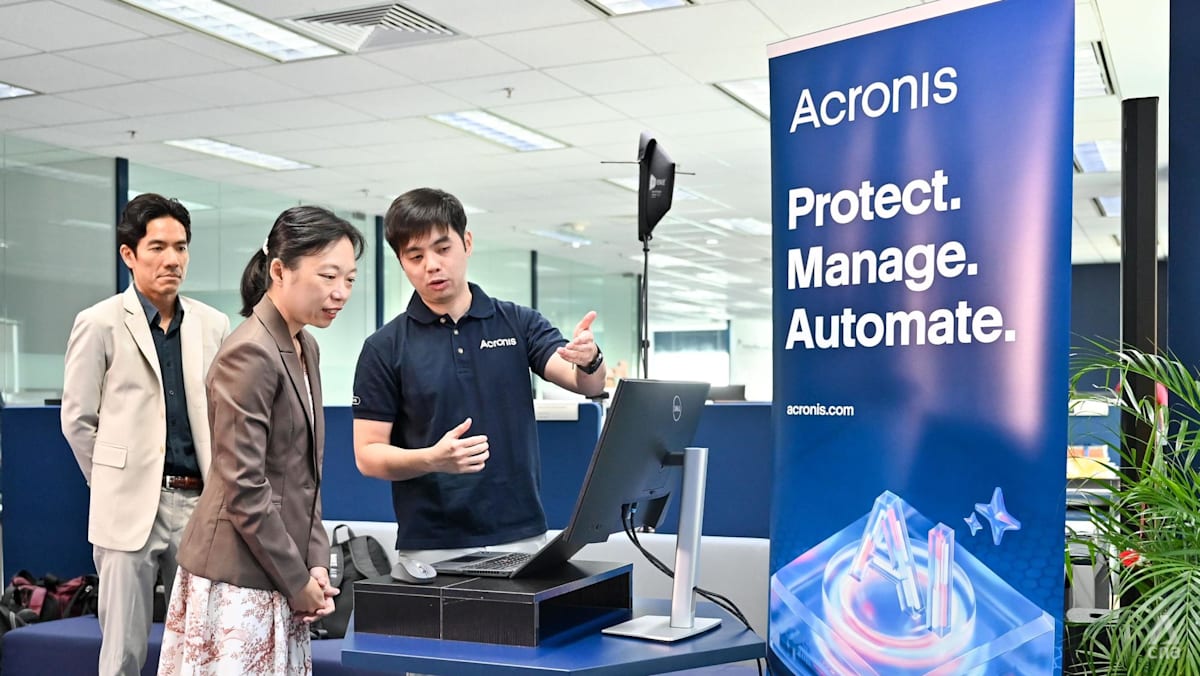
Acting Minister for Manpower Jasmin Lau interacts with representatives from Acronis, a global cybersecurity company located at Suntec Tower 3, Sep 21, 2026. (Photo: CNA/Alyssa Tan)
This audio is generated by an AI tool.
SINGAPORE: Retrenchments in Singapore rose to 4,620 in the second quarter of 2026, reaching the highest level since Q4 2020, the latest labour market data showed on Monday (Sep 21).
This raised the retrenchment incidence to 2.0 per 1,000 employees, up from 1.6 in the previous quarter.
The higher retrenchments were driven by business reorganisation and restructuring in outward-oriented sectors like manufacturing, information and communications, and financial services, according to the Ministry of Manpower (MOM).
MOM said the labour market remained resilient, with continued employment growth and low unemployment. But other indicators showed "signs of softening".
CNA Games Guess Word Crack the word, one row at a time Buzzword Create words using the given letters Mini Sudoku Tiny puzzle, mighty brain teaser Mini Crossword Small grid, big challenge Word Search Spot as many words as you can Show More Show Less "Conditions became less favourable for some resident workers, as resident employment growth moderated, retrenchments increased and six-month re-entry outcomes weakened," the ministry said in a press release. For the April to June period, the rate at which workers re-entered the workforce six months after retrenchment slowed to 54.9 per cent, lower than the 60.7 per cent recorded in the previous quarter. The 12-month re-entry rate remained stable at 69.8 per cent.
"Conditions became less favourable for some resident workers, as resident employment growth moderated, retrenchments increased and six-month re-entry outcomes weakened," the ministry said in a press release.
For the April to June period, the rate at which workers re-entered the workforce six months after retrenchment slowed to 54.9 per cent, lower than the 60.7 per cent recorded in the previous quarter. The 12-month re-entry rate remained stable at 69.8 per cent.
Resident employment growth also slowed to 2,200 from 5,400 in the previous quarter.
Overall employment grew by 11,400, with non-resident employment growth driven by work permit holders in construction and manufacturing. This is higher than the growth of 9,400 in the first quarter of 2026.
Unemployment remained low and stable at 1.9 per cent overall, 2.9 per cent for residents and 3 per cent for citizens.
Long-term unemployment – referring to those out of a job for at least six months – was 1 per cent in June, inching up from 0.9 per cent in March.
Job vacancies fell to 68,600 in June from 73,300 in March. The decline mainly reflected a fall in professional, manager, executive and technician (PMET) vacancies in financial services and information and communication.
MOM said that the labour market remained relatively tight, with vacancies still exceeding those out of work, at a rate of 1.48 vacancies per unemployed person in June.
Entry-level PMET vacancies remained broadly stable, at 31,700 vacancies or 45.3 per cent of all vacancies in June, compared to 32,800 vacancies or 43.6 per cent of all vacancies in March.
Speaking to reporters during a visit to cybersecurity firm Acronis, Acting Manpower Minister Jasmin Lau noted these "signs of change".
"Fewer job vacancies were added this quarter, and some workers are finding the transition into their next role taking slightly longer. This is a concern for some Singaporeans," she said.
Although job opportunities remain, moving from one job to the next can be challenging, said Ms Lau.
She pointed to career conversion programmes, which target mid-career workers, as one way the government will support workers.
"Instead of learning a new skill and then hoping to find a job that uses it, workers train for actual roles that companies need. They learn on the job, gain real experience, and build on the skills they already have," she said.
"This is the shift I hope we can all make together – learning new skills not just to protect what we have, but to open up more possibilities for what comes next.
"Many things will change – the economy, industries and job roles that are available. But when we keep building on our skills, we can face these changes with more confidence.
"Our government is committed to supporting our workers and creating pathways for Singaporeans to build these new skills and to move into job opportunities," said the acting minister.
Mr Ang Boon Heng, MOM's director of manpower research and statistics, said that consecutive quarters of rising retrenchments warranted monitoring.
But he said there were no forward indicators suggesting that this will be sustained. He pointed out that the number of workers placed on short work-week and temporary layoffs, which are an early indicator of retrenchments, fell to 700 in Q2 2026.
The quarterly retrenchment incidence of 2 per 1,000 workers is also slightly above the non-recessionary norm of 1.7, which is the quarterly average measured from 2014 to 2019. But it remains below the levels seen during a recession, said Mr Ang.
Acting Minister for Manpower Jasmin Lau speaking to the media at Acronis, a global cybersecurity company located at Suntec Tower 3, Sep 21, 2026. (Photo: CNA/Alyssa Tan)
OLDER WORKERS ABOVE 50
MOM highlighted that unemployment indicators among older resident workers aged 50 and above warranted closer monitoring.
For those in their 50s, the unemployment rate rose to 3.1 per cent in June from 2.9 per cent in March. Long-term unemployment edged up to 1.2 per cent from 1.1 per cent.
For those aged 60 and above, the unemployment rate rose to 2.2 per cent in June from 1.8 per cent in March. Long-term unemployment was 0.7 per cent, up from 0.6 per cent.
Workers in their 50s continued to record the highest incidence of retrenchment at 3.6 per 1,000 resident employees in Q2 2026.
"The high retrenchment incidence among residents in their 50s, coupled with their higher long-term unemployment rate, suggests they are at greater risk of involuntary displacement and may face greater job search challenges," said MOM.
"Skills upgrading and career conversion programmes can help equip these workers with relevant skills to support their transition into new job opportunities."
Polls of businesses pointed to a positive but cautious labour market outlook, said MOM.
Near-term hiring expectations improved across more sectors. The share of firms intending to hire in the next three months rose to 48.7 per cent in July from 43.9 per cent in June.
The proportion of firms intending to raise wages eased slightly to 27.9 per cent in July from 29.3 per cent in June.
Despite the improvement, both hiring and wage expectations remained below their February levels, said the ministry.
Our chief editor shares analysis and picks of the week's biggest news every Saturday.
Get our pick of top stories and thought-provoking articles in your inbox
Stay updated with notifications for breaking news and our best stories
Join our channel for the top reads for the day on your preferred chat app
人力部表示,虽然从2026年4月到6月劳动力市场持续扩张,但一些指标显示“出现了疲软迹象”。
2026年9月21日,人力部代部长刘嘉敏在位于新达城3号楼的全球网络安全公司Acronis与代表进行交流。(图片:CNA/Alyssa Tan)
这段音频由人工智能工具生成。
新加坡:最新劳动力市场数据显示,新加坡2026年第二季度的裁员人数增至4620人,达到2020年第四季度以来的最高水平,该数据于周一(9月21日)公布。
这使得每 1000 名员工的裁员发生率上升至 2.0,高于上一季度的 1.6。
据人力部称,裁员人数增加是由于制造业、信息通信业和金融服务业等对外导向型行业的业务重组和结构调整所致。
人力部表示,劳动力市场依然坚挺,就业持续增长,失业率保持低位。但其他指标显示出“疲软迹象”。
CNA游戏 猜词游戏 逐行破解单词 流行词游戏 用给定的字母组成单词 迷你数独 小小的谜题,强大的脑力挑战 迷你填字游戏 小方格,大挑战 单词搜索 尽可能多地找出单词 显示更多 显示更少 “随着居民就业增长放缓、裁员增加以及六个月重返工作岗位率下降,部分居民工人的处境变得不利,”该部门在一份新闻稿中表示。4月至6月期间,裁员六个月后重返工作岗位的工人比例放缓至54.9%,低于上一季度的60.7%。12个月重返工作岗位率保持稳定,为69.8%。
该部在一份新闻稿中表示:“由于居民就业增长放缓、裁员增加以及六个月再就业率下降,一些居民工人的处境变得不利。”
4月至6月期间,裁员六个月后重返工作岗位的工人比例放缓至54.9%,低于上一季度的60.7%。12个月后的重返工作岗位率保持稳定,为69.8%。
居民就业增长也从上一季度的 5400 人放缓至 2200 人。
整体就业人数增长了11400人,其中非居民就业增长主要由建筑业和制造业的工作许可证持有者推动。这一数字高于2026年第一季度的9400人增幅。
总体失业率保持在较低且稳定的水平,为 1.9%,居民失业率为 2.9%,公民失业率为 3%。
6 月份长期失业率(指失业至少六个月的人)为 1%,较 3 月份的 0.9% 小幅上升。
6月份职位空缺数量从3月份的73300个下降到68600个。这一降幅主要反映了金融服务和信息通信行业专业人员、经理、主管和技术人员(PMET)职位空缺的减少。
人力部表示,劳动力市场仍然相对紧张,职位空缺数仍然超过失业人数,6 月份的失业人数与职位空缺数之比为 1.48。
入门级 PMET 职位空缺基本保持稳定,6 月份空缺职位为 31,700 个,占所有空缺职位的 45.3%,而 3 月份空缺职位为 32,800 个,占所有空缺职位的 43.6%。
人力部代理部长刘嘉敏在访问网络安全公司 Acronis 期间接受记者采访时,指出了这些“变化的迹象”。
“本季度新增职位空缺减少,一些员工发现过渡到下一份工作所需的时间略有延长。这令一些新加坡人感到担忧,”她说道。
刘女士表示,虽然工作机会依然存在,但从一份工作跳槽到另一份工作可能充满挑战。
她指出,针对职业中期工作者的职业转型计划是政府支持劳动者的一种方式。
她表示:“员工们不再是先学习一项新技能,然后寄希望于找到一份能运用这项技能的工作,而是接受企业实际需要的岗位培训。他们在工作中学习,获得实际经验,并在现有技能的基础上不断提升。”
“我希望我们所有人都能共同做出这样的转变——学习新技能,不仅是为了保护我们所拥有的,更是为了开启更多未来的可能性。”
“很多事情都会发生变化——经济形势、行业格局以及就业机会。但是,如果我们不断提升自身技能,就能更有信心应对这些变化。”
代理部长表示:“我国政府致力于支持我们的工人,并为新加坡人创造途径,让他们掌握这些新技能,并获得就业机会。”
人力部人力研究与统计主任洪文兴先生表示,连续几个季度裁员人数上升值得密切关注。
但他表示,目前没有任何迹象表明这种情况会持续下去。他指出,缩短工时和临时裁员的工人数量(这是裁员的早期指标)在2026年第二季度下降到700人。
Ang先生表示,每季度每1000名工人中有2人被裁员,略高于非衰退时期的正常水平1.7(即2014年至2019年的季度平均值),但仍低于经济衰退期间的水平。
人力部代部长刘嘉敏于2026年9月21日在位于新达城3号大厦的全球网络安全公司Acronis接受媒体采访。(图片:CNA/Alyssa Tan)
50岁以上的老年劳动者
人力部强调,50岁及以上老年居民工人的失业指标需要更密切的监测。
6月份,50多岁人群的失业率从3月份的2.9%上升至3.1%。长期失业率也从1.1%小幅上升至1.2%。
60岁及以上人群的失业率从3月份的1.8%上升至6月份的2.2%。长期失业率为0.7%,高于3月份的0.6%。
2026 年第二季度,50 多岁的劳动者裁员率仍然最高,每 1000 名居民员工中有 3.6 人被裁。
人力部表示:“50多岁居民的高裁员率,加上他们较高的长期失业率,表明他们面临更大的非自愿流离失所风险,并且可能面临更大的求职挑战。”
“技能提升和职业转换计划可以帮助这些劳动者掌握相关技能,从而支持他们过渡到新的工作机会。”
人力部表示,企业民调显示,劳动力市场前景乐观但谨慎。
近期招聘预期在更多行业有所改善。计划在未来三个月内招聘的企业比例从6月份的43.9%上升至7月份的48.7%。
7 月份,打算提高工资的企业比例从 6 月份的 29.3% 略微下降至 27.9%。
该部表示,尽管情况有所改善,但招聘和工资预期仍低于2月份的水平。
我们的主编每周六都会分享对本周重大新闻的分析和精选。
订阅我们的邮件,即可获取精选热点新闻和引人深思的文章。
订阅通知,第一时间获取突发新闻和精彩报道。
加入我们的频道,即可在您常用的聊天应用上获取当日热门文章。