US watching Chinese marine presence off Alaska, Arctic Coast Guard chief says美国正密切关注中国在阿拉斯加附近海域的海上活动,北极海岸警卫队司令表示
The United States is watching China’s presence in its Arctic zone “very closely” amid increasing concerns, a senior U.S. Arctic military official said.
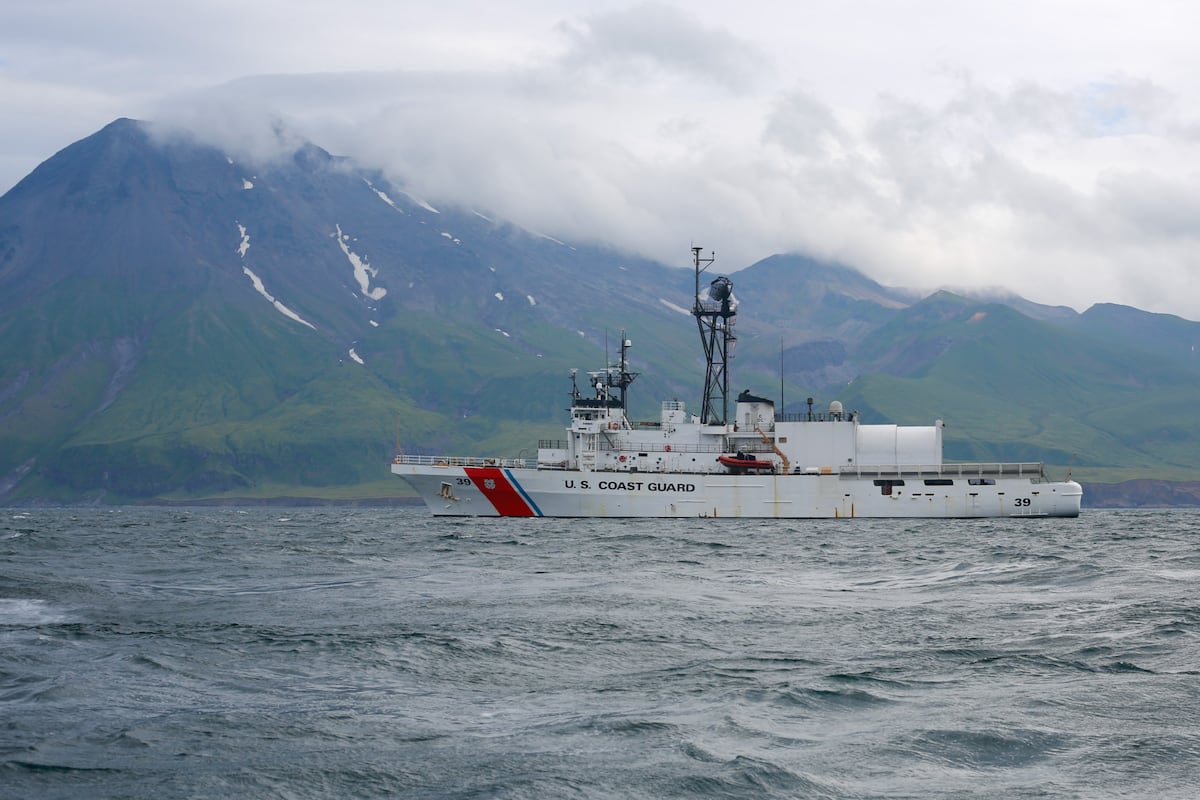
The United States is watching China’s presence in its Arctic zone “very closely” amid concerns regarding the security of the U.S. homeland, a senior U.S. Arctic military official said.
So far in 2026, four Chinese research vessels have conducted work offshore in the U.S. Arctic, compared to a total of five in 2025, Rear Adm. Bob Little, commander of the U.S. Coast Guard’s Arctic District, told Reuters.
The Chinese ships sailed in the maritime zones off the U.S. state of Alaska, including the Aleutian Islands, into the Bering Strait and as far north as the North Pole, he said during a visit to Oslo to speak at a conference on Arctic security.
“Where I have responsibility, interest and concern is when they are operating in and around U.S. sovereign space,” said Little.
“So inside of our exclusive economic zones, or over our extended continental shelf, we certainly have a security concern. And so those are the types of activities that we see that we’re watching very closely.”
The ships remained in international waters but had not notified the U.S. of their presence in advance through diplomatic channels, as would be the usual practice.
“When we challenge them and query them as to the purpose of their activities, their response typically is either ‘we are conducting operations in international waters’ or ‘we are conducting scientific research,’” he said.
The concern is two-fold. One is that China may be involved in scientific research focused on the mineral exploitation of the seabed in an area that belongs to the U.S., Little said.
The other is that these vessels conduct activity that might “provide [the Chinese] with a military advantage or pose a security threat to the United States,” said Little, whose area of operations is nearly as vast as Europe.
China, which calls itself a “near-Arctic” state and wants to create a “Polar Silk Road” in the Arctic, has stepped up its presence in the polar region in recent years, sometimes in joint operations with Russia and sometimes alone.
While in Norway, Little discussed with international colleagues how they were dealing with similar activities by Russian research vessels.
“Whether it’s the Barents (Sea) or the Baltic (Sea), it’s easy to find examples of hybrid threats and activities,” he said.
“So I certainly watch that very carefully, because it’s the same nation-state that’s my neighbor on the western side of the Arctic,” he said, referring to Russia.
Moscow denies that its research vessels conduct illegal activity or that it poses any threat to U.S. interests.
一位美国北极地区高级军事官员表示,出于对美国本土安全的担忧,美国正在“非常密切地”关注中国在其北极地区的活动。
美国海岸警卫队北极区司令鲍勃·利特尔海军少将告诉路透社,截至2026年,已有四艘中国科考船在美国北极近海开展了工作,而2025年全年共有五艘。
他在访问奥斯陆参加北极安全会议期间表示,中国船只在美国阿拉斯加州附近的海域(包括阿留申群岛)航行,进入白令海峡,最北到达北极点。
“我关心、感兴趣和关注的是,当他们在美国主权领空及其周边地区活动时,”利特尔说。
“因此,在我们专属经济区内或延伸大陆架上,我们当然存在安全隐患。所以,这些正是我们正在密切关注的活动类型。”
这些船只仍停留在国际水域,但并未像通常做法那样,事先通过外交渠道通知美国其存在。
他说:“当我们质问他们并询问他们活动的目的时,他们的回答通常是‘我们正在国际水域进行作业’或‘我们正在进行科学研究’。”
利特尔表示,担忧主要有两方面。一是中国可能参与了在美国领土范围内开展的以海底矿产开采为重点的科学研究。
利特尔表示,另一种可能性是,这些船只的活动可能会“为(中国)提供军事优势或对美国构成安全威胁”,他的行动区域几乎与欧洲一样广阔。
中国自称是“近北极”国家,并希望在北极地区打造“极地丝绸之路”。近年来,中国加强了在极地地区的存在,有时与俄罗斯联合行动,有时则单独行动。
在挪威期间,利特尔与国际同行探讨了他们如何应对俄罗斯科考船的类似活动。
他说:“无论是巴伦支海还是波罗的海,都很容易找到混合威胁和活动的例子。”
“所以我当然会非常密切地关注此事,因为俄罗斯是北极西侧与我接壤的同一个国家,”他指的是俄罗斯。
莫斯科否认其科研船从事非法活动,也否认其对美国利益构成任何威胁。