Trump's FBI shut down investigation into defense contractor's alleged bribes特朗普领导下的联邦调查局停止了对国防承包商涉嫌受贿的调查
A CEO told agents about funneling money to U.S. lawmakers in return for Pentagon contracts worth millions of dollars. Then the probe was killed.
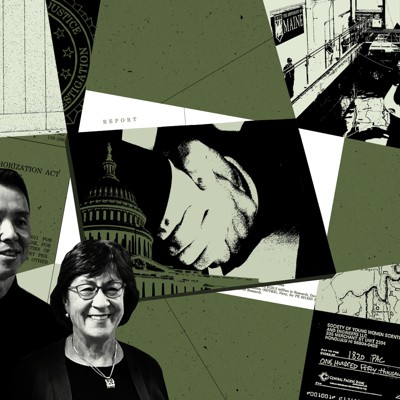
Beatrice Caciotti for ProPublica. Source images: U.S. Sen. Susan Collins’ official Facebook page.
A CEO told agents about funneling money to U.S. lawmakers in return for Pentagon contracts worth millions of dollars. Then the probe was killed.
William Turton , Avi Asher-Schapiro , Molly Redden and Kirsten Berg , ProPublica
In the final weeks of 2019, a top fundraiser for Sen. Susan Collins walked into a perilous meeting at a Corner Bakery in Washington, D.C.
For the first time in her two-decade Senate career, the Republican lawmaker from Maine was in danger of losing her seat. President Donald Trump’s dismal approval ratings were dragging her down in the polls, and she was falling behind her likely 2020 Democratic challenger in fundraising.
Scott Reed, head of the Collins super PAC, was on a mission to close that gap. Reed was meeting that day with three executives from a Hawaiian defense contractor, Navatek. A year earlier, Collins had helped their company land a multimillion-dollar Navy research contract in Maine. Now, seated at a coffee shop not far from the U.S. Capitol, Reed asked them for a $500,000 donation.
Government contractors are banned from making political contributions. More consequentially, for the company to offer donations to Collins in exchange for an official action, or for Collins to accept, would constitute criminal bribery.
But the company did have such a proposal: Navatek was hungry for more government contracts in Maine. If they cut a big check, the CEO told Reed, Navatek wanted Collins to guarantee tens of millions of dollars in additional federal funding.
To skirt campaign finance laws and conceal the source of the funds, Navatek planned to funnel the donation through a shell company. The CEO wanted assurance that Collins would know where the money came from. Reed confirmed that she would, the executive said — and that Navatek would get its government contracts.
After the Corner Bakery meeting, Navatek’s CEO, Martin Kao, sent an initial $150,000 to the Collins super PAC using the shell company. Two months later, he told Navatek executives that Collins committed to getting the company $32 million in naval contracts, according to an internal company email reviewed by ProPublica.
Three years later, Kao holed up in a conference room to recount the Corner Bakery meeting to a group of four FBI agents and federal prosecutors. The FBI had seen through his shell company ruse, and in 2022 a grand jury indicted him for making illegal campaign contributions. No one working for Collins was charged.
Facing years in prison, Kao hoped to do less time by revealing the entire scheme.
What he told them has never before become public. The Corner Bakery meeting, he asserted, was just one episode in a sprawling pay-to-play operation that embroiled some of the most powerful figures in Congress.
Over three days at the U.S. attorney’s office in Honolulu, Kao laid out in devastating detail how his operation worked. He gave agents a 50-page document naming dozens of lobbyists, congressional staffers and members of Congress who he said helped him trade cash for contracts. Kao and his close associates had donated nearly $900,000 to dozens of politicians, allowing Navatek to establish operations in half a dozen states with over $40 million a year in government funding.
Most damningly, Kao told FBI agents and prosecutors, the company’s work for the government was of no real value. Navatek’s research under his stewardship never resulted in products the military wanted to buy, ProPublica found.
Kao’s tell-all interviews with the FBI lasted into late 2024. His confessions opened up an entirely new phase of the investigation. Agents sifted through hundreds of thousands of records seized during Kao’s arrest and found that many were consistent with his account of widespread influence peddling.
Kao had credibility issues. He was now a felon trying to avoid a lengthy prison sentence. And there were other challenges. Building a corruption case against elected officials requires extraordinary proof of a quid pro quo arrangement, in part because the Supreme Court has narrowed what counts as bribery.
Even so, by the end of 2024, the agents had enough evidence to pursue a sweeping bribery probe that could ensnare top lawmakers of both political parties. They asked their supervisors to approve a new investigation and contemplated using undercover operatives to gather more evidence. Although their effort was in its early stages, and it was unclear where it would lead, FBI agents asked Kao extensive questions about his dealings with Collins and her office.
Then Trump returned to the White House. Consumed by a campaign of vengeance , he stacked the Department of Justice with his personal lawyers and demanded a purge of anyone who had ever investigated him.
The specialized FBI and DOJ teams handling public corruption investigations, some of which were involved in Trump-related cases, were eviscerated. One of the agents who had taken Kao’s confession was pushed out as retribution for her role in investigating Trump’s attempt to overturn the 2020 election. Dozens of agents and prosecutors quit amid the department’s destruction, including the career attorney assigned to Kao’s case.
Trump’s Justice Department no longer takes on public corruption in any meaningful fashion , former officials said. The investigation sparked by Kao’s revelations is dead. And the government is no longer talking to an informant who had offered a road map to corruption in Congress.
The White House referred ProPublica to the FBI.
FBI spokesperson Ben Williamson said the agency had investigated claims against Collins years ago “and ultimately found nothing implicating Senator Collins or Senator Collins’ campaign. Any suggestion otherwise is totally false.” Williamson said the Trump administration has removed agents only “if they have been found to have acted unethically, undermined the mission, or engaged in weaponization of law enforcement.”
Williamson did not respond to questions about the new investigation launched in 2024 based on Kao’s previously unreported cooperation with the FBI.
ProPublica is revealing the existence of the case for the first time. We reviewed a trove of evidence gathered by the FBI and thousands of pages of legal records, and interviewed dozens of people familiar with Navatek, its Washington operations, and the FBI inquiry to conduct our own investigation. We independently corroborated much of Kao’s account. Whether or not Kao’s dealings with politicians amount to criminal bribery, the Trump Justice Department has little interest in finding out, and his sheer success reveals how easily influence is purchased in Washington today. This is the first in a series of stories drawn from our reporting.
Of all the politicians Navatek courted under Kao’s leadership, Collins was its most important patron. The senator’s office steered government contracts worth millions toward the company while her campaign was pumping Kao and his network for donations, according to emails seen by ProPublica. Sometimes they cut checks within 24 hours of the annual defense spending bill, which funds military contracts, clearing a key Senate hurdle.
Collins’ office did not specifically address questions about the Corner Bakery meeting, the senator’s relationship with Kao and the millions she helped appropriate for Navatek.
Annie Clark, Collins’ deputy chief of staff, told ProPublica in an email that Collins’ office “vigorously” denies allegations of bribery and pay-for-play made by Kao, calling his claims “outlandish.” Collins’ campaign was not part of the discussions between Kao and the super PAC, and her office “fully cooperated” with the FBI investigation, Clark said.
“The fact that the FBI and Biden-led Department of Justice thoroughly examined the Navatek matter demonstrates this,” Clark wrote. “These issues were resolved in 2021 and concluded when the Collins campaign disgorged the illegal contributions that Martin Kao had made without our knowledge.”
Collins is once again fighting to keep her seat, in a race that could determine control of the Senate. On the campaign trail, she spotlights the funding she directs to Maine while leading the appropriations committee, which she calls “the most powerful committee in the Senate.”
She demonstrated that power with Navatek. After the budgets became law, Collins’ office pushed the Navy to award specific contracts to Navatek, emails seen by ProPublica show, even though awards are supposed to be competitive.
“I spoke with Sen. Collins office regarding the $8M,” a naval official wrote in an email on Feb. 6, 2019. “The interested company is Navatek.”
In a meeting with Collins and two campaign officials, Kao said, the officials told him the senator expected his ongoing support. Collins told him: “You’ve seen me deliver,” Kao said.
Reed knew Kao was behind the $150,000 anonymous donation, emails showed, because Kao told Reed he planned to donate through a shell company. “Very smart,” Reed replied in an email viewed by ProPublica.
Reed did not respond to detailed questions about the Corner Bakery meeting, the $150,000 donation and Kao’s allegations. “I understand Martin Kao is now sitting in federal prison,” Reed wrote in a brief email. “I never had any communications with Senator Collins [or] her staff about Martin Kao and/or Navatek.”
But an email seen by ProPublica suggests that someone must have relayed the news of Kao’s donation to Collins, just like Reed promised to do in Kao’s recounting of the Corner Bakery meeting.
Seven days after the super PAC cashed the check from Kao’s shell company, one of Reed’s subordinates emailed a Navatek lobbyist asking for Kao’s phone number: “Senator Collins would like to call Martin to thank him.”
Before Kao’s doomed reign as CEO, Navatek was a sleepy Hawaiian engineering company with a few dozen employees. It was founded in 1978 by Steven Loui, a talented engineer and scion of a powerful Hawaiian shipping family. Navatek was not a profit center but a vehicle for Loui’s passion projects, like an experimental catamaran for navigating Hawaii’s choppy waters.
The company benefited from the largesse of the legendary Hawaii Sen. Daniel Inouye, multiple former Navatek executives and employees said, whose family had been close to the Loui family for generations. Inouye was a master of earmarks, a practice that allowed lawmakers to insert funding for specific companies by name in the federal budget. The self-styled “King of Pork” steered hundreds of millions in federal dollars to Hawaii. Former Navatek employees say he was affectionately referred to as “Uncle Dan.” “Before Inouye took an interest, Congress didn’t even know our companies existed,” a longtime Loui lieutenant wrote in a 1998 op-ed.
In response to ProPublica questions, Loui said that money appropriated by Inouye made up “a minority” of Navatek’s revenue.
Inouye’s death in 2012 made the company’s future uncertain. Not only was Navatek’s direct line to Capitol Hill gone, but Congress was doing away with the abuse-riddled earmark process. Now companies would nominally have to compete on the merits for government contracts.
Kao joined Navatek in 2008 as its chief financial officer. Loui charged him with replacing Navatek’s rainmaker and eventually named Kao CEO. He sold Kao the company in return for a share of the profits.
Kao was an unusual figure among the company’s low-key naval engineers and boat aficionados. He seemed to be aping a Wall Street tycoon, telling employees they could either be “a beast or a bitch,” a former executive said. He drove to work in a Ferrari and abruptly fired subordinates who displeased him — one time, in the middle of the night. “He had very little interest in the technology,” one former employee recalled. “Martin was only interested in dollar signs.”
Kao also exaggerated and lied. He told different people he had stepbrothers whose parents died in a fishing accident or an avalanche, a former employee recalled. He lied to Loui about having law degrees from both the University of California, Los Angeles and New York University. He once told a lobbyist who raised quarter horses that he owned a herd of polo ponies, just to one-up him.
Despite his erratic behavior, former employees agree Kao hit upon an effective way to replace the lost earmarks. If the company could not rely on a benefactor like Inouye, it would develop a stable of them.
Navatek targeted the powerful members who sat on the House and Senate appropriations committees. These members could no longer earmark money for specific military contractors. But they retained the power to budget millions of dollars for equipment or bespoke research and development. Because Pentagon budgets run thousands of pages and are largely prepared in secret, it is easy for appropriators to add a line item intended for a contractor like Navatek without leaving any fingerprints.
Soon, Kao had refined a playbook. Navatek would concoct a research project in partnership with a university in a member’s district or home state, and Kao would make a large initial campaign donation. Working with a team of pricey, well-connected lobbyists, Navatek would get meetings on Capitol Hill to pitch the research to congressional staff. Navatek kept spreadsheets, reviewed by ProPublica, that listed members of Congress as the “specialty” of certain lobbyists.
Separately, Kao later told the FBI, there would be a meeting of just the key players. One engineer, who traveled with Kao to D.C. to explain the technical side of a project, recalled being sent out of the room once the subject of money came up. Sometimes in these smaller meetings, members of Congress directly asked Kao for donations, he told the FBI. In other cases, he said, Navatek’s lobbyists would relay a request from an intermediary for a specific dollar amount.
Kao told the FBI that the lawmakers, lobbyists and Navatek brass understood these donations were bribes and that the payments were essential to the entire scheme. Kao believed he was buying Navatek’s way into the annual defense budget, not winning over members with innovative engineering proposals.
“I’m not red or blue, I’m green,” he would tell congressional staffers, a former Navatek employee recalled.
While a deal was being struck, Navatek and congressional staffers worked closely on the legislative process. Every year, Congress prefaces the defense budget with massive reports describing the purpose of inscrutable line items. Staffers would include a project description so specific that Navatek would be the only logical pick.
Often, Navatek composed language that ended up, word for word, in Senate funding requests, former employees said. In 2019, for example, Navatek’s priorities were tucked into page 185 of the 307-page report released by the Senate Appropriations Committee. The committee set aside $21.5 million for “hybrid composite structures research for enhanced mobility,” “electric propulsion for military craft and advanced planing hulls” and a “test bed for autonomous ship systems.” Although Navatek’s name does not appear on the page, these were all projects the company requested, according to internal documents and interviews with former employees.
Once the budget passed, lawmakers’ staff leaned on Navy officials to award Navatek the money. Former contracting officers told ProPublica they felt pressure to go along because money from those contracts funded their office — and because members of Congress had confronted dissenting naval officials in the past. “There’s only so many battles you can fight,” one said. So Congress sometimes got its way even when Navatek’s projects made little sense.
Inside Navatek, employees referred to this strategy as “the method.” And it enabled the company to string together tens of millions of dollars in contracts. The result was the same as getting earmarks: a reliable, growing revenue stream bankrolled by U.S. taxpayers.
“It was a simple enough play. Let’s find the small states that have complementary universities … [and] let’s get access to their senators,” Eric Schiff, a former Navatek executive, told ProPublica. “I’ve met Susan Collins. You can get access to Susan Collins. Once we got the first things working with Maine, then we said, ‘Well, let’s keep reaching.’ And so we did.”
In a statement to ProPublica, Navatek founder Loui said Kao’s “unethical and illegal method of winning contracts” was a departure from how he operated the company prior to Kao’s ownership.
Kao boosted Navatek’s annual revenue from $10 million around the time Loui sold him the company to almost $40 million when he was arrested in 2020. In the second half of 2019 alone, Navatek paid a roster of five lobbying shops more than $500,000.
Even Navatek’s executives were surprised at how far their money went in D.C. “It was eye-opening for me, frankly. ‘Oh my God, all of it is for sale. It’s all for sale,’” Schiff said.
The key players in Kao’s pay-to-play deals went to great lengths to meet in person and leave no trace of an actual quid pro quo, he told agents. “That is why I literally had to fly to D.C. almost every week,” Kao later told the FBI. “Sometimes for a 15-minute meeting.”
But the FBI compiled emails, which ProPublica reviewed, that were suggestive of illegal bargains. Navatek executives and lobbyists spoke openly as if they were buying lawmakers’ assistance. In one back-and-forth, a lobbyist and a company executive described another senator as “fundamentally transactional” and having “a reputation as a pay-to-play office.”
In another message, Andy Winer, who former executives said was Navatek’s chief strategist, reminded Kao to budget money for political contributions based on how much the company wanted in congressional funding the following year.
Winer was his guide to the political underbelly, Kao said. A consummate insider, Winer had parlayed six years as chief of staff to Democratic Sen. Brian Schatz of Hawaii into a lucrative lobbying career with a firm called Strategies 360. One of Winer’s former colleagues compared him to the slick lobbyist on the Netflix show “House of Cards” who toggles between the political and corporate worlds.
In another email exchange scrutinized by the FBI, Kao asked Winer about making a $5,600 donation to nudge along a senator who seemed keen to work with Navatek: “Would that ‘help?’”
Winer, who had already donated himself, replied, “With my contribution, I think it sends the right message.” He suggested Kao split up his donation to be “less conspicuous.”
The method didn’t always work. Once, Kao complained that a senator had reneged on a deal and he ought to get his donations back.
“You should not feel aggrieved nor should you ever put that in writing,” Todd Webster, another lobbyist Navatek hired, replied. Webster did not respond to detailed questions.
Winer said he stopped working with Navatek following Kao’s arrest. “The political contributions I discussed with Kao were understood by me to be lawful political contributions. I never participated in, witnessed, or had knowledge of any illegal political contribution, bribe, or agreement to exchange a political contribution for an appropriation, contract, or other official action,” Winer said in an email to ProPublica. “I never advised Kao to make a contribution in exchange for official action.”
Strategies 360 has new ownership that did not oversee Winer while he represented Navatek, its CEO, John Oceguera, said.
Navatek employees began to notice members of Congress visiting their East Coast offices. “You would be like, ‘Oh, there’s this senator walking around,’ and we would get a picture with them,” one engineer recalled.
While some projects involved potentially meaningful research, Navatek’s bread and butter was R&D that went nowhere. As a slideshow prepared by an executive explained, “We thrive in the valley of death,” the term for the bureaucratic gap where research languishes without being developed into a product. The slideshow noted that none of the technology had ever actually been deployed.
The Office of Naval Research did not respond to a request for comment.
In Maine, Navatek was studying ways to modify small boats to reduce the “slamming” impact felt by passengers at high speeds. With the help of the University of Maine’s giant 3D printer, Navatek made a prototype and unveiled it at a press conference where a Guinness World Records representative declared it the world’s largest 3D-printed boat . But Navatek executives knew the Navy had no plans to use the new design, former employees said.
“[The work] got rolled into a few PowerPoint slides and a white paper, and that was the deliverable,” recalled one who worked on the project. “The boats weren’t delivered to the Navy — the Navy didn’t even want them.”
Kao to Collins: “Here to Help”
The first time Kao came face-to-face with Collins, in 2018, he told the FBI, he had to pay for the privilege.
Collins would not meet unless he agreed to donate to her campaign, he said. While it is not illegal for politicians to exchange face time for contributions — in this case, just a few thousand dollars — it was not the last time Collins would seek Kao’s support.
Navatek had been eager to expand beyond Hawaii, and Maine was a perfect beachhead — a small, coastal state hungry for high-tech jobs that happened to be represented by a senior member of the Senate Appropriations Committee. Collins, more than most appropriators, likes to trumpet the dollars she brings home .
To work with Collins, Navatek hired a lobbyist, Glen Mandigo, who also lobbied for the University of Maine and was tight with her office. Mandigo asked how much Navatek wanted in funding and how much Kao was willing to support Collins, Kao told the FBI. The University of Maine did not reply to a request for comment.
In that first meeting with Collins and her staff, Kao pitched an $8 million boat hull research project for Navatek and the university. Collins seemed supportive. Not long after, Mandigo called Kao and said Collins wanted him to bundle tens of thousands of dollars for her reelection, suggesting Navatek throw a fundraiser, Kao said.
In an email to ProPublica, Mandigo denied taking part in a pay-to-play arrangement.
“I did not advise Navatek officials, nor would I advise any client, that support from Sen. Collins was contingent on campaign donations,” Mandigo wrote. He said that in his 25 years of working with Collins and the Maine delegation, “I never saw or heard of such behavior from the Senator or her staff.” Clark, Collins’ deputy chief of staff, told ProPublica it was “wholly inaccurate” to say Mandigo was close to their office.
FBI agents had collected voluminous corporate records and email correspondence between Navatek and Collins’ inner circle. Much of that evidence aligned with the story they were now getting directly from Kao.
The FBI had spotted his out-of-the-blue donations in the summer of 2018, just before Collins included $8 million for Navatek’s proposal in the defense budget. Emails showed her staff made it clear to the Navy that it should send the money to Navatek. FBI agents also had evidence of Kao and Mandigo planning a fundraiser starting in April 2019. Their emails — with her scheduler and her campaign’s finance director — freely mixed talk of Navatek’s Collins-backed contract with plans to raise money for her.
The principals settled on hosting Collins for a publicity event at Navatek’s Maine headquarters in August 2019, where she posed for pictures with Kao and a model of the company’s experimental boat. Behind the scenes, the FBI saw in emails and company records, Kao orchestrated over $40,000 in donations from extended family in advance of the event. To avoid the legal cap on individual campaign contributions, the emails show, he told Collins’ team to reallocate his excess contributions to his father — which an agent highlighted and noted is against election law in a presentation to prosecutors — and sent them his father’s full name and address.
“This is perfect,” Amy Abbott, the reelection campaign finance director, emailed Kao after discussing his father’s contribution. “We are so grateful for ALL the Kao support!”
Before the event, Kao said, Collins, Abbott and another staffer met with him in private. One of the staffers told Kao the campaign expected more donations. It was in this meeting that Collins said, “You’ve seen me deliver,” he told the FBI.
Less than one month after the event, the Senate released a draft of the defense budget containing $21.5 million for Navatek’s pet projects in Maine. Kao emailed a Collins campaign fundraiser — who would in theory have nothing to do with a government contract — four days later, saying, “Thanks again for all the support from Sen Collins.”
“I’ve been involved in many tight races in the past and understand last minute ‘needs’ come up,” he continued. “We are here to help anyway we can … financially or whatever.”
Kao’s desire to donate even more money led to the fateful Corner Bakery meeting with the head of the Collins super PAC, called the 1820 PAC, Kao told the FBI. Unlike Collins’ campaign, which could accept only $5,600 per election from individuals, the super PAC could accept unlimited contributions.
The super PAC emailed Kao a memo before the meeting stressing the need to raise money with “urgency.” At the meeting, Kao and Reed, the super PAC’s chair, hammered out a deal for a six-figure donation, Kao told the FBI. Over email, Kao informed Reed of his shell company scheme, saying he had cleared it with his lawyer. “They are super vague and very difficult to get any background info on,” Kao reassured him. “Thanks for doing this,” Reed replied.
The FBI spoke to the other Navatek executives at Corner Bakery, who confirmed the meeting took place. One, David Kring, the company’s top scientist, told ProPublica he had no memory of what was discussed.
The other, Duke Hartman, told an FBI agent it was just “a get to know you meeting” with the chair of the super PAC and they did not discuss the “particulars of a donation.” Agents, records show, came to believe Hartman was lying about his role in Kao’s pay-to-play operation and would name him as a formal subject of a future investigation. Hartman was not charged. He did not respond to a detailed request for comment.
A few weeks after the $150,000 check to the Collins super PAC cleared, in February 2020, Kao and his team met with Collins’ office and secured a new round of funding.
“We were very warmly received,” Kao reported to his colleagues in an email obtained by the FBI. “Excellent meeting. Total of $32M will be supported.” Records show the Senate allocated at least $10 million that year based on Navatek’s proposals.
Navatek’s ambitions peaked in mid-2020. As the company waited to see if Collins would survive her reelection campaign, executives prepared to ask their champion on the appropriations committee for even more funding the following spring, internal documents show.
Other documents from that time show the company was courting senators from seven additional states and gunning for more than $200 million in new appropriations. Navatek expected to have offices in more than a dozen states by the end of the following year, including a new 15,000-square-foot facility in the Portland, Maine, harbor.
Kao, meanwhile, closed on a $4.5 million beachside home in an exclusive Honolulu neighborhood; the backyard pool had a waterfall feature. He renamed the company Martin Defense Group after himself, joking that it would simplify his future takeover of Lockheed Martin.
“It was working well, and it would have continued to work well,” said Schiff, the former executive. “Martin got greedy. Just got damn greedy.”
In early 2020, the Campaign Legal Center, a nonprofit good government group, noticed something strange in the public filings for the Collins super PAC. The PAC had received a $150,000 donation from a newly created LLC with a typo in its name: the Society of Young Women Scientist and Engineers, with no S at the end of “Scientist.”
This was the $150,000 Kao donated after the Corner Bakery meeting. The money had come from Navatek’s account, not Kao’s, violating a ban on government contractors making donations.
The center suspected the society was not a real group but a pass-through to hide the identity of a major political donor. It filed a complaint with the Federal Election Commission. It took only a few days for a Hawaii journalist to discover Kao’s wife’s name on the society’s paperwork, linking the shell company to Navatek.
Inside Navatek, Kao shifted into damage control mode. He spoke to Reed and the super PAC’s lawyer, Cleta Mitchell, and began to hatch a cover-up. In an email released in civil litigation, Mitchell suggested the society make charitable donations — preferably in Maine — which would make it seem like a legitimate nonprofit. “I want to be sure that the LLC proceeds with the ideas we discussed — giving scholarships and recognition to women in engineering, etc.,” wrote Mitchell. “That would help both of us, I think.”
Mitchell added, “We should develop a plan and timetable, so there are some scholarships given over the next several months, and particularly, perhaps in Maine, where the bad press was.”
Mitchell, who later played a major role in Trump’s attempts to overturn the results of the 2020 election, did not respond to requests for comment.
Kao and his team settled on donating scholarships to women in STEM. They offered between $5,000 and $25,000 apiece to state universities where they were angling to win government contracts — that way, the cover-up would benefit them politically, too.
But Navatek’s and Kao’s problems were just beginning. Undeterred by scrutiny from the FEC, Kao defrauded the COVID-era Paycheck Protection Program newly passed by Congress. He inflated Navatek’s payroll to amass loans of $13 million, according to a federal indictment. The Navatek founder, Loui, had long since soured on his chosen successor. This was the final straw. He reported Kao to federal authorities.
“This is not how Navatek behaved or conducted business before I sold the company to Martin Kao,” Loui wrote to ProPublica. He said Navatek was successful before Kao’s ownership and had many sources of government funding. After Kao’s arrest, he added, the company fully cooperated with law enforcement.
Loui has since regained control of the company and renamed it PacMar. He is dedicated to restoring its reputation and ability to execute government contracts, he continued. Loui said he fired employees hired during Kao’s tenure who were “not capable of performing quality, professional engineering and science tasks.”
“The company received no Collins-supported funding after Martin Kao’s arrest, nor should it,” Loui added. “What Martin Kao and his cabal did was wrong.”
On Sept. 30, 2020, law enforcement raided Navatek’s Honolulu offices and arrested Kao for fraud. Federal agents in windbreakers seized his laptop and ordered the company’s IT staff to copy the company’s internal servers.
Navatek’s public flameout attracted the attention of Michelle Ball and Kevin Gounaud, two experienced agents in the FBI’s elite anti-corruption unit. Gounaud was a 20-year FBI veteran who had worked on elaborate undercover operations. Ball had made a name for herself taking on politically sensitive cases. In 2018, she led the investigation into Maria Butina, the Russian agent convicted of infiltrating the National Rifle Association in an attempt to influence the Trump campaign.
The agents began digging through thousands of records for details of Navatek’s lobbying operation, donation strategy and ties to politicians.
They zeroed in on Kao’s relationship with Collins. In a 60-slide presentation agents prepared for prosecutors, they highlighted contributions that Kao and his wife made to the senator in 2018, right before Collins placed the $8 million in research funding into the federal budget. Kao had also given Navatek money to various relatives to donate to Collins in 2019, sending her around $33,000 through these illegal straw donors, the indictment said . Kao’s wife and father did not reply to requests for comment.
Collins christens a Navatek-designed boat at a University of Maine engineering lab in October 2019. U.S. Sen. Susan Collins via Facebook
The government charged Kao in two separate cases: one for defrauding the loan program and another for his campaign finance crimes. His love of talking like a wheeler-dealer — including over email — was a gift to investigators. In one email, he all but admitted the scholarships to young women were a diversion. “Whatever… just a pack of bitches getting free $,” he wrote.
In the face of overwhelming evidence, Kao pleaded guilty in both cases in the fall of 2022. Navatek by then was under court-ordered new management. Awaiting sentencing, Kao worked as a line cook at a Cheesecake Factory.
He began meeting with the same FBI agents and prosecutors who brought him down. For the agents, he was a rare witness: a contractor with deep ties to elected officials saying he would speak candidly about how Washington works.
Kao faced nearly a decade in prison. “My world and life imploded,” he would later recall in a letter to the Hawaii U.S. District Court. “I was fooled and foolish enough to believe that the power elected officials wielded, and [were] actively willing to sell to anyone wealthy enough to pay, was….‘smart business.’”
Over the next two years, Kao sat with agents for at least three dayslong interviews. He told them that politicians, Collins in particular, had been willing participants in his scheme. “It takes two to tangle,” he told them.
Taxpayers funded Navatek’s entire political operation, Kao said. “Most companies of our size do not have the resources to endlessly hire expensive lobbyists and make political donations,” he told the FBI. Navatek solved this by using money from government contracts to hire lobbyists and make campaign contributions, according to interviews, court testimony and internal company records. Diverting money from contracts for lobbying and political donations can be illegal.
For their final meeting, in September 2024, Kao handed the FBI the 50-page document detailing Navatek’s dealings with more than a dozen members of Congress and their staff. It was not only a confession but a road map, with the email addresses and phone numbers of people Kao thought agents ought to subpoena.
Last year, Kao was sentenced to 87 months in prison. The judge in his case offered no leniency based on his cooperation with the FBI. Loui is battling Kao in court to recover the millions he contends Kao stole from the company.
Both Scott Reed and Amy Abbott remain in Collins’ inner circle. Abbott is the finance director for her 2026 reelection effort, and Reed again chairs the main Collins super PAC. Abbott, who is married to Collins’ campaign manager, referred questions to the senator’s communications staff. Clark told ProPublica that Abbott and other campaign staff were interviewed by the FBI and that the campaign was never a target of the investigation.
Earlier this year, Kao agreed to meet a ProPublica reporter at the Federal Prison Camp in Yankton, South Dakota, where he is incarcerated. But on two occasions when guards summoned Kao over the intercom, he refused to enter the visitation room. Over email, he said he was no longer willing to meet, citing the ongoing litigation. He declined through his lawyer to respond to detailed questions.
By late 2024, Ball and Gounaud, the FBI agents, had come to believe there was enough evidence to warrant a broader investigation into bribery of members of Congress, according to a memo seen by ProPublica.
Before they could embark on their new mission, however, they became casualties of Trump’s retribution campaign.
Ball and Gounaud worked for the FBI’s elite anti-corruption unit known as CR-15, which specialized in investigating misconduct by elected officials. When Trump retook power, his new FBI director, Kash Patel, purged the unit agent by agent.
Ball was targeted for her work on the special counsel investigation of Trump’s failed bid to overturn the 2020 election. She was fired in October 2025 in a one-page letter stating she had “weaponized” the Justice Department. She is challenging her firing in a lawsuit. Gounaud was pushed out in early 2026. Both agents declined to comment through their attorney.
Trump also targeted the Justice Department attorneys who worked with CR-15. The team, known as the Public Integrity Section, collapsed spectacularly in February 2025 after staff were ordered to drop a case against New York City Mayor Eric Adams, a Trump ally. The unit’s leadership quit en masse. Trump appointees ordered the remaining prosecutors to halt new corruption cases , just months after Kao made his detailed confession.
Before Ball was fired, however, she managed to take a key step forward.
Based on all the evidence, she persuaded her supervisors to approve a new investigation. It centered on South Carolina, one of the states Navatek eyed for a rapid expansion. The FBI had questions about a steak dinner Kao shared with Sen. Lindsey Graham.
NEXT STORY: Space Force braces for stalled progress amid lack of full funding
Beatrice Caciotti 为 ProPublica 拍摄。图片来源:美国参议员苏珊·柯林斯的官方 Facebook 页面。
一位首席执行官向特工透露,他曾向美国国会议员输送资金,以换取价值数百万美元的五角大楼合同。随后,这项调查被终止了。
William Turton、Avi Asher-Schapiro、Molly Redden 和 Kirsten Berg,ProPublica
2019 年最后几周,苏珊·柯林斯参议员的一位重要筹款人走进华盛顿特区一家街角面包店,参加了一场危险的会议。
在她长达二十年的参议院生涯中,这位来自缅因州的共和党议员首次面临失去席位的危险。唐纳德·特朗普总统糟糕的支持率拖累了她的民调支持率,而且她在筹款方面也落后于2020年可能的民主党挑战者。
科林斯超级政治行动委员会主席斯科特·里德正致力于弥合这一差距。当天,里德会见了夏威夷国防承包商纳瓦泰克公司的三位高管。一年前,科林斯曾帮助该公司在缅因州获得一份价值数百万美元的海军研究合同。如今,在距离美国国会大厦不远的一家咖啡馆里,里德向他们请求捐赠50万美元。
政府承包商被禁止进行政治捐款。更重要的是,如果该公司向柯林斯提供捐款以换取其采取官方行动,或者柯林斯接受捐款,则构成刑事贿赂。
但该公司确实提出了这样的方案:纳瓦泰克公司渴望在缅因州获得更多政府合同。首席执行官告诉里德,如果他们开出一张巨额支票,纳瓦泰克希望柯林斯公司保证提供数千万美元的额外联邦资金。
为了规避竞选财务法并掩盖资金来源,纳瓦泰克公司计划通过一家空壳公司转移捐款。首席执行官希望确保柯林斯会知道这笔钱的来源。里德向这位高管保证她会知道——而且纳瓦泰克公司也能顺利获得政府合同。
在Corner Bakery会面之后,Navatek首席执行官马丁·高(Martin Kao)通过一家空壳公司向柯林斯(Collins)的超级政治行动委员会(Super PAC)汇款15万美元。两个月后,据ProPublica查阅的一封公司内部邮件显示,他告诉Navatek高管,柯林斯承诺为该公司争取到价值3200万美元的海军合同。
三年后,高躲在会议室里,向四名联邦调查局特工和联邦检察官讲述了“街角面包店”会面的经过。联邦调查局识破了他的空壳公司骗局,2022年,大陪审团以非法竞选捐款的罪名起诉了他。科林斯手下无人被起诉。
面临多年监禁,高希望通过揭露整个阴谋来减轻刑罚。
他告诉他们的内容此前从未公开过。他断言,在街角面包店的会面只是一个庞大的权钱交易运作中的一个插曲,而这个运作牵涉到国会一些最有权势的人物。
在檀香山美国检察官办公室的三天庭审中,高某详尽地交代了他的运作方式,令人震惊。他向特工提交了一份长达50页的文件,列出了数十名游说者、国会工作人员和国会议员的姓名,称这些人帮助他用现金换取合同。高某及其亲信向数十名政客捐赠了近90万美元,使得纳瓦泰克公司得以在六个州开展业务,每年获得超过4000万美元的政府资助。
最令人震惊的是,高告诉联邦调查局特工和检察官,该公司为政府所做的工作毫无实际价值。ProPublica 的调查发现,在他领导下,纳瓦泰克公司的研究从未产生过军方想要购买的产品。
高某与联邦调查局的谈话一直持续到2024年底。他的供述开启了调查的全新阶段。探员们仔细审查了高某被捕时缴获的数十万份记录,发现其中许多与他关于广泛进行权钱交易的说法相符。
高某的信誉度堪忧。他如今已是重罪犯,正试图逃避长期监禁。此外,他还面临其他挑战。要对民选官员提起腐败诉讼,需要提供非同寻常的证据来证明存在利益交换安排,部分原因是最高法院缩小了贿赂的定义范围。
即便如此,到2024年底,探员们已掌握足够的证据,可以展开一项影响深远的贿赂调查,这项调查可能会牵连到两党的高层议员。他们请求上级批准一项新的调查,并考虑派遣卧底探员收集更多证据。尽管调查尚处于初期阶段,结果也难以预料,但联邦调查局探员还是就高与柯林斯及其办公室的往来,对高进行了详尽的询问。
随后,特朗普重返白宫。他一心复仇,将自己的私人律师安插到司法部,并要求清除所有曾经调查过他的人。
负责公共腐败调查的联邦调查局和司法部专门小组遭到严重削弱,其中一些小组曾参与与特朗普相关的案件。一名曾负责获取高某供词的特工因其在调查特朗普试图推翻2020年大选结果一事中所扮演的角色而遭到排挤。在司法部遭受重创之际,数十名特工和检察官辞职,其中包括负责高某案件的资深律师。
前官员表示,特朗普领导下的司法部已不再以任何有意义的方式打击公共腐败。高某的爆料引发的调查已经终止。政府也不再与一位曾提供国会腐败路线图的线人交谈。
白宫将ProPublica的案件移交给了联邦调查局。
联邦调查局发言人本·威廉姆森表示,该机构多年前就对科林斯参议员的指控进行过调查,“最终发现没有任何证据表明科林斯参议员或其竞选团队涉案。任何相反的说法都是完全错误的。”威廉姆森还表示,特朗普政府只有在“发现特工行为不道德、破坏任务或将执法权力武器化”的情况下才会将其撤职。
对于根据高某此前未公开的与联邦调查局的合作而于 2024 年启动的新调查,威廉姆森没有回应相关问题。
ProPublica首次披露了此案的存在。我们查阅了联邦调查局收集的大量证据和数千页法律记录,并采访了数十位熟悉Navatek公司、其在华盛顿的业务以及联邦调查局调查情况的人士,开展了我们自己的调查。我们独立证实了Kao的大部分说法。无论Kao与政客的交易是否构成刑事贿赂,特朗普领导下的司法部对此都漠不关心,而他取得的巨大成功也揭示了如今在华盛顿,影响力是多么容易被金钱收买。这是我们根据报道撰写的一系列文章的第一篇。
在卡奥领导下,纳瓦泰克公司曾与众多政界人士拉拢关系,而科林斯参议员无疑是其中最重要的支持者。据ProPublica网站查阅的电子邮件显示,科林斯参议员的办公室在她竞选团队积极向卡奥及其关系网募集捐款的同时,为该公司争取到了价值数百万美元的政府合同。有时,他们会在年度国防开支法案通过后的24小时内就开出支票,从而绕过参议院的关键审批程序,直接获得军方合同的资助。
科林斯的办公室没有具体回应有关 Corner Bakery 会面、这位参议员与 Kao 的关系以及她帮助 Navatek 挪用的数百万美元的问题。
科林斯的副幕僚长安妮·克拉克在给ProPublica的一封电子邮件中表示,科林斯的办公室“强烈”否认高提出的贿赂和权钱交易指控,称他的说法“荒谬至极”。克拉克说,科林斯的竞选团队并未参与高与超级政治行动委员会之间的讨论,她的办公室也“全力配合”了联邦调查局的调查。
克拉克写道:“联邦调查局和拜登领导的司法部彻底调查了纳瓦泰克事件,这证明了这一点。这些问题在2021年得到了解决,最终以科林斯竞选团队交出马丁·高在我们不知情的情况下所做的非法捐款而告终。”
科林斯再次为保住席位而战,这场选举的结果可能决定参议院的控制权。在竞选活动中,她重点强调了自己领导拨款委员会期间为缅因州争取到的资金,她称拨款委员会是“参议院最有权势的委员会”。
她利用纳瓦泰克公司展现了这种影响力。ProPublica 看到的邮件显示,预算案生效后,科林斯的办公室施压海军将特定合同授予纳瓦泰克公司,尽管合同授予本应是竞争性的。
“我已就这 800 万美元与科林斯参议员办公室联系过,”一位海军官员在 2019 年 2 月 6 日的电子邮件中写道。“感兴趣的公司是 Navatek。”
高先生说,在与柯林斯参议员和两位竞选官员的会面中,官员们告诉他,这位参议员希望他继续支持自己。柯林斯告诉他:“你已经看到了我的政绩。”
邮件显示,里德知道高某是那笔15万美元匿名捐款的幕后主使,因为高某告诉里德,他计划通过一家空壳公司进行捐款。“非常聪明,”里德在ProPublica看到的一封邮件中回复道。
里德没有回应关于Corner Bakery会面、15万美元捐款以及高某指控的详细问题。里德在一封简短的电子邮件中写道:“据我了解,马丁·高目前已被关押在联邦监狱。我从未与柯林斯参议员或其工作人员就马丁·高和/或纳瓦泰克公司进行过任何沟通。”
但 ProPublica 看到的一封电子邮件表明,一定有人把高捐款的消息告诉了柯林斯,就像里德在高讲述 Corner Bakery 会议时承诺的那样。
在超级政治行动委员会兑现了高氏空壳公司的支票七天后,里德的一名下属给纳瓦泰克公司的一名游说者发了一封电子邮件,询问高氏的电话号码:“柯林斯参议员想打电话给马丁表示感谢。”
在高(Kao)担任CEO期间,Navatek还只是一家默默无闻的夏威夷工程公司,只有几十名员工。它由史蒂文·路易(Steven Loui)于1978年创立,路易是一位才华横溢的工程师,也是夏威夷一个实力雄厚的航运家族的后裔。Navatek并非以盈利为目的,而是路易实现其个人热情项目的平台,例如用于在夏威夷波涛汹涌的海域航行的实验性双体船。
多位纳瓦泰克公司前高管和员工表示,该公司受益于夏威夷传奇参议员丹尼尔·井上(Daniel Inouye)的慷慨资助。井上家族与路易家族世代交情。井上精通专项拨款,这种做法允许立法者在联邦预算中指定特定公司获得资金。这位自诩为“猪肉之王”的人物为夏威夷争取到了数亿美元的联邦资金。纳瓦泰克公司前员工称,他被亲切地称为“丹叔叔”。路易家族的一位长期助手在1998年的一篇评论文章中写道:“在井上关注我们之前,国会甚至都不知道我们公司的存在。”
针对 ProPublica 的提问,Loui 表示,Inouye 拨款的资金仅占 Navatek 收入的“一小部分”。
2012年井上去世,使公司的未来充满不确定性。不仅纳瓦泰克公司与国会山的直接联系断绝,国会还废除了饱受滥用现象困扰的专项拨款程序。如今,各公司名义上必须凭借自身实力竞争政府合同。
2008年,高先生加入Navatek公司担任首席财务官。路易先生委派他接替Navatek的业绩领军人物,最终任命高先生为首席执行官。之后,路易先生将公司出售给高先生,换取了部分利润。
在公司里那些低调的海军工程师和船舶爱好者中,高先生是个特立独行的人物。一位前高管说,他似乎在模仿华尔街大亨,告诉员工他们要么“做个狠角色”,要么“做个软蛋”。他开着法拉利上班,而且会突然解雇那些让他不高兴的下属——有一次甚至是在半夜。“他对技术几乎不感兴趣,”一位前员工回忆道,“马丁只关心钱。”
高某也喜欢夸大其词、撒谎。一位前雇员回忆说,他曾告诉不同的人,他有同父异母的兄弟,他们的父母死于捕鱼事故或雪崩。他还谎称自己拥有加州大学洛杉矶分校和纽约大学的法学学位。他甚至为了胜过一位饲养夸特马的说客,谎称自己拥有一群马球马。
尽管高先生行为古怪,但前员工们一致认为他找到了弥补资金损失的有效方法。如果公司无法依靠像井上先生这样的捐助者,那就培养一批这样的捐助者。
纳瓦泰克的目标是众议院和参议院拨款委员会中那些权势显赫的成员。这些成员不再能够为特定的军工承包商指定拨款,但他们仍然有权为装备或定制研发项目拨出数百万美元的预算。由于五角大楼的预算动辄数千页,而且大多是在秘密情况下编制的,因此拨款者很容易在预算中添加一项原本打算拨给像纳瓦泰克这样的承包商的款项,而不会留下任何痕迹。
很快,高就完善了一套策略。纳瓦泰克会与议员选区或家乡所在州的大学合作,炮制一项研究项目,而高则会先投入一大笔竞选资金。纳瓦泰克会与一群身价不菲、人脉广泛的游说者合作,安排在国会山与议员会面,向国会工作人员推介研究成果。据ProPublica报道,纳瓦泰克保存着一些电子表格,上面列出了国会议员作为某些游说者的“专长”。
高后来向联邦调查局供述,还会单独召开一次只有关键人物参加的会议。一位曾随高前往华盛顿特区讲解项目技术细节的工程师回忆说,一旦谈到钱,他就被请出了会议室。他告诉联邦调查局,有时在这些小型会议上,国会议员会直接向高索要捐款。他还说,在其他情况下,纳瓦泰克公司的游说人员会转达中间人提出的特定金额的捐款请求。
高告诉联邦调查局,议员、游说者和纳瓦泰克公司的高层都明白这些捐款是贿赂,而且这些款项对整个计划至关重要。高认为他是在用金钱为纳瓦泰克公司争取年度国防预算,而不是用创新的工程方案来赢得议员的支持。
“我既不是红色的也不是蓝色的,我是绿色的,”一位前纳瓦泰克公司员工回忆说,他会这样告诉国会工作人员。
在达成协议的同时,纳瓦泰克公司与国会工作人员密切合作,推进立法程序。每年,国会都会在国防预算案之前发布大量报告,解释那些晦涩难懂的项目用途。工作人员会提供一份非常具体的项目描述,以此证明纳瓦泰克公司是唯一合理的选择。
据前员工透露,纳瓦泰克公司经常撰写与参议院拨款申请一字不差的措辞。例如,2019年,纳瓦泰克公司的优先事项被悄悄地塞进了参议院拨款委员会发布的307页报告的第185页。该委员会拨款2150万美元用于“增强机动性的混合复合材料结构研究”、“军用舰艇和先进滑行艇的电力推进系统”以及“自主船舶系统测试平台”。尽管纳瓦泰克公司的名字没有出现在报告页面上,但根据内部文件和对前员工的采访,这些都是该公司提出的项目申请。
预算通过后,议员们的幕僚向海军官员施压,要求他们把钱拨给纳瓦泰克公司。一些前合同官员告诉ProPublica,他们感到压力,不得不同意,因为这些合同的资金是他们办公室的经费来源——而且国会议员过去也曾与持不同意见的海军官员发生过冲突。“你能打的仗毕竟有限,”一位议员说道。因此,即使纳瓦泰克公司的项目毫无意义,国会有时也能如愿以偿。
在纳瓦泰克公司内部,员工们将这种策略称为“秘诀”。正是这种策略让公司得以签下数千万美元的合同。其结果与获得专项拨款无异:一条由美国纳税人资助的、稳定且不断增长的收入来源。
“这其实很简单。我们先找到那些拥有互补型大学的小州……然后联系他们的参议员,”前纳瓦泰克公司高管埃里克·希夫告诉ProPublica。“我见过苏珊·柯林斯。你也能联系到苏珊·柯林斯。在与缅因州取得初步进展后,我们就说,‘好吧,让我们继续拓展。’于是我们就这么做了。”
Navatek 创始人 Loui 在向 ProPublica 发表的声明中表示,Kao 的“不道德和非法赢得合同的方式”与他在 Kao 接手公司之前经营公司的方式截然不同。
Kao将Navatek的年收入从Loui将公司卖给他时的1000万美元左右提升到2020年他被捕时的近4000万美元。仅在2019年下半年,Navatek就向五家游说公司支付了超过50万美元。
就连纳瓦泰克公司的高管们也对他们的资金在华盛顿特区的购买力感到惊讶。“坦白说,这让我大开眼界。‘我的天哪,这一切都在出售。一切都在出售,’”希夫说道。
高告诉特工,他那些“付费交易”的关键人物煞费苦心地安排线下会面,并且不留下任何实际交易的痕迹。“这就是为什么我几乎每周都要飞去华盛顿特区,”高后来告诉联邦调查局,“有时候只是为了15分钟的会面。”
但联邦调查局收集的电子邮件(ProPublica 审阅了这些邮件)暗示存在非法交易。Navatek 公司的高管和游说者公开表示,他们似乎在用金钱收买议员的支持。在一封往来邮件中,一名游说者和一名公司高管将另一位参议员描述为“本质上是个交易狂”,并称其“以权谋私”。
在另一条信息中,据前高管称是 Navatek 首席战略官的 Andy Winer 提醒 Kao,要根据公司下一年希望从国会获得多少资金来安排政治捐款的预算。
高说,维纳是他了解政治阴暗面的引路人。维纳是个老练的圈内人,他曾担任夏威夷州民主党参议员布莱恩·沙茨的幕僚长六年,之后凭借在一家名为“360战略咨询公司”的游说公司的工作,开启了利润丰厚的游说生涯。维纳的一位前同事把他比作Netflix剧集《纸牌屋》中那个游刃有余、穿梭于政界和商界的说客。
在联邦调查局审查的另一封电子邮件交流中,高问维纳,如果向一位似乎热衷于与纳瓦泰克合作的参议员捐款 5600 美元,会不会“有帮助”:“这样做会有帮助吗?”
已经捐款的维纳回应说:“我认为我的捐款传递了正确的信息。”他建议高以翔将捐款分成几份,以“不那么引人注目”。
这种方法并非总是奏效。有一次,高抱怨一位参议员违背了协议,他应该拿回捐款。
“你不应该感到委屈,也不应该把这种想法写下来,”纳瓦泰克公司聘请的另一位游说者托德·韦伯斯特回答道。韦伯斯特没有回答更详细的问题。
维纳表示,高被捕后,他便停止了与纳瓦泰克公司的合作。“我与高讨论过的政治捐款,在我看来都是合法的。我从未参与、目睹或知晓任何非法政治捐款、贿赂,或以政治捐款换取拨款、合同或其他官方行为的协议,”维纳在给ProPublica的邮件中写道。“我从未建议高以捐款换取官方行为。”
Strategies 360 的首席执行官 John Oceguera 表示,该公司已更换所有者,新所有者在 Winer 代表 Navatek 期间并未对其进行监管。
Navatek 的员工开始注意到国会议员会来他们位于东海岸的办公室视察。“你会想,‘哦,那边有个参议员在走动’,然后我们就会和他们合影,”一位工程师回忆道。
尽管有些项目可能包含有意义的研究,但纳瓦泰克的主要收入来源却是毫无进展的研发。正如一位高管准备的幻灯片所解释的那样,“我们擅长在‘死亡谷’中生存”,这个词指的是研究成果因官僚主义作风而停滞不前,最终未能转化为产品的阶段。幻灯片指出,这些技术从未真正投入使用。
美国海军研究办公室未回应置评请求。
在缅因州,纳瓦泰克公司(Navatek)正在研究如何改进小型船只,以减少乘客在高速航行时感受到的“砰砰”冲击。借助缅因大学的巨型3D打印机,纳瓦泰克公司制作了一个原型,并在新闻发布会上亮相。吉尼斯世界纪录的代表宣布它是世界上最大的3D打印船。但据前员工透露,纳瓦泰克公司的高管们知道海军并没有采用这种新设计的计划。
“(这项工作)最终只变成了几张PPT幻灯片和一份白皮书,这就是最终交付成果,”一位参与该项目的人员回忆道。“这些船并没有交付给海军——海军甚至根本不想要它们。”
高对柯林斯说:“我来帮忙了”
高告诉联邦调查局,2018 年他第一次与柯林斯正面交锋时,他不得不为此付出代价。
他说,除非他同意为柯林斯的竞选活动捐款,否则柯林斯不会与他见面。虽然政客用露面时间换取捐款(在本例中只是几千美元)并不违法,但这并非柯林斯最后一次寻求高的支持。
纳瓦泰克公司一直渴望将业务拓展到夏威夷以外,而缅因州是一个完美的滩头阵地——这个沿海小州急需高科技工作岗位,而且恰好有一位参议院拨款委员会的资深成员代表该州。与其他拨款委员会成员相比,科林斯更喜欢大肆宣传她为州政府争取到的资金。
为了与柯林斯合作,纳瓦泰克聘请了游说者格伦·曼迪戈,曼迪戈也曾为缅因大学游说,并与柯林斯的办公室关系密切。据高告诉联邦调查局,曼迪戈询问纳瓦泰克需要多少资金,以及高愿意为柯林斯提供多少支持。缅因大学未回复置评请求。
在与柯林斯及其工作人员的第一次会面中,高向纳瓦泰克公司和大学提出了一个价值800万美元的船体研究项目。柯林斯似乎很支持。高说,不久之后,曼迪戈打电话给他,说柯林斯希望他能为她的连任筹集数万美元,并建议纳瓦泰克公司举办一场筹款活动。
曼迪戈在给 ProPublica 的一封电子邮件中否认参与了付费比赛安排。
曼迪戈写道:“我没有向纳瓦泰克公司官员透露,也不会向任何客户透露,科林斯参议员的支持与竞选捐款挂钩。” 他说,在他与科林斯和缅因州代表团共事的25年里,“我从未见过或听说过参议员或其工作人员有此类行为。” 科林斯的副幕僚长克拉克告诉ProPublica,说曼迪戈与他们办公室关系密切“完全不准确”。
联邦调查局特工收集了大量公司记录以及纳瓦泰克公司与柯林斯核心圈子之间的电子邮件往来。这些证据大多与他们现在直接从高先生那里得到的说法相吻合。
2018年夏天,就在柯林斯将纳瓦泰克公司800万美元的提案纳入国防预算之前,联邦调查局发现了高某莫名其妙的捐款。电子邮件显示,柯林斯的幕僚明确指示海军将这笔钱拨给纳瓦泰克公司。联邦调查局探员还掌握了高某和曼迪戈计划从2019年4月开始筹款的证据。他们与柯林斯的日程安排员和竞选财务主管的电子邮件中,既有关于柯林斯支持的纳瓦泰克公司合同的讨论,也有为柯林斯筹款的计划。
最终,双方决定于2019年8月在纳瓦泰克公司位于缅因州的总部举办一场宣传活动,邀请柯林斯出席。活动中,柯林斯与高先生以及该公司的一艘实验船模型合影。然而,联邦调查局在电子邮件和公司记录中发现,高先生在活动前就安排了超过4万美元的捐款,这些捐款来自他的亲属。邮件显示,为了规避个人竞选捐款的法定上限,高先生指示柯林斯的团队将超出上限的捐款转给他的父亲——一名探员在向检察官的陈述中指出,这种做法违反了选举法——他还向检察官提供了他父亲的全名和地址。
“这真是太好了,”竞选连任财务主管艾米·阿博特在讨论完高某父亲的捐款后,给高某发了一封电子邮件。“我们非常感谢高某一家给予我们的所有支持!”
据高先生说,活动开始前,柯林斯、阿博特和另一名工作人员曾私下与他会面。其中一名工作人员告诉高先生,竞选团队预计会收到更多捐款。高先生告诉联邦调查局,正是在这次会面中,柯林斯对他说:“你已经见识过我的实力了。”
事件发生不到一个月后,参议院公布了一份国防预算草案,其中包含2150万美元,用于纳瓦泰克公司在缅因州的重点项目。四天后,高给柯林斯竞选团队的一位筹款人发了一封电子邮件——理论上,此人与政府合同没有任何关系——邮件中写道:“再次感谢柯林斯参议员的大力支持。”
“我过去参与过很多竞争激烈的比赛,也了解有时会出现一些突发情况,”他继续说道。“我们会尽我们所能提供帮助……无论是资金上的还是其他方面的。”
据高某向联邦调查局供述,他之所以想捐出更多钱,是因为他与柯林斯超级政治行动委员会(名为“1820 PAC”)的负责人约在“街角面包店”见面,而这次会面最终酿成了悲剧。与柯林斯竞选团队每次选举只能接受个人捐款5600美元不同,这个超级政治行动委员会可以接受无限额的捐款。
在会议召开前,超级政治行动委员会(Super PAC)给高某发了一份备忘录,强调筹款的“紧迫性”。高某告诉联邦调查局,在会议上,他和超级政治行动委员会主席里德敲定了一笔六位数的捐款。高某通过电子邮件告知里德他的空壳公司计划,并表示他已经咨询过律师。“他们非常含糊其辞,很难获得任何背景信息,”高某向里德保证道。“谢谢你帮忙,”里德回复道。
联邦调查局与纳瓦泰克公司在科纳面包店的其他高管进行了交谈,他们证实了这次会面。其中一位高管,公司首席科学家大卫·克林告诉ProPublica,他对会面内容没有任何印象。
另一名涉案人员杜克·哈特曼告诉联邦调查局探员,这只是与超级政治行动委员会主席的一次“互相认识的会面”,他们并未讨论“捐款的具体细节”。记录显示,探员们后来认为哈特曼在高氏“付费游戏”行动中所扮演的角色上撒了谎,并将他列为未来调查的正式对象。哈特曼未被起诉。他没有回应详细的置评请求。
在向柯林斯超级政治行动委员会支付的 15 万美元支票兑现几周后,2020 年 2 月,高和他的团队与柯林斯的办公室会面,并获得了新一轮的资金。
“我们受到了非常热烈的接待,”高在给同事的一封电子邮件中报告说,这封邮件已被联邦调查局获取。“会议非常成功。总共将支持3200万美元。”记录显示,参议院当年根据纳瓦泰克的提议拨款至少1000万美元。
Navatek 的雄心壮志在 2020 年年中达到顶峰。内部文件显示,在等待柯林斯能否成功连任之际,该公司高管准备在次年春天向拨款委员会的支持者申请更多资金。
当时的其他文件显示,该公司正在拉拢另外七个州的参议员,并力争获得超过2亿美元的新拨款。纳瓦泰克预计到次年年底,将在十几个州设立办事处,其中包括位于缅因州波特兰港的一座15000平方英尺的新设施。
与此同时,高以450万美元的价格在檀香山一处高档社区购置了一套海滨豪宅;后院泳池还带有瀑布景观。他将公司更名为马丁防务集团,并开玩笑说这样能简化他未来收购洛克希德·马丁公司的流程。
“一切进展顺利,而且本来会继续顺利下去,”这位前高管希夫说道。“马丁贪婪了。真是贪得无厌。”
2020年初,非营利性政府倡导组织“竞选法律中心”注意到科林斯超级政治行动委员会的公开文件中存在一些异常。该委员会收到了一笔来自一家新成立的有限责任公司的15万美元捐款,而这家公司的名称存在拼写错误:“青年女科学家和工程师协会”(Society of Young Women Scientist and Engineers),其中“Scientist”(科学家)一词末尾缺少字母“s”。
这是高先生在Corner Bakery会议后捐赠的15万美元。这笔钱并非来自高先生的个人账户,而是来自Navatek公司的账户,这违反了政府承包商不得进行捐赠的禁令。
该中心怀疑这个协会并非真正的组织,而是一个用来掩盖一位主要政治捐款人身份的幌子。他们向联邦选举委员会提出了申诉。仅仅几天后,一位夏威夷记者就在该协会的文件上发现了高某妻子的名字,从而将这家空壳公司与纳瓦泰克公司联系起来。
在纳瓦泰克公司内部,高先生立即进入危机公关模式。他与里德以及超级政治行动委员会的律师克莱塔·米切尔进行了沟通,开始策划掩盖真相。在民事诉讼中公开的一封电子邮件中,米切尔建议该协会进行慈善捐赠——最好是在缅因州——这样可以使其看起来像一个合法的非营利组织。“我希望确保有限责任公司能够落实我们讨论过的想法——例如为女性工程师提供奖学金和表彰等等,”米切尔写道,“我认为这对我们双方都有好处。”
米切尔补充道:“我们应该制定一个计划和时间表,以便在接下来的几个月里颁发一些奖学金,尤其是在缅因州,那里曾受到负面报道。”
米切尔后来在特朗普试图推翻 2020 年大选结果的过程中扮演了重要角色,但他没有回应置评请求。
高和他的团队决定向 STEM 领域的女性捐赠奖学金。他们向一些州立大学提供每所大学 5000 至 25000 美元的奖学金,这些大学正努力争取政府合同——这样一来,掩盖真相的行为也能在政治上使他们受益。
但纳瓦泰克和高先生的麻烦才刚刚开始。尽管联邦选举委员会(FEC)进行了审查,高先生仍然利用国会新近通过的“薪资保护计划”(PPP)进行欺诈。根据联邦起诉书,他虚报纳瓦泰克的工资总额,骗取了1300万美元的贷款。纳瓦泰克的创始人路易早就对他选定的继任者感到不满。这件事成了压垮骆驼的最后一根稻草。他向联邦当局举报了高先生。
“在我将公司卖给马丁·高之前,纳瓦泰克并非如此行事或经营,”路易在写给ProPublica的信中说道。他表示,在高接手之前,纳瓦泰克发展良好,并拥有多项政府资助。他还补充说,在高被捕后,公司全力配合了执法部门的工作。
路易已重新掌控公司,并将其更名为PacMar。他表示,他致力于恢复公司的声誉和执行政府合同的能力。路易还说,他解雇了高在任期间雇佣的、“无法胜任高质量、专业工程和科学工作”的员工。
“马丁·高被捕后,该公司没有再收到柯林斯集团的资助,也不应该收到,”路易补充道。“马丁·高及其同伙的所作所为是错误的。”
2020年9月30日,执法部门突袭了Navatek公司位于檀香山的办公室,并以欺诈罪逮捕了Kao。身穿防风衣的联邦特工没收了他的笔记本电脑,并命令公司IT人员复制公司内部服务器的数据。
纳瓦泰克的公开丑闻引起了米歇尔·鲍尔和凯文·古诺的注意,他们是联邦调查局精英反腐部门的两名经验丰富的特工。古诺是联邦调查局的资深特工,拥有20年的从业经验,曾参与过多次精心策划的卧底行动。鲍尔则因处理政治敏感案件而声名鹊起。2018年,她领导了对玛丽亚·布蒂娜的调查,布蒂娜是一名俄罗斯特工,因渗透美国全国步枪协会试图影响特朗普竞选而被定罪。
特工们开始翻阅数千份记录,以了解纳瓦泰克游说活动、捐款策略以及与政界人士的关系等细节。
他们重点调查了高与柯林斯的关系。在特工为检察官准备的一份长达60页的演示文稿中,他们着重强调了高及其妻子在2018年向这位参议员捐款的情况,而就在2018年,柯林斯将800万美元的研究经费纳入联邦预算之前。起诉书称,高还曾将纳瓦泰克公司的资金交给多位亲属,让他们在2019年转交给柯林斯,通过这些非法的“稻草人”捐款人向她汇款约3.3万美元。高及其妻子和父亲均未回复置评请求。
2019年10月,柯林斯参议员在缅因大学工程实验室为一艘由纳瓦泰克公司设计的船只举行命名仪式。(图片来自Facebook)
政府以两项罪名起诉高某:一项是欺诈贷款项目,另一项是竞选资金犯罪。他喜欢像个奸商一样说话——包括通过电子邮件——这对调查人员来说简直是天赐良机。在一封电子邮件中,他几乎承认给年轻女性的奖学金只是个幌子。“随便吧……不过是一群婊子白拿钱罢了,”他写道。
面对确凿证据,高在2022年秋季对两起案件均认罪。当时,纳瓦泰克公司已由法院下令更换管理层。在等待判决期间,高在一家芝士蛋糕工厂当厨师。
他开始与当初扳倒他的那些联邦调查局特工和检察官会面。对这些特工来说,他是一位难得的证人:一位与民选官员关系密切的承包商,声称他会坦率地讲述华盛顿的运作方式。
高面临近十年的牢狱之灾。“我的世界和生活彻底崩溃了,”他后来在写给夏威夷联邦地区法院的一封信中回忆道。“我当时真是愚昧无知,竟然相信民选官员所掌握的权力,以及他们积极向任何有钱人兜售的权力,是……‘精明的生意’。”
在接下来的两年里,高至少与特工们进行了三天以上的面谈。他告诉他们,政客们,尤其是柯林斯,都是他阴谋的积极参与者。“一个巴掌拍不响,”他说道。
高先生表示,纳瓦泰克公司的所有政治运作都由纳税人资助。“大多数像我们这样规模的公司都没有足够的资源来无休止地聘请昂贵的游说人员和进行政治捐款,”他告诉联邦调查局。根据访谈、法庭证词和公司内部记录,纳瓦泰克公司利用政府合同的资金来聘请游说人员和进行竞选捐款,从而解决了这个问题。将合同资金挪用于游说和政治捐款是违法的。
在2024年9月的最后一次会面中,高向联邦调查局递交了一份长达50页的文件,详细记录了纳瓦泰克与十几位国会议员及其工作人员的交易。这不仅是一份供词,更是一份行动路线图,其中包含了高认为特工应该传唤的人员的电子邮件地址和电话号码。
去年,高某被判处87个月监禁。法官并未因其与联邦调查局的合作而给予任何宽大处理。路易正在法庭上与高某对簿公堂,试图追回他声称高某从公司窃取的数百万美元。
斯科特·里德和艾米·阿博特仍然是柯林斯的核心圈子成员。阿博特是她2026年连任竞选的财务总监,里德则继续担任柯林斯主要超级政治行动委员会的主席。阿博特的妻子是柯林斯的竞选经理,她将所有问题都转给了这位参议员的公关团队。克拉克告诉ProPublica,阿博特和其他竞选团队成员都接受了联邦调查局的问询,但竞选活动从未成为调查目标。
今年早些时候,高某同意在南达科他州扬克顿联邦监狱营地与ProPublica的一名记者见面,他目前被关押在那里。但狱警两次通过对讲机召见高某时,他都拒绝进入探视室。之后,他通过电子邮件表示,由于诉讼仍在进行中,他不再愿意见面。他通过律师拒绝回答详细问题。
据 ProPublica 看到的一份备忘录显示,到 2024 年底,联邦调查局特工鲍尔和古诺德认为,有足够的证据对国会议员受贿行为展开更广泛的调查。
然而,在他们开始执行新任务之前,他们就成为了特朗普报复行动的牺牲品。
鲍尔和古诺都曾效力于联邦调查局的精英反腐部门CR-15,该部门专门调查民选官员的不当行为。特朗普重掌政权后,他的新任联邦调查局局长卡什·帕特尔对该部门进行了逐一清洗。
鲍尔因参与特别检察官对特朗普试图推翻2020年大选结果的调查而成为目标。2025年10月,她收到一封仅有一页的解雇信,信中称她“将司法部武器化”。她已提起诉讼,对解雇决定提出质疑。古诺则在2026年初被迫离职。两位特工均通过律师拒绝置评。
特朗普还将矛头指向了与CR-15合作的司法部律师。这个名为“公共诚信部门”的团队在2025年2月突然瓦解,此前该部门工作人员被命令撤销对纽约市长埃里克·亚当斯(特朗普的盟友)的指控。该部门领导层集体辞职。就在高某做出详细供述几个月后,特朗普任命的官员命令剩余的检察官停止调查新的腐败案件。
然而,在鲍尔被解雇之前,她设法向前迈出了关键一步。
根据所有证据,她成功说服上级批准一项新的调查。调查的重点是南卡罗来纳州,这是纳瓦泰克公司计划快速扩张的州之一。联邦调查局对高与参议员林赛·格雷厄姆共进牛排晚餐一事提出了质疑。
下一篇报道:由于资金不足,太空部队项目进展停滞不前。