Israel tests Iron Dome with Iron Beam, pairing missiles with laser pulses for air defense以色列测试“铁穹”与“铁光束”联合防御系统,将导弹与激光脉冲相结合用于防空。
The combination of technologies is meant to give Israel a leg up in shooting down high-volume swarms of incoming threats like drones or missiles.
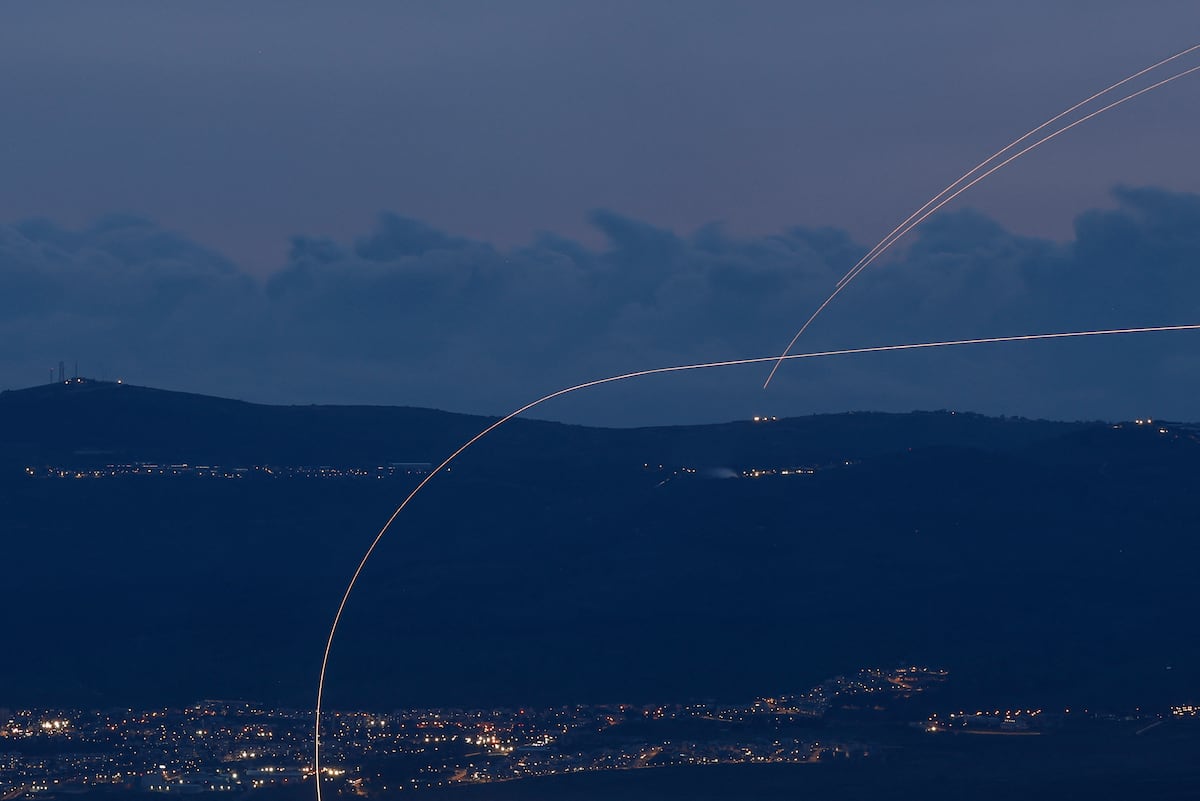
JERUSALEM — Israel has successfully completed a series of tests on an upgraded version of its Iron Dome aerial defense system, demonstrating new joint operational capabilities with the Iron Beam laser system , the Israeli ministry of defense said on Tuesday.
The defense ministry declined to provide technical specifics on the modifications. However, it stated that the upgrades enhance the system’s ability to contend with high rates and volumes of fire, allowing Israel’s air defenses to more effectively manage massive, concentrated saturation salvos.
A key element of the latest test series was the operational integration of the Iron Beam. During the tests, joint operational scenarios were successfully executed and managed directly from the Iron Dome’s battle management center, the government said.
This integration is a prerequisite for future operational deployments allowing commanders to dynamically toggle between missile and laser interceptions based on the nature of the incoming threat, system availability and cost-benefit calculations.
Israel’s announcement comes amid a U.S.-Iran ceasefire, a diplomatic development that has left Israel in a state of high strategic tension along its northern border with Lebanon, where it continues to endure persistent drone salvos launched by Hezbollah.
The Iron Dome was declared operational in 2011, when it also achieved its historic first interception of a Gaza-launched Grad rocket, and since formed the backbone of Israel’s multi-layered air defense network. Each of its batteries consists of a radar system, a command center and missile launchers carrying about 20 Tamir interceptors, protecting against threats within a range of 4 to 70 kilometers.
The primary developer for the Iron Dome is the Israeli firm Rafael, which is also the primary developer for the Iron Beam.
That system is designed to neutralize targets within four to five seconds from the moment it locks onto the target, at ranges up to 10 kilometers. An Iron Beam laser pulse is deemed to cost only a few dollars while a single Tamir interceptor missile costs roughly $50,000.
Tzally Greenberg is the Israel correspondent for Defense News. He has experience reporting on economic affairs as well as defense and cyber companies.
耶路撒冷——以色列国防部周二表示,以色列已成功完成对其升级版“铁穹”防空系统的一系列测试,展示了与“铁束”激光系统的新联合作战能力。
国防部拒绝透露此次改进的具体技术细节。但表示,升级提升了系统应对高频率、高强度火力攻击的能力,使以色列防空系统能够更有效地应对大规模、集中的饱和式齐射。
最新一轮测试的关键要素之一是“铁穹”系统的作战整合。政府表示,测试期间,联合作战场景成功执行,并由“铁穹”作战管理中心直接进行管理。
这种集成是未来作战部署的先决条件,它允许指挥官根据来袭威胁的性质、系统可用性和成本效益计算,动态地在导弹拦截和激光拦截之间切换。
以色列的声明是在美国和伊朗达成停火协议之际发布的。这一外交进展使以色列在其北部与黎巴嫩接壤的边境地区处于高度战略紧张状态,以色列继续遭受真主党持续不断的无人机袭击。
“铁穹”系统于2011年正式投入使用,同年首次成功拦截了一枚从加沙发射的“冰雹”火箭弹,此后便成为以色列多层防空网络的核心组成部分。该系统的每个防空单元都包含一套雷达系统、一个指挥中心和导弹发射装置,每个发射装置可搭载约20枚“塔米尔”拦截导弹,有效防御范围为4至70公里。
“铁穹”的主要开发商是以色列的拉斐尔公司,该公司也是“铁梁”的主要开发商。
该系统旨在锁定目标后四到五秒内将其摧毁,有效射程可达10公里。一次“铁束”激光脉冲的成本仅需几美元,而一枚“塔米尔”拦截导弹的成本约为5万美元。
扎利·格林伯格是《防务新闻》的以色列记者。他拥有丰富的经济事务以及国防和网络安全公司报道经验。