Pocket Force Of Stealthy Avenger Drones May Have Made Returning F-117s To Service Unnecessary隐形复仇者无人机组成的袖珍部队或许已使F-117战斗机重返服役变得没有必要
Avengers have flown over Syria and the secretive nature of who owns and operates the handful that have been delivered points to a clandestine program.
By Joseph Trevithick and Tyler Rogoway
Updated Dec 1, 2019 6:46 AM EST
recently outlined the logic behind persistent rumors that the U.S. Air Force, or some other U.S. government entity, might have regenerated some F-117A Nighthawk stealth combat jets for operations in the Middle East, most likely Syria, in recent years. We also noted that there’s absolutely no hard evidence to substantiate these claims. But there is a strong possibility that the United States did deploy another aircraft, a variant of the General Atomics Avenger drone, carrying the base designation Q-11, to meet a similar requirement for a stealthy, but armed platform that could strike high value and mobile targets in contested areas.
To quickly recap, on Mar. 2, 2019 , Dutch online aviation magazine Scramble posted claims on their Facebook page regarding the possibility that some F-117As flew missions in the Middle East in 2017. If true, this would have likely occurred because of a demand for the Nighthawks’ particular attributes , most notably it being a relatively quick and stealthly platform that is able to employ laser-guided bombs on moving targets. It also doesn’t represent the high-end of U.S. aerospace technology, especially in terms of its low-observable design. As such, if one was lost, the technological risk wouldn’t be catastrophic.
This is a capability gap the U.S. military had had since retiring the first-generation stealth jets in 2008 and only recently regained, at least publicly, with the integration of the GBU-49/B dual-mode Paveway precision guided bomb and associated software onto the F-35 Joint Strike Fighter . You can read all about these issues in our previous post here .
Officially, most of the last of the Nighthawks are in “ Type 1000 ” regenerative storage Tonopah Test Range Airport , where they have been since their formal retirement more than a decade ago. Between four and six have remained in flyable condition, and have flown fairly regularly, for years . The service’s stated plan has been to permanently dispose of them at a rate of four per year starting in 2017.
An official picture of F-117As in storage at Tonopah., USAF
But whether or not the United States sent F-117s back into combat or not, the requirements that would have prompted that deployment were still there. If the U.S. government had identified a target it wanted to strike clandestinely and that could be on the move in, say, Western Syria, an area full of Syrian air defenses, it would have had few, if any options, at least publicly, to carry out that mission without being easily detected.
This bring us to the General Atomics Avenger , also known as the Predator C . The Air Force appears to have designated at least one variant of this drone the YQ-11 and there are likely be additional configurations, such as an operational MQ-11. These designations are wholly unrelated to AeroVironment’s RQ-11A and RQ-11B Ravens . At the time of writing, Air Force Materiel Command (AFMC) has not responded to our queries for clarification and additional details on this nomenclature. But more on this later.
The video below was General Atomics’ vision for how Avengers would operate on the battlefield circa 2012.
Despite its initial name, this unmanned aircraft is distinct from the company’s earlier MQ-1 Predator and MQ-9 Reaper designs , featuring a stealthy planform reminiscent of Northrop’s Tacit Blue demonstrator and using a turbofan engine for greater power and speed than its propeller-driven family members. Avenger also has a much higher operational ceiling than the MQ-1 or MQ-9, being able to reach altitudes of around 50,000 feet.
General Atomics Avenger in front of an MQ-1 Predator, at left, and an MQ-9 Reaper., General Atomics
The latest iterations of the Avenger, which are substantially larger than the original prototype, have a cruising speed of around 400 miles per hour, more than twice that of a Reaper, and a maximum flight time of around 20 hours, depending on what payloads it is carrying. In 2016, General Atomics also flew a new variant of the drone, called the Avenger Extended Range (ER), for the first time . The Avenger ER has since demonstrated an ability to remain aloft for longer than 20 hours .
They also have the ability to carry weapons, including laser-guided bombs, in their internal payload bays, as well as additional stores on up to six underwing pylons. The Avenger can accommodate various sensor turrets with electro-optical, infrared, and multi-spectral cameras , as well as laser designators, on a retractable mount. This allows the drone to operate in maximum stealth mode until it reaches the target area.
These drones, which, like the F-117s, don’t represent the cutting-edge of American low-observable technology, but would still be well suited to conducting discreet and flexible missions over less than welcoming airspace in Syria from bases in nearby neighboring countries. General Atomics says the drones can also self-deploy to a forward operating site or that C-17A Globemaster III or C-5 Galaxy transport aircraft can transport them and other supporting equipment to the desired location.
An Avenger with various inert examples of the precision guided bombs it can carry internally on display in front., USN
Publicly, the Air Force has exactly one of these unmanned aircraft in its inventory, which it announced it was buying in 2011 under curious circumstances . An initial contracting notice said the service planned to send the drone to Afghanistan for tests, but this announcement was then “cancelled” and edited to redact the planned deployment location.
In December 2011 , the Air Force denied that it had plans to send the Avenger to Afghanistan. The initial contracting notice had come shortly after an RQ-170 Sentinel stealth drone, likely flying from a base in Afghanistan, had crashed in neighboring Iran, leading some to speculate that the Avenger’s actual missions would be over that country. Another possibility was that it might fly from Afghan bases to conduct secretive strikes against terrorists and keep in an eye on the nuclear arsenal in Pakistan .
An Avenger on the ground with its payload bay open., General Atomics
What exactly the Air Force’s plans for the Avenger were or what it actually did with the drone remain unclear. An annual history of Air Combat Command (ACC), the service’s main warfighting command, for 2011 includes a section talking about both the Predator C and the then-ongoing MQ-X program , but the comments on the former are almost entirely redacted. The author previously obtained a copy of this document via the Freedom of Information Act.
“The next generation RPA [remotely piloted aircraft], or MQ-X as it was more commonly called, promised a more viable solution to meeting the Air Force’s future unmanned ISR [intelligence, surveillance, and reconnaissance] needs,” the historical review explains. “Unlike the Predator C which offered only minor improvements over the MQ-9, MQ-X had to be ‘survivable in a contested environment, weather tolerant, and have robust and agile communications.’”
The entire, unredacted portions of the section on the Predator C and MQ-X from the 2011 ACC history., USAF via FOIA
This is curious commentary given that the Avenger can carry a significantly larger payload than the MQ-9, has a substantially greater cruise and dash speed, and offers stealthy capabilities that the Reaper does not. This same section says that by the end of 2011, ACC had begun discussions with the U.S. Navy about blending MQ-X with the Unmanned Carrier-Launched Airborne Surveillance and Strike ( UCLASS ) program.
In February 2012, the Air Force publicly cancelled MQ-X entirely . In retrospect, this is not surprising as anything having to do with advanced unmanned combat air vehicles had disappeared from the USAF’s documentation and vernacular around that time. You can read all about this mysterious saga here . The unredacted portions of the 2012 annual history for ACC, which the author also got via FOIA, makes no mention of this program at all or of the final fate of the Air Force’s lone Avenger.
The Navy’s UCLASS turned into an entirely separate debacle, which you can read about in more detail here , resulting in a complete shift in requirements to an unmanned aircraft that would primarily serve as an aerial refueling tanker. Boeing is now on contract to build this drone, known as the MQ-25 Stingray . General Atomics had used the Avenger as a surrogate to test various technologies in support of its own ultimately failed bid for this program .
The Avenger’s history with the U.S. government didn’t end with MQ-X. As of 2017 , General Atomics had confirmed the sale of the lone drone to the Air Force, but also the delivery of “up to seven” additional examples to an undisclosed U.S. government entity. The year before, the company also went on the record saying that someone had flown one of these unmanned aircraft over Syria to conduct a propaganda leaflet drop.
We don’t know for sure who within the U.S. government owns or is flying the other Avengers, but Air Force Materiel Command’s (AFMC) Detachment 3 flies the “YQ-11,” likely the sole example the Air Force “officially” owns, for test and evaluation purposes, as of 2019. This detachment is situated in Poway, California, home of General Atomics, according to a contracting announcement that appeared on FedBizOpps, the U.S. government’s main contracting website, in February 2019 .
The detachment also has a so-called “operation location,” or OL-Det 3, spread between General Atomics’ Mojave Desert Flight Test Facilities at Gray Butte and El Mirage Airfields. The testing that Detachment 3 conducts, which also includes work on the MQ-9, supports ACC requirements, as well as those from U.S. Special Operations Command (SOCOM) by way of Air Force Special Operations Command (AFSOC).
A section from a recent contracting document mentionoing the YQ-11., USAF
Another section from another related contracting document describing AFMC, Detachment 3’s mission and operating locations., USAF
But the latest editions of the Air Force’s Flight Test Aircrew Training manuals , which the service published in 2017, certainly hint at the existence of other U.S. government Avengers and actual operational activities. These documents include entire sections covering the YQ-11, something that seems incongruous for a fleet of just one drone.
To retain their currency on this aircraft type, the Air Force says pilots and sensor operators must conduct landings using the drone’s electro-optical, infrared, and multi-spectral camera systems. It’s worth noting that Raytheon’s product page for its Multi-Spectral Targeting System (MTS) says this system is found on the “MQ-9C,” another designation that has been associated with the Avenger . YQ-11 crews must also fly mission profiles at least simulating the employment of both missiles and bombs.
“Qualification in the YQ-11 does not count as qualification in any other aircraft except like YQ-11 series (Q-11X) requiring difference/conversion training,” one of the manuals says. The “Q-11X” reference suggests that there could be additional Q-11 variants, such as an MQ-11A, beyond the “prototype” YQ-11.
YQ-11 proficiency requirements as described in Air Force Instruction 11-2FT, Flight Test Aircrew Training, Volume 1., USAF
“In accordance with the 2011 defense appropriation act, the Air Force procured prototype demonstration capabilities of the Avenger system,” a spokesperson for the Air Force’s 645th Aeronautical Systems Group, a special projects office better known by the nickname Big Safari, told Flight Global in 2016. “The demonstration has completed and there are no current plans for future demonstrations.”
But this wouldn’t preclude the Air Force from operating a separate, classified fleet of operational Avengers. It also wouldn’t prevent the service from being involved in some way with another U.S. government entity’s operation of those drones. Annual historical reviews for Big Safari for 2012, 2013, and 2014, which the author obtained via FOIA, make no mention of Predator C, Avenger, or YQ-11 in any way, though they do have a category simply labeled “Classified Programs.”
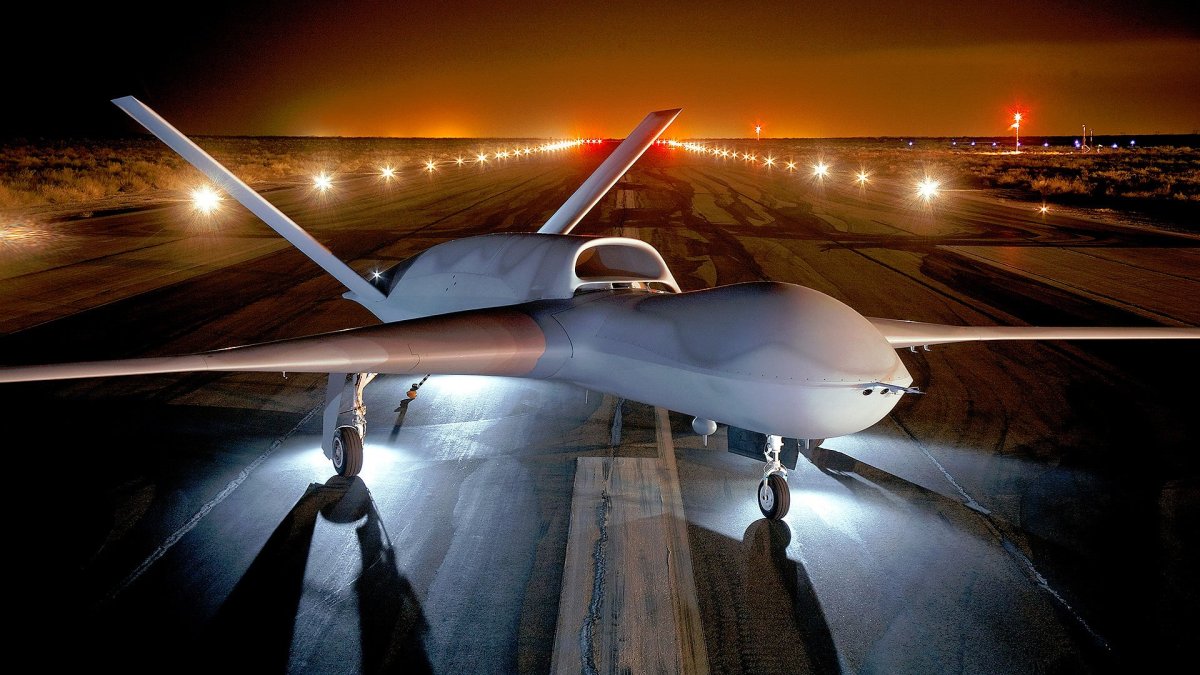
Tyson V. Rininger / www.tvrphotography.com
In addition, all of this could fit in with what is known, and still unknown, about the Air Force’s top-secret 44th Reconnaissance Squadron, which we at The War Zone
were first to report on in detail in 2018. The service will not tell us what type or types of unmanned aircraft this unit operates.
The 44th has its own convoluted history tracing back to the activation of a separate, secretive entity known as the 732nd Operations Group, Detachment 1. The 732nd as a whole has connections to the Central Intelligence Agency (CIA) and the Joint Special Operations Command (JSOC). Previous media reports have suggested the group acts as a cover for or is otherwise tied in with the CIA’s top-secret drone operations.
A patch for the 732nd Operations Group, Detachment 1, showing motifs in common with the 30th Reconnaissance Squadron, which flies the RQ-170 Sentinel stealth drone. This insignia also has the text “Forging the Sword” along with a lightning bolt, sword, and droplets of blood, suggesting this unit had other missions beyond intelligence, surveillance, and reconnaissance., Flightlineinsignia.com
All of this brings us back to the F-117 rumors. There remains no evidence that these Nighthawk deployments ever occurred.
There are, however, the on-the-record statements from General Atomics that a U.S. government agency, widely understood to be the CIA, possibly in cooperation with the Air Force, has a fleet of Avengers. There have been no other publicly acknowledged sales of this drone to the U.S. government or any other country.
The drone’s manufacturer has also revealed that at least one Avenger was flying over Syria at the same time when the rumors about F-117s heading back to combat were first emerging. The Avenger would have been able to meet many of the same requirements for stealthy, armed platform able to engage static and moving targets that was far faster, and therefore more responsive, than other unmanned aircraft available in the region.
The 44th also officially stood up in April 2015, which would have given it months to reach at least initial operational capability ahead of an actual deployment the following year. This unit’s activation could have provided a cover for a much more mature Avenger program under the auspices of the CIA, as well.
We also know that Al Qaeda’s number two leader, Abu Khayr Al Masri, died in what appeared to be an air strike on his car involving a special low-collateral damage munition in Syria’s western Idlib governorate in February 2017. More recently, The Washington Post reported, citing anonymous sources, that President Donald Trump had pushed the CIA to begin arming unspecified drones under its control flying over Syria after taking office the month before. Trump also reportedly received a briefing from the Agency about unique air-dropped munitions designed to avoid civilian casualties.
This strike on Al Masri’s car is exactly the kind of mission profile – a high value target in a moving vehicle traveling in a denied area where American manned platforms don’t generally go – that seemed to explain why the Air Force or the CIA might have turned to the mothballed F-117s at all. It’s also an operation that an Avenger could have performed and fits almost perfectly with the details and timeline regarding CIA drone operations in The Post ’s subsequent reporting.
With all this in mind, the small but critical gap that needed filling over Syria, and possibly over other countries in the Middle East, both friendly and not so friendly, could very well have been filled by the diminutive, but adaptable and relatively low-risk Avenger fleet that currently lives in the darkness. That’s not to say that the mothballed F-117 force wasn’t possibly evaluated to fulfill this role, but taking the human out of cockpit, as well as leveraging the long-endurance capabilities of the Avenger may have been an all too logical alternative.
There’s also the possibility that both airframes were put to use to fulfill a similar mission set. The presence of one in the region doesn’t necessarily preclude the other. Especially if the F-117s were assigned to the Air Force and the Avengers were CIA assets. But we know for a fact that a handful of Avengers are flying under some classified umbrella for a certain government agency and that they have been active in the Middle East, and Syria, in particular. The claims that the F-117s were returned to service and deployed to the region, on the other hand, come without any hard evidence at all.
If the Avenger has quietly stalked and killed high value targets in sensitive airspace, the program is far more successful than anyone has been allowed to let on.
Author’s note: A special thanks to Tyson Rininger for allowing to use his amazing photo as the banner image in this article. Make sure to check out all his work here .
Contact the author at tyler@thedrive.com
Comments couldn’t be loaded. Please refresh the page.
作者:约瑟夫·特雷维西克和泰勒·罗戈韦
更新于美国东部时间2019年12月1日上午6:46
最近,我们概述了关于美国空军或其他美国政府机构可能在近年来重新启用部分F-117A“夜鹰”隐形战斗机用于中东(很可能是叙利亚)作战的传言背后的逻辑。我们也指出,目前没有任何确凿证据可以证实这些说法。但美国很可能确实部署了另一种飞机,即通用原子公司“复仇者”无人机的衍生型号,其基本代号为Q-11,以满足类似的对隐蔽且武装的平台的需求,该平台能够打击冲突地区的高价值移动目标。
简单回顾一下,2019年3月2日,荷兰在线航空杂志《Scramble》在其Facebook页面上发布消息称,部分F-117A战斗机可能在2017年执行过中东地区的作战任务。如果属实,这很可能是因为当时对“夜鹰”战斗机特定性能的需求,尤其是它相对快速、隐蔽性强,并且能够使用激光制导炸弹攻击移动目标。此外,它并非美国航空航天技术的顶尖水平,尤其是在低可探测性设计方面。因此,即使损失了一架,其技术风险也不会是灾难性的。
自2008年第一代隐形战机退役以来,美军一直存在这种能力缺口,直到最近才通过将GBU-49/B双模“铺路”精确制导炸弹及其配套软件集成到F-35联合攻击战斗机上而得以弥补(至少在公开层面上是如此)。您可以在我们之前的文章中了解所有相关内容(点击此处)。
官方数据显示,大部分“夜鹰”战斗机目前都存放在托诺帕试验场机场的“1000型”再生封存设施中,自十多年前正式退役以来一直如此。其中四到六架仍保持适航状态,并且多年来一直定期飞行。美国空军的既定计划是从2017年开始,每年永久退役四架。
这是美国空军托诺帕空军基地存放的F-117A战斗机的官方照片。
但无论美国是否将F-117战机重新投入战斗,促使其部署的必要条件依然存在。如果美国政府确定了一个想要秘密打击的目标,而该目标可能位于叙利亚西部——一个遍布叙利亚防空系统的地区——并且正在移动,那么至少在公开场合,美国几乎没有其他选择,能够在不轻易被发现的情况下执行这项任务。
这就引出了通用原子公司(General Atomics)的“复仇者”(Avenger)无人机,也称为“捕食者C”(Predator C)。空军似乎已将该无人机的至少一个变型命名为YQ-11,而且可能还有其他配置,例如可投入作战的MQ-11。这些命名与AeroVironment公司的RQ-11A和RQ-11B“渡鸦”(Raven)无人机完全无关。截至发稿时,空军装备司令部(AFMC)尚未回复我们关于此命名规则的澄清和更多细节的询问。稍后我们将对此进行更详细的报道。
下面的视频是通用原子公司对 2012 年左右复仇者联盟在战场上作战方式的设想。
尽管最初名为“复仇者”,但这款无人机与该公司早期的MQ-1“捕食者”和MQ-9“死神”无人机截然不同。它采用了类似诺斯罗普·格鲁曼公司“静默蓝”验证机的隐身外形,并使用涡扇发动机,使其动力和速度都优于同系列的螺旋桨无人机。“复仇者”的作战高度也远高于MQ-1和MQ-9,能够达到约50,000英尺的高度。
通用原子公司的复仇者无人机,左侧是MQ-1捕食者无人机,右侧是MQ-9死神无人机。
最新款的“复仇者”无人机比最初的原型机大得多,巡航速度约为每小时400英里,是“死神”无人机的两倍多,最大飞行时间约为20小时,具体取决于其携带的有效载荷。2016年,通用原子公司首次试飞了该无人机的新型改进型——“复仇者增程型”(Avenger Extended Range,简称ER)。此后,“复仇者增程型”已证明其能够持续飞行超过20小时。
它们还能够在内部有效载荷舱携带武器,包括激光制导炸弹,并且最多可在六个翼下挂架上挂载其他武器。复仇者无人机可在可伸缩的支架上安装各种传感器炮塔,包括光电、红外和多光谱摄像机以及激光指示器。这使得无人机能够在到达目标区域之前保持最大程度的隐身状态。
这些无人机与F-117战斗机一样,并非美国低可探测性技术的尖端产品,但仍然非常适合从邻近国家的基地出发,在叙利亚不太友好的空域执行隐蔽灵活的任务。通用原子公司表示,这些无人机可以自行部署到前沿作战地点,或者由C-17A“环球霸王III”或C-5“银河”运输机将它们和其他配套设备运送到指定地点。
一架复仇者式轰炸机,机舱前方展示着各种可内置携带的精确制导炸弹的惰性弹头。(美国海军)
公开资料显示,美国空军目前仅有一架此类无人机,其采购计划于2011年在颇为蹊跷的情况下宣布。最初的合同公告称,空军计划将这架无人机派往阿富汗进行测试,但随后该公告被“取消”,并修改以隐去原定的部署地点。
2011年12月,美国空军否认计划向阿富汗派遣“复仇者”无人机。最初的合同公告发布不久后,一架RQ-170“哨兵”隐形无人机在邻国伊朗坠毁,该无人机很可能是从阿富汗的某个基地起飞的。这引发了一些猜测,认为“复仇者”无人机的实际任务可能在伊朗上空执行。另一种可能性是,它可能从阿富汗的基地起飞,对恐怖分子进行秘密打击,并监视巴基斯坦的核武库。
一架复仇者运输机停在地面上,有效载荷舱已打开。(通用原子公司)
空军究竟对“复仇者”无人机有何计划,以及实际使用了该无人机的情况,目前仍不清楚。空军主要作战司令部——空战司令部(ACC)2011年的年度历史报告中,有一个章节提到了“捕食者C”无人机和当时正在进行的MQ-X项目,但关于前者的评论几乎全部被删减。作者此前曾根据《信息自由法》获得过这份文件的副本。
历史回顾解释说:“下一代遥控驾驶飞机(RPA),或更常见的名称MQ-X,有望为满足空军未来无人情报、监视和侦察(ISR)需求提供更可行的解决方案。与仅在MQ-9基础上略作改进的捕食者C不同,MQ-X必须‘能够在对抗环境中生存,能够适应各种天气条件,并拥有强大而灵活的通信能力’。”
根据《信息自由法》,美国空军2011年航空司令部(ACC)历史报告中关于“捕食者C”和MQ-X无人机的全部未删节部分。
考虑到复仇者无人机的有效载荷远大于MQ-9,巡航速度和突进速度也更快,并且具备死神无人机所不具备的隐身能力,这段评论显得颇为耐人寻味。该章节还提到,到2011年底,美国海军航空司令部(ACC)已开始与美国海军探讨将MQ-X无人机与舰载无人空中监视与打击(UCLASS)项目相结合的可能性。
2012年2月,美国空军公开宣布彻底取消MQ-X项目。事后看来,这并不令人意外,因为当时美国空军的文档和相关术语中几乎完全没有提及任何与先进无人作战飞行器有关的内容。您可以在这里阅读有关这段神秘故事的全部内容。作者通过《信息自由法》获取的2012年空军作战司令部(ACC)年度历史报告(未删节部分)中,完全没有提及该项目,也没有提及空军唯一一架“复仇者”无人机的最终命运。
海军的UCLASS项目最终演变成一场彻底的失败,详情请点击此处阅读。这场失败导致项目需求完全转向一种主要用于空中加油的无人机。波音公司目前已获得合同,负责建造这款名为MQ-25“黄貂鱼”的无人机。通用原子公司曾使用“复仇者”无人机作为替代机型,测试各种技术,以支持其最终失败的竞标。
复仇者联盟与美国政府的合作并未止步于MQ-X无人机。截至2017年,通用原子公司已证实向美国空军出售了这架无人机,同时还向一个未公开的美国政府机构交付了“至多七架”无人机。此前一年,该公司也曾公开表示,有人操控其中一架无人机飞越叙利亚,进行宣传传单散发活动。
我们尚不清楚美国政府内部哪些部门拥有或驾驶其他复仇者联盟无人机,但截至2019年,空军装备司令部(AFMC)第3分遣队驾驶着“YQ-11”无人机,这可能是空军“官方”拥有的唯一一架用于测试和评估的无人机。根据2019年2月发布在美国政府主要合同网站FedBizOpps上的一份合同公告,该分遣队位于加利福尼亚州波威市,通用原子公司总部所在地。
该分遣队还设有一个所谓的“作战地点”,即OL-Det 3,位于通用原子公司莫哈韦沙漠飞行测试设施的格雷比特机场和埃尔米拉奇机场之间。第3分遣队开展的测试工作,包括MQ-9无人机的相关工作,旨在满足美国空军作战司令部(ACC)以及美国特种作战司令部(SOCOM)通过空军特种作战司令部(AFSOC)提出的需求。
近期一份合同文件中提及YQ-11的章节,美国空军
另一份相关合同文件中的另一部分描述了美国空军装备司令部第三分遣队的任务和作战地点。
但空军于2017年发布的最新版《飞行测试机组人员训练手册》确实暗示了美国政府可能拥有其他“复仇者”无人机以及实际的作战行动。这些文件中包含专门章节介绍YQ-11无人机,这对于一支仅有一架无人机的机队来说似乎有些不合常理。
为了保持对这种机型的熟练操作,空军表示,飞行员和传感器操作员必须使用无人机的光电、红外和多光谱摄像系统进行着陆。值得注意的是,雷神公司在其多光谱目标瞄准系统(MTS)的产品页面上指出,该系统应用于“MQ-9C”,而MQ-9C也是与“复仇者”无人机相关的另一个型号。此外,YQ-11机组人员还必须至少模拟使用导弹和炸弹的任务飞行。
其中一份手册指出:“YQ-11的飞行资格认证不适用于其他任何机型,除非是像YQ-11系列(Q-11X)那样需要进行差异化/转换训练的机型。” “Q-11X”的提及表明,除了“原型机”YQ-11之外,可能还有其他Q-11衍生机型,例如MQ-11A。
YQ-11 熟练度要求,详见美国空军第 11-2FT 号指令《飞行测试机组人员训练》第一卷。
“根据2011年国防拨款法案,空军采购了复仇者系统的原型演示能力,”空军第645航空系统大队(一个以绰号“大狩猎”而闻名的特种项目办公室)的一位发言人在2016年告诉《飞行全球》杂志。“演示已经完成,目前没有未来演示的计划。”
但这并不妨碍空军运营一支独立的、保密的“复仇者”无人机作战机队。这也不妨碍空军以某种方式参与其他美国政府机构对这些无人机的运作。作者通过《信息自由法》获得的2012年、2013年和2014年“大型狩猎行动”(Big Safari)年度历史回顾报告,完全没有提及“捕食者C”(Predator C)、“复仇者”(Avenger)或YQ-11,尽管其中确实有一个名为“机密项目”的类别。
泰森·V·林格 (Tyson V. Rininger) / www.tvrphotography.com
此外,所有这些都可能与我们在《战区》杂志上报道过的空军绝密第44侦察中队的已知信息和未知信息相吻合。
2018年,我们率先对此进行了详细报道。军方拒绝透露该部队操作的是哪种或哪些类型的无人机。
第44特种作战大队有着一段错综复杂的历史,其前身是一个名为“第732作战大队第一分遣队”的独立秘密机构。第732作战大队整体上与中央情报局(CIA)和联合特种作战司令部(JSOC)有着密切联系。此前的媒体报道暗示,该大队可能为CIA的绝密无人机行动提供掩护,或者与CIA的无人机行动存在某种关联。
这是第732作战大队第1分队的臂章,其图案与装备RQ-170“哨兵”隐形无人机的第30侦察中队相似。该臂章上还印有“锻造利剑”的字样,以及闪电、利剑和血滴图案,表明该部队除了情报、监视和侦察之外,还承担着其他任务。(Flightlineinsignia.com)
这一切又让我们回到了F-117的传闻上。目前仍然没有任何证据表明这些“夜鹰”战机曾经部署过。
然而,通用原子公司曾公开表示,美国某个政府机构(普遍认为是中央情报局,可能与空军合作)拥有一支“复仇者”无人机队。除此之外,没有其他公开承认的向美国政府或其他任何国家出售该型无人机的交易。
该无人机的制造商还透露,在有关F-117重返战场的传闻首次出现时,至少有一架“复仇者”无人机正在叙利亚上空飞行。“复仇者”无人机能够满足许多相同的要求,它是一款隐蔽、武装的平台,可以攻击静态和移动目标,而且速度更快,因此反应也比该地区其他无人机更灵敏。
第44部队也于2015年4月正式成立,这意味着它有几个月的时间至少达到初始作战能力,以便在次年进行实际部署。该部队的成立也可能为中央情报局主导的更为成熟的“复仇者”计划提供了掩护。
我们还知道,基地组织二号人物阿布·海尔·马斯里于2017年2月在叙利亚西部伊德利卜省遭遇空袭身亡,当时他乘坐的汽车似乎遭到了一种特殊的低附带伤害弹药的袭击。最近,《华盛顿邮报》援引匿名消息人士报道称,唐纳德·特朗普总统在上任前一个月就敦促中央情报局开始武装其控制下在叙利亚上空飞行的未指明无人机。据报道,特朗普还听取了中央情报局关于一种旨在避免平民伤亡的特殊空投弹药的简报。
这次对阿尔·马斯里座驾的袭击,正是美国空军或中央情报局为何会启用封存的F-117战机执行任务的典型案例——目标为高价值目标,且车辆行驶在美军有人驾驶平台通常不会进入的禁飞区。此外,复仇者无人机也能执行类似的行动,这与《华盛顿邮报》后续报道中关于中央情报局无人机行动的细节和时间线几乎完全吻合。
考虑到所有这些因素,叙利亚乃至中东其他国家(无论友好与否)上空那虽小却至关重要的防空缺口,完全可以由目前处于封存状态的小型、适应性强且风险相对较低的“复仇者”战机队来填补。这并非否认封存的F-117战机部队可能被评估过能够胜任这项任务,但将飞行员从驾驶舱中移除,并充分发挥“复仇者”战机的长航时能力,或许是一个更为合理的选择。
还有一种可能是,这两款战机被用于执行类似的任务。其中一款战机出现在该地区并不一定意味着另一款也不存在。特别是如果F-117战机隶属于美国空军,而“复仇者”战机是中央情报局的资产。但我们确切知道,少数“复仇者”战机在某个政府机构的秘密掩护下执行任务,并且它们一直在中东地区,特别是叙利亚活动。另一方面,关于F-117战机已重新服役并部署到该地区的说法,则没有任何确凿证据。
如果复仇者导弹已经悄悄地跟踪并击毙了敏感空域中的高价值目标,那么该计划的成功程度远远超过了任何人所透露的。
作者注:特别感谢泰森·里宁格允许我们使用他拍摄的精彩照片作为本文的封面图片。请务必点击此处查看他的所有作品。
请通过 tyler@thedrive.com 联系作者。
评论加载失败,请刷新页面。