Saudi Arabia has billions in weapons — why are Yemen’s Houthis still so difficult to defeat?沙特阿拉伯拥有数十亿美元的武器——为什么也门胡塞武装仍然如此难以击败?
RIYADH, Sept 22 — Saudi Arabia has deep pockets and cutting-edge weapons yet for more than a decade it has been unable to quash Yemen’s battle-hardened Houthis.The Iran-backed...
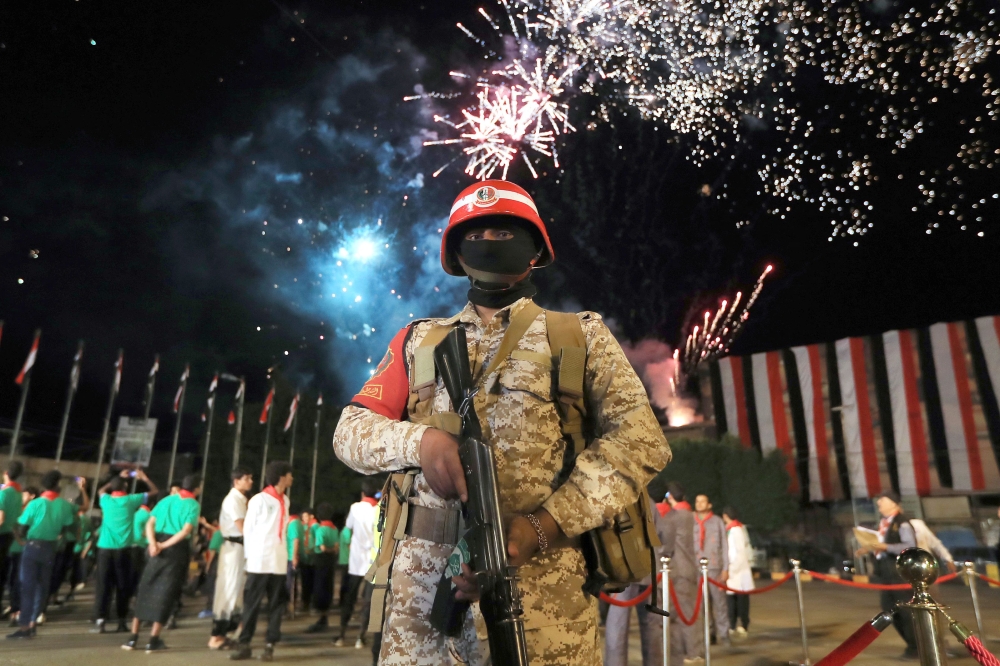
Saudi Arabia has struggled to combat Yemen's Iran-backed Houthis despite substantial military investments and advanced weaponry, due to ineffective ground proxies and challenging terrain that favors the Houthis.
The kingdom's strategies have been hindered by its fragmented military, which is kept intentionally weak to prevent coups, and the Houthis' strong command structure.
The Houthis have advanced their missile and drone capabilities with Iranian support, gaining control over strategic areas and implementing actions like blockading Saudi oil exports.
The Yemeni government, supported by Saudi Arabia since 2015, faces challenges such as low morale, rifts with the UAE, and inadequate resources to counter Houthi advances effectively.
RIYADH, Sept 22 — Saudi Arabia has deep pockets and cutting-edge weapons yet for more than a decade it has been unable to quash Yemen’s battle-hardened Houthis.
The Iran-backed group has now attacked Riyadh with a missile strike, seized Yemen’s entire Red Sea coast and is blockading Saudi oil exports, seemingly unimpeded.
Experts say Saudi Arabia has struggled to rebuff the group in part due to its reliance on ineffective proxies on the ground, while rugged terrain and Iranian support have favoured the Houthis.
Why has Saudi Arabia struggled?
The kingdom has spent billions acquiring sophisticated weaponry and military kit, while historically relying on a large presence of foreign personnel, contractors and trainers to supplement its forces.
Major weapons purchases from Western manufactures — including American, British and French companies — have become a defining feature of Saudi defence policy and diplomatic strategy to curry favour with its allies.
Last week, the United States has approved a $24.3 billion sale of 48 F-35 stealth warplanes to Saudi Arabia.
Despite its formidable arsenal, the Saudi military has had relatively limited experience overseeing complex combat operations on its own.
“The Saudis have to build a military that’s willing to fight and a population that’s willing to die to preserve what they have,” said Bernard Haykel, a Saudi expert at Princeton University, during a discussion posted online after the Houthi’s latest offensive.
“And that’s not what they have right now.”
Experts have long suggested that the kingdom’s military forces have purposely remained smaller and fragmented to prevent a putsch in a region prone to coups.
“Saudi Arabia is the one place where the monarchy has not [been] displaced by [the] military, because they have kept the military weak,” Middle East scholar Ray Takeyh told a congressional hearing in 2015.
Why are the Houthis so tough?
Initially lightly-armed, the Houthis have used their rugged terrain and tribal bonds to employ formidable defences that have been difficult to uproot.
Over the years, the group has amassed an advanced arsenal of missiles and drones with Iranian backing. They have also remained unified — contrary to the government.
“The Houthis have been able to build a united front,” Thomas Juneau, an expert on Iran and Yemen at the University of Ottawa, told AFP.
“They have a very centralised government that exercises a strong command and control over what initially were the disparate forces that they put together.”
Since 2023, the group has proved its ability to hamper Red Sea traffic as it attacked vessels accused of Israel links after the Gaza war.
A similar strategy would later be employed by Iran to effectively close the Strait of Hormuz.
Repeated US, British and Israeli strikes in 2024 and 2025 are believed to have degraded Houthi military infrastructure, but failed to neutralise its missile and drone capabilities.
What about the Yemeni government?
Saudi Arabia entered the Yemen war in 2015 alongside its UAE ally to bolster a government, chased out of the capital Sanaa a year earlier by the Houthis.
Weeks before the Middle East war began, trouble was already brewing for Yemen’s embattled government in Aden.
In December, UAE-backed forces briefly seized control of all government areas, provoking Riyadh’s fury and triggering an ongoing rift between the two allies. Riyadh demanded Abu Dhabi withdraw from Yemen, which it did.
The UAE withdrew its forces and equipment — including helicopter gunships — from areas near the Red Sea coast.
The Saudis proved unable to fill the vacuum left in the UAE’s absence and a disorganised force was left to defend a swath of strategic territory.
“A heavy hit and a weak coordination relationship with the Yemenis is what created this collapse,” Middle East expert Michael Knights told AFP.
A 2022 ceasefire broke down in July as the Houthis welcomed an Iranian plane directly to Sanaa, defying the kingdom.
Later, they imposed a maritime blockade of Saudi Arabia and began hitting its ships, territory and oil facilities, before seizing the entire Red Sea coast overlooking Bab al-Mandab and later hitting Riyadh.
In response, Saudi Arabia did not launch any major counter-offensive, though the Houthis are still fighting government forces.
US media has reported that Saudi Crown Prince Mohammed bin Salman has repeatedly asked President Donald Trump for assistance in halting the Houthis to no avail, so far.
On the ground, Yemen government forces complain of low morale.
“We were suffering from shortages of weapons and ammunition as well as delays in salary payments,” a fighter in the southern province of Lahj told AFP.
“Two days ago, we received reinforcements and equipment, but it’s still not enough.” — AFP
Thailand on alert as water level at Chao Phraya river expected to rise
Typhoon Dujuan: Death toll climbs to six in Japan
Russia demands Europe lifts sanctions against all Russians
Selangor Malay Reserve Land up 1,084.55 hectares since 2018, says Amirudin
Just 40m long, new Mont Kiara road opens shortcut to Solaris and Segambut
KPWKM seeks higher Budget 2027 allowances for disabled workers and PDK staff, says Nancy
尽管沙特阿拉伯投入了大量军事资金并拥有先进的武器装备,但由于地面代理人的不力以及有利于胡塞武装的复杂地形,沙特在打击也门伊朗支持的胡塞武装方面一直举步维艰。
王国的战略受到其分散的军队(为了防止政变而故意保持较弱的军队)和胡塞武装强大的指挥结构的阻碍。
在伊朗的支持下,胡塞武装提升了其导弹和无人机能力,控制了战略要地,并采取了封锁沙特石油出口等行动。
自 2015 年以来一直得到沙特阿拉伯支持的也门政府面临着士气低落、与阿联酋关系紧张以及资源不足等挑战,难以有效应对胡塞武装的推进。
利雅得,9 月 22 日——沙特阿拉伯财力雄厚,拥有尖端武器,但十多年来,它始终未能镇压也门身经百战的胡塞武装。
这个受伊朗支持的组织现在已经用导弹袭击了利雅得,占领了也门的整个红海沿岸,并封锁了沙特的石油出口,似乎毫无阻碍。
专家表示,沙特阿拉伯难以击退该组织,部分原因是其依赖于当地不称职的代理人,而崎岖的地形和伊朗的支持则有利于胡塞武装。
沙特阿拉伯为何举步维艰?
该王国花费数十亿美元购置了先进的武器和军事装备,同时历史上也依赖大量外国人员、承包商和教官来补充其军队。
从西方制造商(包括美国、英国和法国公司)大量采购武器已成为沙特阿拉伯国防政策和外交战略的一个显著特征,以此来讨好其盟友。
上周,美国批准向沙特阿拉伯出售价值 243 亿美元的 48 架 F-35 隐形战机。
尽管沙特军队拥有强大的武器库,但在独立指挥复杂的作战行动方面,其经验相对有限。
“沙特人必须建立一支愿意战斗的军队和一支愿意为保卫自己所拥有的一切而牺牲的人民,”普林斯顿大学的沙特问题专家伯纳德·海克尔在胡塞武装最新攻势后发布的一段网络讨论中说道。
“而他们现在并没有这样的条件。”
专家们长期以来一直认为,沙特王国的军队规模故意较小且分散,以防止在易发生政变的地区发生政变。
“沙特阿拉伯是唯一一个君主制没有被军方取代的地方,因为他们一直保持着军队的弱势,”中东问题学者雷·塔克耶在 2015 年的一次国会听证会上说道。
为什么胡塞武装如此顽强?
胡塞武装最初装备简陋,但他们利用崎岖的地形和部落间的联系,构筑了难以撼动的强大防御工事。
多年来,在伊朗的支持下,该组织积累了一批先进的导弹和无人机。与伊朗政府不同,他们也一直保持着团结。
“胡塞武装已经能够建立统一战线,”渥太华大学伊朗和也门问题专家托马斯·朱诺告诉法新社。
“他们拥有高度集中的政府,对最初由不同力量组成的联合体实行强有力的指挥和控制。”
自 2023 年以来,该组织已证明其有能力阻碍红海交通,在加沙战争后袭击了被指控与以色列有关联的船只。
伊朗后来也采用了类似的策略,有效地封锁了霍尔木兹海峡。
据信,美国、英国和以色列在 2024 年和 2025 年的多次打击削弱了胡塞武装的军事基础设施,但未能使其导弹和无人机能力丧失。
也门政府的情况如何?
沙特阿拉伯于 2015 年与其盟友阿联酋一起介入也门战争,以支持一年前被胡塞武装赶出首都萨那的也门政府。
中东战争爆发前几周,也门处境艰难的亚丁政府就已陷入困境。
去年12月,阿联酋支持的部队短暂控制了也门所有政府控制区,激怒了利雅得,并引发了这两个盟友之间持续的裂痕。利雅得要求阿布扎比从也门撤军,阿布扎比照做了。
阿联酋从红海沿岸附近地区撤出了包括武装直升机在内的部队和装备。
沙特阿拉伯未能填补阿联酋撤离后留下的权力真空,一支组织涣散的部队被迫保卫大片战略要地。
“遭受重创以及与也门方面薄弱的协调关系是造成此次崩溃的原因,”中东问题专家迈克尔·奈茨告诉法新社。
2022 年达成的停火协议于 7 月破裂,胡塞武装直接迎接一架伊朗飞机降落在萨那,公然违抗沙特阿拉伯王国的命令。
后来,他们对沙特阿拉伯实施了海上封锁,并开始袭击其船只、领土和石油设施,之后占领了俯瞰曼德海峡的整个红海沿岸,后来又袭击了利雅得。
对此,沙特阿拉伯并未发动任何大规模反攻,尽管胡塞武装仍在与政府军作战。
美国媒体报道称,沙特王储穆罕默德·本·萨勒曼曾多次请求美国总统唐纳德·特朗普协助阻止胡塞武装,但迄今为止均未得到回应。
也门政府军地面部队士气低落。
“我们面临武器弹药短缺以及工资拖欠的问题,”南部拉赫季省的一名战士告诉法新社。
“两天前我们收到了增援部队和装备,但这仍然不够。”——法新社
泰国发布警报,湄南河水位预计将上涨
台风杜鹃:日本死亡人数升至6人
俄罗斯要求欧洲解除对所有俄罗斯人的制裁。
阿米鲁丁表示,自2018年以来,雪兰莪马来保护区土地增加了1,084.55公顷
这条仅40米长的新蒙特基亚拉路开辟了一条通往索拉里斯和泗岩沫的捷径
KPWKM 寻求在 2027 年预算案中提高残疾工人和 PDK 员工的津贴,Nancy 表示。