Denmark to invest around $615 million to renew Navy, Home Guard fleets丹麦将投资约6.15亿美元用于海军和国民警卫队舰队的更新换代。
Danish defense leaders are crafting a new naval fleet plan meant to support impending NATO capability goals.
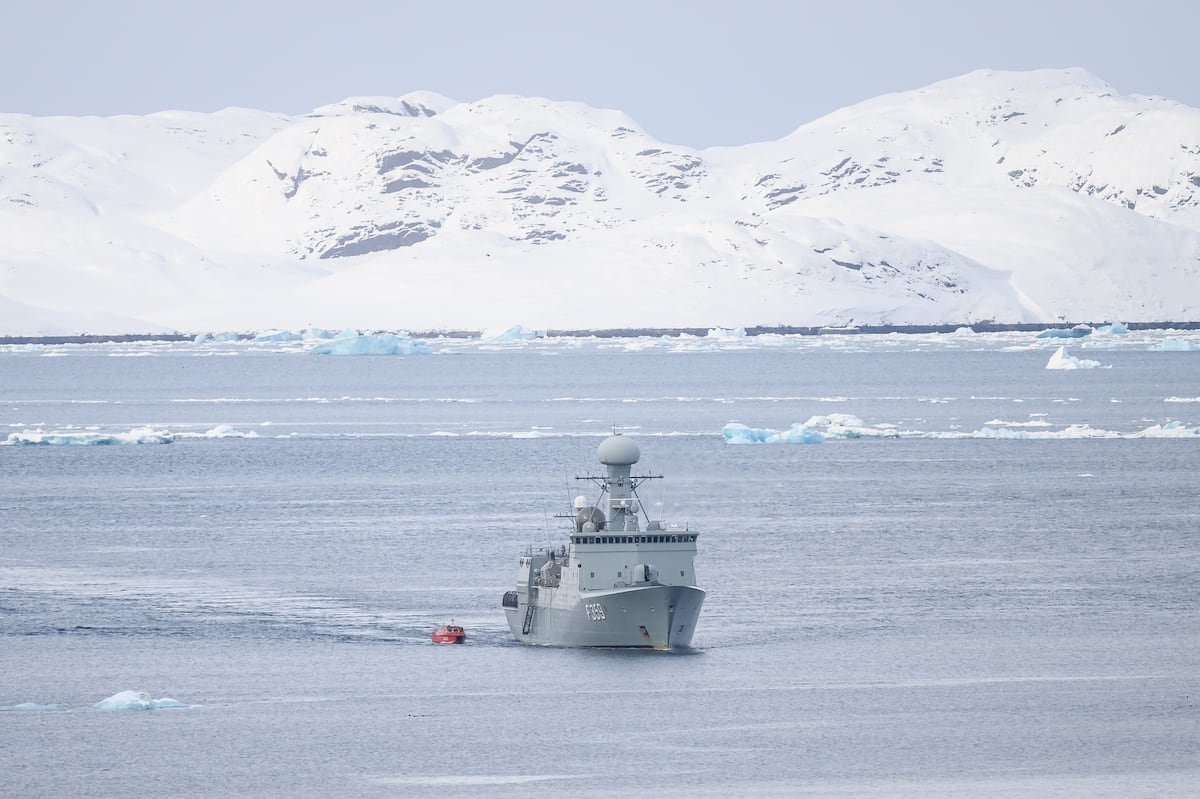
PARIS — Denmark will invest about 4 billion Danish kroner (US$615 million) through 2033 in the country’s Navy and Home Guard fleets, aiming to improve surveillance and defense of the country’s home waters, the government said.
The plans include the acquisition of four multifunctional environmental-protection and minelaying vessels, a ship with drones and sonar systems to monitor underwater activity, as well as 21 new vessels for the Naval Home Guard, Defense Minister Troels Lund Poelsen said at a press conference in Copenhagen on Tuesday.
The plan was backed by the three-party coalition government and six of the eight other parties in parliament. The parties also agreed on long-term investments in additional capabilities, including air-defense frigates, as well as a decision later this year to buy more Arctic vessels, with details still to be determined.
The tasks of the four environmental and minelaying vessels will include surveillance as well as clean-up of chemical and oil spills. Denmark will additionally boost the Navy’s ability to monitor both above and under water with a program to develop autonomous units such as underwater drones, according to Lund Poelsen.
The government had sketched the outlines of its long-term fleet plan in March, with Lund Poelsen saying the Danish frigate fleet still had a decade in it, with the new naval plan preparing the future acquisition of the next generation of vessels.
While the Navy’s current frigates still have “good years” left, new investments have to be made, and due diligence calls for agreement on a new fleet plan before the decision to buy new frigates, Lund Poelsen said. He said those decisions will be made when NATO’s capability goals are finalized in June.
Lund Poelsen said “it’s no secret” that the next round of naval investment will involve “a very large number of billions,” without providing details.
The Danish government in February agreed to allocate an additional 50 billion kroner to defense over the coming two years, boosting defense spending to more than 3% of GDP in 2025 and 2026.
There is a political ambition for the future frigates and the Arctic vessels to be built in Denmark, though there is no decision on that yet, according to the defense minister. Lund Poelsen said he believes Denmark can do more to cooperate with other NATO countries with regards to participating in their frigate capacity-expansion programs.
Denmark currently operates three frigates in the Iver Huitfeldt class, the first of which entered service in 2012. The 139-meter vessels, designed for air defense, displace 6,645 tons and are equipped with a 32-cell Mk 41 vertical missile launcher. The Danish Navy also operates two Absalon-class anti-submarine warfare frigates with a multi-purpose deck, which entered service in 2005.
The Danish Navy has been using a modular payload system called Standard Flex since the 1990s, allowing vessels to swap out containerized weapons or systems for different missions or roles.
The lead vessel in the Iver Huitfeldt class infamously experienced a malfunction of critical weapon and sensor systems on deployment in the Red Sea in 2024, resulting in Lund Poelsen firing Denmark’s chief of defense for reportedly failing to disclose the issues aboard the frigate.
The Niels Juel, a sister ship of the Iver Huitfeldt, suffered a separate incident while docked in April last year, with the crew unable to deactivate the booster of a Harpoon missile during testing.
Rudy Ruitenberg is a Europe correspondent for Defense News. He started his career at Bloomberg News and has experience reporting on technology, commodity markets and politics.
巴黎——丹麦政府表示,到 2033 年,丹麦将向该国海军和国民警卫队舰队投资约 40 亿丹麦克朗(6.15 亿美元),旨在改善对该国近海的监视和防御。
国防部长特罗尔斯·伦德·波尔森周二在哥本哈根举行的新闻发布会上表示,这些计划包括采购四艘多功能环境保护和布雷舰艇、一艘配备无人机和声呐系统以监测水下活动的舰艇,以及为海军国民警卫队采购 21 艘新舰艇。
该计划得到了三党联合政府和议会其他八个政党中的六个的支持。各党派还同意对包括防空护卫舰在内的其他能力进行长期投资,并计划在今年晚些时候决定购买更多北极舰艇,具体细节尚待确定。
据伦德·波尔森称,这四艘环境监测和布雷舰艇的任务包括监视以及清理化学品和石油泄漏。此外,丹麦还将通过一项开发水下无人机等自主装置的计划,提升海军水上和水下监测能力。
政府在 3 月份勾勒出了长期舰队计划的轮廓,伦德·波尔森表示,丹麦护卫舰舰队还有十年的使用寿命,新的海军计划为未来采购下一代舰艇做准备。
隆德·波尔森表示,虽然海军现役护卫舰仍可服役多年,但必须进行新的投资,而且在决定购买新护卫舰之前,必须先就新的舰队计划达成一致,这是尽职调查的要求。他还表示,这些决定将在北约6月份最终确定能力目标后做出。
伦德·波尔森表示,下一轮海军投资将涉及“数十亿”的巨额资金,“这已不是什么秘密”,但他没有提供具体细节。
丹麦政府在 2 月份同意在未来两年内额外拨款 500 亿克朗用于国防,使 2025 年和 2026 年的国防开支占 GDP 的比例超过 3%。
据国防部长透露,丹麦政府有意在未来建造护卫舰和北极舰艇,但目前尚未就此做出决定。伦德·波尔森表示,他相信丹麦可以加强与其他北约国家的合作,参与它们的护卫舰扩建计划。
丹麦目前拥有三艘伊弗·休特费尔特级护卫舰,首舰于2012年服役。这些139米长的舰艇设计用于防空,排水量6645吨,配备有32单元的Mk 41型垂直导弹发射装置。丹麦海军还拥有两艘阿布萨隆级反潜护卫舰,该级舰艇配备多用途甲板,于2005年服役。
自 20 世纪 90 年代以来,丹麦海军一直在使用一种名为 Standard Flex 的模块化有效载荷系统,该系统允许舰艇更换集装箱式武器或系统以执行不同的任务或角色。
伊弗·胡特费尔特级首舰在 2024 年于红海部署期间发生关键武器和传感器系统故障,导致伦德·波尔森解雇了丹麦国防部长,据报道,原因是国防部长未能披露护卫舰上的问题。
“尼尔斯·尤尔”号是“伊弗·休特费尔特”号的姊妹舰,去年 4 月停靠在码头时也发生了一起事故,当时船员在测试中无法关闭“鱼叉”导弹的助推器。
鲁迪·鲁伊滕贝格是《防务新闻》的欧洲记者。他的职业生涯始于彭博新闻社,拥有报道科技、大宗商品市场和政治方面的经验。