Behind Italy’s defense-spending hike, pushback at home意大利国防开支增加背后,是国内的阻力
Italy has little appetite to spend, despite the threat of Russian aggression on its doorstep.
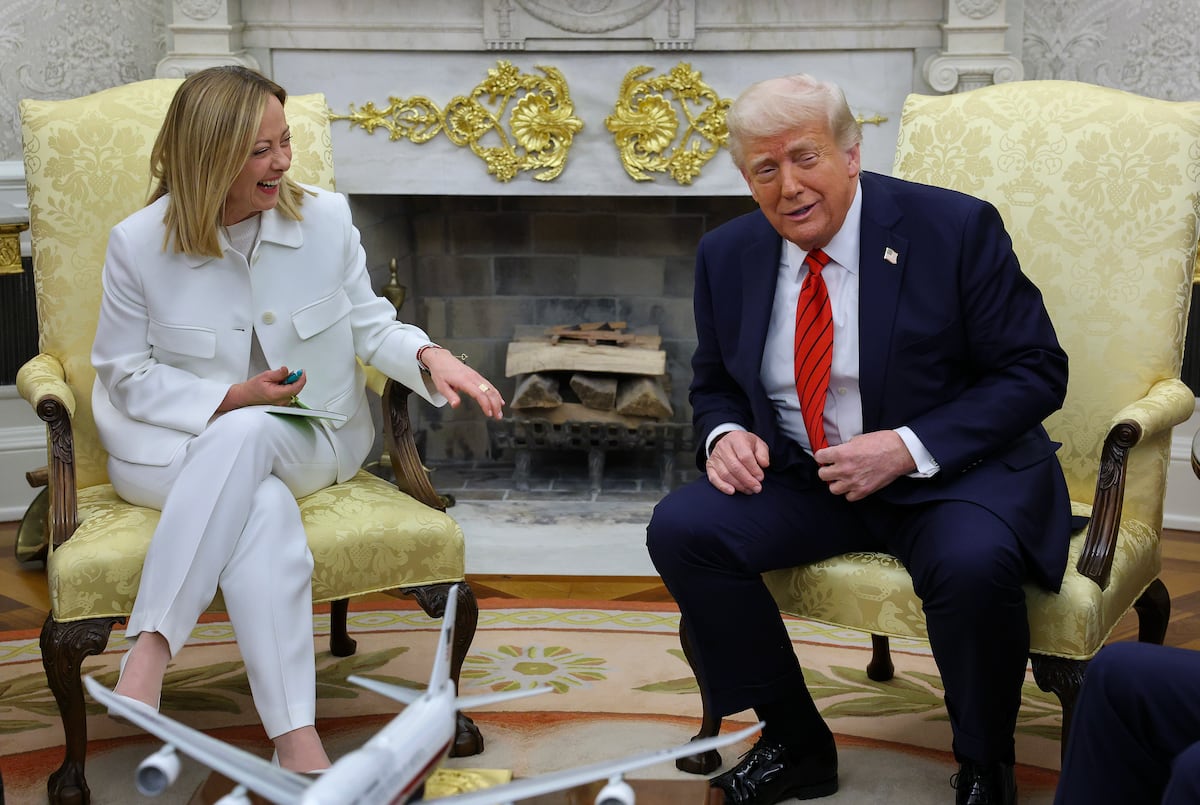
ROME — With a few hours to spare before Italian Prime Minister Giorgia Meloni tackled the thorny issue of defense spending with President Trump, her finance minister announced Italy would hit 2% of GDP this year.
Speaking in parliament on Thursday, minister Giancarlo Giorgetti said, “We are fully aware, including in light of the current tensions, of the need to increase this spending in the coming years.”
Across the Atlantic at the White House where she visited Trump the same day, Meloni was able to announce, “Italy is honouring its commitments,” adding, “We are a serious nation.”
The two percent announcement was a last minute face-saving exercise for Italy, which has long been a relative low spender on defense, budgeting only 1.54% of GDP in 2024, according to Defense Minister Guido Crosetto, despite longstanding commitments to NATO to spend more.
Getting to two percent was not a given. Italy has little appetite to spend, despite the threat of Russian aggression on its doorstep, with polls showing a majority of Italians do not want to hike defense budgets, while the opposition Five Star party led a march against spending in Rome this month.
More challenging for Meloni is that her deputy prime minister and coalition partner Matteo Salvini has also complained that spare cash should go on hospitals not bombs.
Clearly however, the pressure from the White House and NATO won out, even if 2% is nowhere near the 5% President Trump has called for, or the figure of around 3% NATO will demand in June when members meet.
The next question is how Italy will raise the money.
Defense spending has already shot up in recent years, with procurement outlays hitting €9.31 billion ($10.59 billion) last year, almost double the €5.45 billion spent in 2020.
But if overall spending reached €29.18 billion euros last year, equaling 1.54% of GDP, then pushing that to 2% now means finding an extra €8.7 billion this year to reach a new total of €37.9 billion.
Italian media has speculated the government will try some creative accounting by pushing spending on services like the Coast Guard into the defense category, but one analyst warned against it.
“That’s a dead end – I don’t see any flexibility in the NATO definitions of what constitutes defense spending,” said Alessandro Marrone, who heads the defense, security and space program at Rome think tank IAI.
Another possibility has been pitched by the European Union, which is offering €150 billion in loans for defence spending by member states.
The EU also wants to allow members to exempt defense spending worth up to 1.5% of their national GDP from bloc debt limit rules.
Italy clamored for just such a rule for years, claiming that without it there was no way to boost spending.
“Italy has now obtained the escape clause it has been asking for. There are no more alibis,” said Marrone.
However, on Thursday, finance minister Giorgetti said it was unlikely Rome would use the scheme .
If Italy does conjure up more cash this year, the next question is what it will spend it on, with the U.S. likely putting pressure on Rome to buy American kit.
Last year, according to Italian government figures, nearly a quarter of Italy’s defense imports from outside the EU came from the U.S., worth about about €184 million.
In 2024 Italy committed to spend €7 billion on 25 F-35 fighters to add to the 90 it is already buying. Italy is also buying Gulfstream aircraft in early-warning, signals-intelligence and electronic-attack versions from the U.S.
Italy is meanwhile assembling new tanks and armored vehicles with Rheinmetall while shipbuilding is done in-house by Fincantieri, and new SAMP-T air defense batteries are on order with Europe’s MBDA.
If the U.S. ups the pressure to buy American, the EU is pulling in the other direction, starting with its promised €150 billion in loans for spending.
“It is possible the EU will ask for two thirds of that money to be spent on European products, which is a balance that could suit Italy,” said Marrone.
Tom Kington is the Italy correspondent for Defense News.
罗马——在意大利总理乔治娅·梅洛尼与特朗普总统讨论棘手的国防开支问题前几个小时,她的财政部长宣布,意大利今年的国防开支将达到国内生产总值的2%。
周四,部长詹卡洛·乔尔杰蒂在议会发言时表示:“我们充分意识到,包括考虑到当前的紧张局势,未来几年需要增加这方面的支出。”
同一天,梅洛尼在大西洋彼岸的白宫拜访了特朗普,并宣布:“意大利正在履行其承诺,”她补充道,“我们是一个严肃的国家。”
对于意大利而言,宣布增加 2% 的国防开支是最后一刻挽回颜面的举措。意大利长期以来在国防上的支出相对较低,国防部长圭多·克罗塞托表示,尽管意大利长期以来一直承诺向北约增加国防开支,但 2024 年的国防预算仅占 GDP 的 1.54%。
达到2%的目标并非易事。尽管俄罗斯的侵略威胁近在咫尺,意大利却鲜有增加国防开支的意愿。民调显示,大多数意大利人不希望提高国防预算,而反对党五星运动本月还在罗马组织了一场反对国防开支的游行。
对梅洛尼来说,更具挑战性的是,她的副总理兼执政联盟伙伴马泰奥·萨尔维尼也抱怨说,多余的钱应该用于医院而不是炸弹。
但显然,来自白宫和北约的压力最终占了上风,即使 2% 的增长率远低于特朗普总统要求的 5%,也低于北约成员国在 6 月份会议上将要求的 3% 左右。
下一个问题是意大利将如何筹集资金。
近年来,国防开支已经大幅增长,去年的采购支出达到 93.1 亿欧元(105.9 亿美元),几乎是 2020 年 54.5 亿欧元的两倍。
但如果去年的总支出达到 291.8 亿欧元,相当于 GDP 的 1.54%,那么现在要将其提高到 2%,就意味着今年需要额外找到 87 亿欧元,才能达到 379 亿欧元的新总额。
意大利媒体猜测,政府可能会尝试一些巧妙的会计处理方法,将海岸警卫队等服务的支出纳入国防范畴,但一位分析人士警告说,这种做法不可取。
“这是一条死路——我认为北约对国防开支的定义没有任何灵活性,”罗马智库 IAI 的国防、安全和太空项目负责人亚历山德罗·马罗内说道。
欧盟提出了另一种可能性,即向成员国提供 1500 亿欧元的贷款,用于国防开支。
欧盟还希望允许成员国将相当于本国GDP 1.5%的国防开支豁免于欧盟债务上限规则。
多年来,意大利一直呼吁制定这样一条规则,声称如果没有这条规则,就无法刺激消费。
“意大利现在已经获得了它一直要求的脱身条款。它再也没有借口了,”马龙说道。
然而,周四,财政部长乔尔杰蒂表示,罗马不太可能使用该计划。
如果意大利今年真的能筹集到更多资金,下一个问题是它将把钱花在哪里,而美国可能会向罗马施压,要求其购买美国设备。
根据意大利政府的数据,去年意大利从欧盟以外进口的国防产品中,近四分之一来自美国,价值约 1.84 亿欧元。
2024年,意大利承诺斥资70亿欧元购买25架F-35战斗机,以补充其已订购的90架F-35战斗机。此外,意大利还从美国购买湾流公司的预警机、信号情报飞机和电子攻击飞机。
与此同时,意大利正与莱茵金属公司合作组装新型坦克和装甲车,而造船则由芬坎蒂尼公司自行完成,并且已向欧洲的MBDA公司订购了新型SAMP-T防空炮。
如果美国加大力度购买美国货,欧盟则采取相反的措施,首先兑现其承诺的 1500 亿欧元贷款用于支出。
“欧盟有可能要求将其中三分之二的资金用于购买欧洲产品,这种平衡可能对意大利有利,”马龙说。
汤姆·金顿是《防务新闻》驻意大利记者。