The Evolving Role Of Ukraine’s Artillery In The Age Of Drones无人机时代乌克兰炮兵角色的演变
Artillery, once the 'king of battle' along the front lines has been dethroned by drones, but it still has a critical job to do.
Published Sep 23, 2026 4:20 PM EDT
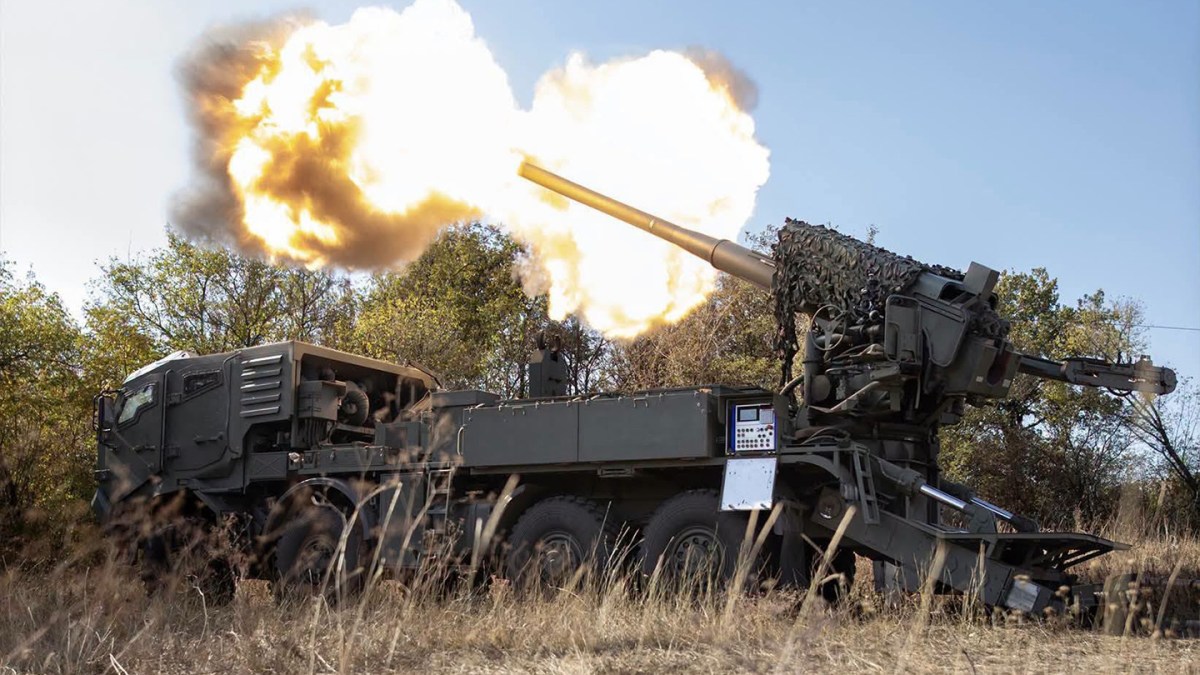
(Ukraine Armed Forces General Staff)
It’s stunning to comprehend how much has changed since Russia began its invasion of Ukraine. The conflict quickly turned into one dominated by artillery, with both sides scrambling to source shells wherever possible. Drones have since replaced tubed artillery as the ‘king of battle’ along the front, but cannons still have an important place on the battlefield. The commander of a new combined drone-artillery brigade offered some fresh insights into how his guns are now being deployed to achieve effects that drones still can’t provide.
As we have frequently documented , the ubiquity of drones has changed the nature of combat, especially when it comes to artillery. Not only do can drones hold artillery positions at risk, many are cheaper than shells and easier to produce at scale. Most types are also precision guided munitions capable of hitting moving targets with pinpoint accuracy and can also provide battlefield surveillance. However, they are not a panacea, especially amid the cat-and-mouse game of electronic warfare countermeasures and improving kinetic and passive defenses .
In a recent interview with the Ukrainian Oboronka news outlet , Lt. Col. Vitalii Korniienko, commander of the 7th Artillery Brigade, talked about the changing nature of artillery warfare. Korniienko, whose unit is part of the Ukrainian National Guard, explained what is being done to keep his array of domestically produced Bogdana 155mm systems, donated weapons like M777 howitzers, remaining Soviet-era 2S7 Pion 203mm self-propelled howitzers and other guns, relevant. Here are some takeaways from that discussion.
How The Game Changed
“Guns used to be massed at positions to create an ‘artillery wall’ and a barrage of fire,” the lieutenant colonel said. “That practice is gone now. So, how effective is artillery today? We can create an artillery barrage, but what is the point of mindlessly churning up the earth? I’d rather send 20 FPV drones to destroy the target. The cost of that mission is $20,000.”
A soldier from the 13th Khartiia Brigade of Ukraine’s National Guard hones his FPV drone piloting skills during a training flight in the Kharkiv region, Ukraine, (Photo by Viacheslav Madiievskyi/ Ukrinform /Future Publishing via Getty Images) Future Publishing
“Alternatively, I could fire 200 shells, but the cost would be astronomical,” he pointed out. “Plus, if we fired 100 shells from a gun in a single day, it likely wouldn’t survive until evening. The sky is full of drones; every shot gives away the position, leading to detection and an attempt to dismantle it using every available means. Nowadays, a typical mission involves a series of up to 10 shots. First, 3–5 shells for ranging, followed by fire on the target. That’s a minimum of five shells, with each costing at least $2,000.”
What Does The Drone-Artillery Brigade Do Differently?
“It is a concept of ours that was approved: combining artillery and drones within a single brigade,” Korniienko said. “Drones take out enemy artillery and logistics, while our guns provide cover for the infantry, destroy targets, and pin the enemy down in their dugouts. This way, we mitigate the limitations of both systems and boost overall effectiveness.”
Ukrainian troops firing a domestically produced 2S22 “Bogdana” self-propelled howitzer against Russian forces near the front line in the Zaporizhia direction. (Photo by Maksym Kishka/Frontliner/Getty Images) Frontliner#VIDEO
“Our primary operations are focused within the corps’ area of responsibility—targeting positions 10 kilometers deep or farther behind enemy lines. Of course, we will also engage closer targets if requested by the brigade holding the defense. In addition, we are shifting logistics tasks from pickup trucks to ground-based robotic systems. They are already transporting ammunition to drone and artillery positions, as well as food and fuel for generators.”
What Artillery Can Do That Drones Can’t
“Let’s be honest: 95% of strikes right now are carried out by drones,” Korniienko explained. “Yet, we cannot simply abandon artillery. The focus of our operations has shifted from merely striking the enemy to destroying, suppressing, and halting the actions of assault groups and armored columns—and the need for that remains as critical as ever. There are tasks that only artillery can handle.”
The high art of war, as practiced by the warriors of the National Guard's Artillery Brigade. So high, it lands beyond the horizon. 💥 📹: @ng_ukraine pic.twitter.com/v06aJ8KcjM — Defense of Ukraine (@DefenceU) September 23, 2026
The high art of war, as practiced by the warriors of the National Guard's Artillery Brigade. So high, it lands beyond the horizon. 💥 📹: @ng_ukraine pic.twitter.com/v06aJ8KcjM
“For instance, we currently have several enemy targets in the Kupyansk sector that drones cannot reach due to electronic warfare (EW) interference, while slow fiber-optic drones are simply shot down,” the officer noted. “What do we do? We call in artillery. Nothing affects its shells. Fog, strong winds, snow, or headwinds—it makes no difference to artillery; it will operate regardless.”
Preparing Artillery For The Modern Battlefield
“At the beginning, both we and the Russians might have had two or three guns at a single position,” Korniienko proffered. “The enemy was doing this as late as 2023. Then it tapered off, because if you deployed six guns, an hour later they’d be gone. No one drives out into an open field anymore. Today, a gun wouldn’t even make it to the position without being spotted.”
Ukrainian National Guard troops prepare a ‘Bogdana-BG’ artillery installation from a dugout position. (Photo by Sofiia Bobok/Anadolu via Getty Images) Anadolu
As a result, the artillery crew’s deployment “is prepared in advance,” the officer stated. “First, anti-aircraft drone teams ‘clear’ the sky above the site of enemy reconnaissance assets. The position itself is a fully underground-dugout caponier with well-camouflaged access routes. We put a lot of effort into ensuring the artillery doesn’t get destroyed. Losing a gun is a huge blow to us.”
Short Range Versus Long Range Shells
“There is currently an ongoing debate about phasing out ‘short’ shells and switching entirely to long-range variants,” the officer stated. “This is intended to protect artillery from drone strikes.”
“What exactly is a ‘short’ shell, and should we stop using it?” he asked rhetorically. “The M107 155mm round is what is known as a ‘short’ shell. It is inexpensive and mass-produced; all our allies—and even our own country—manufacture it. We have sufficient stocks of them for combat operations. While accurate, its range is limited to 14–18 km, depending on the propellant used.”
Long-range options “include the M795 and its foreign equivalents,” Korniienko explained. “These are longer, heavier, and significantly more expensive. With high-quality propellant, they can reach 30 km, or even further if equipped with a base-bleed unit. However, both these shells and the necessary propellants are in short supply.”
“I do not believe abandoning the M107 is the right move,” the officer suggested. “Long-range shells cause faster barrel wear and compromise position concealment; firing a long-range charge produces a massive burst of flame from the muzzle—visible for kilometers at dusk or dawn.” “Besides,” he added, “18 km is a respectable range. If the gun is positioned 15 km back, it still has a 3-km margin to spare. That is sufficient for engaging frontline infantry. In my view, the ideal mix for most brigades would be 60% long-range shells and 40% standard M107 rounds.”
Big Versus Small Guns
“I operated 105mm guns in the Serebryanka area, on the Kharkiv axis,” Korniienko noted. “Based on intercepted communications, the enemy thought it was a mortar and searched for it within a five-to-six-kilometer range. But the howitzer was positioned eight or nine kilometers away and fired out to 10–12 kilometers.”
“There is almost no muzzle flash, just a bit of dust,” he added. “The shell arrives, and the enemy doesn’t even hear the sound of the shot. It’s compact and lightweight—you can transport it on a pickup truck. So yes, it would be useful.”
An L119 lightweight towed howitzer. (Via X)
“I’d also like to see the development of 203mm artillery; why move away from that caliber?” the officer wondered aloud. “Our ‘Pion’ systems fire a massive 100-kilogram shell capable of punching through at least two floors of a building or a bunker. And it’s reasonably accurate, too. You wouldn’t want to be on the receiving end when guns like that are firing at you. Overall, I believe we need competition. Right now, the ‘Bogdana’ is evolving under wartime conditions, which is good. But in a few years, momentum could stall. They might just keep producing the same system without significant upgrades because there’s no incentive to innovate. Yet, the nature of war doesn’t stand still.”
Wary Of Asian Shells
“We have a wide range of shells from different countries, and the ones coming from the West are fine,” Korniienko said. “However, their counterparts produced in certain Asian countries… the quality is frankly poor.”
“What is wrong with them?” queried Korniienko, who did not name the country in question. “On paper, the shell weight is listed as 46 kilograms, but when we weigh them, we find 46.9 or 45.4 kg. And that half-kilogram difference—give or take—has a huge impact on where the shell lands.”
As a result, “we no longer trust the standard firing tables provided with the shells; instead, we compile our own for each manufacturer. We weigh every batch and sort them by weight so that the difference between the ‘piles’ is minimal, ensuring a reasonably tight grouping. I can’t afford to make a mistake that causes a shell to land 2 kilometers off-target—right where our infantry guys are positioned. I should add that our artillerymen are actually wary of shells from one specific country. There have been instances where they tore off the muzzle brake or even caused the barrel to burst. A barrel burst is a disaster.”
Homegrown Is The Best
Korniienko said his unit was one of the first to test the Bogdana system, adding that he prefers it to other guns.
“We tested them and provided feedback to the manufacturer, which was then used to refine the design,” he explained. “It is a solid gun now, and it is my preferred choice. It might not be the absolute best, but I am very satisfied with the support and service.”
“If there’s a breakdown, the gun is back in position within a day or two,” he pointed out. “For instance, a gun broke down today, and we needed a repair team from the manufacturer. I know I’ll have it fixed by the day after tomorrow. They arrive in the morning, and by midday, the gun is ready. Then it takes another day or two to get it back to the position. That is very fast.”
That’s a very different experience than what he sees with donated weapons like the U.S.-made M777.
Ukrainian soldiers prepare to fire an M777 howitzer at Russian forces. (Photo by Diego Herrera Carcedo/Anadolu Agency via Getty Images) Anadolu
“As for the Western partners helping us—we are deeply grateful,” the officer avowed. “However, by the time you actually receive a part—say, a sensor—the gun might have been sitting idle for six months. And you can’t try to fix it yourself, because that would void the warranty.”
While artillery may no longer be the reigning weapon of war, as far as Ukraine is concerned, it has not been relegated to the dustbin of history yet either.
Contact the author: howard@twz.com
Comments couldn’t be loaded. Please refresh the page.
发布于美国东部时间2026年9月23日下午4:20
(乌克兰武装部队总参谋部)
俄罗斯入侵乌克兰以来,局势发生了翻天覆地的变化,令人震惊。冲突迅速演变为一场以炮兵为主导的战争,双方都竭尽所能地搜寻炮弹。无人机已经取代管式火炮成为前线的“主力”,但火炮在战场上仍然占据着重要的地位。一支新组建的无人机-火炮联合旅的指挥官就如何部署火炮以实现无人机目前尚无法达到的效果,提出了一些新的见解。
正如我们多次记录的那样,无人机的普及改变了战争的性质,尤其是在炮兵作战方面。无人机不仅能威胁到炮兵阵地,而且许多无人机比炮弹更便宜,也更容易大规模生产。大多数无人机都是精确制导武器,能够以极高的精度打击移动目标,还能提供战场侦察。然而,它们并非万能灵药,尤其是在电子战对抗措施层出不穷、动能防御和被动防御不断增强的背景下。
在最近接受乌克兰新闻媒体“Oboronka”采访时,乌克兰第七炮兵旅旅长维塔利·科尔尼延科中校谈到了炮兵作战性质的转变。科尔尼延科的部队隶属于乌克兰国民警卫队,他解释了为保持其装备的国产“博格达纳”155毫米炮系统、捐赠的M777榴弹炮、现存的苏联时代2S7“皮翁”203毫米自行榴弹炮以及其他火炮的有效性,正在采取哪些措施。以下是此次访谈的一些要点。
游戏规则的改变
“过去,火炮会密集部署在特定位置,形成‘炮兵阵地’,进行密集火力压制,”这位中校说道。“现在这种做法已经过时了。那么,如今的火炮效能究竟如何?我们仍然可以进行炮火压制,但盲目地搅动土地又有何意义呢?我宁愿派出20架FPV无人机去摧毁目标。这项任务的成本仅为2万美元。”
一名来自乌克兰国民警卫队第13哈尔蒂亚旅的士兵在乌克兰哈尔科夫地区的一次训练飞行中磨练他的FPV无人机驾驶技能。(图片由Viacheslav Madiievskyi/ Ukrinform /Future Publishing via Getty Images提供)Future Publishing
“或者,我可以发射200发炮弹,但成本将是天文数字,”他指出。“而且,如果我们一天之内用一门炮发射100发炮弹,它很可能撑不到晚上。天空到处都是无人机;每一发炮弹都会暴露位置,导致被发现,并遭到不择手段的摧毁。如今,一次典型的任务需要发射多达10发炮弹。首先发射3-5发炮弹进行测距,然后向目标开火。这至少需要5发炮弹,每发炮弹的成本至少为2000美元。”
无人机炮兵旅有何不同之处?
科尔尼延科说:“这是我们提出的一个方案,已经获得批准:将火炮和无人机整合到一个旅级单位中。无人机负责摧毁敌方火炮和后勤保障,而我们的火炮则为步兵提供掩护,摧毁目标,并将敌人压制在掩体中。这样一来,我们就能弥补两种系统的不足,提高整体作战效能。”
乌克兰军队在扎波罗热方向的前线附近,使用国产2S22“博格达纳”自行榴弹炮向俄军开火。(图片来源:Maksym Kishka/Frontliner/Getty Images)Frontliner#视频
“我们的主要作战行动集中在军团责任区内——目标是敌后纵深10公里或更远的阵地。当然,如果负责防御的旅提出请求,我们也会打击更近的目标。此外,我们正在将后勤运输任务从皮卡车转移到地面机器人系统。这些机器人已经开始向无人机和火炮阵地运送弹药,以及为发电机运送食品和燃料。”
火炮能做到而无人机做不到的事
“坦白说,目前95%的打击行动都是由无人机执行的,”科尔尼延科解释道。“然而,我们不能就此放弃火炮。我们的作战重点已经从单纯打击敌人转变为摧毁、压制和阻止敌方突击队和装甲纵队的行动——而这方面的需求仍然至关重要。有些任务只有火炮才能完成。”
乌克兰国民警卫队炮兵旅战士们所实践的战争艺术,如此高超,炮火甚至能落到地平线之外。💥 📹: @ng_ukraine pic.twitter.com/v06aJ8KcjM — 乌克兰国防部 (@DefenceU) 2026年9月23日
国民警卫队炮兵旅战士们所实践的战争艺术,如此高超,炮火甚至能落到地平线之外。💥 📹: @ng_ukraine pic.twitter.com/v06aJ8KcjM
“例如,我们目前在库皮扬斯克地区有几个敌方目标,由于电子战干扰,无人机无法到达,而速度较慢的光纤无人机则很容易被击落,”这位军官指出。“我们怎么办?我们呼叫炮兵支援。炮弹不受任何影响。雾、强风、雪、逆风——这些对炮兵来说都无关紧要;它照常作战。”
为现代战场做好炮兵准备
“一开始,我们和俄军可能都会在一个阵地部署两三门火炮,”科尔尼延科说道。“敌军直到2023年还在这么做。后来这种做法就逐渐减少了,因为如果你部署了六门火炮,一个小时后它们就会被撤走。现在没人会开车到开阔地带了。如今,一门火炮甚至还没到达阵地就会被发现。”
乌克兰国民警卫队士兵在掩体中准备“博格达纳-BG”型火炮装置。(图片由Sofiia Bobok/Anadolu via Getty Images提供)阿纳多卢通讯社
因此,炮兵阵地的部署“都是提前准备的”,这位军官说道。“首先,防空无人机小组会清除阵地上空的敌方侦察力量。阵地本身是一个完全埋入地下的掩体,入口通道伪装得很好。我们投入了大量精力来确保火炮不会被摧毁。损失一门火炮对我们来说是巨大的打击。”
短程炮弹与远程炮弹
“目前正在就逐步淘汰短程炮弹并完全转向远程炮弹进行辩论,”这位军官表示。“这样做是为了保护火炮免受无人机袭击。”
“究竟什么是‘短’炮弹?我们应该停止使用它吗?”他反问道。“M107型155毫米炮弹就是所谓的‘短’炮弹。它价格低廉,批量生产;我们所有的盟国——甚至我们自己的国家——都在生产这种炮弹。我们有足够的库存用于作战行动。虽然精度不错,但其射程有限,只有14到18公里,具体取决于所使用的推进剂。”
科尔尼延科解释说,远程炮弹的选择“包括M795及其国外同类产品”。“这些炮弹更长、更重,而且价格也贵得多。使用高质量推进剂时,它们的射程可达30公里,如果配备底部泄放装置,射程甚至更远。然而,这些炮弹和所需的推进剂都供应短缺。”
“我不认为放弃M107是明智之举,”这位军官建议道。“远程炮弹会加速炮管磨损,并影响阵地隐蔽性;发射远程装药炮弹时,炮口会喷出巨大的火焰——在黄昏或黎明时分,数公里外都能看到。”他补充说,“此外,18公里射程相当可观。如果火炮部署在15公里外,还有3公里的射程余量。这足以打击前线步兵。在我看来,对于大多数旅来说,理想的弹药配比应该是60%远程炮弹和40%标准M107炮弹。”
大枪与小枪
“我在哈尔科夫轴线上的谢列布里扬卡地区操作过105毫米火炮,”科尔尼延科说道。“根据截获的通讯信息,敌人误以为那是一门迫击炮,并在五六公里范围内进行搜索。但实际上,这门榴弹炮部署在八九公里之外,射程可达十到十二公里。”
“几乎没有枪口焰,只有一点尘土,”他补充道。“炮弹到达目标时,敌人甚至听不到枪声。它体积小、重量轻——可以用皮卡车运输。所以,是的,它会很有用。”
一门L119轻型牵引榴弹炮。(图片来自X)
“我也想看看203毫米火炮的发展;为什么要放弃这个口径呢?”军官自言自语道。“我们的‘小恶魔’系统发射的炮弹重达100公斤,足以穿透建筑物或掩体至少两层楼。而且精度也相当不错。你肯定不想被这种火炮击中。总的来说,我认为我们需要竞争。目前,‘博格达纳’系统正在战时条件下不断改进,这很好。但几年后,这种势头可能会停滞不前。他们可能只会继续生产同样的系统,而不会进行重大升级,因为没有创新的动力。然而,战争的本质是瞬息万变的。”
对亚洲贝壳保持警惕
“我们有来自不同国家的各种贝壳,其中来自西方的贝壳质量很好,”科尔尼延科说。“但是,某些亚洲国家生产的贝壳……坦白说,质量很差。”
“它们到底出了什么问题?”科尔尼延科问道,但他没有透露是哪个国家。“纸面上标明贝壳重量是46公斤,但我们称重后发现是46.9公斤或45.4公斤。这半公斤的差别——上下浮动——对贝壳的最终落点有着巨大的影响。”
因此,“我们不再信任炮弹随附的标准射击表;相反,我们为每个制造商自行编制射击表。我们对每一批炮弹进行称重,并按重量分类,使各‘堆’之间的重量差异最小,从而确保炮弹分组相对紧密。我不能承受任何导致炮弹偏离目标2公里——正好落在我们步兵阵地——的错误。我还应该补充一点,我们的炮兵实际上对某个特定国家的炮弹格外警惕。曾发生过炮弹炸断炮口制退器甚至导致炮管爆裂的情况。炮管爆裂可是灾难性的。”
自家种植的才是最好的
科尔尼延科表示,他的部队是最早测试博格达纳系统的部队之一,并补充说他更喜欢这种武器而不是其他武器。
“我们进行了测试,并将反馈意见提供给了制造商,他们据此改进了设计,”他解释说。“现在这把枪很可靠,也是我的首选。它可能不是绝对最好的,但我对他们的支持和服务非常满意。”
“如果发生故障,一两天内就能把炮架好,”他指出。“比如今天就有一门炮坏了,我们需要厂家派维修队过来。我知道后天就能修好。他们早上到,中午前炮就修好了。然后再花一两天时间把它装回原位。这速度非常快。”
这与他使用捐赠武器(例如美国制造的 M777)所看到的情况截然不同。
乌克兰士兵准备用M777榴弹炮向俄军开火。(图片来源:Diego Herrera Carcedo/Anadolu Agency via Getty Images)
“至于西方伙伴对我们的帮助——我们深表感激,”这位军官坦言。“但是,等到你们真正收到零件——比如说一个传感器——枪支可能已经闲置了六个月。而且你们也不能自己修理,因为那样会使保修失效。”
虽然火炮可能不再是乌克兰的主要战争武器,但就乌克兰而言,它还没有被扫进历史的垃圾堆。
联系作者:howard@twz.com
评论加载失败,请刷新页面。