US, European navies push Lego-like modularity to boost ships’ combat punch美国和欧洲海军正大力推进类似乐高积木的模块化设计,以提升舰艇的作战能力。
Containerized forces packages, when executed well, are a flexible way to bring new capabilities to sea quickly, service chiefs said in Paris.
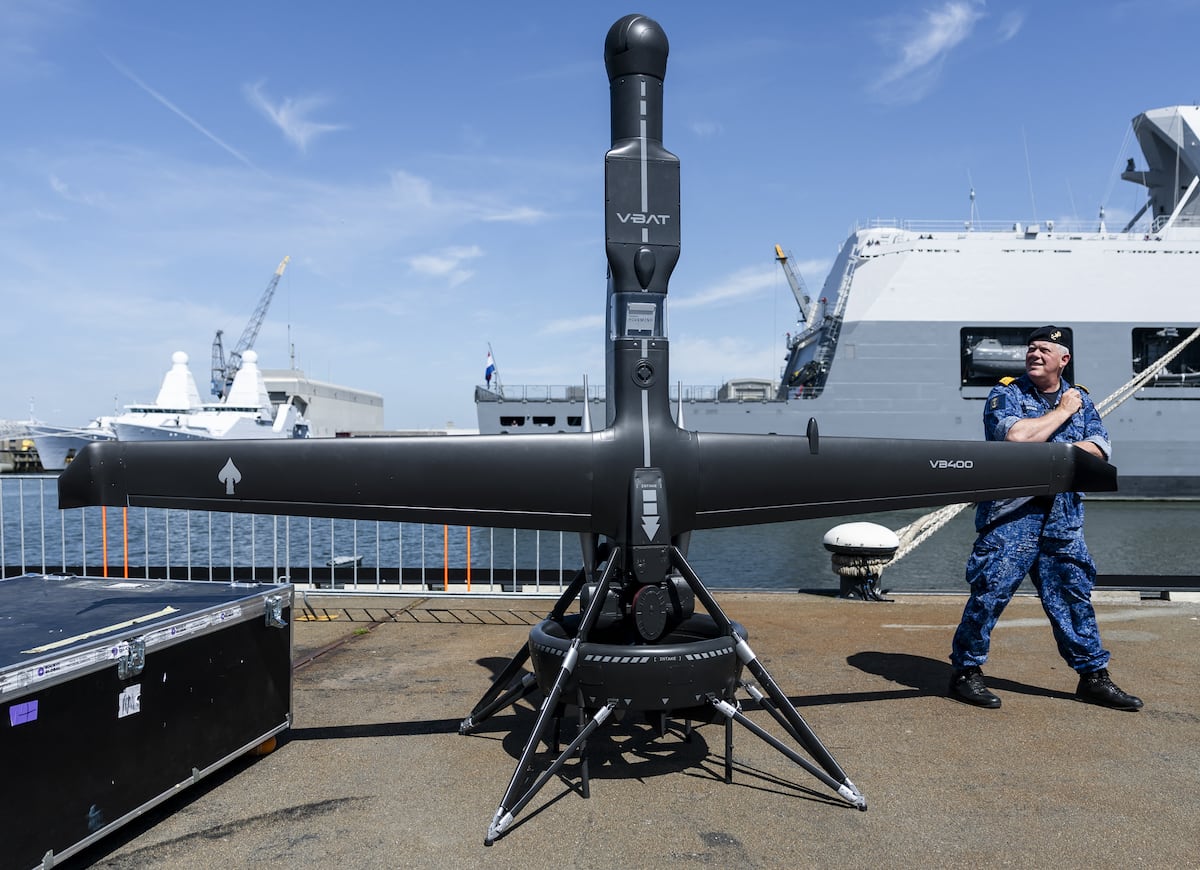
PARIS — Western navies are betting on modularity to keep their fleets relevant in the face of fast-changing technology, according to naval commanders gathered in Paris last week, with an ability to switch out equipment that the Dutch navy chief likened to clipping Lego bricks onto vessels.
New naval designs increasingly incorporate containerized payloads, and the commanders of the United States, Italian, Dutch and British navies cited advantages including mission flexibility, quickly getting firepower on the water, and at-sea replenishment.
Italy’s new Thaon di Revel-class patrol frigates have been designed to carry containerized mission modules, while the Netherlands announced a class of multi-role support ships mounting containers loaded with anything from air-defense missiles to electronic-warfare kit or assault drones. The United States Navy has said its new frigate will be fitted with containerized mission packages.
“All our future ships, they will be specifically designed for this kind of capability,” said Adm. Giuseppe Berutti Bergotto, chief of staff of the Italian Navy, speaking at the Paris Naval Conference. “The primary role of the ship will be the same, but the ship needs to have this capability to be ready to attack different missions.”
The modularity of the patrol frigate “was a great idea” that the Italian Navy is now trying to apply to all its construction, according to Berutti Bergotto. He said the navy has also experimented with fitting different containers with different payloads on the deck of a commercial vessel.
“If you look at modularity, it’s like Lego, building blocks are already there, you just need to put them together,” said Vice Adm. Harold Liebregs , the commander of the Royal Netherlands Navy, on the sidelines of the conference. “But keep it simple. Don’t over-integrate.”
The Netherlands has said its modular support vessels will be able to mount a containerized version of the Barak ER surface-to-air interceptor from Israel Aerospace Industries, as well as the company’s Harop long-range loitering munitions.
Liebregs said introducing modularity is sometimes “easier said than done, because not every Lego block now is good enough,” but modules such as air-defense missile systems are available and ready to be plugged in. He said navies have to accept they will have to learn along the way, “so just start somewhere as soon as possible.”
The Dutch navy needs to be ready for war by 2028, and “one of my main challenges is to bring more firepower to sea,” Liebregs said. The multi-role support vessel concept is one possible solution, and fitting such a ship with a container full of Barak missiles would quickly provide some “very capable air-defense capability,” allowing for mass and dispersed operations.
Such ships would have reduced crews of six to eight sailors, and roles might also include escorting Russian vessels in the North Sea, “saving a lot of very expensive warships,” according to the Dutch commander.
“It’s an affordable way to augment our fleet,” Liebregs said. “These kinds of ships are very adaptable, and it fits very well to short-cycled innovation, the thing we very much need.”
The United Kingdom’s Royal Navy is running its own modular mission-system program, and is now trialing what it calls “mission pods” that were produced in the autumn of last year, said Gen. Gwyn Jenkins , the United Kingdom’s First Sea Lord and chief of naval staff. He said standardization of data and power cable connections is key.
“We’re all on this journey, I think,” Jenkins said. “As long as you’ve got commonality across the system, then we can position those mission pods around our different naval bases with allies, give ourselves the ability to come back in and change pods, go back out to sea in any format, replenish at sea with different pods.”
Modularity will allow naval vessels to adapt to future threats as well as new technology, such as the on-board power required for future direct-energy weapons, Berutti Bergotto said. He said navies also need to be able to make changes during ship construction to take into account emerging threats and remain relevant at sea.
He cited his command of the Horizon-class destroyer Andrea Doria, which was commissioned in 2010 with cathode-ray tube monitors because that was the available technology six years earlier.
“When you commission the ship, this ship lasts for 20 years, pretty much,” the Italian admiral said. “You cannot have, after one year, an old ship.”
The U.S. attempted to include modularity in the Littoral Combat Ship program but failed to predict the complexity of building effective modules, and under-invested in that area, according to U.S. Chief of Naval Operations Adm. Daryl Caudle .
“We’ve learned from that mistake,” Caudle said. “Going forward with our small surface combatant, we’re going to put more energy into this from the acquisition side, the research and development, and how to containerize payloads that we need” to make that ship type effective.
“When you put that ship to sea with modular force packages, things that can be containerized, from ordnance to unmanned systems to towed arrays — the sky’s the limit on what you can modularize there on that platform,” Caudle said. “Then we can build them quickly, fill them.”
Modularity will allow the U.S. Navy to tailor the “high-low mix” to create force packages that might be more suitable to deal with a threat than a carrier strike group or amphibious strike group, according to Caudle.
Caudle said modularity goes beyond payloads, and can also boost U.S. shipbuilding capacity, with the admiral citing large surface ships such as liquid natural gas tankers that are built in modules. The U.S. has historically built its combat ships as a single unit, with the Virginia-class submarines the first move into modularity, according to the sea service chief.
“You’re going to see us extend that methodology to all of our ships going forward,” Caudle said. “What that does is allow more shipyards to enter the actual shipbuilding game and add capacity to an oversubscribed yard structure by tailoring what they can do to add value to how we build our ships and deliver them quickly.”
Rudy Ruitenberg is a Europe correspondent for Defense News. He started his career at Bloomberg News and has experience reporting on technology, commodity markets and politics.
巴黎——据上周在巴黎举行的海军指挥官会议称,西方海军正押注模块化,以使其舰队在快速变化的技术面前保持竞争力,这种模块化能够更换设备,荷兰海军司令将其比作将乐高积木夹到船上。
新型海军舰艇设计越来越多地采用集装箱式有效载荷,美国、意大利、荷兰和英国海军的指挥官们列举了其优势,包括任务灵活性、快速将火力部署到水上以及海上补给。
意大利新型“塔翁·迪·雷维尔”级巡逻护卫舰的设计旨在搭载集装箱式任务模块;荷兰宣布将推出一系列多用途支援舰,这些舰艇将配备装载各种装备的集装箱,包括防空导弹、电子战设备以及攻击型无人机等。美国海军也表示,其新型护卫舰将配备集装箱式任务模块。
意大利海军参谋长朱塞佩·贝鲁蒂·贝尔戈托海军上将在巴黎海军会议上表示:“我们未来的所有舰艇都将专门设计具备这种能力。舰艇的主要任务不变,但必须具备这种能力才能随时执行不同的任务。”
贝鲁蒂·贝尔戈托表示,巡逻护卫舰的模块化设计“非常棒”,意大利海军目前正尝试将其应用于所有舰艇的建造。他还提到,海军也曾试验过在商船甲板上安装装载不同有效载荷的集装箱。
“如果你看看模块化设计,它就像乐高积木,积木都在那里,你只需要把它们拼起来,”荷兰皇家海军司令哈罗德·利布雷格斯中将在会议间隙说道。“但要保持简单,不要过度集成。”
荷兰方面表示,其模块化支援舰将能够搭载以色列航空航天工业公司生产的巴拉克ER地对空拦截导弹的集装箱版本,以及该公司生产的哈罗普远程巡飞弹。
利布雷格斯表示,引入模块化有时“说起来容易做起来难,因为并非所有乐高积木都足够好用”,但像防空导弹系统这样的模块已经可用,随时可以安装。他说,海军必须接受他们需要在实践中学习,“所以尽快从某个地方开始”。
荷兰海军需要在2028年之前做好战争准备,“我面临的主要挑战之一就是增强海上火力,”利布雷格斯说道。多用途支援舰的概念是可能的解决方案之一,为这种舰艇配备装满巴拉克导弹的集装箱,就能迅速提供“非常强大的防空能力”,从而支持大规模和分散作战。
据这位荷兰指挥官称,这样的舰艇可以将船员人数减少到六到八人,其任务可能还包括在北海护送俄罗斯船只,“从而节省大量非常昂贵的军舰”。
“这是扩充船队的一种经济实惠的方式,”利布雷格斯说。“这类舰船适应性很强,非常符合我们急需的短周期创新模式。”
英国皇家海军正在推行其模块化任务系统项目,目前正在试用去年秋季生产的所谓“任务舱”。英国第一海务大臣兼海军参谋长格温·詹金斯将军表示,数据和电源线连接的标准化是关键所在。
“我认为我们都在这条路上,”詹金斯说。“只要整个系统具有通用性,我们就可以与盟友一起将这些任务舱部署在我们不同的海军基地周围,使我们能够返回基地更换任务舱,以任何形式重返海上,并在海上用不同的任务舱进行补给。”
贝鲁蒂·贝戈托表示,模块化设计将使海军舰艇能够适应未来的威胁和新技术,例如未来定向能武器所需的舰载电源。他还指出,海军也需要能够在舰艇建造过程中进行改造,以应对新出现的威胁,并保持其在海上的竞争力。
他提到自己曾指挥过地平线级驱逐舰安德烈亚·多利亚号,该舰于 2010 年服役,配备阴极射线管显示器,因为那是六年前可用的技术。
“这艘船服役后,它的使用寿命基本上可以达到20年,”这位意大利海军上将说。“你不能指望一年后就有一艘旧船。”
据美国海军作战部长达里尔·考德尔海军上将称,美国曾试图在濒海战斗舰项目中引入模块化设计,但未能预料到建造有效模块的复杂性,并且在该领域投入不足。
考德尔说:“我们已经从那个错误中吸取了教训。展望未来,我们将加大对小型水面作战舰艇的投入,包括采购、研发以及如何将我们需要的有效载荷集装箱化,以使这种舰艇类型能够有效发挥作用。”
考德尔说:“当你把那艘船和模块化部队包一起部署到海上时,那些可以集装箱化的装备,从军械到无人系统再到拖曳阵列——在这个平台上,模块化的可能性是无限的。然后我们就可以快速建造并装载它们。”
考德尔表示,模块化将使美国海军能够调整“高低组合”,从而创建比航母打击群或两栖打击群更适合应对威胁的兵力组合。
考德尔表示,模块化设计不仅限于有效载荷,还能提升美国的造船能力。他举例说,像液化天然气运输船这样的大型水面舰艇就是采用模块化建造的。这位海军司令指出,美国历来都是将作战舰艇作为一个整体建造,而弗吉尼亚级潜艇则是迈向模块化的第一步。
考德尔说:“你们将会看到我们将这种方法推广到我们未来的所有船舶上。这样做可以让更多的造船厂参与到实际的造船业务中来,并通过调整他们的服务能力,为我们建造和快速交付船舶的方式增加价值,从而为产能过剩的造船厂体系增加产能。”
鲁迪·鲁伊滕贝格是《防务新闻》的欧洲记者。他的职业生涯始于彭博新闻社,拥有报道科技、大宗商品市场和政治方面的经验。