Transboundary haze poses long-term threat to wildlife, disrupting habitats, food sources and reproduction跨境雾霾对野生动物构成长期威胁,破坏其栖息地、食物来源和繁殖。
KUALA LUMPUR, Sept 4 — Transboundary haze not only threatens human health, but also has a long-term effect on the survival of ecosystems and wildlife populations due to...
The article highlights the severe impact of transboundary haze on ecosystems and wildlife, with harmful consequences like respiratory damage, reduced reproduction, and food scarcity among fauna such as orangutans, bees, and hornbills.
Universiti Putra Malaysia's Assoc Prof Haliza Abdul Rahman emphasizes the disruption of wildlife habitats and increased poaching risks due to limited visibility and energy depletion in animals.
She advocates for a multi-agency rapid response team, wildlife rescue protocols, and AI-based early warning systems to mitigate these effects.
Amidst hazardous haze conditions, an emergency was declared in Sarawak, Malaysia, following recommendations from national leaders and agencies.
KUALA LUMPUR, Sept 4 — Transboundary haze not only threatens human health, but also has a long-term effect on the survival of ecosystems and wildlife populations due to habitat destruction and disruption of the respiratory system.
Universiti Putra Malaysia (UPM) Environmental Governance expert Assoc Prof Haliza Abdul Rahman said among the significant impacts on fauna were chronic respiratory damage, decreased reproduction rates, dehydration and lack of food sources.
The UPM head of Laboratory Institute for Social Science Studies also said that large mammals and primates such as orangutans in Borneo and Sumatra, for example, faced the threat of respiratory tract infections following forest fires, which also affected the availability of their food sources.
“The haze does not only affect humans, but also animals and plants.
“Toxic smoke also disrupts the life cycles of pollinating insects such as bees and fireflies, while affecting the availability of food for fruit-eating animals such as hornbills,” she said as a guest on Bernama Radio’s ‘Fokus 30’ programme here today.
Haliza said thick haze also reduced visibility for wildlife, resulting in a higher risk of these animals straying from their natural habitats into forest fringes or human settlements.
“When animals flee from fires or are trapped in thick haze, they lose energy due to dehydration and starvation. A lack of water and food weakens animals such as deer and tapirs,” she said.
She said the situation indirectly increased the risk of wildlife becoming easy targets for poachers, especially when enforcement was more focused on firefighting operations and managing the haze crisis.
To reduce these risks, Haliza proposed the setting up of a multi-agency rapid response team involving the Department of Wildlife and National Parks (Perhilitan), the Malaysian Fire and Rescue Department (JBPM) and non-governmental organisations (NGOs).
She also suggested the implementation of wildlife rescue and relocation protocols, the construction of emergency migration corridors, as well as the use of an early warning system based on artificial intelligence (AI) and air quality sensors in forest reserve areas.
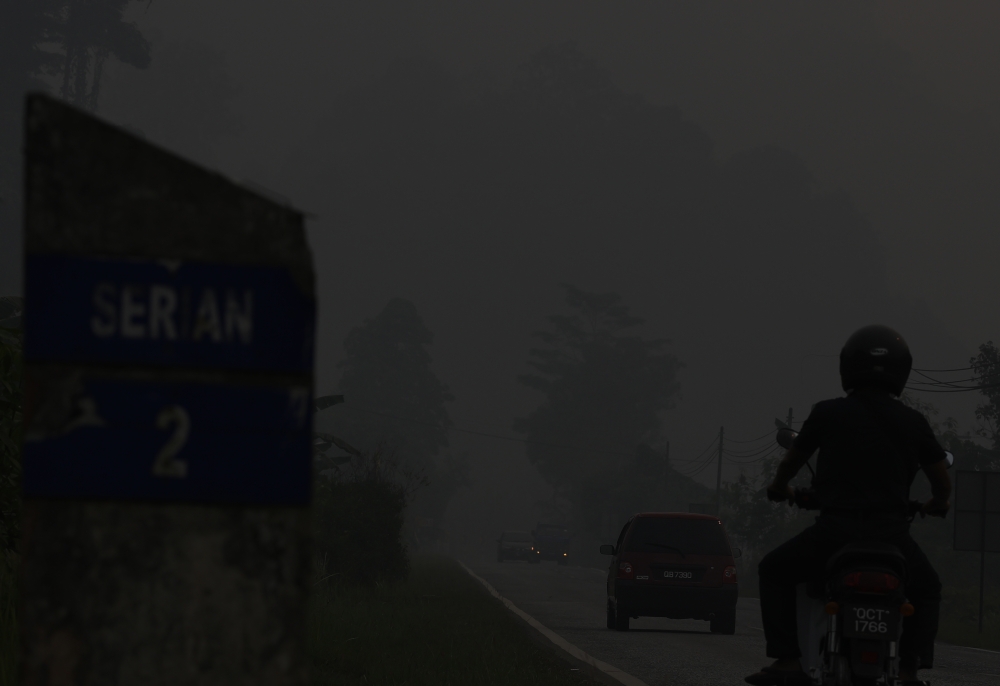
The entire Serian Division in Sarawak was declared a disaster emergency following hazardous haze conditions, with the Air Pollutant Index (API) reading reaching 514 as of 4 pm today.
His Majesty Sultan Ibrahim, King of Malaysia, consented to the declaration of an emergency after considering advice from Prime Minister Datuk Seri Anwar Ibrahim, Sarawak Premier Tan Sri Abang Johari Tun Openg and relevant agencies on air quality in the area. — Bernama
Sarawak to close 647 schools for five days from Sept 7 to 11 as haze persists
King consents to emergency declaration in Serian as haze reaches hazardous levels
TMJ says no issue paying Singapore tax on land sale exceeding RM4b
文章重点介绍了跨境雾霾对生态系统和野生动物的严重影响,对猩猩、蜜蜂和犀鸟等动物造成了呼吸系统损伤、繁殖减少和食物短缺等有害后果。
马来西亚博特拉大学副教授哈利扎·阿卜杜勒·拉赫曼强调,由于能见度降低和动物能量消耗,野生动物栖息地遭到破坏,偷猎风险增加。
她主张成立多部门快速反应小组、制定野生动物救援方案和基于人工智能的预警系统,以减轻这些影响。
在危险的雾霾天气下,根据国家领导人和机构的建议,马来西亚砂拉越宣布进入紧急状态。
吉隆坡,9月4日讯——跨境烟霾不仅威胁人类健康,还会因栖息地破坏和呼吸系统紊乱而对生态系统和野生动物种群的生存产生长期影响。
马来西亚博特拉大学 (UPM) 环境治理专家 Haliza Abdul Rahman 副教授表示,对动物群的重大影响包括慢性呼吸系统损伤、繁殖率下降、脱水和食物来源缺乏。
马来西亚博特拉大学社会科学研究所实验室主任还表示,婆罗洲和苏门答腊的猩猩等大型哺乳动物和灵长类动物在森林火灾后面临呼吸道感染的威胁,这也影响了它们的食物来源。
“雾霾不仅影响人类,还影响动物和植物。”
“有毒烟雾还会扰乱蜜蜂和萤火虫等授粉昆虫的生命周期,同时影响犀鸟等食果动物的食物供应,”她今天在马新社电台的“Fokus 30”节目中作为嘉宾说道。
哈利扎表示,浓雾还会降低野生动物的能见度,导致这些动物更容易偏离其自然栖息地,进入森林边缘或人类居住地。
“当动物逃离火灾或被困在浓烟中时,它们会因脱水和饥饿而失去能量。缺乏水和食物会使鹿和貘等动物变得虚弱,”她说。
她表示,这种情况间接增加了野生动物成为偷猎者目标的风险,尤其是在执法部门更侧重于灭火行动和应对雾霾危机的情况下。
为了降低这些风险,哈利扎提议成立一个由野生动物和国家公园局(Perhilitan)、马来西亚消防救援局(JBPM)和非政府组织(NGO)组成的多机构快速反应小组。
她还建议实施野生动物救援和迁移方案,建设紧急迁徙走廊,以及在森林保护区使用基于人工智能 (AI) 和空气质量传感器的预警系统。
由于危险的雾霾天气,砂拉越西连省全境宣布进入灾难紧急状态,截至今天下午 4 点,空气污染指数 (API) 读数达到 514。
马来西亚国王苏丹易卜拉欣陛下在考虑了首相拿督斯里安瓦尔易卜拉欣、砂拉越州州长丹斯里阿邦佐哈里敦奥以及相关机构有关该地区空气质量的建议后,同意宣布进入紧急状态。 — 马新社
受雾霾持续影响,砂拉越647所学校将于9月7日至11日停课五天。
国王同意西连宣布进入紧急状态,因为雾霾已达到危险级别
TMJ表示,土地出售超过40亿令吉,缴纳新加坡税款并无问题。