Inside Ukraine’s Operation Vivaldi That Sees It Troops Gaining Ground In The East深入了解乌克兰“维瓦尔第行动”:其部队在东部地区节节胜利
Ukraine Situation Report: Ukrainian Colonel gives insights into how his forces have been slowly advancing on the eastern front.
新闻视频
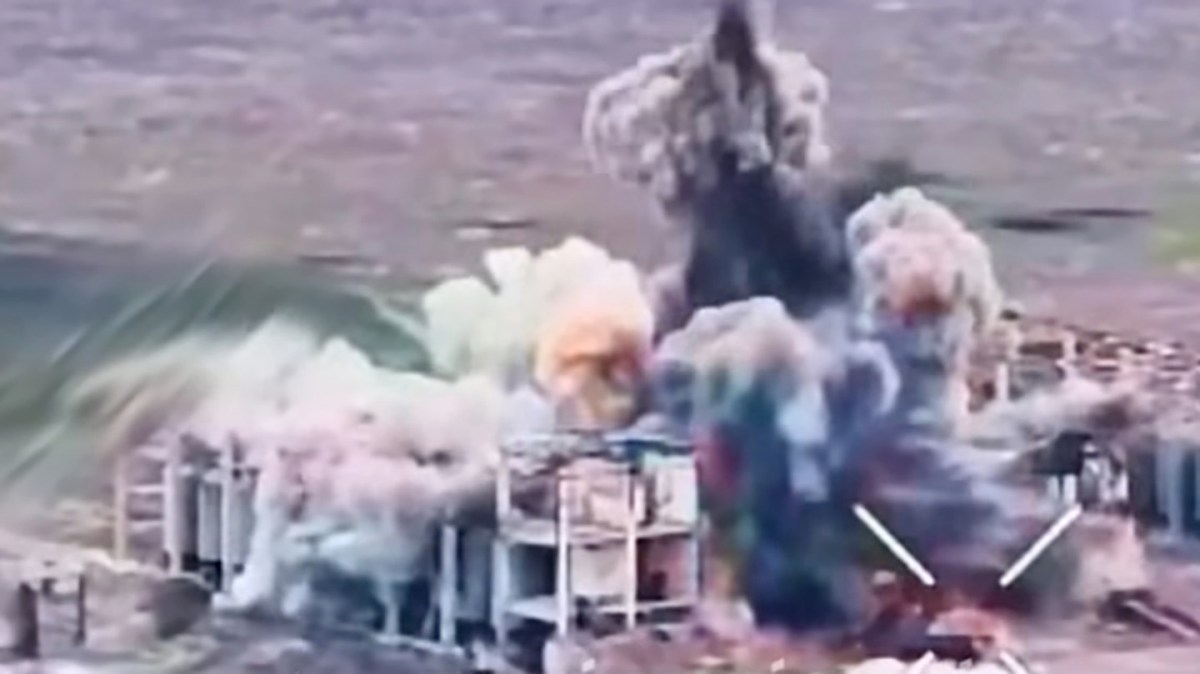
Published Sep 24, 2026 1:54 PM EDT
(Ukrainian 3rd Army Corps screencap)
Ukraine claims it has recently regained about 125 sq. km. of territory near the town of Lyman in the eastern Donetsk region during what has been dubbed Operation Vivaldi. Rodion Kudryashov, a Ukrainian colonel and deputy commander of the Third Army Corps, offered some insights into this offensive and what made it different.
Though the operation is still ongoing, the success of Vivaldi began long before any troop movements, Kudryashov explained in an editorial he published in Ukrainian Pravda .
Ukraine is making advances near the town of Lyman, located in the Donetsk region. (Google Earth)
“After the Third Army Corps was formed, we changed the command system of its subordinate units,” he noted. “Some brigades came to the corps after very heavy fighting, with losses, manning problems and, most importantly, eroded trust in their leadership.”
Third Army Corps Commander Brig. Gen. Andriy Biletsky “then set out one of our key principles: a commander must be responsible for the entire cycle, from training a soldier to the result on the battlefield,” Kudryashov pointed out. “In some places that meant replacing a commander. In others it meant restructuring a staff or strengthening the NCO chain. In some cases we had to build, almost from scratch, processes that on paper should have been working long ago.”
At issue was changing the culture from a more rigid Soviet-era model, with a cumbersome chain of command, to a modern, more flexible one better suited for the current conflict.
“A modern commander has to handle an enormous flow of information and make decisions quickly,” the deputy commander proffered. “He has to understand what unmanned systems, logistics, reconnaissance and adjacent units can do, while not smothering initiative at lower levels with endless approvals. An army where every decision takes hours to travel up and down the chain loses to an army that makes the same trip in minutes.”
Once those changes were put in place, the Third Army Corps had to first stop Russian advances in the sector before it could move forward.
VIVALDI 🎼🎶 GoPro footage from Ukrainian assault troops who took part in the Vivaldi counteroffensive, which resulted in the liberation of five settlements in the Lyman direction. pic.twitter.com/2SVXSKlEX0 — 𝔗𝔥𝔢 𝕯𝔢𝔞𝔡 𝕯𝔦𝔰𝔱𝔯𝔦𝔠𝔱 🦩🇬🇪🇺🇦🇺🇲🇬🇷 (@TheDeadDistrict) September 17, 2026
VIVALDI 🎼🎶 GoPro footage from Ukrainian assault troops who took part in the Vivaldi counteroffensive, which resulted in the liberation of five settlements in the Lyman direction. pic.twitter.com/2SVXSKlEX0
“When the corps took over its area of responsibility, our first task was not an offensive,” the officer said. “We had to stop the situation from deteriorating and stabilize the forward edge.”
“The enemy was pressing. In some sectors our combat formations were losing cohesion,” he underscored. “The Russians were actively using infiltration tactics: small groups seeped between positions, massed in our rear, threatened logistics and gradually eroded the defensive line.”
“We had to stabilize the forward edge and stop the infiltration,” Kudryashov said. “We had to rebuild command, put in commanders capable of making decisions, form new teams and reconstitute units. We had to set up the surveillance-and-strike system and sustain the front line. We had to stockpile ammunition, drones and other resources, understand the enemy, and plan the next step before the previous one was finished. Only after that could we move forward.”
By June, the corps was able to secure the front “in the sector from Borova to Lyman and eliminate the enemy’s infiltration zones,” Kudryashov continued. “That sounds less impressive than the word ‘offensive,’ but no offensive ever happens without it.”
“You cannot plan a complex operation if you don’t know where your forward edge will be tomorrow,” the deputy commander extrapolated. “You cannot build up forces if your logistics are constantly under threat. And you cannot form a strike group if your units are always forced to patch new breaches. So the first phase of ‘Vivaldi’ was not an advance at all. It was creating the conditions that made an advance possible in the first place.”
Once the front was stabilized, the next step was shaping the battlefield for the offensive. The corps’ unmanned systems units went to work against Russian logistics, striking a pipeline and depots. That forced the enemy to change its fuel and lubricant supply routes.
Ukraine’s 3rd Army Corps released new footage of search-and-strike operations on the Lyman front. FPV drone operators from the 60th Mechanized Brigade’s FATUM unit targeted Russian armored vehicles, a Grad multiple rocket launcher and personnel. #Ukraine pic.twitter.com/1iNG7z2N1c — NOELREPORTS 🇪🇺 🇺🇦 (@NOELreports) September 24, 2026
Ukraine’s 3rd Army Corps released new footage of search-and-strike operations on the Lyman front. FPV drone operators from the 60th Mechanized Brigade’s FATUM unit targeted Russian armored vehicles, a Grad multiple rocket launcher and personnel. #Ukraine pic.twitter.com/1iNG7z2N1c
“The operation also involved the corps’ brigades, its reconnaissance and unmanned units, and attached forces from the SSO (Special Operations Forces), GUR (Defense Intelligence) and DPSU (State Border Guard Service),” the deputy commander said. “To counter infiltration, a joint headquarters was set up to coordinate special and reconnaissance units at the tactical level under a single concept.”
“In my view, this is one of the main characteristics of modern war,” he further stated. “It is not 10 strong units that each fight well on their own. It is 10 different elements that start working as one system at the right moment.”
An interesting new detail from Ukraine’s 3rd Army Corps about Operation Vivaldi on the Lyman axis. The Corps says Ukrainian forces carried out a flanking maneuver and, for the first time, airlifted unmanned ground vehicles behind Russian lines, while also suppressing Russian… https://t.co/ZEq8C75bN4 pic.twitter.com/KgKcZ0Zs2P — Special Kherson Cat 🐈🇺🇦 (@bayraktar_1love) September 20, 2026
An interesting new detail from Ukraine’s 3rd Army Corps about Operation Vivaldi on the Lyman axis. The Corps says Ukrainian forces carried out a flanking maneuver and, for the first time, airlifted unmanned ground vehicles behind Russian lines, while also suppressing Russian… https://t.co/ZEq8C75bN4 pic.twitter.com/KgKcZ0Zs2P
The influential, Kremlin-connected Rybar Telegram channel has acknowledged Ukrainian gains in this sector.
“In the first half of summer, Russian units gradually advanced in Lyman,” Rybar wrote this morning . “However, in August, the enemy launched counterattacks and, by the first week of September, regained some positions, and also began attempts to recapture Shandryholovo and Zarechnoye.”
“The enemy did not inflict significant losses on Russian troops, as the concentration of units of the West group of forces in the salient remained relatively low,” Rybar added. “However, later, the UAF deployed reserves to launch an offensive towards Zherebets in order to align the front along the water barrier and return it to the configuration of the end of 2025.”
rybar now saying the 144th division is still falling back. the 3rd corps is still advancing and destroying an entire army group as they move. this is historic. pic.twitter.com/2jOa8KR9oA — david D. (@secretsqrl123) September 22, 2026
rybar now saying the 144th division is still falling back. the 3rd corps is still advancing and destroying an entire army group as they move. this is historic. pic.twitter.com/2jOa8KR9oA
Though the battle is still in flux, Kudryashov said there are lessons the rest of the Ukrainian military should heed.
“Winning one battle is not yet winning the war,” he said. “The enemy is learning too. He changes tactics, looks for weak spots and tries to scale what works for him.”
“So our task is to be faster, not only in physically moving forward but also in our ability to see, think, decide and put into practice what delivers results,” the deputy commander avowed. “And to do everything possible so that our soldiers pay the lowest possible price for every next kilometer of Ukrainian land.”
On the battlefield, in addition to the gains Ukraine has made near Lyman, it has also largely been able to hold off Russian advances across the front lines. Here are some key takeaways from the latest Institute for the Study of War assessment of frontline operations :
Sumy: Russian forces recently conducted an infiltration mission east of Sumy City, and they continue to conduct glide bomb strikes against frontline settlements in northern Sumy Oblast to set conditions for future offensives.
Kharkiv: Russian forces continued offensive operations in northern Kharkiv Oblast and in the Borova, Kupyansk and Velykyi Burluk directions on Sept. 21 and 22 but did not advance.
Donetsk: Ukrainian forces reportedly continue counterattacks in the Lyman direction, including southeast of Lyman, as Russian forces are attempting to use redeployments to stabilize the area. Russian forces continued offensive operations east and southeast of Slovyansk near Rai-Oleksandrivka and toward Mykolaivka and Fedorivka Druha on Sept. 21 and 22 but did not advance. During this period, they also tried to advance in the Novopavlivka and Oleksandrivka directions but made no gains, as Ukrainian forces counterattacked in both areas.
Zaporizhia: Ukrainian forces recently advanced or maintained positions in western Zaporizhia Oblast.
Kherson: Neither Russian nor Ukrainian forces reported ground activity in the Kherson direction on September 22.
Russian Offensive Campaign Assessment, September 22, 2026: The Russian Ministry of Defense (MoD) falsely claimed that Russian forces have encircled Dobropillya — an intensification of the Kremlin’s cognitive warfare campaign alleging encirclements across various sectors of the… pic.twitter.com/yMoAcyVIme — Institute for the Study of War (@TheStudyofWar) September 23, 2026
Russian Offensive Campaign Assessment, September 22, 2026: The Russian Ministry of Defense (MoD) falsely claimed that Russian forces have encircled Dobropillya — an intensification of the Kremlin’s cognitive warfare campaign alleging encirclements across various sectors of the… pic.twitter.com/yMoAcyVIme
In his speech to the U.N. General Assembly this afternoon , Ukrainian President Volodymyr Zelensky called for Russia to end its war and said it was paying a heavy price — and exacting a terrible toll — for little territorial gain.
“This ridiculous and never-ending war with Ukraine must be ended,” the Ukrainian leader urged. “I do not know a single world leader who would say otherwise. I do not know anyone who is openly for this war, except one man.”
He was referring to Russian President Vladimir Putin.
“Ladies and gentlemen, for almost five years now, Russian generals have been trying to carry out Putin’s crazy order to seize our eastern land, the Donetsk region,” Zelensky continued. “And just this year, from January through August, the Russian army lost 248,964 people on the battlefield in Ukraine in eight months. Twenty-one countries in the world have smaller populations… than the number of Russian troops lost in just eight months.”
“It’s madness, but they still keep going there to die because that is what Putin wants,” Zelensky suggested. “After losing so many people, Russia managed to capture just over 1,000 square kilometers of our land this year, and we have already liberated a significant part of it. Russia is a country that already has 17 million square kilometers of its own land without any Ukrainian territory, by the way. So to add another 1,000 square kilometers, Putin is paying with 248 people for every kilometer. Does anyone still think that he is reasonable? And moderate?”
“Russia’s leader, Patient Zero, the man from whom this war began and spread into the world, becoming the largest war in Europe since World War II, will inevitably leave this war,” Zelensky proffered. “But the longer Putin is able to wage war, the more evil he will leave behind in this world. Today, nothing in war works the same way it did, by the way, in 2022, except the courage of people.”
Russian missile and drone barrages have “caused damage, but they didn’t break us,” the president proclaimed. “We build our defense. What is really difficult for us now is Russian ballistic missiles and their new jet-powered Shaheds — Iranian technologies.”
Residential buildings stand against the backdrop of smoke from a Russian attack on Kyiv. (Photo by Bohdan Diev/Global Images Ukraine via Getty Images) Tatyana Kudel’s’ka
“Just imagine this: since the beginning of this year, Russia has already used more than 2,100 missiles of different types again against us, against Ukraine, our people and our children,” Zelensky stated. “More than 950 of them were ballistic missiles . In eight months of this year, Russia used 63,000 attack drones of different types against Ukraine, our people, and more than 7,700 of them were jet-powered Shaheds , truly destructive and very dangerous weapons. Just think about it. The Russians launch jet-powered Shaheds every hour, every hour, against our cities , our economy, our infrastructure. Our combat aircraft are fighting them 24/7, and this is part of Russia’s strategy to create a new threat every hour, to make life harder for the economy and to disrupt people’s lives, and to stop children from being able to study, to study at school.”
Speaking at the Sixth Summit of the International Crimea Platform in New York on Wednesday, Zelensky said the return of Crimea is a condition for any return to normal relations with Russia.
“Disrespect for international law began in 2014, when Russia entered Crimea,” the Ukrainian leader stated. “There can be no full return to normality without Crimea, the restoration of security, the protection of people and lives, the release of prisoners held by Russia, and a return to the fundamental principles of international law. Territorial integrity matters, state sovereignty matters, and human lives matter. And Russia must learn this.”
Tuesday, Zelensky met with U.S. President Donald Trump.
Among the topics of their three-hour meeting were a path to end the war and a renewed discussion about the licensing of Patriot air defense interceptors so they can be built in Ukraine. The country is struggling to defend against Russian ballistic missiles because of the dearth of these munitions.
“Just had a positive and productive meeting with President Trump on the sidelines of the UN General Assembly,” the Ukrainian leader stated on X. “Both the United States and Ukraine want this senseless Russian war to end before winter. We discussed possible de-escalation steps that could pave the way to diplomacy.”
“I am grateful that, in parallel with this, our teams continue to work on launching the production of Patriot interceptor missiles in Ukraine,” Zelensky noted. “This is exactly what will help protect lives if Russia rejects negotiations and continues to rely on ballistic terror against our people this winter and beyond. We also discussed other bilateral and multilateral issues, including the winter air defense package for Ukraine. Thank you to President Trump, his team, and all the American people for their support.”
I just had a positive and productive meeting with President Trump @POTUS at UNGA. Both the U.S. and Ukraine want to see this senseless Russian war ended before winter. We discussed potential de-escalatory steps that can open up the way to diplomacy. I am grateful that in the… pic.twitter.com/Ayvsj9It3m — Volodymyr Zelenskyy / Володимир Зеленський (@ZelenskyyUa) September 22, 2026
I just had a positive and productive meeting with President Trump @POTUS at UNGA. Both the U.S. and Ukraine want to see this senseless Russian war ended before winter. We discussed potential de-escalatory steps that can open up the way to diplomacy. I am grateful that in the… pic.twitter.com/Ayvsj9It3m
For his part, Trump said negotiations about Patriots are ongoing but offered no commitments.
“We’re talking about that,” Trump stated. “We’ll be talking about that now. If you would have come in at the end, we would have had an answer. But we’ll be talking about that. I mean, we talk about it all the time. Very capable people, really amazingly capable people.”
This isn’t the first time the two leaders have talked about a Patriot licensing deal. The issue came up back in July. As we noted at the time, such a deal faces big challenges.
First of all, it could face bureaucratic and regulatory hurdles, like getting congressional approval. Major security concerns not just having license production of a very sensitive weapon in Ukraine, but also having to do with whatever facility will perform the work, which would become a top target for Russia. Even if they got the clearance to move forward, delivery of new weapons will still take years due to the time it takes to build the facility and to source long-lead components.
Even Lockheed Martin, one of the world’s biggest arms makers, currently produces only about 650 PAC-3 MSE interceptors a year, or just shy of two per day. However, under a contract with the Pentagon inked in January , Lockheed is committed to boosting Patriot PAC-3 MSE annual production to 2,000 in the years to come.
You can read more about the headwinds a Patriot licensing deal would face, even if it were to come to fruition, in our initial story here .
A Patriot interceptor. (DOW) Department of Defense
Ukraine’s president also confirmed that “Kyiv is ready to agree to an energy truce on the condition that Russia does not attack its energy, electricity and heating infrastructure as well as its water supplies,” CNBC reported . “Trump has previously called on Ukraine to stop targeting Russian oil refineries with drone strikes, which he says are ‘hurting the world’ as fuel supply disruptions from the Ukraine and Iran wars propel U.S. diesel prices to a record high .”
Ukraine’s repeated attacks on Russian oil infrastructure is having a major impact.
“Russian refinery throughput fell to 3.8 mb/d, its lowest level in more than 20 years and roughly 30% below a year earlier,” according to a recent report by the International Energy Agency (IAE). “Reported gasoline output is down by 20% compared with 2025 levels, while diesel production is estimated to have fallen by nearly 30%, prompting the government to restrict fuel exports to protect domestic supplies.”
Amid the U.N. General Assembly meeting, strikes by both sides continued.
“At least 16 people were killed and 59 others injured in Russian attacks across Ukraine over the past day, as Russia launched several waves of ballistic missiles at Kyiv overnight,” the Kyiv Independent reported , citing local authorities.
“Two people were killed and eight others injured in Kyiv, where Russian ballistic missiles struck the capital in three waves overnight,” the publication added. “Residential buildings, a maternity hospital, energy, and logistics infrastructure were among the sites damaged, according to President Volodymyr Zelensky.”
“Russia launched 282 attack drones of various types overnight, including jet-powered drones, as well as Zircon anti-ship missiles and Iskander-M, S-400, and KN-23 ballistic missiles,” the news outlet stated, citing the Ukrainian Air Force . “Ukrainian air defenses shot down 227 aerial targets, including 219 drones, four Zircon missiles, three ballistic missiles, and one Banderol munition. Strikes were recorded at 13 locations, while debris from downed targets fell at 10 locations.”
A difficult night for Ukraine as Russia continued attacking our civilians, launching a ballistic missile attack on Kyiv, and attacking Kyiv and other Ukrainian regions with drones. The air raid alert in Kyiv was turned on at 3:28 a.m. and hasn't turned off since. ▪️In Kyiv, two… https://t.co/l1Vr7AMH5o pic.twitter.com/giT5FjWq80 — Anton Gerashchenko (@Gerashchenko_en) September 24, 2026
A difficult night for Ukraine as Russia continued attacking our civilians, launching a ballistic missile attack on Kyiv, and attacking Kyiv and other Ukrainian regions with drones. The air raid alert in Kyiv was turned on at 3:28 a.m. and hasn't turned off since. ▪️In Kyiv, two… https://t.co/l1Vr7AMH5o pic.twitter.com/giT5FjWq80
Ukraine’s strikes on Russian energy infrastructure continued.
“Over the past 24 hours, two oil refineries were hit – one in Bashkortostan and one in the Samara region. There were also strikes in the Black Sea,” the Ukrainian Defense Ministry stated on X. “We are taking the war back to where it came from. We are bringing peace closer for Ukraine. I thank the units involved for their precision.”
I thank our warriors for the results they achieve every day in carrying out Ukraine’s long-range sanctions. Over the past 24 hours, two oil refineries were hit – one in Bashkortostan and one in the Samara region. There were also strikes in the Black Sea. We are taking the war… pic.twitter.com/x8LGqvsJ0e — Defense of Ukraine (@DefenceU) September 22, 2026
I thank our warriors for the results they achieve every day in carrying out Ukraine’s long-range sanctions. Over the past 24 hours, two oil refineries were hit – one in Bashkortostan and one in the Samara region. There were also strikes in the Black Sea. We are taking the war… pic.twitter.com/x8LGqvsJ0e
In an effort to defend against Ukrainian attacks, Russia continues to use netting to protect its energy facilities. You can see a recent example in the video below.
After more frequent Ukrainian strikes on Russian oil refineries and fuel depots, Moscow and the Moscow region decided to cover potential targets with anti-drone nets. This is the reality Putin has brought Russia to. pic.twitter.com/G4QZyTL22c — Visegrád 24 (@visegrad24) September 23, 2026
After more frequent Ukrainian strikes on Russian oil refineries and fuel depots, Moscow and the Moscow region decided to cover potential targets with anti-drone nets. This is the reality Putin has brought Russia to. pic.twitter.com/G4QZyTL22c
Finland’s President Alexander Stubb and Zelensky this morning “signed an Agreement on Enhanced Defense and Security Cooperation under the Drone Deal format,” the Finnish Defense Ministry said in a statement. “It will enable defense materiel cooperation between the two countries.”
“The agreement will enable Finland and Ukraine to transfer technology and knowledge, pursue research, development and innovation cooperation and promote joint manufacturing and drone technology development between their industries,” the MoD stated. “Another objective is to simplify administrative processes, for example regarding the granting of export authorizations, to make the transfer of defense materiel and technologies between the two countries as efficient as possible.”
Finland and Ukraine take their defence cooperation to the next level Today, we signed a drone deal with @ZelenskyyUa . The agreement enables, among other things, the joint production of defence materiel. Defence sector companies in Finland are ready, and the joint effort can now… pic.twitter.com/UUh2kZPPpk — Alexander Stubb (@alexstubb) September 23, 2026
Finland and Ukraine take their defence cooperation to the next level Today, we signed a drone deal with @ZelenskyyUa . The agreement enables, among other things, the joint production of defence materiel. Defence sector companies in Finland are ready, and the joint effort can now… pic.twitter.com/UUh2kZPPpk
With electronic warfare interfering with how drones controlled by radio frequencies operate, Ukraine is testing a new system of small radio beacons placed on the ground that allow drones to navigate without GNSS — including missions deep inside Russia. While many systems might not be need this fix, some of the lower-end drones might.
Ukraine is testing and scaling this technology as part of a layered navigation system designed to keep drones autonomous in heavily jammed environments.
“The concept is quite simple,” the BBC wrote . “If the enemy jams the signal coming from above—specifically from GNSS (Global Navigation Satellite System) satellites, which determine the precise coordinates, speed, and time of any object on Earth—then specific points must be created to provide that same signal from below.”
The idea is to guide the drones by triangulating their location.
“To achieve this, special small devices—radio beacons—are either installed on the ground or air-dropped across a specific area. Their coordinates are known; thus, when a drone flies through the area, it receives coordinate data and signal transmission timing from several beacons. From there, it is a matter of basic geometry: the UAV calculates its own spatial position using data on the distance to the beacon and its altitude above the ground.”
GPS can be jammed. Ukrainian drones still need to fly. A new beacon network is helping solve that problem. Small radio beacons placed on the ground allow drones to navigate without GNSS or a constant communications link — including missions deep inside russia. Ukraine is now… — 7th Corps of AAF (@7corpsDSHV) September 23, 2026
GPS can be jammed. Ukrainian drones still need to fly. A new beacon network is helping solve that problem. Small radio beacons placed on the ground allow drones to navigate without GNSS or a constant communications link — including missions deep inside russia. Ukraine is now…
In the age of robots, uncrewed ground vehicles (UGVs) are playing a larger role in combat . The following video shows one UGV rescuing another one by pushing it back on its wheels.
A Ukrainian logistics UGV comes to the rescue of its overturned teammate, helping get the stranded ground robot back on its wheels. pic.twitter.com/q7d5I2tyOe — Special Kherson Cat 🐈🇺🇦 (@bayraktar_1love) September 23, 2026
A Ukrainian logistics UGV comes to the rescue of its overturned teammate, helping get the stranded ground robot back on its wheels. pic.twitter.com/q7d5I2tyOe
Contact the author: howard@twz.com
Comments couldn’t be loaded. Please refresh the page.
发布于美国东部时间2026年9月24日下午1:54
(乌克兰第三军截图)
乌克兰声称,在代号为“维瓦尔第行动”的军事行动中,近期在顿涅茨克州东部莱曼镇附近收复了约125平方公里的领土。乌克兰陆军上校、第三军副司令罗季翁·库德里亚绍夫就此次攻势及其独特之处发表了一些见解。
库德里亚绍夫在乌克兰《真理报》上发表的一篇社论中解释说,虽然行动仍在进行中,但维瓦尔第行动的成功早在任何部队调动之前就开始了。
乌克兰军队在顿涅茨克州莱曼镇附近取得进展。(谷歌地球)
“第三军成立后,我们改变了其下属部队的指挥体系,”他指出。“一些旅级单位加入军级单位之前都经历过非常激烈的战斗,伤亡惨重,人员配备困难,最重要的是,官兵对领导层的信任度已经下降。”
库德里亚绍夫指出,第三军军长安德烈·比列茨基准将“随后阐述了我们的一项关键原则:指挥官必须对整个流程负责,从士兵训练到战场战果。在某些地方,这意味着更换指挥官;在另一些地方,这意味着重组参谋部或加强士官队伍。在某些情况下,我们几乎不得不从零开始建立一些流程,而这些流程按理说早就应该运行了。”
问题在于如何将文化从苏联时代较为僵化的模式(指挥链繁琐)转变为更现代、更灵活的模式(更适合当前的冲突)。
“现代指挥官必须处理海量信息并迅速做出决策,”副指挥官说道。“他必须了解无人系统、后勤、侦察和相关部队的能力,同时又不能用无休止的审批扼杀下级的主动性。如果一个决策需要几个小时才能上下游传递,那么一支军队就会输给一支几分钟就能完成同样决策的军队。”
这些变化一旦落实到位,第三军就必须先阻止俄军在该地区的推进,才能继续前进。
维瓦尔第🎼🎶 这是乌克兰突击队参与维瓦尔第反攻的 GoPro 视频,该反攻解放了莱曼方向的五个定居点。pic.twitter.com/2SVXSKlEX0 — 𝔗𝔥𝔢 𝕯𝔢𝔞𝔡 𝕯𝔦𝔰𝔱𝔯𝔦𝔠𝔱 🦩🇬🇪🇺🇦🇺🇲🇬🇷 (@TheDeadDistrict) September 17, 2026
维瓦尔第🎼🎶 这是参与维瓦尔第反攻的乌克兰突击队用 GoPro 拍摄的画面,该反攻最终解放了莱曼方向的五个定居点。pic.twitter.com/2SVXSKlEX0
“军团接管责任区后,我们的首要任务并非进攻,”这位军官说。“我们必须阻止局势恶化,并稳定前沿阵地。”
“敌人步步紧逼。在某些战区,我们的作战部队已经失去凝聚力,”他强调说。“俄军积极运用渗透战术:小股部队渗透到阵地之间,集结在我们后方,威胁后勤,并逐渐削弱我们的防线。”
库德里亚绍夫说:“我们必须稳固前沿阵地,阻止渗透。我们必须重建指挥系统,任命能够做出决策的指挥官,组建新的团队,重组部队。我们必须建立监视和打击系统,维持前线稳定。我们必须储备弹药、无人机和其他资源,了解敌人,并在前一步完成之前就计划好下一步。只有这样,我们才能继续前进。”
库德里亚绍夫继续说道,到6月份,该军团已经能够控制“从博罗瓦到莱曼一带的战线,并清除敌人的渗透区”。“这听起来不如‘进攻’这个词那么响亮,但没有‘进攻’这个词,进攻就无法真正发生。”
“如果你不知道明天的前沿阵地在哪里,就无法制定复杂的作战计划,”副指挥官进一步解释道。“如果你的后勤保障不断受到威胁,就无法集结兵力。如果你的部队总是被迫修补新的缺口,就无法组建打击群。因此,‘维瓦尔第’行动的第一阶段根本不是推进,而是为后续的推进创造了条件。”
前线局势稳定后,下一步便是为进攻构筑战场。该军的无人系统部队开始对俄军后勤保障系统发起攻击,摧毁了一条输油管道和多个仓库。这迫使敌军改变了燃料和润滑油的供应路线。
乌克兰第三军公布了在莱曼前线进行搜索打击行动的最新视频。来自第60机械化旅FATUM部队的FPV无人机操作员对俄军装甲车辆、一门“冰雹”多管火箭炮和人员进行了打击。#乌克兰 pic.twitter.com/1iNG7z2N1c — NOELREPORTS 🇪🇺 🇺🇦 (@NOELreports) September 24, 2026
乌克兰第三军公布了在莱曼前线进行搜索打击行动的最新视频。来自第60机械化旅FATUM部队的FPV无人机操作员对俄军装甲车辆、一门“冰雹”多管火箭炮和人员进行了打击。#乌克兰 pic.twitter.com/1iNG7z2N1c
副指挥官表示:“此次行动还动用了该军团的各旅、侦察部队和无人机部队,以及来自特种作战部队(SSO)、国防情报局(GUR)和国家边防局(DPSU)的附属部队。为了打击渗透,我们设立了一个联合指挥部,在统一的作战理念下协调各特种部队和侦察部队的战术行动。”
“在我看来,这是现代战争的主要特征之一,”他进一步说道。“不是10个各自为战的强大单位,而是10个不同的要素在恰当的时机开始像一个整体一样协同作战。”
乌克兰第三军公布了关于莱曼轴线“维瓦尔第行动”的一个有趣新细节。该军称,乌克兰军队实施了侧翼包抄,并首次将无人地面车辆空投至俄军防线后方,同时压制了俄军…… https://t.co/ZEq8C75bN4 pic.twitter.com/KgKcZ0Zs2P — Special Kherson Cat 🐈🇺🇦 (@bayraktar_1love) September 20, 2026
乌克兰第三军公布了关于莱曼轴线“维瓦尔第行动”的一个有趣新细节。该军称,乌克兰军队实施了侧翼包抄,并首次将无人地面车辆空投至俄军防线后方,同时压制了俄军…… https://t.co/ZEq8C75bN4 pic.twitter.com/KgKcZ0Zs2P
与克里姆林宫关系密切、颇具影响力的Rybar Telegram频道已经承认乌克兰在该领域取得的成就。
“夏季上半月,俄军在莱曼地区逐步推进,”雷巴尔今天早上写道。“然而,到了8月,敌人发动反击,并在9月的第一周夺回了一些阵地,并开始试图重新夺回尚德里霍洛沃和扎列奇诺耶。”
雷巴尔补充说:“由于西部集团军在突出部的兵力部署相对较低,敌军并未对俄军造成重大损失。然而,之后俄军部署了预备队,向热列别茨方向发动攻势,目的是将战线沿水障排列,使其恢复到2025年底的格局。”
rybar 现在说第 144 师仍在撤退。第 3 军仍在推进,并在推进过程中摧毁了一个集团军群。这是历史性的一幕。pic.twitter.com/2jOa8KR9oA — david D. (@secretsqrl123) September 22, 2026
rybar 现在说第 144 师仍在撤退。第 3 军仍在推进,并在推进过程中摧毁了一个集团军群。这是历史性的一幕。pic.twitter.com/2jOa8KR9oA
尽管战局仍不明朗,但库德里亚绍夫表示,乌克兰军队其他成员应该从中吸取教训。
他说:“赢得一场战役并不意味着赢得整场战争。敌人也在不断学习。他会改变战术,寻找弱点,并试图扩大对自己有利的策略。”
“所以我们的任务是加快速度,不仅要加快实际推进速度,还要加快观察、思考、决策和实践的能力,从而取得成果,”副司令郑重承诺。“并且要尽一切可能,让我们的士兵为每一公里乌克兰土地付出尽可能低的代价。”
在战场上,除了在莱曼附近取得的进展外,乌克兰还基本阻挡了俄军在前线的推进。以下是战争研究所最新发布的关于前线作战行动评估报告中的一些关键要点:
苏梅:俄罗斯军队最近在苏梅市东部进行了一次渗透任务,并继续对苏梅州北部的前线居民点进行滑翔炸弹袭击,为未来的进攻创造条件。
哈尔科夫:9月21日和22日,俄军继续在哈尔科夫州北部以及博罗瓦、库皮扬斯克和韦利基布尔卢克方向发动进攻行动,但并未取得进展。
顿涅茨克:据报道,乌克兰军队继续在莱曼方向(包括莱曼东南方向)发起反击,而俄军则试图通过重新部署来稳定该地区局势。9月21日至22日,俄军在斯拉维扬斯克以东和东南方向,靠近赖-奥列克桑德里夫卡以及向尼古拉耶夫卡和费多里夫卡德鲁哈方向发起进攻,但未能取得进展。在此期间,俄军还试图在诺沃帕夫利夫卡和奥列克桑德里夫卡方向推进,但由于乌克兰军队在这两个地区发起反击,也未能取得任何进展。
扎波罗热:乌克兰军队最近在扎波罗热州西部推进或维持了阵地。
赫尔松:9月22日,俄罗斯和乌克兰军队均未报告在赫尔松方向发生地面行动。
俄罗斯攻势评估,2026年9月22日:俄罗斯国防部错误地声称俄军已包围多布罗皮利亚——这是克里姆林宫认知战策略的升级,该策略声称俄军已在多个地区包围…… pic.twitter.com/yMoAcyVIme — 战争研究所 (@TheStudyofWar) 2026年9月23日
俄罗斯攻势评估,2026年9月22日:俄罗斯国防部错误地声称俄军已包围多布罗皮利亚——这是克里姆林宫认知战策略的升级,该策略声称俄军已在多个地区包围…… pic.twitter.com/yMoAcyVIme
今天下午,乌克兰总统泽连斯基在联合国大会上发表讲话,呼吁俄罗斯结束战争,并表示俄罗斯为此付出了沉重的代价,造成了可怕的伤亡,却只获得了很少的领土利益。
“这场荒谬且永无止境的与乌克兰的战争必须结束,”乌克兰领导人呼吁道。“我不知道有哪位世界领导人会持相反意见。除了一个人之外,我不知道有谁公开支持这场战争。”
他指的是俄罗斯总统弗拉基米尔·普京。
“女士们、先生们,近五年来,俄罗斯将军们一直试图执行普京的疯狂命令,夺取我们东部的土地——顿涅茨克地区,”泽连斯基继续说道。“仅今年1月到8月,俄军在乌克兰战场上就损失了248964人,仅用了八个月时间。世界上有21个国家的人口都比俄军在短短八个月内损失的人数少。”
“这简直是疯了,但他们还是继续去那里送死,因为这正是普京想要的,”泽连斯基说道。“俄罗斯今年损失了那么多人,却只占领了我们1000多平方公里的土地,而我们已经解放了其中相当一部分。顺便说一句,俄罗斯本身就拥有1700万平方公里的国土,没有侵占任何乌克兰领土。所以,为了再夺取1000平方公里,普京每平方公里就要付出248条人命的代价。还有人认为他理智吗?还有人认为他温和吗?”
泽连斯基表示:“俄罗斯的领导人,也就是这场战争的始作俑者,这场战争由此爆发并蔓延至全球,成为二战以来欧洲规模最大的战争,他终将离开这场战争。但普京发动战争的时间越长,他留给这个世界的罪恶就越多。顺便说一句,如今战争的运作方式与2022年截然不同,唯一不变的是人们的勇气。”
总统宣称,俄罗斯的导弹和无人机袭击“造成了破坏,但并没有击垮我们”。“我们正在重建防御体系。现在真正让我们感到棘手的是俄罗斯的弹道导弹和他们新型的喷气式“沙赫德”导弹——这些都是伊朗的技术。”
居民楼在俄罗斯袭击基辅后浓烟的映衬下显得格外醒目。(图片由Bohdan Diev/Global Images Ukraine via Getty Images提供)Tatyana Kudel's'ka
泽连斯基表示:“试想一下:自今年年初以来,俄罗斯已经再次对我们、对乌克兰、对我们的人民和我们的孩子使用了超过2100枚不同类型的导弹。其中超过950枚是弹道导弹。今年前八个月,俄罗斯对乌克兰、对我们的人民使用了63000架不同类型的攻击无人机,其中超过7700架是喷气式“沙赫德”无人机,这些武器具有极强的破坏力,极其危险。想想看,俄罗斯每小时都在向我们的城市、我们的经济和基础设施发射喷气式‘沙赫德’无人机。我们的战斗机日夜不停地与之战斗,而这正是俄罗斯战略的一部分,他们每小时都在制造新的威胁,让经济雪上加霜,扰乱人民的生活,阻止孩子们上学。”
泽连斯基周三在纽约举行的国际克里米亚平台第六届峰会上发表讲话时表示,克里米亚的回归是与俄罗斯恢复正常关系的先决条件。
“对国际法的漠视始于2014年俄罗斯入侵克里米亚,”乌克兰领导人表示。“没有克里米亚,没有安全保障,没有人民生命安全,没有俄罗斯释放被扣押的囚犯,没有回归国际法的基本原则,就不可能完全恢复正常。领土完整至关重要,国家主权至关重要,人的生命至关重要。俄罗斯必须明白这一点。”
周二,泽连斯基会见了美国总统唐纳德·特朗普。
在长达三小时的会谈中,双方讨论了结束战争的途径,并再次探讨了向乌克兰发放“爱国者”防空拦截导弹的生产许可证,以便在乌克兰生产这种导弹。由于缺乏此类导弹,乌克兰在防御俄罗斯弹道导弹方面举步维艰。
乌克兰领导人在X网站上表示:“刚刚在联合国大会期间与特朗普总统举行了一次积极且富有成效的会晤。美国和乌克兰都希望这场毫无意义的俄罗斯战争在冬季之前结束。我们讨论了可能有助于缓和局势、为外交对话铺平道路的措施。”
泽连斯基指出:“我欣慰地看到,与此同时,我们的团队仍在继续推进在乌克兰启动‘爱国者’拦截导弹的生产工作。如果俄罗斯拒绝谈判,并在今年冬天及以后继续依赖弹道导弹恐怖袭击我们的人民,那么这些导弹正是保护生命安全的关键。我们还讨论了其他双边和多边问题,包括乌克兰冬季防空方案。感谢特朗普总统、他的团队以及全体美国人民的支持。”
我刚刚在联合国大会上与特朗普总统@POTUS举行了一次积极且富有成效的会晤。美国和乌克兰都希望在冬季到来之前结束这场毫无意义的俄罗斯战争。我们讨论了可能有助于缓和局势、开启外交途径的潜在措施。我对此深感欣慰…… pic.twitter.com/Ayvsj9It3m — Volodymyr Zelenskyy / Володимир Зеленський (@ZelenskyyUa) September 22, 2026
我刚刚在联合国大会上与特朗普总统@POTUS举行了一次积极且富有成效的会晤。美国和乌克兰都希望这场毫无意义的俄罗斯战争能在冬季之前结束。我们讨论了可能有助于缓和局势、开启外交途径的潜在措施。我对此深感欣慰…… pic.twitter.com/Ayvsj9It3m
特朗普则表示,关于爱国者队的谈判仍在进行中,但他没有做出任何承诺。
“我们正在讨论这个问题,”特朗普说道。“我们现在就要讨论这个问题。如果你最后才进来,我们就能得到答案了。但我们现在就要讨论这个问题。我的意思是,我们一直在讨论这个问题。他们都是能力很强的人,真的非常非常有能力。”
这并非两位领导人首次谈及爱国者导弹授权协议。早在7月份,这个问题就曾被提出。正如我们当时指出的,此类协议面临着巨大的挑战。
首先,该项目可能面临繁琐的官僚程序和监管障碍,例如获得国会批准。其次,不仅在乌克兰获得高度敏感武器的生产许可会带来重大的安全隐患,而且生产设施本身也可能成为俄罗斯的首要目标。即便获得许可,由于建造设施和采购长周期零部件都需要时间,新武器的交付仍需数年之久。
即使是全球最大的武器制造商之一洛克希德·马丁公司,目前每年也仅生产约650枚PAC-3 MSE拦截导弹,相当于每天不到两枚。然而,根据今年1月与五角大楼签署的合同,洛克希德·马丁公司承诺在未来几年内将“爱国者”PAC-3 MSE导弹的年产量提高到2000枚。
您可以阅读我们最初的报道,了解更多关于即使爱国者授权协议最终达成也会面临的阻力。
爱国者拦截导弹。(陶氏化学)美国国防部
据CNBC报道,乌克兰总统也证实,“基辅准备同意能源停火,前提是俄罗斯不攻击其能源、电力、供暖基础设施以及供水系统。” “此前,特朗普曾呼吁乌克兰停止使用无人机袭击俄罗斯炼油厂,他称这些袭击‘正在损害世界利益’,因为乌克兰和伊朗战争造成的燃料供应中断已将美国柴油价格推至历史新高。”
乌克兰对俄罗斯石油基础设施的反复袭击造成了重大影响。
国际能源署(IAE)最近的一份报告显示,“俄罗斯炼油厂加工量降至380万桶/日,为20多年来的最低水平,比一年前下降了约30%”。报告还指出,“汽油产量较2025年水平下降了20%,柴油产量预计下降了近30%,促使俄罗斯政府限制燃料出口以保障国内供应。”
在联合国大会召开期间,双方的罢工仍在继续。
据《基辅独立报》援引当地政府消息报道,“过去一天,俄罗斯在乌克兰各地发动袭击,造成至少 16 人死亡,59 人受伤。俄罗斯连夜向基辅发射了多波弹道导弹。”
该报道还称,“俄罗斯弹道导弹连夜分三波袭击基辅,造成两人死亡,八人受伤。据总统泽连斯基称,受损地点包括居民楼、一家妇产医院、能源和物流基础设施等。”
据新闻媒体援引乌克兰空军的消息称,“俄罗斯连夜发射了282架各类攻击无人机,包括喷气式无人机,以及锆石反舰导弹、伊斯坎德尔-M、S-400和KN-23弹道导弹。” “乌克兰防空部队击落了227个空中目标,其中包括219架无人机、4枚锆石导弹、3枚弹道导弹和1枚班德罗尔弹药。空袭发生在13个地点,被击落目标的残骸散落在10个地点。”
对乌克兰而言,这是一个艰难的夜晚。俄罗斯持续袭击乌克兰平民,向基辅发射弹道导弹,并使用无人机袭击基辅及其他乌克兰地区。基辅的空袭警报于凌晨3点28分响起,至今仍未解除。▪️在基辅,两起…… https://t.co/l1Vr7AMH5o pic.twitter.com/giT5FjWq80 — Anton Gerashchenko (@Gerashchenko_en) September 24, 2026
对乌克兰而言,这是一个艰难的夜晚。俄罗斯持续袭击乌克兰平民,向基辅发射弹道导弹,并使用无人机袭击基辅及其他乌克兰地区。基辅的空袭警报于凌晨3点28分响起,至今仍未解除。▪️在基辅,两名…… https://t.co/l1Vr7AMH5o pic.twitter.com/giT5FjWq80
乌克兰对俄罗斯能源基础设施的袭击仍在继续。
乌克兰国防部在X网站上发表声明称:“过去24小时内,两座炼油厂遭到袭击——一座位于巴什科尔托斯坦共和国,另一座位于萨马拉州。黑海地区也发生了袭击事件。我们将战争带回其源头,让乌克兰的和平更近一步。我感谢参与行动的部队的精准打击。”
我感谢我们的战士们每天为执行乌克兰的长期制裁所取得的成果。过去24小时内,两座炼油厂遭到袭击——一座位于巴什科尔托斯坦共和国,另一座位于萨马拉州。黑海地区也发生了袭击事件。我们正在赢得这场战争…… pic.twitter.com/x8LGqvsJ0e — 乌克兰国防部 (@DefenceU) 2026年9月22日
我感谢我们的战士们每天为执行乌克兰长期制裁所取得的成果。过去24小时内,两座炼油厂遭到袭击——一座位于巴什科尔托斯坦共和国,另一座位于萨马拉州。黑海地区也发生了袭击事件。我们正在赢得这场战争…… pic.twitter.com/x8LGqvsJ0e
为了抵御乌克兰的攻击,俄罗斯继续使用防护网保护其能源设施。您可以在下面的视频中看到一个近期案例。
在乌克兰对俄罗斯炼油厂和燃料库发动更频繁的袭击后,莫斯科和莫斯科州决定用反无人机网覆盖潜在目标。这就是普京将俄罗斯带入的现实。 pic.twitter.com/G4QZyTL22c — Visegrád 24 (@visegrad24) September 23, 2026
在乌克兰对俄罗斯炼油厂和燃料库发动更频繁的袭击后,莫斯科和莫斯科州决定用反无人机网覆盖潜在目标。这就是普京将俄罗斯带入的现实。pic.twitter.com/G4QZyTL22c
芬兰国防部在一份声明中表示,芬兰总统亚历山大·斯图布和泽连斯基今天上午“签署了无人机交易框架下的加强国防与安全合作协议”。声明称,“这将促进两国之间的国防物资合作。”
芬兰国防部表示:“该协议将使芬兰和乌克兰能够进行技术和知识转让,开展研发创新合作,并促进两国产业间的联合制造和无人机技术研发。另一目标是简化行政流程,例如出口许可的审批流程,以尽可能提高两国间国防物资和技术转让的效率。”
芬兰和乌克兰将防务合作提升到新水平。今天,我们与@ZelenskyyUa签署了一项无人机协议。该协议除其他事项外,还将促成双方联合生产国防物资。芬兰的国防企业已做好准备,双方的合作现在可以…… pic.twitter.com/UUh2kZPPpk — Alexander Stubb (@alexstubb) September 23, 2026
芬兰和乌克兰今日将防务合作提升至新高度。我们今天与@ZelenskyyUa签署了无人机协议。该协议除其他事项外,还将促成双方联合生产国防物资。芬兰国防企业已做好准备,双方的合作现在可以…… pic.twitter.com/UUh2kZPPpk
由于电子战干扰了无线电频率控制无人机的运行,乌克兰正在测试一种新型系统,该系统利用放置在地面的小型无线电信标,使无人机能够在无需全球导航卫星系统(GNSS)的情况下导航——包括深入俄罗斯境内执行任务。虽然许多系统可能不需要这种改进,但一些低端无人机或许需要。
乌克兰正在测试和推广这项技术,作为分层导航系统的一部分,旨在使无人机在严重干扰的环境中保持自主飞行。
BBC 写道:“这个概念很简单。如果敌人干扰了来自上方的信号——特别是来自全球导航卫星系统 (GNSS) 卫星的信号,这些卫星可以确定地球上任何物体的精确坐标、速度和时间——那么就必须创建特定的点,以便从下方提供同样的信号。”
其思路是通过三角定位来引导无人机。
“为了实现这一目标,需要在特定区域地面安装或空投一些特殊的微型设备——无线电信标。这些信标的坐标是已知的;因此,当无人机飞越该区域时,它会从多个信标接收坐标数据和信号传输时间。接下来,只需运用基本的几何知识:无人机利用到信标的距离和自身离地高度等数据,计算出自身的空间位置。”
GPS信号可能会受到干扰。但乌克兰的无人机仍然需要飞行。一种新的信标网络正在帮助解决这个问题。放置在地面的小型无线电信标使无人机能够在没有GNSS或持续通信链路的情况下进行导航——包括深入俄罗斯境内的任务。乌克兰现在……——美国陆军航空兵第七军(@7corpsDSHV)2026年9月23日
GPS信号可能会受到干扰,但乌克兰的无人机仍然需要飞行。一种新的信标网络正在帮助解决这个问题。放置在地面的小型无线电信标使无人机能够在没有全球导航卫星系统(GNSS)或持续通信链路的情况下进行导航——包括深入俄罗斯境内的任务。乌克兰现在……
在机器人时代,无人地面车辆(UGV)在战斗中扮演着越来越重要的角色。以下视频展示了一辆UGV如何将另一辆UGV推回地面,使其重新着地。
一辆乌克兰物流无人地面车辆(UGV)前来救援其翻倒的队友,帮助这台陷入困境的地面机器人重新站稳。pic.twitter.com/q7d5I2tyOe — Special Kherson Cat 🐈🇺🇦 (@bayraktar_1love) September 23, 2026
一辆乌克兰物流无人地面车辆(UGV)前来救援其翻倒的队友,帮助这台陷入困境的地面机器人重新站稳。pic.twitter.com/q7d5I2tyOe
联系作者:howard@twz.com
评论加载失败,请刷新页面。