The Navy Isn’t Prepared To Face The Growing Diesel Submarine Threat海军尚未做好应对日益增长的柴油潜艇威胁的准备
A veteran submarine hunter explains how the proliferation of ever more capable diesel-electric submarines is a major problem for the U.S. Navy.
Updated Nov 3, 2021 3:20 PM EDT
Fighting a diesel submarine is potentially easy, but assuredly difficult.
Don’t care for the contradiction? Too bad! Welcome to anti-submarine warfare, or ASW.
The diesel! It is very interesting to see the media coverage of the diesel submarine threat and how impossible it will be to find air-independent propulsion (AIP) submarines. It’s as if we have been thrown back to the dark days of early 1942, when Nazi U-boats began operating off the U.S. East Coast and the Gulf of Mexico. One of my favorite alarmist headlines reads :
NATO Calls This Russian Submarine the “Black Hole” for 1 Terrifying Reason
There is no question that searching for a diesel submarine operating on batteries is very difficult, due to the nature of its signature (or, for the most part, non-signature). I was a sensor operator (SENSO) on S-3 Vikings starting in the mid-1980s, and I spent a lot of time looking for submarines of all kinds. On board a carrier, my Viking squadron’s aircrew chief petty officer loved to remind everyone in our ready room, flashlight in hand, about the challenge we faced as we were about to go into any major submarine-hunting exercise that included diesel boats, which was an extremely rare event. Turning it on, he said: “This is what a diesel sub sounds like.” The silence produced by the device and his comment was deafening.
However, the silence of a diesel submarine is not deafening.
An S-3A Viking with its magnetic anomaly detector (MAD) deployed. The author hunted submarines during the Cold War as a crewman aboard Vikings. , USN/National Archives
I’m amazed at how many of us forget that two world wars were successfully fought against diesel submarines. Then, as the first decade of the Cold War progressed, we relearned how to fight the diesel submarine’s technological advancements — namely, the snorkel and hydrodynamic streamlining.
Notice I said “signature” above, which implies someone is trying to track a diesel submarine with passive sonobuoys . The first sonobuoys, introduced during World War II’s final years, had relatively good success into the 1950s at tracking diesel-boat propeller noises when the operator turned up successive buoys and listened for the one with the loudest propeller noise. As diesel boats became more streamlined and propeller-blade technology progressed, dropping passive buoys after a target submerged did not work as well. Basically, better boats moved faster than NATO aircraft and ASW ships could drop, tune, and listen to the buoys. Thankfully, active sonobuoy technology was just coming of age, and we were back in the game. Along with active sonobuoys, helicopter dipping-sonar technology was rising to the occasion, and a new fixed-wing/rotary-wing hunter-killer team rose with it.
Operationally, no one in the mid-to-late Cold War attempted to track a submerged diesel submarine passively (where hydrophones listen without the help of any active sonar pulses). That non-use may be contributing to the fearful awe in which we hold diesel submarines today.
Hunting Nukes Vs Diesels During The Cold War
Tracking a nuclear submarine can be relatively easy, depending on how noisy it is. As a lot of open-source material makes clear, nuclear boats always have some form of machinery running. The U.S. Navy and its allies learned early on just how noisy such a submarine can be. There is a great story about how easily SOSUS —the vast U.S. undersea sonar tracking network—detected and tracked the world’s first nuclear-powered submarine, the USS Nautilus (SSN-571), when it made its initial voyage across the Atlantic. It stunned the Navy. From then on, the service worked hard at silencing techniques that would make its boats the quietest in the world. The Soviets, on the other hand, took far too long to appreciate the need for silencing, focusing instead on perfecting their troubled reactors .
A US Navy P-3 Orion over a Soviet Victor I class nuclear submarine. Hunting ‘nukes’ is something of a different artform than hunting diesel-electric submarines., USN
Passive sonobuoys became the way to track nuclear submarines during the latter half of the Cold War. Once you gained contact with a search pattern of buoys, you then localized and tracked the target with an ever-decreasing number and narrowing pattern. This worked very, very well, particularly against noisy Soviet submarines. Reliance on this method, however, would become a liability by the time the Cold War came to an end.
Dropping active sonobuoys on a nuclear submarine was not normal. Doing so would only be used as a last resort, either to refine an attack or as an act of desperation if the damn thing pulled a fast one and disappeared! On the other hand, using active sonobuoys against a nuclear boat could be a planned aspect of an ASW exercise, but time “on top” of a U.S. submarine was precious and rare. In my own experience working with U.S. boats—mostly of the 637/ Sturgeon class—I don’t recall ever dropping an active AN/SSQ-62 DICASS buoy on one from my S-3 Viking.
It was almost unheard of to use active buoys against a Soviet nuclear-powered submarine. There’s a Cold War ASW legend that said using active was considered an act of war. I haven’t been able to find anything to support this, but it’s what we were told. I said “almost unheard of,” however. Despite the warning, sometimes permission was given, and it was a great tool to go active on a Soviet boat just to annoy the hell out of them. I never did this, but I have heard the stories of others who did.
A major problem for the U.S. Navy during the Cold War was training. As the nuclear-powered navy took over, diesel submarines quickly attained pariah status, much as propeller-driven aircraft did in the wake of the jet age.
After the Navy’s three Barbel class diesel submarines were decommissioned in the late 1980s — a decision solidified by the tragic fire aboard the USS Bonefish (SS-582) in the spring of 1988 — that was it; no more U.S. diesels. This myopic view affected how well-trained our ASW forces — including nuclear submarines — were when facing a diesel boat in the latter part of the Cold War.
Sadly, I never got a chance to work with one of the Navy’s remarkable diesel subs. I felt completely inadequate with my training and understanding of how to hunt one using active sonobuoys. Even extensive time in the S-3 Viking Weapons Systems Trainer (WST) just did not prepare me for the realities of the active acoustic environment. I shudder every time I think about how poorly I would have done in a shooting war against a Soviet diesel boat.
An aerial starboard bow view of a Soviet Golf II class diesel-powered ballistic-missile submarine underway in 1985., Department of Defense
Since the end of the Cold War, the Navy has refused to seriously consider the need for a non-nuclear boat. The lack of such submarines, particularly U.S.-owned and operated ones, hinders effective training, which continues to be an embarrassment for the U.S. Navy as it confronts the rise of China, a resurgent Russia, and the continued proliferation of diesel/AIP submarines.
Oddly enough, on rare occasions, U.S. nuclear submarines try to compensate for the shortfall by running their auxiliary diesel generators for ASW forces while on the surface or pretending to snorkel to simulate a diesel boat. But let’s be honest, that simply doesn’t approach the reality of going up against the genuine article .
So, how much of a myth is it that diesel submarines are impossible to find and then track?
The problem begins with trying to find a diesel submarine. The Atlantic Ocean’s underwater network of passive acoustic arrays — the SOund SUrveillance System, commonly known as SOSUS — was the Navy’s canary in the oceanic coal mine. It was originally designed to detect diesel submarines operating their main engines while snorkeling or surfaced. First-, second-, and even third-generation Soviet diesel boats, transiting into the Atlantic from the Soviet Northern or Baltic Fleets were relatively easy to detect. But in the Mediterranean Sea, there was no SOSUS network to rely on.
Essentially, NATO air, surface, and subsurface ASW forces had to work closely together to keep constant tracks on the adversary. If contact was lost (say, because the boat submerged on electric motors), the nature of the Mediterranean’s acoustic conditions and its concentrated shipping lanes and fishing grounds all contributed to the challenges of regenerating contact. This became substantially more difficult with the arrival of Soviet Tango class diesel attack submarines.
Tango class submarines entered service beginning in 1972. , USN
I don’t know much about the success of low-frequency active (LFA) sonar used today. Regardless, even if you find a subsurface contact in this manner, you still have to classify it ! A returned ping from the active sonar/sonobuoy I’m familiar with says very little about the source. However, I recently learned from an unclassified U.S. Navy source that the airborne low-frequency (ALF) dipping sonar array on MH-60R Seahawks is capable of identifying a submarine down to its name, by reading its vibration signature as it moves through the water . For an old hand like me, if this is true, then this is incredibly exciting.
Diesel Boats As Hunters
Let me speculate on some factors that affect the hunters and the hunted.
First, the hunted: Diesel submarines have always been relatively small. This affects capacity in several ways. A small submarine has a small power plant and has limited storage for batteries. While battery storage technology is far better than it was in World War II (more on that below), it remains a severe limitation on a diesel boat. There is still no such thing as an operational 30-knot diesel submarine — on primary propulsion or batteries. Running at maximum speed submerged depletes the battery at an exponentially higher rate than the far more efficient five knots or less.
Commander Kaj Toft Madsen, a Dutch submarine skipper writing about the threat in an August 1996 Naval Institute Proceedings article , summarized the propulsion concerns a diesel boat commander faces:
While on patrol, the commanding officer of a conventional submarine always must be thinking of the battery and the amount of energy remaining. In the patrol area, speed seldom will exceed five knots, to limit energy consumption and radiated noise. Reluctant to operate with low battery, a submarine’s CO will take any opportunity to snorkel. It is better to do many, short snorkelings than a few longer ones. Following this policy, the submarine will never be caught low in stored energy, lacking the ability either to evade or to attack.
“Many short snorkelings” has a very pleasant sound to the ears and eyes of an airborne submarine hunter. This means there are many more opportunities to detect the snorkel and other masts with non-acoustic sensors (and depth-changing transients for passive acoustic sensors).
A 1942 snorkel from a Swedish submarine. The snorkel would be raised on a mast to just enough above the water to allow exhaust to vent and fresh air to be exchanged., Wikimedia (Daderot)
A recent article describes how partial or complete loss of GPS during a conflict (by spoofing or outright destruction of GPS satellites) might affect submarines. While they primarily rely on inertial navigation systems (INS) and quick, supporting GPS fixes when they come to periscope depth, during wartime, loss of GPS would force them to find another source to corroborate information provided by the INS. The article describes how to use a periscope as a sextant. But this type of periscope exposure, however brief, would provide an additional opportunity for an ASW aircraft to obtain radar contact.
And there is nothing like a “radar-sinker”— a submarine that is detected on the surface but submerges quickly once it realizes it has been detected — to induce extreme salivation in the mouth of a hunter.
The size of a diesel boat also affects how many and what types of sensors are available. The smaller the hull, the smaller the acoustic arrays used for finding targets. Acoustic array size can affect the sensor’s range and sensitivity. How many sonar techs on the sub does it take to monitor the various active and passive arrays as well as the towed array? How about the system that monitors the submarine’s own noise levels or the active sonar intercept screen? How much space do all the sensors’ processors take up? All these are critical factors that decide how well a diesel boat performs its mission.
It wouldn’t be fair to have a discussion about the threat posed by diesel-electric submarines without mentioning Russia’s prolific Kilo-class, which serves in various configurations with nine naval arms, including U.S. allies and its two biggest peer competitors alike. , UK MOD
A diesel submarine’s compact size is a major attraction for smaller navies because of the exorbitant cost of nuclear submarines, in terms of both sticker price and maintenance. Unfortunately, a navy’s smallness also affects its place in the world, which means its intelligence network isn’t as extensive as a larger one’s might be. Thus, an Indonesian Navy Type 209/1400 might have to spend more time at periscope depth looking for its prey, as opposed to an Australian Collins class that might know precisely where its target is from well-networked intel sources.
Diesel Boats As Prey
If the factors against the hunted are challenging, the hunter faces an environment far worse. Let’s return to size, because size does matter. Amid the disadvantages a small submarine brings, it offers some critical advantages as well:
First, it is small . An active sonar pulse, particularly a high-frequency ping, tends to lose energy quickly in the water. A smaller target will reflect less energy. That energy will then be depleted even more on the journey back to the transducer/receiver.
Now add to the equation a submarine covered with anechoic tiles or coating, and you essentially get mush—a very mushy return on your screen (if at all). Then, consider some old-school variables amid the constants: A submarine skipper is going to present the smallest aspect of his boat to the active sonar, particularly if there is only one active source. He is going to create environmental decoys — such as a knuckle, where he’ll turn abruptly or put the rudder over to starboard and then to port leaving a large disturbance in the water — for a ping to echo against. Or he may sprint forward and then back the boat into its own wake .
S-3 and A-6 over a Russian Foxtrot class submarine. , USN
Second, the hunted gains significant home-field advantages, since diesels tend to hang out in friendly littorals. You can be certain that an enemy diesel skipper will be intimately familiar with the seasonal and daily variations his acoustic environment offers. Shallow coastal water is a notoriously difficult environment for active, passive, and even non-acoustic sensors. Bottom composition, shoaling, currents, outflow of fresh water, weather, and biologics are all tantalizing security blankets a small submarine can wrap itself in.
A third consideration is a skipper’s willingness to hide the submarine’s snorkel or surfaced hull among a host of environmental and man-made distractions always found on the surface. Non-acoustic searches are complicated by an abundance of radar contacts of all shapes and sizes, such as fishing boats, pleasure craft, barges, merchant ships, and navigation buoys. Fog, heavy seas, thunderstorms, coastal influence, and daily temperature variations are environmental changes that can encourage a diesel boat to take risks, greatly affecting an ASW aircraft’s acoustic and non-acoustic performance.
One point in particular: Diesel skippers know how to hide among their nation’s fishing vessels . However, submarines tend to get caught in the nets of fishing vessels used by various types of fishing boats, so operations with a willing and organized fishing fleet require exceptional coordination and training. Since most fishing boats have diesel engines, the submarine’s skipper can run his own knowing that an ASW sensor operator will have a difficult time picking out one engine from, say, 27 others.
Finally, the U. S. Navy hasn’t adapted its ASW weapons to shallow water operations. It has, however, been providing adversary submarines operating in the shallows with an advantage since the 1970s, despite the major end-of-Cold War philosophy change that moved the fleet from blue water to the littorals. We simply didn’t — and still don’t — have ASW weapons that are most effective in this environment. The benefits offered by the Mk 54 air-dropped and surface-launched torpedo over the Mk 46 still can’t defeat the horrendous acoustic conditions common in the shallows. We’ve put all our eggs in this basket and, considering the notorious performance of torpedoes in every war in which they’ve been used (resolved only late in the conflict, or not at all), we are putting our ships at great risk.
A Viking drops a torpedo, identified in the original caption as a Mk 46 light torpedo in 1986. Note the torpedo just beginning to clear the weapon bay doors in the top image., Wikimedia/U.S. Navy
Here is where the Russians and some of our allies have us beat. For our surface navy, we need to come up with a system similar to the Russian RBU-6000 anti-submarine rocket launcher. Better yet, we should support our friends and purchase Sweden’s ASW-601 , or bring back a simple, inexpensive system like the ol’ Hedgehog . The benefits of this system also include mine countermeasures and an anti-torpedo defense, both of which our warships need.
For our aircraft, we need a simple, inexpensive depth charge that is similar to a Hedgehog device — bomblets, perhaps, such as an ASW version of the Mk 20 Rockeye cluster bomb . This would also mean developing a more effective magnetic anomaly detector (MAD) boom/bird to deal with a submarine in this environment. Funny how we seem to need to go back-to-the-future in 21st-century ASW.
Oh, one more critical thing: The closer the hunter gets to an enemy coast, the greater the threat of enemy fighters, SAMs, and anti-aircraft guns.
Finally, the most serious advantage we give to an enemy diesel submarine is our lack of realistic training. This was and continues to be the major problem.
It is embarrassing to have to hear it from a fellow sailor playing the part of our enemy. We had a chance to listen back in August 1978 when the XO of the USS Barbel (SS-580), Lieutenant Commander William Marks, spelled it out for us in a brief, passionate piece in the Naval Institute Proceedings .
USS Barbel (SS-580) completing a docking selected restrictive availability (DSRA) at Saebo Heavy Industries on Oct. 6, 1988., USN
He starts off by reminding us that strategists and planners have failed historically to consider what an actual enemy will do during a time of war and translate that into realistic, effective training. He applies this truth to how we prepared for battle against Soviet diesel submarines: “The most obvious failing in training involves the exercises in which the diesel submarine is forced, by the operations order, to operate in a manner exactly the opposite of what a prudent submarine commander would do.”
Pulling no punches, he then went after the jugular of the primary transgressor:
Naval air ASW forces are the worst offenders of this apparent “head in the sand” training. By operational directive, naval aviators place the diesel submarine in a small circle, in deep, convergence zone water, devoid of merchant traffic or fishing craft, direct daylight snorkeling and predictable snorkel cycles, and top it off by labeling the exercise “freeplay.”
He didn’t accuse us of trying to hide our ineptness or cook the books to look good because we would get an easy kill. Instead, he blamed us for not challenging ourselves to face what we would really see if we engaged the Soviets in a war at sea:
We ought to train against the real diesel submarine threat—in shallow water, near beach noise and fishing fleets. We ought to train in darkness and over vast areas. We ought to train against aircraft crew boredom and disappointment. We ought to train against the uncertainty that a submarine really is there. We ought to train against realistic aircraft maintenance and sonobuoy assets. We ought to train against aircraft crews who are fatigued. And, finally, we ought to train against a diesel submarine that is permitted to exploit the environment to her advantage.
He was a decade ahead of the Navy in pushing us to look a whole helluva lot harder at the littorals where the Soviet diesels were most assuredly going to wait for us. He is essentially saying, “It’s the chokepoints stupid! It’s the straits, the entrances to the ports of departure and arrival of the convoys, the naval bases, the GIUK gap , the entrance to the Fjords! ”
A CIA image, with international borders as they were in 1983, of the GIUK (Greenland, Iceland, United Kingdom) Gap, a North Atlantic chokepoint through which Soviet submarines would have had to pass to reach the open Atlantic. , Wikimedia
Post-Cold War analysis of the Soviet Navy’s plans, not to mention what analysts were saying while reading the Soviet naval journals during this period, confirmed this.
Of course, many probably stopped reading Lt. Cdr. Marks’ article early on because he used the D word, mentioning the Navy’s decision not to continue to build diesel boats and how it affected our ability to effectively train against the non-nuclear submarine threat.
Marks then proceeds to drive a stake through the heart of NAVAIR’s bastard children — Air ASW: “If we’re going to run highly structured, pro-aircraft exercises then let’s call them that so we can accurately assess all our capabilities.”
Ouch! He then calls for exercising realistically by forcing us to go in blind and find a diesel boat where a diesel boat might be, under conditions that are real, complicated, and very difficult to work with.
He concludes with a necessary insult:
Then, after several such exercises, let us examine again our ASW capabilities against the Soviet diesel submarine. I’m certain one conclusion we can safely draw is that the Soviets need not invest any money in the development of a diesel submarine-launched antiaircraft weapon, until such time as a valid air threat exists.
Ouch — fucking OUCH !! Thank you, XO! And thank God for such bitching-and-moaning realists.
Sadly, as I’ve said before, we didn’t listen. The three Barbel class boats could not properly fulfill the need to train every ASW crew in both Atlantic and Pacific fleets and all carrier air wings and patrol squadrons. Once again, I never flew against a Barbel , and most of us only saw a diesel boat in a major, very structured exercise during deployments to the Med or the fjords. Let’s hope to God our women and men in ASW are being prepared for the South China Sea.
How To Find A Diesel Boat From Above
Now I’ll attempt to describe how we dealt with an exercise diesel boat (with respect to the Barbel ’s XO): The submarine “pulled the plug,” retracting its snorkel/periscope/masts when its electronic support measures (ESM) system detected a sweep of the S-3A’s AN/APS-116 radar. This is the classic radar-sinker . And yes, I mean a single sweep, depending on the specifics of the encounter. As the SENSO, I am running the radar and declare the loss of contact. The TACCO (tactical coordinator) sends my last radar fix to the pilot’s display and he turns our aircraft to the heading so we can mark on top (MOT) of that geographic position. The COTAC (copilot/co-tactical coordinator) makes a radio call to any ASW assets we are working with, such as a frigate trailing a towed array sonar, or the battle group ASW commander known as Alpha-Xray to inform them of a possible submarine contact.
If the submarine or its masts weren’t seen visually (or imaged, should this have been a scenario in the S-3B using the AN/APS-137 ISAR radar) as we approached, we would instinctively drop a passive sonobuoy to classify the contact, unless there was a clear indication it was a diesel boat. Such indications could include exhaust smoke still visible around the area where the mast’s feather ends; sonobuoys already seeded in relatively close proximity that show a very distinct change on the display; or “lost contact” called by an escort that had passive contact on a possible diesel submarine’s engine signature. If this is the case, then we would drop AN/SSQ-62 DICASS buoys — equipped with active sonar — in a prearranged pattern.
In the Viking, I could monitor multiple active sonobuoys at one time. Normally, though, we dropped just two at a time to conserve them (because of their cost and because we carried so few). As the hydrophone dropped to initial depth, I would begin pinging to determine if we had a subsurface contact and see if they were still “above the thermal layer.” If no return after a few pings, the TACCO would “send the hydrophone” to its maximum depth, below the layer.
A sailor loads sonobuoys onto a P-3C Orion aircraft., U.S. Navy/Photographer’s Mate 1st Class John Collins
Due to the inherent delay of computer processing of information, it was absolutely critical to have the sonobuoy tuned up to my headset so I could listen in real-time. If a submarine was there, I could hear the echo in my helmet before I saw it on my display. To get a solid return echo on the first ping from the first buoy was a sound to behold !
Now, the trick was to maintain contact as the other buoys were being dropped. This is where enlisted sensor operators realized we were playing a game of chess with the skipper of the submarine, mano a mano . Of course, we couldn’t do it without the crew and the airplane, but this was the true moment for us, I think.
It was you against him.
As the ping emanated from the sonobuoy’s transducer and displayed across my screen, I’d begin calling doppler, buoy number, range, and bearing while marking the return. The nature of the return depended on all the tactics I described above. It was something not only heard, but also felt by the SENSO’s own physical senses as his eyes analyzed the target’s “image” on the screen — usually just a horizontal line to the untrained eye. As I marked a return, the TACCO and COTAC’s screens were provided with an initial symbol generated by the active acoustic portion of the software. The TACCO could then “merge” all the tracks from other sensors and update the Link 11 tactical datalink so every asset throughout the battle group can see a common “picture” of the situation.
As more buoys started transmitting, I would ping them as well. I needed to keep the submarine boxed in with sound. The additional buoys provided a solid fix with visual lines of bearing extending from each of their symbols on the TACCO’s screen.
We played the game as long as necessary, but active sonobuoys were extremely expensive, and we didn’t waste them. Besides, were it a real threat, the initial solid ping returns and fixes usually met the criteria for a torpedo drop.
But if you recall, I did start by saying ASW against a diesel boat is assuredly difficult .
No good skipper is going to tolerate more than a few pings before he slips away, and our subsequent active pulses will just spread longingly out across a now seemingly empty, echoless ocean. Thus, it is always better to invite friends. Another Viking, carrying the same amount or more active buoys (and torpedoes, if we weren’t armed) should have been vectored to us by the E-2 Hawkeye . Far better, you hoped you were within range of a couple of Sea King ASW Helicopters.
A helicopter anti-submarine squadron HS-8 Eightballers Sikorsky SH-3H Sea King helicopter lowers an AQS-13 dipping sonar over the ocean during a training mission. HS-8 was based aboard the aircraft carrier USS Constellation (CV-64) as part of Carrier Air Wing Fourteen (CVW-14) for a deployment to the Western Pacific and the Indian Ocean from 1 December 1988 to 1 June 1989, USN
The arrival of two SH-3s always made the evading submariner’s life expectancy questionable. Of course, during wartime, we would also hope to hear the distinct end-of-life sounds emanating from the submarine amid the reverberations of a Mk 46 torpedo explosion.
Necessary sounds … but for me, they would have been the saddest sounds I could ever have heard.
AIP: What The Well-Dressed Navy Is Wearing
Now, about those AIP (air-independent propulsion) submarines. For me, AIP boats have always been something of a mystery. During my time in ASW, the Stirling engine was the only AIP system in use (other than nuclear), and that was a curiosity. I never flew an ASW mission against one. In my ignorance, I was thinking: “Why all the fuss and worry? A turbine and its associated drivetrain, running submerged, make enough noise to track passively. And a diesel engine? Completely submerged? That’s the loudest noise in the world! What are we so worried about?”
Then I read two excellent books AIP boats— Submarine Technology for the 21st Century (2nd Ed) by Stan Zimmerman (Trafford Publishing, 2006) and Quieter, Deeper, Faster: Innovations in German Submarine Construction by Jurgen Rohweder (Maximilian Verlag, 2017) — and now I know what we are worried about.
I won’t go into the history of the design and development of AIP systems, because plenty has already been written about it. Instead, let’s talk about their scary strengths and exploitable weaknesses — if they have such weaknesses — and then I’ll offer some of my own ASW-oriented thoughts.
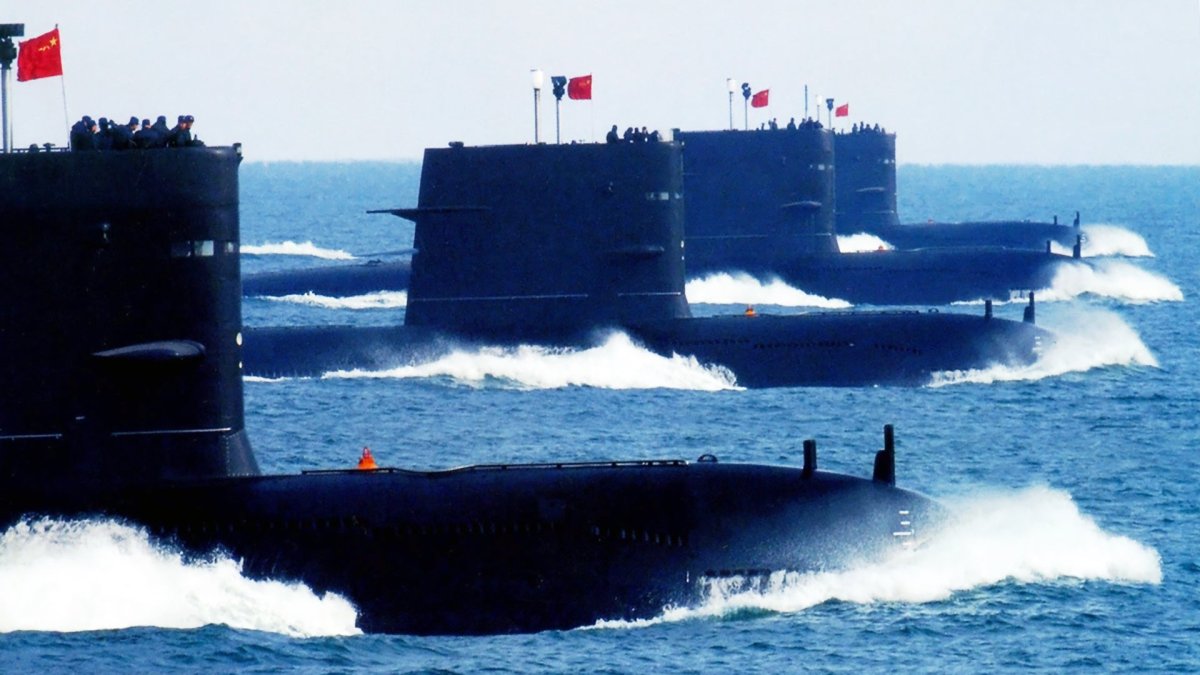
China has greatly expanded its advanced diesel-electric submarine fleet in recent years to go with its larger fleet expansion ambitions. These boats are well suited for prowling the littorals, especially much of the South China Sea that Beijing claims as its own territory. , MARK SCHIEFELBEIN/AFP via Getty Images
The nuclear submarine’s unchallenged superiority in endurance and sustained speed is an exciting and effective foundation for any country’s perceived or realistic naval needs. However, the prohibitive costs of acquiring and maintaining nuclear-powered attacks submarines (SSNs), as well as a litany of other political and regulatory factors , prevent most navies from building their maritime strategy on the bedrock of such a design.
AIP is the obvious alternative, and the choices available offer many benefits, including creating a massive headache for historically dominant navies that don’t like to have their sea power certitude challenged.
So, let’s look at three AIP options here: closed-cycle steam turbine, the Stirling Engine, and the fuel cell, as well as consider the newest upgrade to underwater power — lithium-ion batteries.
The closed-cycle turbine is similar to a nuclear-powered steam turbine, except burning ethanol generates the heat instead of a nuclear reaction. While several navies experimented with it, only the French committed themselves to its development for submarines—the MESMA, or Module d’Energie Sous-Marine
Autonome system. The French-designed Scorpene class, which several navies have acquired, can employ a MESMA turbine. The Agosta 90B class submarines, like the ones Pakistan operates as the Khalid class , also use MESMA. Some sources suggest this AIP system has an endurance of around 16 days at four knots without the need to snorkel.
One of the important benefits of the turbine is its ability to maintain a constant speed for all aspects of the submarine’s performance, because it is connected to the electric motors through an alternator, whereas a closed-cycle diesel must vary its RPMs. Not much is known about the performance and success/failure of the MESMA system. The apparent weaknesses are that the turbine isn’t very quiet, and an excessive amount of exploitable heat is produced.
The Stirling Engine is a very well-known system that has been around for more than two centuries. Famously, Sweden’s Stirling-engined submarine Gotland made an enduring mark on the U.S. Navy .
The first full-scale submarine Stirling engine was added as a “plug,” or hull-section, to the Kockums’-built HSwMS Näcken in the mid-late ‘80s. The engine’s quietness surprised its designers and the Swedish Navy. In the Stirling cycle, the fuel is continuously burned, whereas, in a diesel engine, the combustion is an explosive, noise-generating process. In fact, the motive machinery associated with the Stirling revealed itself to be much noisier than the combustion. Thus, Kockums’ engineers had to ensure that all machinery mounts were placed on rafts to reduce detectable vibration through the hull.
Reported submerged endurance varies, but sources indicate anywhere from 14 to 30 days. The liquid oxygen (LOX) required for combustion of the diesel fuel is located in stainless steel containers that “are the most expensive part of the Stirling AIP system,” according to Zimmerman’s book. The Swedish Navy continues to trust the Stirling system and has incorporated it into its new and provocative Blekinge class submarine (A26 program).
Other countries use a Stirling system, too. The Japan Maritime Self-Defense Force (JMSDF) uses it in the Soryu class , the Royal Singapore Navy in the Archer class (formerly the Swedish Västergötland class), and the Type 039A Yuan -class submarines of the Chinese Navy also employs it.
The Stirling engine has several inherent weaknesses that might contribute to operational constraints. According to Zimmerman, one can be found in the atmospheric limitations of its combustor, which prevents Stirling-powered submarines from diving deeper than 650 feet. Of course, in Swedish waters and the Baltic littorals, this may not be a problem. Also, it “cannot accept radical changes in power demand.”
Sweden’s AIP-equipped submarine Gotland , shown here in San Diego in 2005, with the aircraft carrier USS Ronald Reagan in the background. The submarine reportedly made multiple undetected torpedo-launch runs on the U.S. Navy ship during an exercise off California that year., U.S. Navy/Photographer’s Mate 1st Class Michael Moriatis
Like the MESMA turbine, Stirlings apparently produce an exploitable heat signature. Finally, according to Jurgen Rohweder, “The engine’s efficiency is significantly lower and fuel consumption correspondingly high. This is the most probable reason why most of the countries experimenting with the Stirling engine have abandoned it at the end.” Perhaps it is a contributing factor that influenced both the JMSDF and the Royal Singapore Navy’s decision not to include the Stirling in their newest submarine designs: the Taeigi class and the Invincible class, respectively.
There are a few additional weaknesses to AIP technology. Most important, AIP is expensive. And the nations developing AIP have not become completely committed believers in the technology — none has created a submarine solely powered by AIP. I get that it is designed for those moments when a submarine needs to be a submarine. But the diesel engine and batteries required for routine, safe cruising in and out of port and patrolling when AIP use isn’t important, take up a significant amount of space, add a tremendous amount of weight and size to the design, and cost that much more money.
Yes, almost all nuclear submarines do have an auxiliary diesel engine and battery compartment (with the interesting exception being the Soviet Navy Papa class SSGN), but comparatively, it is substantially smaller and used only in emergencies or while in port.
Now, the system that has transformed the painful headache experienced by ASW forces into a migraine is the fuel cell. There are many types and several countries are developing them, but I’ll focus on German Type 212 and 214 submarines.
“The fuel cell has evolved into an electrochemical device producing electricity without combustion,” writes Rohweder. “The electro-chemical reactions between fuel and an oxidant, which leads to the direct production of electricity … and the greatest progress has been made with the reaction between hydrogen and oxygen.”
The German Navy U34 type U212A submarine visits Gdynia, Poland, in November 2015. The U34 uses a fuel-cell for submerged power generation., Nur Photo/Getty Images
Fuel cells are highly efficient, and they make absolutely no sound . Most of the heat produced by the chemical reaction is employed by the system to extract hydrogen from the metal hydride storage containers. The rest is discharged overboard but apparently leaves a minimal signature.
Unlike lead-acid batteries, the fuel-cell system requires no maintenance while at sea (only monitoring). This point alone has a multilayered impact: With a reduction of crew, you have a reduction of crew weight; you have a reduced need for supplies (which take up space); and the actual space for those crewmembers to live and work leaves room for critical sensor and weapon systems as well as machinery. The diminished reliance on snorkeling means there is less stress on the crew, thereby allowing for greater focus on the submarine’s tactical mission.
Reports of fuel-cell submerged endurance vary, but the standard response is 14 days. However, three to four weeks is commonly accepted, with some claiming up to eight weeks! The fuel cells allow for high sustained underwater speeds and, in conjunction with the batteries, such as lithium-ion technology, those rates could be maintained in a manner that can wreak havoc on any surface fleet.
The ASW migraine is only enhanced by a new generation of electric motors. “Advances in solid-state power conditioning equipment and rare-earth magnets are creating an electric motor half the size and weight—for the same output—as conventional units,” writes Zimmerman. The winding we are so used to in electric motors has been replaced by permanent magnets (PM). The Type 212 submarine (used by the German and Italian navies) and the Type 214 (used by Greece, Portugal, and South Korea), use the Siemens Permasyn PM Motor. This motor, says Jurgen Rohweder, “has particularly low vibrations and emits little heat and noise, which together further contribute to a submarine’s undetectability.”
Lithium-Ion Batteries
The lithium-ion battery (LIB) is the latest technology being applied to diesel submarines. More than just a much-desired replacement for the standard lead-acid battery (LAB), Japan has been working to perfect the LIB for much of the 21st century.
Clearly, with the launch of the second Taigei ( “Big Whale” ) class submarine , the Hakugei (“ White Whale “), a few weeks ago, the JMSDF is comfortable with the performance and safety of the technology; so much so, that it will no longer rely on the cumbersome Stirling engines that provide AIP propulsion for their previous boats, the Sōryū class.
Indeed, lithium-ion batteries could allow some navies to dispense with all the complexity, weight, and, in some cases, the detectability of AIP machinery altogether. In essence, the LIB technology represents the dream of what a diesel-electric boat could possibly be. Depending on the needs of the navy, they offer their own kind of replacement for AIP technology, allowing for much longer dives than their LAB-equipped brethren, all without the complexity of having a separate AIP propulsion technology on board, although they do have unique fire suppression and other requirements.
Compared to AIP and LAB submarines, LIB cells can also take up considerably less space, allowing for more cells in compartments already allocated for batteries. Or, since space is always at a premium on a submarine, the area planned for an AIP plug can now be used for additional sensors, special operations capability, crew spaces, additional weapons, or even more batteries.
ASW crews love to interrupt a diesel boat that is surfaced or snorkeling to recharge its batteries. A LAB submarine needs, ideally, an uninterrupted half an hour — up to several hours — to obtain a full charge, depending on the quality of the batteries. Forcing the submarine to completely submerge when it has only attained, say, a 36 percent charge creates a difficult environment for the skipper. How long will the ASW force keep me down? Will I be interrupted again? With only a 36 percent charge, can I realistically get away from a determined hunter? If a torpedo is in the water, how long can I maintain speed to evade the weapon?
The Japan Maritime Self-Defense Force submarine Taigei “ Big Whale “) at its launching ceremony in 2020. The Taigei uses lithium-ion batteries in lieu of an AIP or lead-acid batteries for underwater power., JMSDF
Unfortunately, “interrupting” a submarine with lithium-ion batteries is very unlikely. LIB cells recharge at a significantly faster rate than LAB cells. They also can discharge a greater amount of energy, which translates into higher speeds, and the batteries will maintain that high level of energy even as the charge is depleted. This allows the skipper to get away from or pursue a threat, even a nuclear submarine — if the conditions are right. Also, the investment a navy makes into lithium-ion technology is rewarded by the fact that the batteries keep most of their fast-charging ability and high-energy output throughout their lives.
LIBs can also be paired with existing AIP technology to dramatically increase the capabilities of these already remarkably capable boats. This is exactly what South Korea is doing with their KSS-III Batch 2 submarines. Navalnews.com reports that Moon-hee Jang of Hanwha Defense says the new configuration will last 300
percent longer at full speed and 160 percent longer in cruise mode, also adding:
“Batch-2 submarines will have both AIP propulsion systems and lithium-ion batteries, which will increase the submerged endurance to more than 20 days at sea.”
And it’s possible that the AIP system can charge the batteries while submerged. That is a stunning performance boost for a diesel-electric submarine, and the pairing of the technologies offers incredible flexibility that would greatly complicate a submarine hunter’s mission.
Finally, a very critical point is made by the authors of this article encouraging the U.S. Navy to have a serious talk with the Japanese regarding LIBs: “All navies are rapidly developing and integrating large fleets of battery-powered [unmanned] submersibles.” As the U.S. Navy pursues unmanned air, surface, and subsurface vehicles, the use of Japanese-developed LIB technology can only enhance their performance and reliability.
Of course, AIP or advanced battery technology alone is not enough for submariners! Advances in propellor-blade technology and hydrodynamic hull designs (which, added to fuel cells’ capability for high speeds, allows for excellent sprint-drift operations), demagnetized hull materials, anechoic coatings, and sensor and weapons capabilities ( including the submarine-fired SAM ), and I think today’s ASW crews might be fucked.
New Means Of Detection
Not long ago, I read an article co-written by a retired admiral who happened to have been a naval oceanographer. He was describing the need for the Navy to start paying closer attention to non-acoustic means of detection of submarines, particularly the effects of bioluminescence. Navy Cdr. Rob Brodie and retired Rear Adm. Tom Donaldson illustrated how “light produced by disturbed bioluminescent plankton is an ocean signature; a submarine cannot prevent the ocean from glowing.” The authors recommend that the Navy equip all ASW platforms, particularly unmanned drones, with low-light sensors and advanced processors with AI technology to decipher and alert sensor operators to highly potential submarine contacts.
We must take the non-acoustic possibilities very seriously. The Russians have been studying a wide range of non-acoustic options for decades in the face of their comparatively poor passive acoustic capabilities during the Cold War. They and most likely the Chinese are light years ahead of us.
This leads to some of my own thoughts about how to meet the threat:
– Unmanned underwater vehicles (UUVs) are already being deployed by submarines from all navies. ASW sensor operators need to be trained on every type of UUV and their passive acoustic signatures, as well as what they sound like in real-time. UUVs will have unique signatures, and navies may not be investing money into the quieting of their machinery for the moment. If an operator can acoustically classify a specific type of UUV known to be launched from a submarine, then she has also localized the threat, the mother submarine.
A Chinese HSU-001 unmanned underwater vehicle. , AP
– The defense industry needs to help us hear better. We need better processors that can pick out a slow-revolution, seven-skewed-blade propeller from a field of very loud biologics and peripheral shipping noise. We need airborne, surface, and subsurface operators well trained in listening to the sounds an ocean makes. I’ve said it before, but I was poorly trained in “aural” acoustics, and it seems the developers of the newest processing equipment were neglectful in providing enhanced, real-time listening capabilities (probably because we weren’t taking it seriously).
– I would encourage the Navy to require all junior submarine Sonar Techs (STs) to do at least one patrol (or a couple of weeks during at-sea training periods) on a ballistic-missile submarine (SSBN) , early in their careers. There, they can listen to sounds expressed by the ocean for hours on end. Unlike attack submarines, SSBNs spend a significant amount of their time boring holes in a limited part of the ocean, which provides an ideal training environment for the STs. Doing this type of listening, I believe, would create “muscle memory” for them to be able to aurally differentiate the slightest acoustic change that an extremely quiet fuel-cell submarine or distant UUV would bring.
As our resident undersea warfare expert has said : “Sonarmen are trained to detect changes in patterns. A sharp metallic transient object is out of place in the natural undersea world … The experienced sailor can quickly identify these changes.” In the comment section of that article, he makes a key point: “Finding a diesel boat passively is largely dependent on diesel-boat crew mistakes or poor maintenance.” Peer combat is like that. It comes down to who makes the first mistake. I’m all for accelerating novice sonar techs to “experienced sailors” and immersion in the actual environment can only help.
I would also love to see the best STs from destroyers, STs destined for the Constellation -class frigates, and the sensor operators flying in P-8 Poseidons and MH-60s get that same opportunity as well. In addition, actual acoustic recordings from previous patrols made by SSBNs can be distributed to all the above platforms for individual or group training (however, motivating individuals to listen to them while ashore or on their own time is a very difficult task, as opposed to actually standing a watch aboard a submarine).
Sonar Technicians aboard the Arleigh Burke class destroyer USS The Sullivans ., USN
– Allied navies have long neglected research and operational development of all non-acoustic ASW options. In our arrogance, we put all our eggs in the passive acoustic basket as we relied on the noisiness of Soviet submarines. Now, with the proliferation of diesel submarines and AIP technology, we are in danger of doing it again with low-frequency active sonar.
We need to invest heavily in nontraditional ways to find a submarine. Exploit the heat signatures of MESMA turbines and Stirling engines at all depths. Exploit submarine wake “signatures.” Consider the molecular-level effects a submarine has on the ocean. Employ marine biologists to study the effects the presence of a submarine has on biological species and, if significant, teach sensor operators to detect them.
– Oceanography! We do not know the ocean, despite our past exploration of her. She is a mystery that is constantly changing, particularly the Arctic Ocean. We need to be able to peel back the surface and understand the variables the depths provide. The Navy should be investing heavily in oceanography research and recruiting more officers and enlisted to become professional oceanographers. We also need more complex, real-time oceanographic sensors that provide far more detail of a specific on-scene area. We need more than a single bathythermographic or “BT” buoy that only reveals the temperature gradient of one tiny column of water.
– Here it comes! The U.S. Navy needs its own AIP submarines to train its ASW professionals and perform operational missions . We cannot rely on exercises with allies that happen only rarely, under sterilized, prepackaged conditions. Getting to fly “on top” of a Type 214 boat in the Med or in the Sea of Japan once every two years doesn’t cut it — and acoustic training from tapes, while helpful to a certain degree, ultimately doesn’t create the real-world conditions our warriors need to prepare for war.
Before I fully understood the implications of AIP, I believed there was nothing new to fear in the old. I was wrong. In fact, if you take into account propulsion, tactics, and implementation by adversary navies, there really isn’t anything old about the new. Once again, we have placed ourselves in a disadvantaged position. ASW created the dragon that is AIP— but there is no reason ASW can’t develop the means to slay it.
The Dutch-made Hai Lung ( Sea Dragon) class diesle-electric submarine surfaces during a Taiwanese Navy combat skills demonstration., SAM YEH/AFP via Getty Images
Kevin Noonan served in the US Navy from 1984–94 as a sensor operator (SENSO), briefly, in the P-3B Orion with VP-94 and for the remainder of his service as a SENSO in the S-3A/B with VS-41, VS-24, and VS-27.
Contact the editors: Tyler@thedrive.com and Brian@thedrive.com.
Comments couldn’t be loaded. Please refresh the page.
更新于美国东部时间2021年11月3日下午3:20
与柴油潜艇作战理论上容易,但实际上肯定很困难。
不喜欢这种矛盾?那也没办法!欢迎来到反潜战(ASW)的世界。
柴油潜艇!媒体对柴油潜艇威胁的报道很有意思,他们声称要找到不依赖空气推进(AIP)的潜艇几乎是不可能的。这仿佛让我们回到了1942年初的黑暗时期,当时纳粹U型潜艇开始在美国东海岸和墨西哥湾活动。我最喜欢的一个耸人听闻的标题是:
北约称这艘俄罗斯潜艇为“黑洞”,原因令人毛骨悚然。
毫无疑问,搜寻使用电池驱动的柴电潜艇非常困难,因为其特征(或者说,大多数情况下根本没有特征)非常特殊。我从上世纪80年代中期开始在S-3“维京”反潜巡逻机上担任传感器操作员(SENSO),花了大量时间搜寻各种类型的潜艇。在航母上,我们“维京”中队的机组长士官长喜欢手持手电筒,提醒我们即将进行的大规模反潜演习(包括与柴电潜艇的演习,这种情况极其罕见)中,我们面临的挑战有多么艰巨。他打开手电筒,说道:“这就是柴电潜艇的声音。” 设备发出的寂静和他这句话语震耳欲聋。
然而,柴油潜艇的寂静并不震耳欲聋。
一架S-3A“维京”反潜巡逻机,其磁异常探测器(MAD)已部署完毕。作者在冷战期间曾作为“维京”巡逻机上的船员参与反潜作战。(美国海军/国家档案馆)
令我惊讶的是,我们当中竟然有那么多人忘记了,两次世界大战我们都成功地击败了柴电潜艇。然后,随着冷战第一个十年的推进,我们又重新学会了如何应对柴电潜艇的技术进步——即通气管和流线型设计。
请注意我上面用的是“信号”,这意味着有人试图用被动声呐浮标追踪一艘柴油潜艇。第一批声呐浮标在二战末期投入使用,在20世纪50年代之前,通过操作员依次调高浮标并监听螺旋桨噪音最大的浮标,追踪柴油潜艇的螺旋桨噪音效果相当不错。随着柴油潜艇的流线型设计和螺旋桨叶片技术的进步,在目标下潜后投放被动声呐浮标的方法不再奏效。基本上,性能更先进的潜艇速度比北约飞机和反潜舰艇投放、调高和监听浮标的速度更快。幸运的是,主动声呐浮标技术正日趋成熟,我们又重新掌握了主动声呐技术。与此同时,直升机吊放式声呐技术也蓬勃发展,一支新型的固定翼/旋翼猎杀艇队伍也随之诞生。
在冷战中后期,没有人尝试过被动追踪水下柴电潜艇(即仅依靠水听器监听,无需任何主动声呐脉冲)。这种未曾使用的方法或许正是我们今天对柴电潜艇抱有敬畏之心的原因之一。
冷战时期核武器与柴油机的较量
追踪核潜艇相对容易,这取决于它的噪音大小。正如许多开源资料所揭示的,核潜艇总是有各种机械设备在运转。美国海军及其盟友很早就体会到了这种潜艇的噪音有多大。美国庞大的水下声呐跟踪网络SOSUS曾轻松探测并跟踪了世界上第一艘核动力潜艇“鹦鹉螺”号(SSN-571),当时它正在进行首次横渡大西洋的航行,这让美国海军震惊不已。从那时起,美国海军便致力于研发静音技术,力求使自己的潜艇成为世界上最安静的潜艇。而苏联则花了太长时间才意识到静音的必要性,反而将精力集中在完善其问题重重的反应堆上。
一架美国海军P-3“猎户座”反潜巡逻机飞越一艘苏联“胜利者I”级核潜艇。猎杀核潜艇与猎杀柴电潜艇是截然不同的艺术。(美国海军)
在冷战后期,被动声呐浮标成为追踪核潜艇的主要手段。一旦与一组搜索浮标建立联系,就可以通过不断减少浮标数量和缩小搜索范围来定位和追踪目标。这种方法非常有效,尤其对付噪音很大的苏联潜艇。然而,随着冷战的结束,对这种方法的依赖逐渐成为一种弊端。
对核潜艇投放主动声呐浮标并非常规操作。这种做法只有在万不得已的情况下才会使用,要么是为了完善攻击策略,要么是该死的家伙突然消失后孤注一掷的绝望之举!另一方面,在反潜演习中,使用主动声呐浮标攻击核潜艇可能是计划的一部分,但“登上”美国潜艇的时间极其宝贵且难得。就我个人与美国潜艇(主要是637/鲟鱼级潜艇)的合作经验而言,我从未记得曾用我的S-3“维京”反潜巡逻机向其中一艘潜艇投放过AN/SSQ-62 DICASS主动声呐浮标。
用主动浮标攻击苏联核动力潜艇几乎是闻所未闻的。冷战时期反潜作战中流传着一种说法,使用主动浮标被视为战争行为。我没找到任何证据支持这种说法,但我们当时就是这么听说的。不过,我说的是“几乎闻所未闻”。尽管有这样的警告,但有时还是会获得许可,而且主动浮标确实是一种骚扰苏联潜艇的绝佳手段,可以让他们恼羞成怒。我从未这样做过,但我听说过其他人这么做的故事。
冷战期间,美国海军面临的一大难题是训练。随着核动力海军的崛起,柴电潜艇迅速沦为不受重视的“异类”,就像螺旋桨飞机在喷气式飞机时代之后一样。
20世纪80年代末,海军的三艘“巴贝尔”级柴电潜艇退役——1988年春季“骨鱼”号潜艇(SS-582)发生的悲剧性火灾更加坚定了这一决定——此后,美国便不再使用柴电潜艇。这种短视的做法影响了冷战后期美国反潜部队(包括核潜艇)在面对柴电潜艇时的训练水平。
遗憾的是,我从未有机会与海军那些卓越的柴电潜艇并肩作战。我深感自身训练不足,对如何使用主动声呐浮标进行搜索也缺乏足够的了解。即使在S-3“维京”武器系统训练器(WST)上进行了长时间的训练,也无法让我做好应对主动声呐环境的准备。每当想到如果真的与苏联柴电潜艇交战,我的表现会多么糟糕,我都会不寒而栗。
1985年,从空中拍摄的苏联“高尔夫II”级柴电弹道导弹潜艇右舷前方照片。(美国国防部)
自冷战结束以来,美国海军一直拒绝认真考虑非核动力潜艇的必要性。此类潜艇的匮乏,尤其是美国拥有和运营的非核动力潜艇的缺乏,阻碍了有效的训练,这令美国海军在面对中国的崛起、俄罗斯的复兴以及柴电/AIP潜艇的持续扩散时,倍感尴尬。
奇怪的是,在极少数情况下,美国核潜艇会试图通过在水面航行时启动辅助柴油发电机为反潜部队供电,或者假装使用通气管来模拟柴油动力潜艇,以此来弥补动力不足的问题。但说实话,这根本无法与真正的柴油动力潜艇对抗相提并论。
那么,柴油潜艇无法被发现和追踪的说法究竟有多少是谬论呢?
问题始于如何发现柴油潜艇。大西洋水下被动声学阵列网络——声波监视系统(SOSUS)——是海军在海洋中探测敌情的“金丝雀”。该系统最初的设计目的是探测正在浮出水面或潜航时启动主发动机的柴油潜艇。从苏联北方舰队或波罗的海舰队进入大西洋的第一代、第二代甚至第三代苏联柴油潜艇都相对容易被探测到。但在地中海,却没有SOSUS网络可以依靠。
本质上,北约的空中、水面和水下反潜部队必须密切合作,才能持续追踪敌方目标。如果失去联系(例如,由于潜艇依靠电力推进下潜),地中海的声学环境以及密集的航道和渔场都会增加重新建立联系的难度。随着苏联“探戈”级柴电攻击潜艇的出现,这种情况变得更加复杂。
Tango级潜艇于1972年开始服役。
我对目前使用的低频主动声呐(LFA)的成功率了解不多。不过,即便用这种方法发现了水下目标,仍然需要对其进行分类!我所熟悉的主动声呐/声呐浮标返回的信号几乎无法提供关于目标的信息。然而,我最近从一位美国海军的非机密人士处得知,MH-60R“海鹰”直升机上的机载低频吊放式声呐阵列能够通过读取潜艇在水中运动时的振动特征,精确识别潜艇的名称。对于像我这样的老手来说,如果这是真的,那真是令人无比兴奋。
柴油船作为猎船
让我推测一下影响猎人和猎物的一些因素。
首先,我们来谈谈柴油潜艇的缺点:柴油潜艇的体积一直相对较小。这会从多个方面影响其续航能力。小型潜艇的动力装置也较小,电池存储空间有限。虽然电池存储技术比二战时期有了显著进步(下文将详细介绍),但对于柴油潜艇而言,这仍然是一个严重的限制因素。目前,无论是依靠主推进还是电池,都无法实现30节的航速。水下以最大航速航行时,电池电量的消耗速度远高于以更高效的5节或更低航速航行。
荷兰潜艇艇长卡伊·托夫特·马德森指挥官在1996年8月发表于《海军学会会刊》的一篇文章中,总结了柴油动力艇艇长面临的推进系统问题:
常规潜艇的指挥官在巡逻时必须时刻关注电池电量和剩余能量。在巡逻区域,航速很少超过五节,以限制能量消耗和辐射噪声。潜艇指挥官不愿在低电量状态下作战,因此会抓住一切机会进行通气作业。与其进行几次长时间的通气,不如进行多次短时间的通气。遵循这一策略,潜艇就不会陷入能量不足的困境,从而拥有足够的机动能力来规避或攻击目标。
对于空中反潜侦察机而言,“多次短距离潜水”听起来和看起来都非常悦耳。这意味着有更多机会利用非声学传感器(以及被动声学传感器利用深度变化瞬态信号)探测到潜水器和其他桅杆。
1942年瑞典潜艇上的通气管。通气管会从桅杆上升起,刚好露出水面,以便排出废气并进行新鲜空气交换。(图片来自Wikimedia,Daderot提供)
最近一篇文章描述了冲突期间GPS部分或完全失效(例如由于GPS卫星被欺骗或彻底摧毁)可能对潜艇造成的影响。潜艇主要依赖惯性导航系统(INS)以及潜望镜深度下快速的GPS辅助定位,但在战时,GPS失效将迫使潜艇寻找其他信息来源来验证INS提供的信息。文章还介绍了如何利用潜望镜作为六分仪。然而,这种潜望镜暴露方式,无论多么短暂,都会为反潜飞机提供额外的雷达探测机会。
没有什么比“雷达沉没器”(一种在水面被探测到,但一旦意识到自己被探测到就会迅速下潜的潜艇)更能让猎人垂涎三尺了。
柴油动力艇的尺寸也会影响可用传感器的数量和类型。艇体越小,用于探测目标的声呐阵列尺寸就越小。声呐阵列的尺寸会影响传感器的探测距离和灵敏度。潜艇上需要多少声呐技术人员来监控各种主动和被动声呐阵列以及拖曳式声呐阵列?监控潜艇自身噪声水平或主动声呐拦截屏幕的系统又需要多少人员?所有传感器的处理器占用多少空间?所有这些都是决定柴油动力艇任务执行效果的关键因素。
如果不提及俄罗斯数量庞大的基洛级潜艇,就无法公平地讨论柴电潜艇构成的威胁。基洛级潜艇以各种配置服役于包括美国盟友及其两大竞争对手在内的九个国家的海军。(英国国防部)
由于核潜艇造价和维护成本都极其高昂,柴电潜艇的紧凑尺寸对规模较小的海军来说极具吸引力。然而,海军规模小也会影响其国际地位,这意味着其情报网络不如规模较大的海军那样广泛。因此,印尼海军的209/1400型潜艇可能需要花费更多时间在潜望镜深度搜寻目标,而澳大利亚的柯林斯级潜艇则可能凭借完善的情报网络精确掌握目标位置。
柴油船作为猎物
如果猎物所处的不利因素已经很严峻,那么猎人所面临的环境则要恶劣得多。让我们再回到尺寸这个话题,因为尺寸确实很重要。小型潜艇虽然存在一些劣势,但也具备一些关键优势:
首先,它很小。主动声呐脉冲,特别是高频声呐脉冲,在水中能量衰减很快。目标越小,反射的能量就越少。而这些能量在返回换能器/接收器的过程中还会进一步损耗。
现在,如果再加上一艘覆盖着消声瓦或涂层的潜艇,你基本上就只能得到一团模糊的回波——屏幕上显示的回波非常模糊(甚至可能根本看不到)。然后,我们再考虑一些常量之外的变量:潜艇艇长会尽可能地将潜艇的最小特征暴露给主动声呐,尤其是在只有一个声呐源的情况下。他会制造环境诱饵——例如急转弯,或者先向右舷打舵再向左舷打舵,在水面上留下较大的扰动——以便声呐能够接收到回波。或者,他可能会快速向前冲刺,然后突然倒退,让潜艇进入自己的尾流中。
S-3 和 A-6 攻击机飞越一艘俄罗斯“狐步”级潜艇。(美国海军)
其次,被猎杀者会获得显著的主场优势,因为柴油动力潜艇往往在友好的近岸水域活动。可以肯定的是,敌方柴油动力潜艇艇长对周围声学环境的季节性和日常变化了如指掌。浅海沿岸水域对主动、被动乃至非声学传感器来说都是极其复杂的环境。海底结构、浅滩、水流、淡水流出、天气以及生物因素,都如同诱人的安全网,让小型潜艇难以招架。
第三个需要考虑的因素是艇长是否愿意将潜艇的通气管或浮出水面的艇体隐藏在水面上常见的各种环境和人为干扰物中。非声学搜索会因各种形状和大小的雷达目标而变得复杂,例如渔船、游艇、驳船、商船和航标。雾、巨浪、雷暴、沿海影响和每日温度变化等环境因素都可能促使柴油动力潜艇冒险航行,从而极大地影响反潜飞机的声学和非声学性能。
尤其需要注意一点:柴油动力潜艇艇长懂得如何隐藏在本国的渔船之中。然而,潜艇很容易被各种类型渔船的渔网缠住,因此与一支配合默契且组织有序的渔船队合作需要非凡的协调和训练。由于大多数渔船都使用柴油发动机,潜艇艇长可以放心地启动自己的发动机,因为反潜作战传感器操作员很难从大约27台发动机中分辨出一台。
最后,美国海军尚未对其反潜武器进行浅水作战的改造。尽管冷战结束后舰队作战理念发生了重大转变,从远洋作战转向近岸作战,但自20世纪70年代以来,美国海军的反潜武器却一直为在浅水区活动的敌方潜艇提供优势。我们过去没有,现在仍然没有在这种环境下最有效的反潜武器。Mk 54空投和水面发射鱼雷相比Mk 46的优势,仍然无法克服浅水区常见的恶劣声学条件。我们把所有希望都寄托在了浅水区,考虑到鱼雷在历次战争中的糟糕表现(要么在冲突后期才得到解决,要么根本无法解决),我们正将自己的舰艇置于巨大的风险之中。
1986年,一架维京级潜艇投放了一枚鱼雷,原图说明中指出是一枚Mk 46轻型鱼雷。请注意上图中鱼雷刚刚离开武器舱门的位置。(图片来源:Wikimedia/美国海军)
在这一点上,俄罗斯和我们的一些盟友胜过我们。对于我们的水面舰艇来说,我们需要研发一套类似于俄罗斯RBU-6000反潜火箭炮的系统。更好的办法是,我们应该支持我们的盟友,购买瑞典的ASW-601,或者重新启用像老式“刺猬”(Hedgehog)那样简单、廉价的系统。这套系统的优势还包括水雷对抗和反鱼雷防御,而这两项能力正是我们的军舰所需要的。
对于我们的飞机来说,我们需要一种简单、廉价的深水炸弹,类似于“刺猬”装置——或许是子炸弹,例如反潜版的Mk 20“岩眼”集束炸弹。这也意味着我们需要研发一种更有效的磁异常探测器(MAD)吊杆/鸟,以便在这种环境下对付潜艇。真有意思,在21世纪的反潜作战中,我们似乎又需要回到未来。
哦,还有一件至关重要的事:猎手越靠近敌方海岸,就越容易受到敌方战斗机、地空导弹和高射炮的威胁。
最后,我们给予敌方柴电潜艇的最大优势在于我们缺乏实战训练。这过去是、现在仍然是主要问题。
听到一位扮演敌人的战友说出这样的话,真是令人尴尬。1978年8月,我们有机会听到“巴贝尔”号潜艇(SS-580)的副艇长威廉·马克斯中校在《海军学会会刊》上发表了一篇简短而充满激情的文章,向我们详细阐述了这一点。
1988年10月6日,美国海军“巴贝尔”号潜艇(SS-580)在赛宝重工完成选择性限制性可用性(DSRA)坞修。
他首先提醒我们,历史上战略家和规划者常常未能充分考虑战时敌人的真实行动,并将其转化为切实有效的训练。他将这一道理应用于我们备战苏联柴电潜艇的训练中:“训练中最明显的缺陷在于,演习中,作战命令强迫柴电潜艇以与谨慎的潜艇指挥官会采取的行动截然相反的方式进行作战。”
他毫不留情,直指主要违规者的要害:
海军航空兵反潜部队是这种明显“鸵鸟心态”训练的重灾区。根据作战指令,海军飞行员将柴电潜艇置于一个小型圆圈内,该圆圈位于深水汇聚区,周围没有商船或渔船,直接进行日间通气训练,并采用可预测的通气循环,最后还把这种训练称为“自由发挥”。
他没有指责我们试图掩盖自己的无能,也没有为了轻易取胜而篡改账目。相反,他指责我们没有挑战自我,没有真正面对如果与苏联在海上交战将会面临的局面:
我们应该针对真正的柴电潜艇威胁进行训练——在浅水区、靠近海滩的噪音源和渔船附近。我们应该在黑暗中和广阔海域进行训练。我们应该针对机组人员的厌倦和失望进行训练。我们应该针对潜艇真实存在的不确定性进行训练。我们应该针对真实的飞机维护和声呐浮标作业进行训练。我们应该针对疲惫的机组人员进行训练。最后,我们应该针对被允许利用环境优势的柴电潜艇进行训练。
他比海军领先十年,敦促我们更加密切地关注近岸海域,因为苏联的柴油机车肯定会在那里等着我们。他实际上是在说:“关键在于咽喉要道!是海峡,是护航船队出发和到达港口的入口,是海军基地,是格陵兰-英吉利海峡,是峡湾的入口!”
一张美国中央情报局提供的图片,图中显示的是1983年的国际边界,展示了格陵兰、冰岛和英国(GIUK)海峡,这是北大西洋的一个咽喉要道,苏联潜艇必须穿过这里才能进入大西洋。图片来自维基媒体
冷战后对苏联海军计划的分析,更不用说分析人士在这一时期阅读苏联海军期刊时所说的话,都证实了这一点。
当然,很多人可能因为马克中校的文章中提到了“D”字(指核潜艇),就很快停止阅读了。文章中提到了海军决定不再建造柴油潜艇,以及这一决定如何影响了我们有效训练对抗非核潜艇威胁的能力。
随后,马克斯毫不留情地抨击了海军航空系统司令部(NAVAIR)的私生子——空中反潜作战(Air ASW):“如果我们打算开展结构严谨、以飞机为重点的演习,那就应该这样称呼它们,以便我们能够准确地评估我们所有的能力。”
哎哟!然后他要求我们进行现实的训练,强迫我们在完全不知情的情况下,在真实、复杂且非常难以操作的条件下,找到可能存在柴油船的地方。
他最后还不忘用一句必要的侮辱来结尾:
经过几次这样的演习之后,让我们再次检验一下我们针对苏联柴电潜艇的反潜作战能力。我可以肯定地说,我们可以得出的一个结论是,在真正存在空中威胁之前,苏联无需投入任何资金研发柴电潜射防空武器。
哎哟——真是疼死了!!谢谢你,XO!也感谢上帝,感谢这些爱抱怨、爱发牢骚的现实主义者。
遗憾的是,正如我之前所说,我们没有听取意见。三艘“巴贝尔”级潜艇无法充分满足大西洋和太平洋舰队所有反潜艇员以及所有航母舰载机联队和巡逻中队的训练需求。再次强调,我从未与“巴贝尔”级潜艇交战过,我们大多数人也只是在部署到地中海或峡湾期间,在一次大型的、组织严密的演习中见过这种柴电潜艇。但愿我们的反潜官兵们已经为南海之行做好了充分的准备。
如何从空中找到柴油船
现在我来尝试描述一下我们是如何应对一艘训练用柴电潜艇的(以“倒钩”号潜艇的副艇长为例):当潜艇的电子支援措施(ESM)系统探测到S-3A反潜巡逻机的AN/APS-116雷达进行扫描时,潜艇便“拔掉了插头”,收回了通气管/潜望镜/桅杆。这是典型的雷达隐蔽操作。是的,我指的是一次扫描,具体情况取决于遭遇战的实际情况。作为雷达站长,我负责操作雷达并宣布失去联系。战术协调员(TACCO)将我最后一次雷达定位信息发送到飞行员的显示器上,飞行员随即调整飞机航向,以便我们能够对该地理位置进行定点定位(MOT)。副驾驶/协同战术协调员 (COTAC) 会通过无线电呼叫与我们正在合作的任何反潜资产(例如拖曳阵列声呐的护卫舰)或被称为 Alpha-Xray 的战斗群反潜指挥官,告知他们可能遇到的潜艇。
如果在接近过程中,我们未能目视(或在S-3B潜艇使用AN/APS-137 ISAR雷达的情况下成像)发现潜艇或其桅杆,我们会本能地投放被动声呐浮标来识别目标,除非有明确的迹象表明它是一艘柴油动力潜艇。这些迹象可能包括:桅杆末端附近仍可见尾气烟雾;已投放在相对较近位置的声呐浮标在显示屏上显示出非常明显的变化;或者护航舰艇报告“失去联系”,而该护航舰艇此前已被动探测到疑似柴油动力潜艇的发动机信号。如果出现这种情况,我们会按照预先设定的模式投放配备主动声呐的AN/SSQ-62 DICASS浮标。
在“维京”号上,我可以同时监测多个活动声呐浮标。不过,通常我们一次只投放两个,以节省资源(因为它们成本高昂,而且我们携带的数量也有限)。当水听器下沉到初始深度后,我会开始发送声呐信号,以确定是否探测到水下目标,并查看它们是否仍在“热层之上”。如果几次发送后没有收到回复,TACCO系统会将水听器下放到最大深度,即热层之下。
一名水兵正在将声呐浮标装载到P-3C“猎户座”反潜巡逻机上。(美国海军/一级摄影师约翰·柯林斯摄)
由于计算机处理信息存在固有的延迟,将声呐浮标调谐到我的耳机上至关重要,这样我才能实时监听。如果有潜艇在附近,我甚至能在显示屏上看到它之前,就从头盔里听到回声。第一次从浮标发出信号就听到清晰的回声,那声音真是令人叹为观止!
现在,关键在于如何在投放其他浮标的同时保持联系。正是在这时,我们这些传感器操作员意识到,我们是在和潜艇艇长下棋,一对一的较量。当然,没有艇员和飞机,我们不可能完成这项任务,但我认为这才是我们真正的考验时刻。
是你和他对抗。
当声呐浮标的换能器发出回波信号并显示在我的屏幕上时,我会开始报出多普勒数、浮标编号、距离和方位,同时标记回波信号。回波信号的特征取决于我上面描述的所有战术。这不仅是听到的,也是传感器操作员(SENSO)通过分析屏幕上的目标“图像”(通常对未经训练的人来说只是一条水平线)来感知到的。当我标记回波信号时,战术指挥官(TACCO)和作战战术指挥官(COTAC)的屏幕上会显示由软件主动声学部分生成的初始符号。然后,TACCO 可以将来自其他传感器的所有轨迹“合并”,并更新 Link 11 战术数据链,以便战斗群中的每个单位都能看到相同的态势“图像”。
随着更多浮标开始发送信号,我也对它们进行回放。我需要用声波信号将潜艇限制在一定范围内。这些新增的浮标提供了可靠的定位,TACCO屏幕上每个浮标的符号都延伸出方位线。
我们一直玩到必要为止,但主动声呐浮标极其昂贵,我们不会浪费它们。此外,如果真的存在威胁,最初几次稳定的声呐回传和定位通常就符合投放鱼雷的标准。
但如果你还记得的话,我一开始就说过,对一艘柴油动力艇进行反潜作战肯定是很难的。
任何一个优秀的船长都不会容忍超过几次信号发出就悄悄溜走,而我们随后发出的主动信号只会无声地飘荡在如今看似空旷寂静的海洋上。因此,最好还是邀请朋友一起行动。另一艘载有相同或更多主动浮标(如果我们没有携带鱼雷的话)的维京级巡逻艇应该会被E-2“鹰眼”预警机引导过来。更好的办法是,你最好在几架海王反潜直升机的射程之内。
美国海军第8反潜直升机中队(HS-8“八球手”)的一架西科斯基SH-3H“海王”直升机正在海面上投放AQS-13吊放式声呐,执行训练任务。HS-8中队隶属于第十四舰载航空联队(CVW-14),驻扎在“星座”号航空母舰(CV-64)上,于1988年12月1日至1989年6月1日期间部署至西太平洋和印度洋。
两架SH-3潜艇的出现总是让躲避的潜艇兵的生存前景变得令人担忧。当然,在战时,我们也希望能在Mk 46鱼雷爆炸的回响中,听到潜艇发出的那种独特的报废之声。
这是必要的声音……但对我来说,这将是我听过的最悲伤的声音。
AIP:衣着考究的海军士兵都穿什么
现在来说说那些AIP(不依赖空气推进)潜艇。对我来说,AIP潜艇一直是个谜。在我从事反潜作战期间,斯特林发动机是唯一使用的AIP系统(核动力除外),这让我感到好奇。我从未执行过针对AIP潜艇的反潜任务。当时我懵懂无知,心想:“这有什么大惊小怪的?涡轮机及其传动系统在水下运转时产生的噪音足以进行被动跟踪。而柴油发动机呢?完全潜入水下?那可是世界上最响亮的噪音!我们到底在担心什么?”
然后我读了两本关于 AIP 潜艇的优秀书籍——斯坦·齐默尔曼的《21 世纪潜艇技术》(第二版)(特拉福德出版社,2006 年)和尤尔根·罗韦德的《更安静、更深、更快:德国潜艇建造的创新》(马克西米利安出版社,2017 年)——现在我知道我们担心的是什么了。
我不会赘述AIP系统的设计和发展历史,因为这方面已经有很多著述了。相反,我们来谈谈它们令人畏惧的优势和可被利用的弱点——如果它们真的存在弱点的话——然后我再分享一些我个人在反潜战方面的想法。
近年来,中国大幅扩充了其先进的柴电潜艇舰队,以配合其更大的舰队扩张计划。这些潜艇非常适合在近海巡逻,尤其是在北京声称拥有主权的南海大部分海域。图片来源:MARK SCHIEFELBEIN/AFP via Getty Images
核潜艇在续航能力和持续航速方面无可匹敌的优势,为任何国家设想或实际的海军需求提供了令人振奋且有效的基础。然而,购置和维护核动力攻击潜艇(SSN)的高昂成本,以及其他诸多政治和监管因素,使得大多数海军无法将这种设计作为其海上战略的基石。
AIP 显然是更合适的选择,而且可供选择的方案有很多好处,包括给那些不愿海上力量确定性受到挑战、历史上占据主导地位的海军造成巨大的麻烦。
那么,让我们来看看这里的三种AIP方案:闭式循环蒸汽轮机、斯特林发动机和燃料电池,以及水下动力系统的最新升级——锂离子电池。
闭式循环涡轮机类似于核动力蒸汽涡轮机,不同之处在于它燃烧乙醇产生热量,而非核反应。虽然多个国家的海军都对其进行过试验,但只有法国致力于将其开发用于潜艇——即MESMA,即水下能源模块。
自主推进系统。法国设计的鲉鱼级潜艇(已被多个国家的海军采购)可采用MESMA涡轮推进器。阿戈斯塔90B级潜艇,例如巴基斯坦海军使用的哈立德级潜艇,也使用MESMA推进器。一些资料显示,这种AIP系统在无需通气管的情况下,以4节航速航行时,续航时间约为16天。
该涡轮机的重要优势之一是能够为潜艇的各项性能保持恒定转速,因为它通过交流发电机与电动机相连,而闭式循环柴油机则必须改变转速。人们对MESMA系统的性能和成败知之甚少。其明显的缺点是涡轮机噪音较大,且会产生过多的可利用热量。
斯特林发动机是一个非常著名的系统,已经存在了两个多世纪。瑞典的斯特林发动机潜艇“哥特兰号”就因其卓越的性能而给美国海军留下了深刻的印象。
第一台全尺寸潜艇斯特林发动机于 20 世纪 80 年代中后期作为“插件”(或船体段)安装在科库姆斯造船厂建造的瑞典海军潜艇“纳肯”号上。该发动机的静音性能令设计者和瑞典海军都感到惊讶。在斯特林循环中,燃料持续燃烧,而柴油发动机的燃烧过程则是一个爆炸性的、会产生噪音的过程。事实上,与斯特林发动机相关的动力机械产生的噪音远大于燃烧过程本身。因此,科库姆斯造船厂的工程师必须确保所有机械装置的安装位置都位于浮筏上,以减少通过船体传递的可检测振动。
据报道,该潜艇的水下续航时间各不相同,但有资料显示约为14至30天。柴油燃烧所需的液氧储存在不锈钢容器中,齐默尔曼在其著作中指出,这些容器“是斯特林AIP系统中最昂贵的部分”。瑞典海军依然信赖斯特林系统,并将其应用于其新型且极具争议的布莱金厄级潜艇(A26项目)。
其他国家也使用斯特林发动机系统。日本海上自卫队在苍龙级潜艇上使用它,新加坡皇家海军在弓箭手级潜艇(原瑞典韦斯特约特兰级潜艇)上使用它,中国海军的039A型元级潜艇也采用了这种发动机。
斯特林发动机存在一些固有的缺陷,可能会限制其运行。齐默尔曼指出,其中一个缺陷在于其燃烧室的大气适应性限制,这使得斯特林发动机驱动的潜艇下潜深度无法超过650英尺(约200米)。当然,在瑞典水域和波罗的海沿岸,这可能不是问题。此外,它“无法应对动力需求的剧烈变化”。
图中所示为瑞典配备AIP系统的潜艇“哥特兰”号,摄于2005年圣地亚哥,背景是美国海军“罗纳德·里根”号航空母舰。据报道,该潜艇在当年加利福尼亚附近的一次演习中,多次对美国海军舰艇进行了未被发现的鱼雷发射攻击。(美国海军一级摄影师迈克尔·莫里亚蒂斯摄)
与MESMA涡轮机类似,斯特林发动机显然也会产生可利用的热信号。最后,正如尤尔根·罗韦德所说:“该发动机的效率显著较低,燃料消耗也相应较高。这很可能是大多数试验斯特林发动机的国家最终放弃它的原因。”或许正是这一因素影响了日本海上自卫队和新加坡皇家海军最终决定不在其最新潜艇设计——大英级和无敌级——中采用斯特林发动机。
AIP技术还有一些其他的缺点。最重要的是,AIP造价昂贵。而且,研发AIP技术的国家并没有完全相信这项技术——目前还没有哪个国家制造出完全依靠AIP动力的潜艇。我明白AIP技术是为潜艇必须发挥其潜航能力的场合而设计的。但是,在无需使用AIP的日常安全出入港口和巡逻任务中,所需的柴油发动机和电池会占用大量空间,显著增加潜艇的重量和体积,从而导致成本大幅上升。
是的,几乎所有核潜艇都有辅助柴油发动机和电池舱(苏联海军的“爸爸”级核潜艇是个有趣的例外),但相对而言,它们的体积要小得多,而且只在紧急情况下或在港口时使用。
如今,将反潜部队原本令人头疼的问题升级为令人头疼的难题的系统,正是燃料电池。燃料电池种类繁多,多个国家都在研发,但我将重点介绍德国212型和214型潜艇。
罗韦德写道:“燃料电池已经发展成为一种无需燃烧即可发电的电化学装置。燃料和氧化剂之间的电化学反应可以直接产生电能……而氢气和氧气之间的反应取得了最大的进展。”
2015年11月,德国海军U34型U212A潜艇访问波兰格丁尼亚。U34潜艇使用燃料电池进行水下发电。(图片来源:Nur Photo/Getty Images)
燃料电池效率极高,而且运行完全无声。化学反应产生的大部分热量被系统用于从金属氢化物储罐中提取氢气。剩余部分则排放到船外,但似乎几乎不会留下任何痕迹。
与铅酸电池不同,燃料电池系统在海上航行时无需维护(只需监控)。仅这一点就具有多方面的影响:船员人数减少,船员体重也随之减轻;所需物资(占用空间)的需求也降低;而船员生活和工作的空间则为关键的传感器、武器系统以及其他机械设备腾出了空间。减少对通气管的依赖意味着船员压力减轻,从而使他们能够更加专注于潜艇的战术任务。
关于燃料电池水下续航时间的报道各不相同,但标准答案是14天。然而,三到四周的续航时间也被普遍接受,甚至有人声称可以达到八周!燃料电池能够实现高速持续的水下航行,并且与电池(例如锂离子电池)配合使用,可以以一种足以对任何水面舰队造成严重威胁的方式维持这种速度。
反潜作战的难题因新一代电动机的出现而更加凸显。“固态电源调节设备和稀土磁体的进步,使得同等输出功率的电动机体积和重量仅为传统电动机的一半,”齐默尔曼写道。我们习以为常的电动机绕组已被永磁体(PM)所取代。德国和意大利海军使用的212型潜艇以及希腊、葡萄牙和韩国海军使用的214型潜艇均采用西门子Permasyn永磁电机。尤尔根·罗韦德表示,这种电机“振动极低,发热量和噪音也很小,这些特性共同作用,进一步提高了潜艇的隐蔽性。”
锂离子电池
锂离子电池(LIB)是目前应用于柴油潜艇的最新技术。它不仅仅是人们梦寐以求的铅酸电池(LAB)的替代品,日本在21世纪的大部分时间里都在致力于完善锂离子电池技术。
显然,随着第二艘大鲸级潜艇“白鲸”号几周前下水,日本海上自卫队对该技术的性能和安全性感到满意;以至于他们将不再依赖笨重的斯特林发动机为其之前的潜艇苍龙级提供AIP推进。
事实上,锂离子电池可以让一些海军彻底摆脱AIP推进系统的复杂性、重量,在某些情况下还能避免其被探测到的风险。从本质上讲,锂离子电池技术代表了柴电动力艇的理想形态。根据海军的需求,它们可以作为AIP技术的替代方案,实现比配备LAB推进系统的同类艇更长的潜水时间,而且无需在艇上安装独立的AIP推进系统,尽管它们对灭火系统和其他方面有独特的要求。
与AIP和LAB潜艇相比,锂离子电池占用空间更小,因此可以在原本用于电池的舱室中容纳更多电池。此外,由于潜艇空间寸土寸金,原本计划安装AIP接口的空间现在可以用来安装额外的传感器、特种作战设备、船员舱室、武器,甚至更多电池。
反潜作战人员最喜欢在柴油动力潜艇浮出水面或进行通气作业充电时将其打断。理想情况下,LAB潜艇需要不间断的半小时——甚至几个小时——才能充满电,具体时间取决于电池的质量。如果潜艇电量只有36%左右就被迫完全下潜,会给艇长带来极大的困难。反潜部队会把我困在水下多久?我会不会再次被打断?只有36%的电量,我真的能摆脱死守的猎手吗?如果一枚鱼雷已经入水,我能保持多久的速度来躲避攻击?
日本海上自卫队潜艇“大鲸”号(Taigei)于2020年下水仪式上亮相。“大鲸”号采用锂离子电池代替AIP或铅酸电池作为水下动力装置。
不幸的是,试图“干扰”配备锂离子电池的潜艇几乎是不可能的。锂离子电池的充电速度远快于铅酸电池。它们还能释放更大的能量,从而实现更高的航速,而且即使电量耗尽,电池也能保持高能量水平。这使得艇长能够在条件允许的情况下摆脱或追击威胁,即使是核潜艇也不例外。此外,海军对锂离子技术的投资也得到了回报,因为这些电池在其使用寿命内几乎都能保持快速充电能力和高能量输出。
LIB(锂离子电池)还可以与现有的AIP(主动式推进系统)技术相结合,从而显著提升这些性能已十分卓越的潜艇的作战能力。韩国正在对其KSS-III第二批次潜艇进行这样的改进。据Navalnews.com报道,韩华防务公司的张文熙表示,新的配置将持续300年。
全速行驶时间延长百分之几,巡航模式下行驶时间延长160%,此外还增加了:
“第二批潜艇将同时配备AIP推进系统和锂离子电池,这将使水下续航时间增加到20天以上。”
AIP系统有可能在潜艇潜航时为电池充电。这对柴电潜艇来说是一项惊人的性能提升,而这两项技术的结合提供了极大的灵活性,将极大地增加反潜舰艇作战的难度。
最后,本文作者提出了一个非常关键的观点,即敦促美国海军与日本就锂离子电池技术进行认真对话:“各国海军都在快速发展并整合庞大的电池动力无人潜艇舰队。” 随着美国海军不断推进无人空中、水面和水下航行器的发展,采用日本开发的锂离子电池技术无疑将提升其性能和可靠性。
当然,单靠AIP或先进电池技术对潜艇兵来说还不够!螺旋桨叶片技术和流线型船体设计的进步(再加上燃料电池的高速性能,使得潜艇能够进行出色的冲刺漂移作业)、消磁船体材料、消声涂层以及传感器和武器能力(包括潜艇发射的防空导弹),我认为如今的反潜艇员们可能要倒霉了。
新的检测手段
不久前,我读到一篇由一位退休海军上将(他恰好是一位海军海洋学家)与人合著的文章。他在文中阐述了海军需要更加重视非声学手段探测潜艇,特别是生物发光效应。海军指挥官罗伯·布罗迪和退休海军少将汤姆·唐纳森举例说明了“受扰动的生物发光浮游生物产生的光是海洋的特征信号;潜艇无法阻止海洋发光”。作者建议海军为所有反潜平台,特别是无人机,配备低光传感器和搭载人工智能技术的先进处理器,以便破译信号并向传感器操作员发出警报,识别高风险的潜艇目标。
我们必须认真对待非声学防御的可能性。冷战时期,俄罗斯被动声学能力相对较弱,因此几十年来,俄罗斯一直在研究各种非声学方案。他们,以及很可能还有中国,在这方面远远领先于我们。
这引发了我对如何应对这一威胁的一些思考:
各国海军的潜艇已经开始部署无人水下航行器(UUV)。反潜战传感器操作员需要接受针对每种UUV及其被动声学特征的培训,并能实时辨别其声音。UUV具有独特的声学特征,而各国海军目前可能尚未投入资金对其进行降噪处理。如果操作员能够通过声学方法识别出已知由潜艇发射的特定类型UUV,那么她也就确定了威胁所在——母潜艇的位置。
一辆中国产HSU-001型无人水下航行器。(美联社)
国防工业需要帮助我们更好地聆听。我们需要更先进的处理器,能够从嘈杂的生物噪音和周边航运噪音中分辨出低速旋转的七叶螺旋桨的声音。我们需要训练有素的空中、水面和水下操作人员,让他们能够聆听海洋发出的各种声音。我以前说过,我的“听觉”声学训练很差,而最新处理设备的开发人员似乎疏忽了提供增强型实时监听能力(可能是因为我们没有认真对待这个问题)。
我建议海军要求所有初级潜艇声呐技师(ST)在其职业生涯早期,至少在弹道导弹核潜艇(SSBN)上进行一次巡逻(或在海上训练期间进行几周的训练)。在那里,他们可以连续数小时聆听海洋发出的各种声音。与攻击型潜艇不同,SSBN 的大部分时间都在有限的海域内进行作战,这为声呐技师提供了理想的训练环境。我相信,这种类型的聆听训练能够帮助他们形成“肌肉记忆”,从而能够通过听觉分辨出极其安静的燃料电池潜艇或远处无人水下航行器(UUV)产生的最细微的声学变化。
正如我们常驻的水下作战专家所说:“声呐兵接受过探测模式变化的训练。在自然的水下环境中,一个尖锐的金属瞬态物体显得格格不入……经验丰富的水手能够迅速识别这些变化。” 在那篇文章的评论区,他提出了一个关键点:“被动地发现柴油动力艇很大程度上取决于柴油动力艇船员的失误或维护不善。” 同级对抗也是如此。胜负取决于谁先犯错。我完全赞成加快新手声呐技师的成长速度,让他们成为“经验丰富的水手”,而沉浸于实际环境中无疑会有所帮助。
我也希望驱逐舰上最优秀的声呐操作员、星座级护卫舰的声呐操作员,以及P-8“海神”反潜巡逻机和MH-60直升机上的传感器操作员也能获得同样的训练机会。此外,弹道导弹核潜艇以往巡逻任务的声学录音可以分发给上述所有平台,用于个人或小组训练(然而,与在潜艇上实际值班相比,要激励人员在岸上或业余时间收听这些录音是非常困难的)。
美国海军“沙利文”号驱逐舰上的声纳技师
盟军海军长期以来忽视了所有非声学反潜作战手段的研究和作战开发。我们曾傲慢地将所有希望都寄托在被动声学上,依赖苏联潜艇的噪音。如今,随着柴电潜艇和主动声呐技术的普及,我们又面临着在低频主动声呐方面重蹈覆辙的危险。
我们需要大力投资于非常规的潜艇探测方法。利用MESMA涡轮机和斯特林发动机在各个深度产生的热信号。利用潜艇尾流的“特征”。考虑潜艇对海洋分子层面的影响。聘请海洋生物学家研究潜艇的存在对生物物种的影响,如果影响显著,则培训传感器操作员进行探测。
海洋学!尽管我们过去曾探索过海洋,但我们对海洋的了解仍然非常有限。海洋是一个不断变化的谜,尤其是北冰洋。我们需要揭开海洋表面的神秘面纱,了解深海的各种变化。海军应该加大对海洋学研究的投入,招募更多军官和士兵成为专业的海洋学家。我们还需要更复杂、更实时的海洋传感器,以便更详细地了解特定区域的情况。我们需要的不只是单个温深浮标,它只能显示一小段水柱的温度梯度。
——来了!美国海军需要自己的AIP潜艇来训练反潜作战人员并执行作战任务。我们不能依赖于与盟友之间那些偶尔在封闭、预先设定好的环境下进行的演习。每两年一次在地中海或日本海“登上”214型潜艇的飞行体验远远不够——而通过录音带进行的声学训练虽然在一定程度上有所帮助,但最终无法创造我们的战士为战争做好准备所需的真实环境。
在我完全理解AIP技术的意义之前,我以为旧技术没什么可怕的。我错了。事实上,如果你考虑到推进系统、战术以及敌方海军的部署,你会发现新技术其实一点也不旧。我们又一次让自己陷入了不利境地。反潜作战创造了AIP这条恶龙——但反潜作战完全有能力开发出战胜它的方法。
在台湾海军作战技能演示中,荷兰制造的海龙级柴电潜艇浮出水面。(图片来源:SAM YEH/AFP via Getty Images)
凯文·努南于 1984 年至 1994 年在美国海军担任传感器操作员 (SENSO),曾短暂地在 VP-94 中队的 P-3B 猎户座飞机上担任传感器操作员,并在服役的剩余时间里在 VS-41、VS-24 和 VS-27 中队的 S-3A/B 飞机上担任传感器操作员。
联系编辑:Tyler@thedrive.com 和 Brian@thedrive.com。
评论加载失败,请刷新页面。