‘Resident Evil’ cements Zach Cregger’s reputation as horror’s brightest new star director《生化危机》巩固了扎克·克雷格作为恐怖片界最耀眼的新星导演的地位
SEPTEMBER 26 — I’ve never been much of a gamer. While die-hard video game purists spent decades complaining about fidelity to source material and whether this or that is canon...
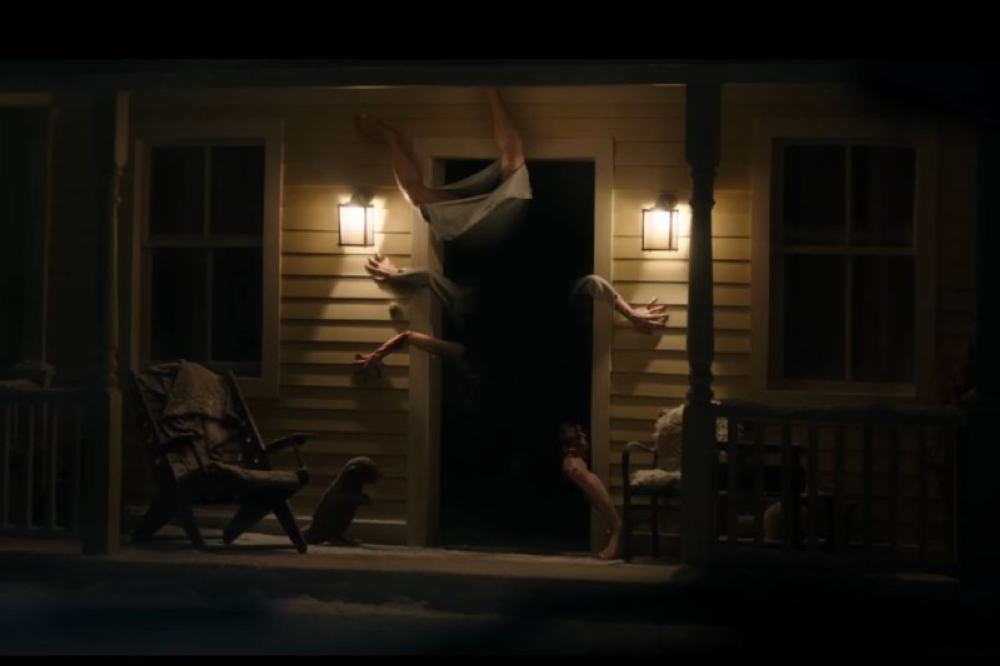
The article offers a personal perspective on the new Resident Evil film directed by Zach Cregger, praising it for its shift from Paul W.S.
Anderson's surreal style to a more straightforward, suspenseful narrative.
The film focuses on a single protagonist, Bryan Hodukavich, portrayed by Austin Abrams, and employs a POV camera style that immerses the audience similarly to a video game experience.
Cregger's adept use of suspense, combined with elements of dark comedy, establishes him as a promising new talent in the horror genre, drawing parallels to Jordan Peele's career transition from comedy to horror.
SEPTEMBER 26 — I’ve never been much of a gamer. While die-hard video game purists spent decades complaining about fidelity to source material and whether this or that is canon or not, I’ve always approached video game adaptations from a purely cinematic perspective.
And as a film fan, I think it’s safe to say that I am one of those rare people who actually loved the original Resident Evil film franchise spearheaded by Paul W.S. Anderson.
Love might even be too light a word to be used as I can be found guilty of singing his praises for what must have been more than a decade, on every platform imaginable.
Why? Well, and here I go again with my championing of Anderson’s Resident Evil movies, for all the critical snobbery aimed at those movies, Anderson’s six-film cycle possessed genuine artistic merits and high-minded visual ambitions.
More specifically, his work fits squarely into the realm of “expressive esoterica,” a concept famously coined by film critic Andrew Sarris to describe cinema that prioritises formal visual abstraction and smart editing rhythms over traditional narrative mechanics.
Entries like Resident Evil: Afterlife and Resident Evil: Retribution are particularly breathtaking in this regard.
Anderson crafted some of the most beautiful, purely formalist uses of CGI and slow-motion photography ever produced within a major Hollywood studio in these films, turning pulp action into mesmerising, avant-garde digital ballet.
So, walking into this latest cinematic reboot, I knew things were going to be radically different.
With director Zach Cregger taking the reins, I was more than prepared for a complete pivot in style, and that was fine by me.
Having been thoroughly impressed by Cregger’s work on Barbarian and Weapons , I was eager to see how his distinct directorial voice would handle the umbrella of biological horror, pun absolutely intended.
Cregger takes this new Resident Evil in a far more straightforward narrative direction than Anderson’s surreal, dream logic aesthetics.
Rather than assembling a tactical ensemble team, the film stays relentlessly anchored to its single main protagonist, Bryan Hodukavich (brilliantly played by Austin Abrams, who was also in Weapons).
By keeping the narrative strictly centred on Bryan’s lone journey through the nightmare-riddled town of Raccoon City, Cregger turns the film into a claustrophobic character study of survival.
Abrams brings a frantic, deeply sympathetic vulnerability to Bryan, making his every move through the sprawling labyrinth feel terrifyingly immediate.
Instead of sprawling, sterile glass corridors and hyper-stylised digital trickery, Cregger places an absolute premium on brilliantly executed suspense set-pieces that build dread through meticulous spatial awareness and exquisite timing.
What makes the film glide so effortlessly, however, is Cregger’s by-now trademark injection of humour into the proceedings.
Just when the claustrophobia threatens to become suffocating, Cregger drops in moments of pitch-black, situational comedy through Bryan’s bewildered reactions.
It releases the pressure without ever undercutting the genuine threat of the biological horrors lurking in the dark, keeping the narrative momentum going and the audience thoroughly entertained throughout its runtime.
Yet, despite taking a more straightforward narrative route, Cregger hasn’t completely abandoned video game grammar.
There are many parts of the movie where the POV camera style makes it feel as if we’re playing the game ourselves, which is helped immensely by the film’s sole focus on Bryan.
By making Bryan our point of entry into the film, the audience not only assumes Bryan’s point of view, but also kind of becomes a player in this Resident Evil video game, thanks to the passages in the film where the POV camera style takes over.
This subjective visual approach immediately recalls that of another brilliant video game adaptation, the Japanese film Exit 8 , which was on my list of favourite genre films last year.
Much like how Exit 8 used a tight, claustrophobic POV to trap the viewer inside an endless, uncanny subway corridor, Cregger uses this perspective to heighten the audience’s disorientation and vulnerability.
We are forced to look down narrow, unlit hallways through Bryan’s flashlight beam, where every turn of the camera carries an agonising sense of anticipation.
Ultimately, this new entry proves that Cregger is no one hit wonder. It firmly cements his reputation as modern horror’s brightest new star director.
His rapid, uncompromising rise in the industry directly mirrors that of Jordan Peele (of Get Out , Us and Nope fame), a filmmaker who transitioned seamlessly from comedy roots into crafting masterclasses in contemporary horror.
Cregger understands that horror works best when the director respects the craft of the set-piece, and with Resident Evil , he delivers a tense, thrilling, and supremely confident ride that marks an exciting new chapter for the franchise.
* This is the personal opinion of the columnist.
Melaka PRN: It’s the negotiations, silly!
What it looks like when cancer gets the chance to spread
Are our students still memorising their way to academic ‘excellence’
Weak 3.3-magnitude earthquake strikes Sabah’s Kuamut, no tsunami threat
Piranhas in Pahang? What we know about the mystery fish found at Klau Dam
Kuching Marathon cancellation a blow to 13,000 participants who made travel plans, says Sarawak sports minister
这篇文章从个人角度评价了扎克·克雷格执导的新《生化危机》电影,并称赞其与保罗·W·史密斯执导的版本有所不同。
安德森的超现实主义风格转变为更直接、更悬疑的叙事风格。
该片以奥斯汀·艾布拉姆斯饰演的主角布莱恩·霍杜卡维奇为中心,采用主观镜头风格,让观众体验到类似电子游戏的感觉。
克雷格巧妙地运用悬念,并融入黑色喜剧元素,使他成为恐怖片领域一位前途无量的新星,这与乔丹·皮尔从喜剧到恐怖片的职业转型有相似之处。
9月26日——我从来就不是一个狂热的游戏玩家。当那些死忠游戏玩家花了数十年时间抱怨游戏对原作的还原度,以及某些设定是否属于正统时,我一直都是从纯粹的电影角度来看待游戏改编作品的。
作为一名影迷,我想我可以肯定地说,我是少数真正喜欢保罗·W·S·安德森执导的《生化危机》系列电影的人之一。
“爱”这个词可能都不足以形容我对他的赞美,因为我可以说在过去的十多年里,在各种你能想到的平台上,都对他赞不绝口。
为什么?好吧,我又要开始吹捧安德森的《生化危机》系列电影了,尽管这些电影受到了评论界的轻蔑,但安德森的六部曲电影确实具有真正的艺术价值和崇高的视觉抱负。
更具体地说,他的作品完全符合“表现主义秘术”的范畴,这一概念由影评人安德鲁·萨里斯提出,用来描述那些优先考虑形式视觉抽象和巧妙剪辑节奏,而不是传统叙事机制的电影。
在这方面,《生化危机:来生》和《生化危机:惩罚》等作品尤其令人叹为观止。
在这些电影中,安德森运用了 CGI 和慢动作摄影技术,打造了好莱坞主要制片厂有史以来最美、最纯粹的形式主义作品,将通俗动作片变成了令人着迷的前卫数字芭蕾。
所以,走进这部最新的电影重启之作时,我就知道一切都将截然不同。
导演扎克·克雷格接手后,我完全预料到影片的风格会彻底转变,而我对此也欣然接受。
我对克雷格在《野蛮人》和《武器》中的表现印象深刻,因此我非常想看看他独特的导演风格将如何处理生物恐怖题材,这绝对是一个双关语。
与安德森超现实的梦境逻辑美学相比,克雷格将这部新的《生化危机》带向了一个更加直白的叙事方向。
这部电影并没有组建一支战术团队,而是始终围绕着它的唯一主角布莱恩·霍杜卡维奇(由奥斯汀·艾布拉姆斯出色地扮演,他之前也出演过《武器》)展开。
克雷格将叙事严格地围绕布莱恩独自穿越噩梦般的浣熊市的旅程展开,使这部电影变成了一部令人窒息的生存角色研究。
艾布拉姆斯赋予布莱恩一种疯狂而又令人深感同情的脆弱感,使他在庞大的迷宫中的每一步都显得惊心动魄、迫在眉睫。
克雷格并没有采用广阔无垠、冷冰冰的玻璃走廊和过度风格化的数字特效,而是极其重视精心设计的悬念场景,通过细致的空间意识和精妙的时机把握来营造恐惧感。
然而,让这部电影如此流畅自然的,是克雷格标志性的幽默元素融入到剧情之中。
就在幽闭恐惧感即将变得令人窒息的时候,克雷格通过布莱恩困惑的反应,插入了一些黑色幽默的情景喜剧桥段。
它释放了压力,但又没有削弱潜伏在黑暗中的生物恐怖的真实威胁,保持了叙事的势头,并让观众在整个播放过程中都感到十分愉悦。
然而,尽管克雷格采用了更为直接的叙事方式,但他并没有完全放弃电子游戏语法。
影片中有很多地方采用主观镜头风格,让人感觉仿佛自己也在玩游戏,而影片只聚焦于布莱恩,这极大地增强了这种感觉。
通过让布莱恩作为我们进入电影的切入点,观众不仅会接受布莱恩的观点,而且由于电影中采用主观视角拍摄的段落,观众也会在某种程度上成为这款《生化危机》电子游戏的玩家。
这种主观的视觉手法立刻让人想起另一部精彩的电子游戏改编电影——日本电影《逃出8号》,这部电影是我去年最喜欢的类型电影之一。
就像《8号出口》使用狭窄、幽闭的视角将观众困在无尽、诡异的地铁走廊中一样,克雷格也利用这种视角来增强观众的迷失感和脆弱感。
我们被迫透过布莱恩的手电筒光束,向下看去狭窄、昏暗的走廊,镜头的每一次转动都伴随着一种令人煎熬的期待感。
最终,这部新作证明克雷格并非昙花一现,它巩固了他作为现代恐怖片界最耀眼的新星导演的地位。
他在业界迅速而毫不妥协的崛起,与乔丹·皮尔(《逃出绝命镇》、《我们》和《不》的导演)的经历如出一辙。皮尔是一位电影制作人,他从喜剧根基无缝过渡到创作当代恐怖片的大师级作品。
克雷格深知,当导演尊重场景的制作工艺时,恐怖片才能取得最佳效果。在《生化危机》中,他呈现了一场紧张刺激、充满自信的旅程,标志着该系列电影开启了激动人心的新篇章。
* 这是专栏作家的个人观点。
马六甲PRN:是谈判的问题,傻瓜!
癌症有机会扩散时的样子
我们的学生是否仍然依靠死记硬背来获得学术上的“卓越”?
沙巴州瓜穆特发生3.3级弱地震,无海啸威胁。
彭亨州有食人鱼?关于克劳水坝发现的神秘鱼类,我们了解多少?
砂拉越体育部长表示,古晋马拉松取消对13000名已制定出行计划的参赛者来说是一个打击。