Dr Hasmah remembered as pioneer of Malaysia’s rural public health哈斯玛博士被铭记为马来西亚农村公共卫生的先驱
KUALA LUMPUR, Sept 28 — Malaysia mourns the loss of Tun Dr Siti Hasmah Mohd Ali, a pioneering doctor and public health advocate, who died at the National Heart Institute (IJN)...
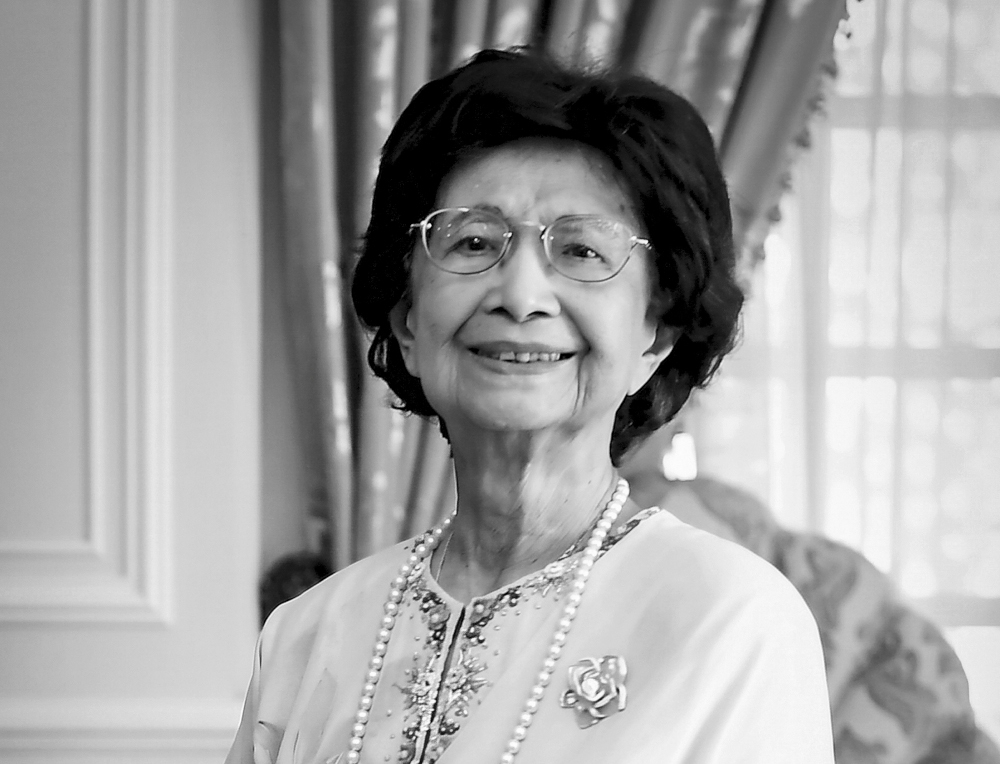
Malaysia mourns the passing of Tun Dr Siti Hasmah Mohd Ali, a pioneering doctor and public health advocate, who passed away at the National Heart Institute aged 100.
Her career focused on maternal and child health, rural women's development, drug abuse prevention, and education, influencing both national and international public health initiatives.
Tun Dr Siti Hasmah was recognised for her dedication with numerous awards and is remembered for her commitment to advancing the welfare of women and children in Malaysia and beyond.
KUALA LUMPUR, Sept 28 — Malaysia mourns the loss of Tun Dr Siti Hasmah Mohd Ali, a pioneering doctor and public health advocate, who died at the National Heart Institute (IJN) today at the age of 100.
Beyond her role as the dedicated life partner of Tun Dr Mahathir Mohamad, Tun Dr Siti Hasmah forged a distinguished legacy in medicine and public service, championing maternal and child health, immunisation, rural women’s development, drug abuse prevention and adult literacy.
Her decades of public service and advocacy eventually took her beyond Malaysia, where she championed many of the same causes internationally.
Despite a career spanning decades in medicine, becoming a doctor was not Tun Dr Siti Hasmah’s original ambition. She had initially wanted to become a journalist before circumstances led her to medicine, a profession through which she would serve the country for decades.
Born in Kampung Jawa, Klang, Selangor, on July 12, 1926, Tun Dr Siti Hasmah was the sixth of 10 children of Mohd Ali Taib and Siti Khadijah Ahmad.
She received her early education at Sekolah Melayu Kampung Baru, Methodist Girls School, St Mary’s School and later Pudu English Girls School. In 1947, she enrolled at the King Edward VII College of Medicine in Singapore and was the only Malay woman studying medicine at the institution that year.
After enduring the demands of medical training, she graduated in June 1955, becoming one of the earliest Malay women to enter the medical profession at a time when it was still largely dominated by men.
Tun Dr Siti Hasmah began her career as a house officer at Kuala Lumpur Hospital in 1955 before moving to Kedah the following year, where she was appointed a lady medical officer at Alor Setar Hospital.
It was in Kedah, her husband’s home state, that she witnessed first-hand the healthcare challenges faced by rural communities - an experience that would shape much of her subsequent work in public health.
In 1962, she was appointed acting medical superintendent for northern Kedah. Three years later, she became the first woman appointed as a medical officer in the Maternal and Child Health Department and also served as principal of the Rural Health Training School in Jitra.
In her 2016 autobiography, My Name is Hasmah, the former first lady recalled how her years in Kedah opened her eyes to the lack of health awareness among rural women and children.
Among the challenges were inadequate care during pregnancy and childbirth, as well as infant care complicated by poverty, traditional practices, taboos and limited health knowledge.
In a 2021 interview, she recalled her concern over potentially fatal childhood diseases at the time, including tuberculosis, polio, whooping cough, diphtheria and tetanus, which prompted her and her team to travel to villages to provide treatment, immunisation and health education directly to rural communities.
She also worked to ensure traditional village midwives received proper training to provide safer and more effective care for mothers and babies.
In a 1997 speech, Tun Dr Siti Hasmah recalled how her team brought government health programmes directly to communities, covering immunisation, nutrition, infectious disease prevention, malaria eradication and care for high-risk pregnancies.
“By the time I left Kedah, it was with deep satisfaction that the people had chosen to accept the government’s health programmes and had benefitted from them,” she said at the opening of R.I. District 3300 in Kuala Lumpur in 1997.
The efforts were also associated with a significant decline in infant mortality, an achievement that later allowed her to share Malaysia’s public health experience in Washington, United States.
Tun Dr Siti Hasmah retired from government service in 1979 before joining Universiti Malaya’s Faculty of Dentistry as a part-time lecturer in social medicine until 1981.
Her contributions earned her numerous honours, including Kedah’s Excellent Service Medal in 1964 for her role in tackling a cholera outbreak, the Asia HRD Lifetime Achievement Award in 2019, and the National Anti-Drug Icon Special Award in 2020.
Beyond medicine, Tun Dr Siti Hasmah was active in numerous organisations and maintained close ties with Malaysian badminton as a patron of the Badminton Association of Malaysia (BAM), and was regarded as a maternal figure by national players.
Her advocacy also took her to the international stage. She represented Malaysia at an international conference on drug abuse in Vienna in 1987 and served as patron of the Pan Pacific and Southeast Asia Women’s Association Malaysia.
Her commitment to advancing rural women also saw her attend the First Ladies Summit for the Economic Advancement of Rural Women in Geneva in 1992, where she was selected as one of six Core-Group Initiators of First Ladies representing the Asia-Pacific region.
In 2001, she led a 15-member group of women comprising doctors, educators, writers and academics on a humanitarian visit to Iraq to witness the conditions faced by its people, particularly children affected by United Nations economic sanctions.
From the villages of Kedah to the international stage, Tun Dr Siti Hasmah’s journey reflected a lifelong commitment to public health and the welfare of women and children.
Beyond the titles and accolades, words attributed to her in the book Suri Hati Mahathir, The Other Half, perhaps best capture the legacy she hoped to leave:
“I have nothing to give or leave to the people except my love and advice. Take them and put them into practice.” — Bernama
Saravanan says ready to disclose assets to MACC, has nothing to hide
Rosmah offers condolences on death of Dr Hasmah, recalls ‘many memories’
BAM remembers patron Dr Hasmah, says her warmth uplifted Malaysian badminton
马来西亚举国哀悼先驱医生和公共卫生倡导者敦西蒂·哈斯玛·莫哈末·阿里博士的逝世,她于国家心脏中心逝世,享年100岁。
她的职业生涯主要集中在妇幼保健、农村妇女发展、药物滥用预防和教育领域,对国家和国际公共卫生倡议都产生了影响。
敦西蒂·哈斯玛博士因其奉献精神荣获多项奖项,人们铭记她致力于提升马来西亚及其他地区妇女儿童福祉的贡献。
吉隆坡,9月28日讯——马来西亚举国哀悼先驱医生和公共卫生倡导者敦西蒂·哈斯玛·莫哈末·阿里博士的逝世,她今天在国家心脏中心(IJN)逝世,享年100岁。
除了作为敦马哈蒂尔·穆罕默德医生的忠实伴侣之外,敦西蒂·哈斯玛医生还在医学和公共服务领域留下了杰出的遗产,她倡导母婴健康、免疫接种、农村妇女发展、预防药物滥用和成人扫盲。
她数十年的公共服务和倡导工作最终将她带到了马来西亚以外的地方,她在国际上也积极倡导许多相同的事业。
尽管敦西蒂·哈斯玛医生在医学领域耕耘数十年,但成为一名医生并非她最初的梦想。她最初的志向是成为一名记者,后来机缘巧合之下走上了医学之路,并以此为职业为国家服务数十年。
敦西蒂哈斯玛医生于 1926 年 7 月 12 日出生于雪兰莪巴生甘榜爪哇,是莫哈末阿里泰益和茜蒂哈迪查艾哈迈德 10 个孩子中的第六个。
她早年在甘榜峇鲁马来学校、卫理公会女子学校、圣玛丽学校接受教育,后来就读于普渡英文女子学校。1947年,她进入新加坡爱德华七世国王医学院学习,是当年该学院唯一一位学习医学的马来族女性。
经过严格的医学培训,她于 1955 年 6 月毕业,成为最早进入医学领域的马来女性之一,当时医学界仍以男性为主导。
敦西蒂·哈斯玛医生于 1955 年在吉隆坡医院开始她的职业生涯,担任住院医师,之后于次年前往吉打州,并在亚罗士打医院被任命为女医务官。
在她丈夫的家乡吉打州,她亲眼目睹了农村社区面临的医疗保健挑战——这段经历塑造了她后来在公共卫生领域的许多工作。
1962年,她被任命为吉打州北部代理医疗总监。三年后,她成为妇幼保健部门首位女性医务官,并担任日得拉农村卫生培训学校校长。
在她 2016 年出版的自传《我的名字叫哈斯玛》中,这位前第一夫人回忆起她在吉打州的岁月如何让她意识到农村妇女和儿童缺乏健康意识。
其中面临的挑战包括孕期和分娩期间护理不足,以及因贫困、传统习俗、禁忌和有限的健康知识而导致的婴儿护理困难。
在 2021 年的一次采访中,她回忆起当时对可能致命的儿童疾病的担忧,包括肺结核、脊髓灰质炎、百日咳、白喉和破伤风,这促使她和她的团队前往村庄,直接为农村社区提供治疗、免疫接种和健康教育。
她还致力于确保传统乡村助产士接受适当的培训,以便为母亲和婴儿提供更安全、更有效的护理。
1997 年,敦西蒂·哈斯玛医生在一次演讲中回忆起她的团队如何将政府的卫生计划直接带到社区,涵盖免疫接种、营养、传染病预防、疟疾根除和高危妊娠护理。
“当我离开吉打州时,我深感欣慰的是,当地人民选择了接受政府的医疗保健计划,并从中受益,”她在 1997 年吉隆坡 RI 第 3300 区的开幕式上说道。
这些努力也与婴儿死亡率的显著下降有关,这一成就后来使她得以在美国华盛顿分享马来西亚的公共卫生经验。
敦西蒂·哈斯玛博士于 1979 年从政府部门退休,之后加入马来亚大学牙医学院担任社会医学兼职讲师,直至 1981 年。
她的贡献为她赢得了众多荣誉,包括 1964 年因在应对霍乱疫情中发挥的作用而获得的吉打州杰出服务奖章、2019 年亚洲人力资源发展终身成就奖和 2020 年国家反毒品偶像特别奖。
除了医学之外,敦西蒂·哈斯玛医生还积极参与众多组织,并以马来西亚羽毛球协会(BAM)赞助人的身份与马来西亚羽毛球保持着密切联系,被国家队队员视为母亲般的人物。
她的倡导工作也使她走向了国际舞台。1987年,她代表马来西亚参加了在维也纳举行的国际禁毒会议,并担任马来西亚泛太平洋和东南亚妇女协会的赞助人。
她致力于提升农村妇女的地位,并于 1992 年出席了在日内瓦举行的促进农村妇女经济发展的第一夫人峰会,并在会上被选为代表亚太地区的六位第一夫人核心小组发起人之一。
2001 年,她带领一个由 15 名女性组成的代表团,成员包括医生、教育家、作家和学者,对伊拉克进行了人道主义访问,亲眼目睹了伊拉克人民,特别是受联合国经济制裁影响的儿童所面临的状况。
从吉打州的乡村到国际舞台,敦西蒂·哈斯玛博士的历程体现了她对公共卫生以及妇女儿童福利的毕生奉献。
除了头衔和荣誉之外,或许《苏里·哈蒂·马哈蒂尔:另一半》一书中归于她的话语,最能体现她希望留下的遗产:
“我没有什么可以留给人民的,除了我的爱和忠告。请接受并付诸实践。”——马新社
萨拉瓦南表示已准备好向反贪污委员会披露资产,没有什么可隐瞒的。
罗斯玛对哈斯玛博士的去世表示哀悼,并回忆起“许多往事”。
大马羽总缅怀赞助人哈斯玛博士,称她的温暖提升了马来西亚羽毛球运动的水平