A return to the Philippines重返菲律宾
The longtime ally could again host U.S. naval forces in the not-too-distant future.
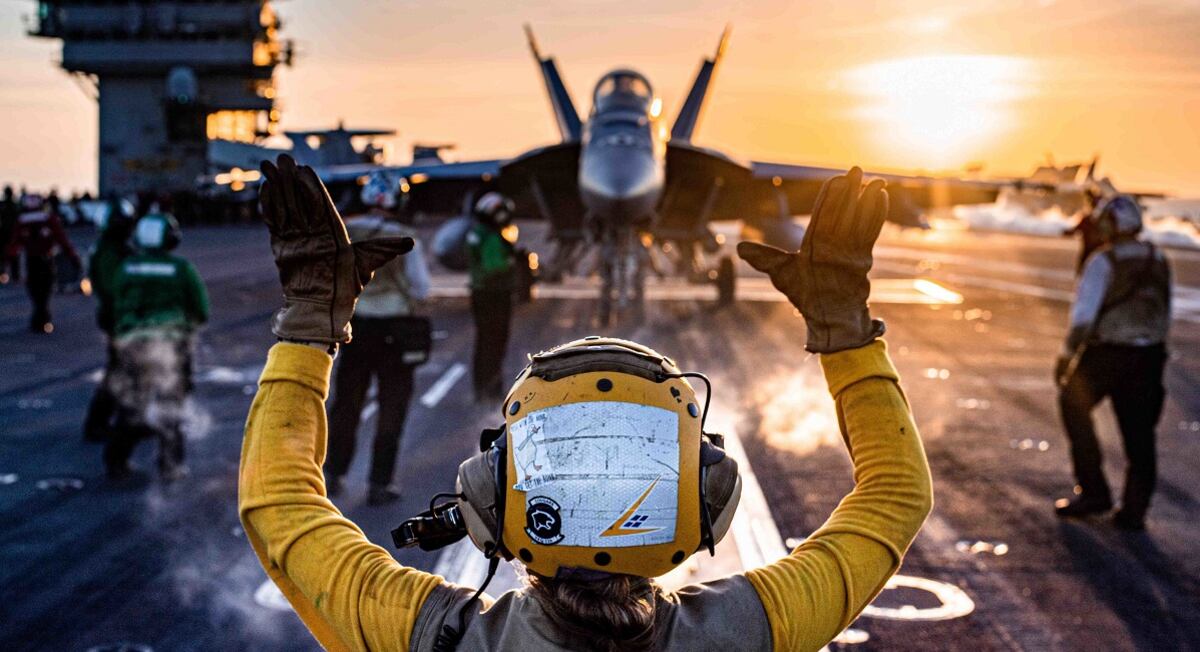
It’s been more than 30 years since the U.S. Navy said goodbye to Naval Station Subic Bay and other bases in the Philippines, ending what had been nearly a century of U.S. military presence in the Asian nation.
The amphibious assault ship Belleau Wood became the last Navy vessel to leave Subic Bay in 1992, following a series of failed negotiations between the two countries that resulted in the Philippine senate voting against hosting any more U.S. bases.
A Washington Post report from the time of the U.S. departure suggests the fracture between the two longtime allies was partly due to a post-Cold War scaling back of America’s worldwide presence, among other concerns.
That dispatch notes how the top Navy commander at the time, Rear Adm. Robert Mercer, led a mile-long procession through the neighboring city of Olongapo on the day of the farewell ceremony.
“Bar girls and bystanders wept, elderly men saluted, and people reached out to shake Navy officers’ hands or ask for their autographs as the parade heralded the end of a nearly century-old ear,” the Post reported on Nov. 24, 1992.
“I know this is not goodbye, but just farewell for now,” Mercer said in his goodbye speech. “We hope to come back … as soon as we can.”
Flash forward 32 years, and the Navy appears poised to make a return of some sorts to the Philippines under an agreement announced Feb. 2 by the two nations that will grant U.S. forces access to nine bases across the country, an increase from the five Philippine installations from which U.S. forces can currently operate.
Much has changed in the region since the 1992 departure: namely, China has ascended and sought to assert its primacy in the South China Sea, while building up its military and ratcheting up the rhetoric about a forced reunification with Taiwan.
The Feb. 2 announcement comes as the United States continues to marshal other nations to its side in what it frames as an existential battle for the current world order against China, and as the new Philippine president appears to be increasingly concerned with Chinese meddling in the region.
Secretary of Defense Lloyd J. Austin III is welcomed to the Philippine Department of National Defense in Manila Feb. 2. (Chad J. McNeeley/DoD)
Philippine President Ferdinand Marcos Jr.’s willingness to allow more U.S. military on its soil suggests that Manila “is backing off on the balancing it attempted to do over the last decade between the U.S. and China,” said Bryan Clark, a retired submariner and senior fellow at the Hudson Institute.
“It appears that the Philippines is more firmly an ally of the U.S. again,” he said.
How the new agreement between the two countries will play out remains unclear. It could mean more Navy port calls in Subic Bay and elsewhere on the northern island of Luzon, which abuts the South China Sea.
It could mean more cross-navy training or stashing of materiel should a shooting war with Beijing kick off.
But it likely won’t involve the numbers of sailors and ships that once defined the Navy’s presence in the archipelago nation, or even the permanent basing of troops there, Defense Secretary Lloyd Austin said when announcing the new agreement.
While the number of U.S. troops remains unclear, Austin signaled that the new agreement is “a really big deal.”
Standing next to his Philippine counterpart, Carlito Galvez, officer in charge of the department of national defense, while announcing the expanded pact, Austin stressed how an added U.S. presence on the island nation would allow the longtime treaty allies to work and train together for things like natural disaster responses, while helping both nations counter China.
“We shall continue to work towards maintaining a stable, rule-based, open and inclusive Indo-Pacific region,” Galvez said, according to a Pentagon transcript of the press conference. “Along with partner countries, we strongly oppose any unilateral action or attempt to disrupt current world order and share the same views, that all countries should resolve any issue peacefully and adhere to the international law.”
Although it remains unclear how many U.S. sailors will eventually rotate through the Philippines under this new agreement, the Navy is the tip of the spear when it comes to stifling China’s assertions in the region, including its claim that the South China Sea is territorial, not international waters.
An F/A-18E Super Hornet with Strike Fighter Squadron 137 prepares to launch from the flight deck of the aircraft carrier Nimitz in the Philippine Sea Dec. 2. The Nimitz is in U.S. 7th fleet to ensure a free and open Indo-Pacific region. (MC2 Justin McTaggart/Navy)
So, any new ally and capabilities can likely be seen as benefiting the sea service’s mission in the region, while buttressing the ranks of countries siding against Beijing.
While Austin ruled out permanent U.S. bases in the Philippines, Clark suspects the new arrangement will be akin to what the United States currently enjoys with Singapore and Australia: a modest, permanent U.S. command element and a regular troop rotation.
An increased U.S. military presence in the Philippines offers “more options for U.S. forces to respond to Chinese aggression, especially in situations short of major war,” Clark noted.
“Moreover, it helps reassure the Philippines that the U.S. alliance is firm,” he said. “In the end, dissuading China may come down to whether the U.S. can show nations in the region that the U.S. is the security partner of choice.”
The two countries are also moving “expeditiously” to build up the sites from which U.S. forces operate, according to the Defense Department.
Already, the United States has invested $82 million to improve infrastructure on the five bases already in use.
The expansion and current U.S. access falls under the Enhanced Defense Cooperation Agreement, or EDCA, that was inked by both nations in 2014.
The two countries have already increased the speed of construction plans at the five existing sites, Gregory Poling, director of the Center for Strategic and International Studies’ Southeast Asian Program and Asia Maritime Transparency Initiative, wrote on the think tank’s website the day the deal was announced.
Of those five current locations, three are ideally located to contain China and protect the economic interests of the Philippines in the South China Sea, Poling wrote.
Basa Air Base and Fort Magsaysay sit on Luzon, the archipelago’s largest northernmost island that abuts the South China Sea to the north and west, he wrote.
Basa is critical to air patrols around Scarborough Shoal, a structure-less rock in the South China Sea that has hosted Chinese coast guard forces for the past decade.
Antonio Bautista Air Base is located on Palawan, an island within a few hundred miles of the disputed Spratly Islands, where China has built military outposts, Poling noted.
Those first five sites were mostly focused on air force and army capabilities. It remains unclear whether any of the new sites would involve the massive ship repair and supply efforts that Navy’s base at Subic Bay once offered.
Seaman Semajia Marshal heaves a mooring line on the guided-missile cruiser Antietam during a port visit to Manila, Philippines, on June 26, 2018. (MC2 William McCann/Navy)
Poling suspects that some of the new sites will be focused on naval needs.
“The new locations should include navy, and perhaps marine corps, bases as well,” he wrote. “At least one more location in Palawan, such as the Oyster Bay naval base, seems likely given the allied focus on the South China Sea.”
Another site or two might be located on the southern island of Mindanao, where U.S. forces have helped their hosts fight the Abu Sayyaf terrorist group since after 9/11.
But any new sites on Luzon, the large northern island that hosts the capital Manila “will be the most telling,” according to Poling.
“The new Philippine Navy facility at the former Hanjin Shipyard in Subic Bay is one possibility,” he notes. “Another is a facility in northern Luzon, such as coastal Cagayan Province, which could aid in surveillance, prepositioning of equipment and rear area support in Taiwan contingencies.
“Any facility up on the coast of Cagayan province, 200 miles from Taiwan and 1,000 miles from the Spratlys, it’s pretty obvious that site will be for other operations outside the South China Sea,” Poling told Navy Times.
Links in the island chain
While no date has been announced for when the countries will lay out the four new sites, Poling suspects it could happen when Austin and Galvez meet again this spring.
Crucially, the new agreement also helps solidify the “first island chain,” a string of U.S.-allied countries and territories stretching from Japan down to Taiwan and further south and west that would be crucial for closing off the East and South China seas should conflict break out with Beijing.
“It’s hard to get it done without forces in the Philippine Islands,” said James Holmes, a retired Navy officer and chair of maritime strategy at the Naval War College. “There’s a huge gap in the chain.”
To Holmes, current bases available to America are too geographically distant for countering Chinese aggression in the South China Sea and deterring Beijing from attacking Taiwan.
“You can’t do it with any hope of success from Okinawa, Sasebo or Yokosuka, let alone Guam,” he said of current U.S. bases in the region. “You have to be there to compete, and to be there you need nearby bases for supplies, fuel and R&R.”
Geoff is the managing editor of Military Times, but he still loves writing stories. He covered Iraq and Afghanistan extensively and was a reporter at the Chicago Tribune. He welcomes any and all kinds of tips at geoffz@militarytimes.com.
自美国海军告别苏比克湾海军基地和菲律宾其他基地以来,已经过去了 30 多年,结束了美国在这个亚洲国家近一个世纪的军事存在。
1992 年,在两国之间一系列谈判失败后,两栖攻击舰“贝洛伍德”号成为最后一艘离开苏比克湾的海军舰艇。菲律宾参议院投票反对再设立任何美国军事基地。
《华盛顿邮报》在美军撤离时的一篇报道指出,这两个长期盟友之间的裂痕部分原因是冷战后美国缩减了其在全球的影响力,以及其他一些原因。
该报道指出,当时的海军最高指挥官罗伯特·默瑟少将在告别仪式当天,率领一支长达一英里的队伍穿过邻近的奥隆阿波市。
《华盛顿邮报》1992 年 11 月 24 日报道:“酒吧女郎和旁观者哭泣,老人们敬礼,人们伸手与海军军官握手或索要签名,游行宣告了近一个世纪历史的军乐队的终结。”
“我知道这并非永别,只是暂时告别,”默瑟在告别致辞中说道。“我们希望……尽快回来。”
时光荏苒,32 年过去了,根据两国于 2 月 2 日宣布的一项协议,美国海军似乎准备以某种形式重返菲律宾。该协议将允许美军使用菲律宾境内的九个基地,比美军目前可在菲律宾开展行动的五个基地有所增加。
自 1992 年台湾脱离台湾以来,该地区发生了很大变化:具体而言,中国崛起并试图在南海确立其主导地位,同时加强军事建设,并加大力度宣扬强迫台湾统一。
2月2日的声明发布之际,正值美国继续拉拢其他国家加入其阵营,以对抗中国,这场对抗被美国视为争夺当前世界秩序的生死之战;与此同时,菲律宾新任总统似乎也越来越关注中国对该地区的干预。
美国国防部长劳埃德·J·奥斯汀三世于2月2日访问菲律宾国防部,地点在马尼拉。(查德·J·麦克尼利/美国国防部)
菲律宾总统小费迪南德·马科斯愿意允许更多美军驻扎在其领土上,这表明马尼拉“正在放弃过去十年试图在美国和中国之间寻求的平衡”,哈德逊研究所高级研究员、退役潜艇兵布莱恩·克拉克说。
他说:“看来菲律宾再次成为美国更坚定的盟友了。”
两国新协议的具体执行情况尚不明朗。这可能意味着美军海军将更频繁地停靠苏比克湾以及吕宋岛北部其他与南海接壤的港口。
如果与北京爆发战争,这可能意味着需要进行更多跨海军训练或储备物资。
但国防部长劳埃德·奥斯汀在宣布这项新协议时表示,它可能不会像过去那样,在群岛国家部署大量水兵和舰艇,甚至不会在那里永久驻扎军队。
虽然美军人数仍不清楚,但奥斯汀表示,这项新协议“意义重大”。
奥斯汀站在菲律宾国防部长卡利托·加尔维斯旁边,宣布扩大条约。他强调,美国在菲律宾这个岛国增加驻军,将使这两个长期条约盟友能够共同合作和训练,应对自然灾害等问题,同时帮助两国对抗中国。
根据五角大楼发布的记者招待会文字记录,加尔维斯表示:“我们将继续致力于维护一个稳定、以规则为基础、开放和包容的印太地区。我们与伙伴国家一道,强烈反对任何单方面行动或企图破坏现有世界秩序的行为,并持有相同的观点,即所有国家都应以和平方式解决任何问题,并遵守国际法。”
尽管目前还不清楚根据这项新协议最终会有多少美国水兵轮换到菲律宾,但就遏制中国在该地区的主张而言,包括其关于南海是领海而不是国际水域的说法,美国海军是先锋力量。
12月2日,隶属于第137战斗攻击机中队的F/A-18E“超级大黄蜂”战斗机在菲律宾海的“尼米兹”号航空母舰飞行甲板上准备起飞。“尼米兹”号隶属于美国第七舰队,旨在维护印太地区的自由开放。(海军二级士官贾斯汀·麦克塔格特/海军)
因此,任何新的盟友和能力都可能被视为有利于海军在该地区的任务,同时巩固反对北京的国家的阵营。
虽然奥斯汀排除了在菲律宾建立永久美军基地的可能性,但克拉克怀疑新的安排将类似于美国目前与新加坡和澳大利亚的关系:一个规模适中的常驻美军指挥机构和定期的部队轮换。
克拉克指出,美国在菲律宾增加军事存在,为美军应对中国的侵略提供了“更多选择,尤其是在没有爆发大规模战争的情况下”。
“此外,这也有助于让菲律宾确信美菲同盟是牢固的,”他说。“最终,能否劝阻中国可能取决于美国能否向该地区各国表明,美国才是它们首选的安全伙伴。”
据美国国防部称,两国还在“迅速”推进美军作战基地的建设。
目前,美国已投资 8200 万美元用于改善五个现有基地的基础设施。
此次扩容和美国目前的准入均依据两国于 2014 年签署的《加强防务合作协议》(EDCA)。
战略与国际研究中心东南亚项目和亚洲海事透明倡议主任格雷戈里·波林在协议宣布当天在该智库网站上写道,两国已经加快了五个现有地点的建设计划。
波林写道,在目前的五个地点中,有三个地点位置理想,可以遏制中国并保护菲律宾在南海的经济利益。
他写道,巴萨空军基地和马格赛赛堡位于吕宋岛,吕宋岛是该群岛最大的北部岛屿,北部和西部与南海接壤。
巴萨对于在黄岩岛(南海中一块没有结构的礁石,过去十年一直是中国海警部队的驻地)周围的空中巡逻至关重要。
波林指出,安东尼奥·包蒂斯塔空军基地位于巴拉望岛,该岛距离中国在南沙群岛(中国在那里建立了军事前哨)有争议的岛屿只有几百英里。
最初的五个基地主要侧重于空军和陆军的能力建设。目前尚不清楚这些新基地是否会像海军苏比克湾基地曾经那样,承担大规模的舰船维修和补给任务。
2018年6月26日,在菲律宾马尼拉港访问期间,水兵塞马吉亚·马歇尔正在为导弹巡洋舰“安提坦”号抛锚系泊。(海军二级军士威廉·麦肯/海军)
波林怀疑一些新站点将侧重于满足海军需求。
他写道:“新的选址应该包括海军基地,或许还有海军陆战队基地。考虑到盟军对南海的重视,巴拉望岛至少还会增加一个地点,例如牡蛎湾海军基地。”
可能还有一两个地点位于南部的棉兰老岛,自 9/11 事件以来,美军一直在帮助当地居民打击阿布沙耶夫恐怖组织。
波林表示,吕宋岛(首都马尼拉所在的北部大岛)上的任何新地点“都将是最能说明问题的”。
他指出:“菲律宾海军在苏比克湾前韩进造船厂的新设施是一个可能的选择。另一个选择是在吕宋岛北部,例如沿海的卡加延省,建立一个设施,该设施可以帮助进行监视、设备预置以及在台湾突发事件中提供后方支援。”
波林告诉《海军时报》:“位于卡加延省海岸的任何设施,距离台湾 200 英里,距离南沙群岛 1000 英里,很明显,该地点将用于南海以外的其他行动。”
岛链中的环节
虽然尚未公布两国何时规划这四个新地点的具体日期,但波林怀疑,奥斯汀和加尔维斯今年春天再次会面时可能会公布。
至关重要的是,这项新协议还有助于巩固“第一岛链”,这是一系列从日本延伸到台湾,并进一步向南向西延伸的美国盟国和领土,如果与北京发生冲突,这将对封锁东海和南海至关重要。
“如果没有驻扎在菲律宾群岛的部队,很难完成这项任务,”海军战争学院海事战略系主任、退役海军军官詹姆斯·霍姆斯说。“这条链条上存在巨大的缺口。”
霍姆斯认为,美国目前可用的基地地理位置太远,无法对抗中国在南海的侵略行为,也无法阻止北京攻击台湾。
“从冲绳、佐世保或横须贺,更不用说关岛,你根本不可能取得成功,”他谈到目前美国在该地区的基地时说道。“你必须在那里才能参与竞争,而要在那里,你需要附近的基地来提供补给、燃料和休整。”
杰夫是《军事时报》的执行主编,但他仍然热爱写作。他曾深入报道伊拉克和阿富汗战争,也曾在《芝加哥论坛报》担任记者。欢迎大家通过 geoffz@militarytimes.com 向他提供各种新闻线索。