NATO hosts Icelandic exercise to monitor vital north Atlantic passage北约主办冰岛演习,以监测重要的北大西洋航道
The drill involved joint operations in the maritime transit route known as the GIUK gap, an acronym for Greenland, Iceland and the United Kingdom.
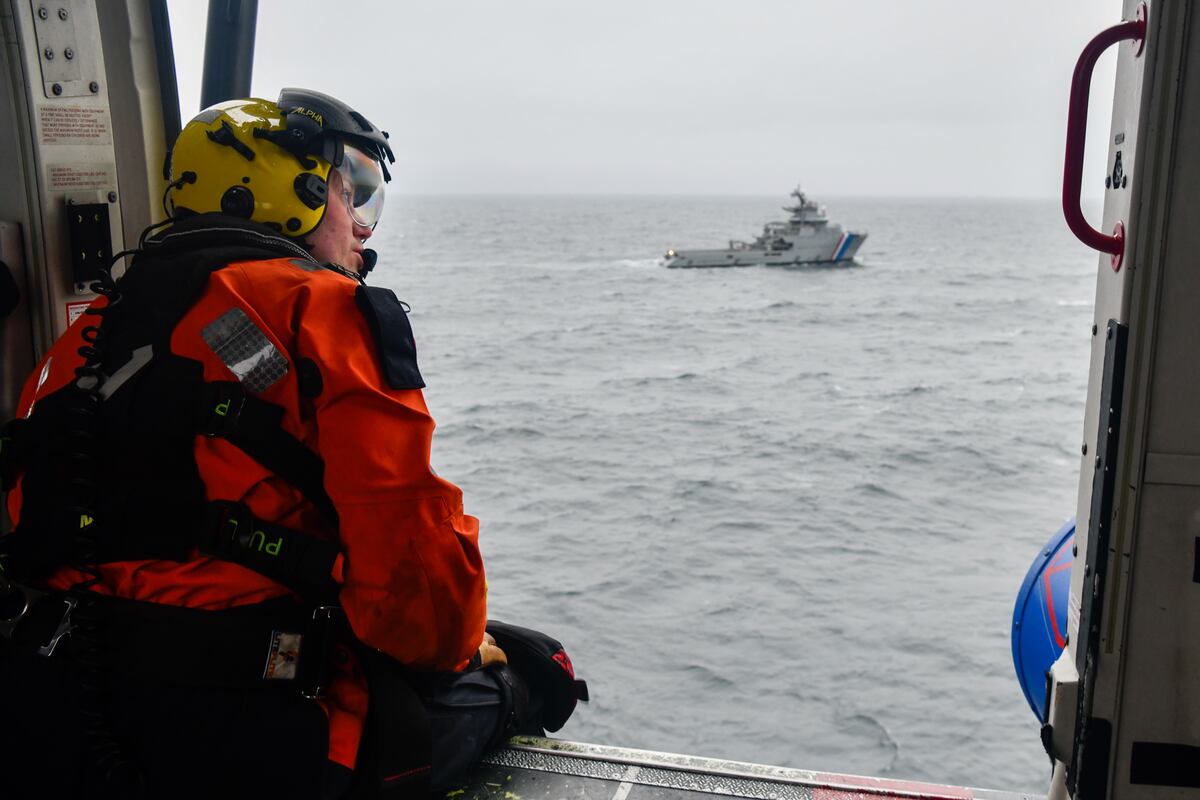
MILAN — Seven NATO countries completed an Iceland-based exercise aimed at defending vital underwater lines of communication and sea routes against conventional military threats and acts of sabotage.
The annual exercise Northern Viking wrapped up on Sept 3. after 11 days of joint operations in the maritime transit route known as the GIUK gap, an acronym for Greenland, Iceland and the United Kingdom.
The area forms an important naval chokepoint, a passage that connects two stretches of open ocean to the three land masses, vital to naval and air traffic between Europe and North America.
Led by the U.S. Naval Forces Europe, the training brought together 1,200 participants from Iceland, Denmark, France, Norway, Poland and Portugal, according to an Iceland government statement.
Missions were based on a simulated threat to Iceland’s national security in order to test NATO’s ability to respond to crises threatening strategic lines of communication in the GIUK gap. It included anti-surface, anti-submarine warfare, maritime surveillance as well as search-and-rescue operations.
Allies deployed an array of drones, maritime patrol aircraft, surface vessels equipped with radars and sensors as well as ships from NATO’s Standing Maritime Group One, part of the alliance’s high readiness maritime capability.
The exercise was further aimed at “facing traditional military threats on land, at sea and in the air, but also multi-faceted threats and acts of sabotage, which will test the Icelandic authorities,” the government of Iceland said in the notice.
The GIUK gap is located at the edge of the eastern Arctic, a region that remains at the center of geopolitical tensions as many states have contended for greater ownership and control over the resources it offers.
Due to climate change, sea ice covering the Arctic ocean has melted at an alarming rate and new shipping lanes have emerged, fueling a race between Arctic states – the United States, Canada, Denmark, Finland, Iceland, Norway, Russia and Sweden – and non-Arctic countries like China for control over them.
“In a region that is a focal point for geopolitical competition, maintaining robust surveillance capabilities is essential for early warning and rapid response to potential threats,” NATO’s Allied Maritime Command said in a statement.
Two days prior to the start of Northern Viking, the Chinese Premier Li Qiang met with Russian President Vladimir Putin in Moscow to discuss how to bolster their countries’ cooperation.
A communique released by China’s State Council following the meeting, highlighted that the Arctic is an area where the two partners want to expand their collaboration specifically related to “shipping development, navigation safety, polar ship technology and construction.”
In July, the U.S., Canada and Finland announced a new trilateral initiative, the so-called “Ice Pact,” to deepen cooperation in the manufacturing of polar icebreakers.
Elisabeth Gosselin-Malo was a Europe correspondent for Defense News. She covers a wide range of topics related to military procurement and international security, and specializes in reporting on the aviation sector. She is based in Milan, Italy.
米兰——七个北约国家在冰岛完成了一项旨在保护重要水下交通线和海上航线免受常规军事威胁和破坏行为侵害的演习。
一年一度的“北方维京”演习于 9 月 3 日结束,历时 11 天,在被称为 GIUK 通道(格陵兰、冰岛和英国的缩写)的海上通道上进行了联合行动。
该地区构成了一个重要的海上咽喉要道,连接着两片开阔的海洋和三块陆地,对欧洲和北美之间的海空交通至关重要。
据冰岛政府声明,此次训练由美国海军欧洲部队牵头,汇集了来自冰岛、丹麦、法国、挪威、波兰和葡萄牙的 1200 名学员。
此次演习任务模拟了冰岛国家安全面临的威胁,旨在测试北约应对威胁冰岛-英国边境战略交通线危机的能力。演习内容包括反水面作战、反潜作战、海上监视以及搜救行动。
盟军部署了一系列无人机、海上巡逻机、配备雷达和传感器的水面舰艇,以及北约常设海上第一集群的舰艇,这是北约高度戒备海上力量的一部分。
冰岛政府在公告中表示,此次演习旨在“应对陆地、海洋和空中的传统军事威胁,以及多方面的威胁和破坏行为,这将考验冰岛当局”。
GIUK 缺口位于北极东部边缘,该地区一直是地缘政治紧张局势的中心,因为许多国家都争夺对其资源的更大所有权和控制权。
由于气候变化,覆盖北冰洋的海冰以惊人的速度融化,新的航道出现,引发了北极国家(美国、加拿大、丹麦、芬兰、冰岛、挪威、俄罗斯和瑞典)与中国等非北极国家之间争夺对这些航道控制权的竞赛。
北约盟军海上司令部在一份声明中表示:“在这样一个地缘政治竞争的焦点地区,保持强大的监视能力对于及早预警和快速应对潜在威胁至关重要。”
在北方维京人活动开始前两天,中国国务院总理李强在莫斯科会见了俄罗斯总统弗拉基米尔·普京,讨论如何加强两国合作。
会后,中国国务院发表公报,强调北极是双方希望扩大合作的领域,尤其是在“航运发展、航行安全、极地船舶技术和建造”方面。
7 月,美国、加拿大和芬兰宣布了一项新的三边倡议,即所谓的“冰雪协定”,旨在深化在极地破冰船制造方面的合作。
伊丽莎白·戈斯林-马洛曾任《防务新闻》欧洲通讯员。她的报道涵盖军事采购和国际安全等广泛领域,尤其擅长航空领域的报道。她常驻意大利米兰。