Taiwan takes a page from Ukraine’s playbook in steeling society for an invasion台湾效仿乌克兰的做法,使社会做好应对入侵的准备。
Taiwan leaders are working to embed resistance against an occupying force into civilian life.
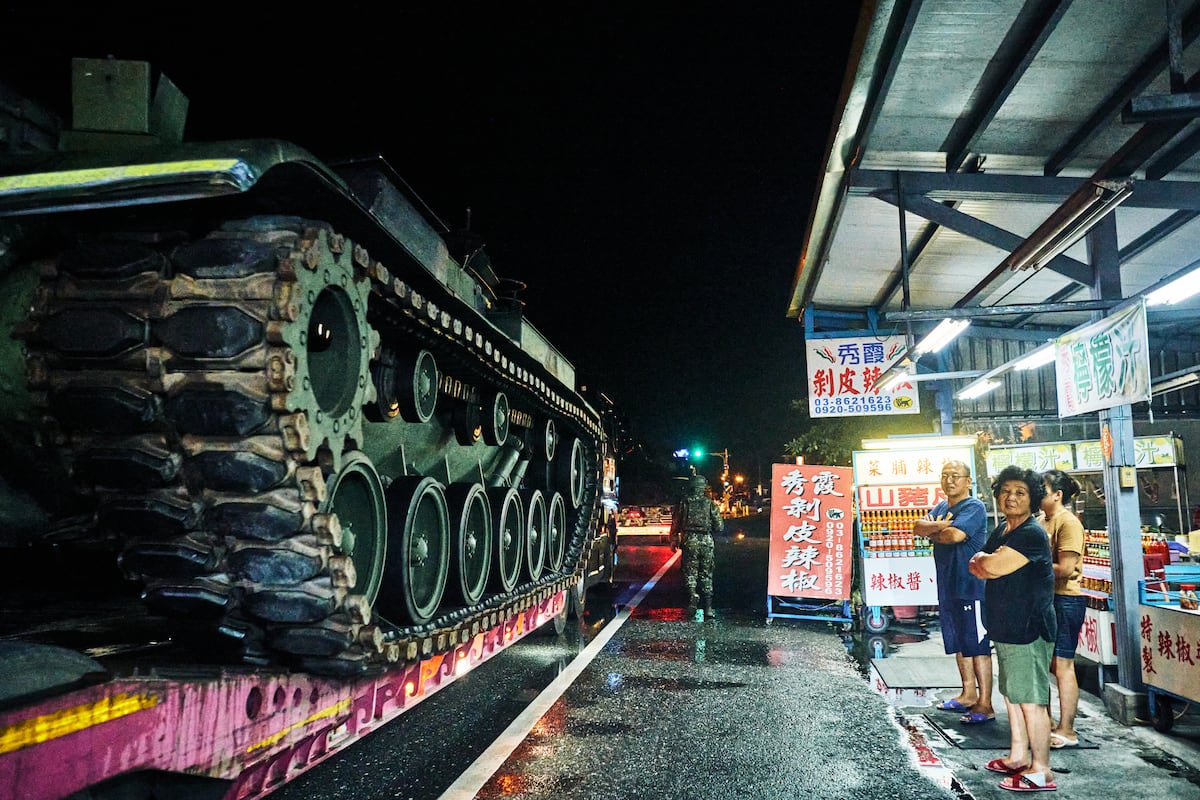
NEW TAIPEI CITY, Taiwan — Taiwan President Lai Ching-te told a forum in late September he was seeking “resilience through unity” with a new alliance that would let world officials and non-governmental groups prepare together in case of disaster.
For Taiwan, that could mean an attack or blockade by the militarily more powerful China .
Lai’s pitch to 500 experts and guests augured an international expansion of a roughly five-year-old domestic, military-civilian, whole-of-society awareness campaign similar to that seen overseas when larger countries bear down on smaller rivals.
Taiwan’s “efforts promoting whole-of-society defense resilience have progressed toward closer international connections and cooperation,” Lai said.
The domestic whole-of-society defense effort has grown visibly since its inception here, at the time when Russia was gearing up for its war in Ukraine, but where it’s going now depends who you ask.
It includes the November 2025 distribution of the cartoon-style Case of Crisis: Taiwan’s National Public Safety Guide to a targeted 9.83 million households with tips on stockpiling food and water and finding shelter.
Citizens in turn have prepared “go-bags” of daily rations and basic supplies plus emergency first aid kids and civilian-led civil defense preparation courses have sprung up.
“A potential conflict involving Taiwan would not affect only military targets but also the entire population and our critical infrastructure,” said Wen Liu, Taipei-based chairperson of the non-governmental civil defense group Kuma Civil Defense Education Promotion Association.
“That means the question is not only whether Taiwan’s armed forces can defend the island,” Liu said. “It is also a question of whether Taiwanese society can continue functioning under sustained pressure.”
The association also known as the Kuma Academy launched in 2021 to train civilians in emergency preparedness and cognitive warfare awareness. Liu said it had received backing from a retired billionaire and reached 100,000 people through hundreds of in-person courses.
The whole-of-society movement was enshrined in January 2022 under ex-president Tsai Ing-wen, whose Ministry of National Defense created its All-out Defense Mobilization Agency.
Lai formed the presidential office committee two years later to bind the government and society in learning how to maintain normal operations during attacks or natural disasters. The committee meets four times annually.
Finland, Switzerland and Singapore have long practiced a whole-of-society approach, said David Silbey, a military Historian and associate teaching professor with the Cornell Brooks School of Public Policy at Cornell University.
“Finland notably [prepared] against Russia in the 1950s through 1960s, Switzerland against Germany in World War II, and civilians in Singapore who have prepared for any move from Malaysia, all smaller countries resisting bigger ones,” Silbey said.
“The goal is to deter as much as it is to win an actual conflict, as actually fighting that way would be cataclysmically destructive to the smaller country,” he said. “In Taiwan’s case, the threat obviously comes from China and they’re trying to establish and standardize a resistance model where everyone fights back against a potential invasion.”
Hospitals must stay open, food must keep reaching supermarket shelves and families still need to get around during a crisis, said Sean Su, a Taiwan-based independent political analyst.
“What [whole-of-society resilience] actually does is keep a country running while the soldiers do their thing,” Su said. “You can see that in places like Ukraine.
“Taiwan’s foundation in dealing with a crisis is our experience with typhoons and earthquakes,” he said. “But a blockade is not designed to end in a few weeks so we’ll have to adjust accordingly.”
China claims sovereignty over self-ruled Taiwan and has threatened to take the island by force, if needed. Over the past four years People’s Liberation Army forces have stepped up military exercises near Taiwan, often in the 160-kilometer (100-mile) strait between them.
The idea is “synchronizing” civilian and military responses to war or other crises, said Brian Hioe, a non-resident fellow at the Taiwan Research Hub of the University of Nottingham. The number of non-military, civil defense groups, he said, is rising – an indication that Taiwan is “serious about defense at the grassroots of society.”
But the military hasn’t embraced those civilian-led groups, Hioe said.
“The challenge to date remains how to synchronize civilian and military efforts, with the military continuing to view itself as primarily responsible for defense and taking the view that civilians should stay in their lane and leave fighting to professional soldiers,” he said.
Civilian activity has gone flat overall since the survival guides were issued, said Joanna Lei, a former legislator and current chairwoman of the National Women’s League in Taiwan. “There’s no mass hysteria, and people are living their normal lives,” she said.
Whole-of-society momentum is expected to make only a neutral or vaguely positive impact on President Donald Trump’s decision whether to approve a stalled $14 billion U.S. arms package for Taiwan, analysts say. China opposes U.S. weapons sales to the island and Trump has sought unrelated deals with Chinese President Xi Jinping at meetings in May and September.
Taiwan advocacy group the Formosan Association for Public Affairs on Sept. 28 urged Trump to approve the sale without delay, saying China’s military and maritime “gray-zone” pressure had reached “unprecedented levels.”
But Trump doesn’t “care one way or the other” about activity in Taiwan, Silbey said, because “it’s not about how serious Taiwan is for him, it’s about wooing China.”
台湾新台北市——台湾总统赖清德在9月下旬的一个论坛上表示,他正在寻求通过建立新的联盟来实现“团结韧性”,该联盟将使世界各国官员和非政府组织能够共同做好准备,以应对灾难。
对台湾而言,这可能意味着遭到军事实力更强的中国的攻击或封锁。
赖向 500 位专家和嘉宾发表的演讲预示着一项已有大约五年历史的国内军民全民意识运动将扩展到国际范围,类似于海外大国打压小竞争对手时所采取的行动。
赖先生表示,台湾“在促进全社会防卫韧性方面所做的努力,已朝着更紧密的国际联系与合作方向发展”。
自俄罗斯准备入侵乌克兰以来,国内全社会参与的国防努力已经明显发展壮大,但如今它将走向何方,则取决于你问谁。
其中包括在 2025 年 11 月向 983 万户目标家庭分发卡通风格的《危机事件:台湾国家公共安全指南》,其中包含有关储备食物和水以及寻找住所的提示。
市民们也纷纷准备了装有日常口粮和基本用品的“应急包”,此外还有急救儿童和民间主导的民防准备课程涌现出来。
“一旦台湾卷入潜在冲突,不仅会影响军事目标,还会影响全体民众和我们的关键基础设施,”总部位于台北的非政府民防组织隈研教促进会会长刘文表示。
刘先生说:“这意味着问题不仅在于台湾军队能否保卫岛屿,还在于台湾社会能否在持续压力下继续运转。”
该协会又名隈研吾学院,成立于2021年,旨在为民众提供应急准备和认知战意识方面的培训。刘先生表示,该协会获得了一位退休亿万富翁的支持,并通过数百门线下课程惠及了10万人。
全社会运动于 2022 年 1 月在前总统蔡英文的领导下正式确立,其国防部成立了全面防卫动员局。
两年后,赖清德成立了总统府委员会,旨在协调政府和社会各界学习如何在遭受袭击或自然灾害时维持正常运转。该委员会每年召开四次会议。
康奈尔大学康奈尔布鲁克斯公共政策学院的军事历史学家兼副教授大卫·西尔贝表示,芬兰、瑞士和新加坡长期以来一直奉行全社会参与的方式。
西尔贝说:“芬兰在 20 世纪 50 年代至 60 年代为对抗俄罗斯做好了充分准备,瑞士在二战期间为对抗德国做好了准备,新加坡的平民也为应对马来西亚的任何行动做好了准备,所有这些小国都在抵抗大国。”
他说:“我们的目标是威慑,其次才是赢得实际冲突,因为那样打仗对小国来说将是灾难性的。” “就台湾而言,威胁显然来自中国,他们正试图建立和规范一种抵抗模式,让所有人都能反击潜在的入侵。”
台湾独立政治分析家苏世安表示,医院必须保持开放,食品必须继续供应超市货架,家庭在危机期间仍然需要出行。
苏说:“(全社会韧性)的真正作用是,在军队执行任务的同时,维持国家的正常运转。在乌克兰等地,你就能看到这一点。”
他说:“台湾应对危机的基础在于我们应对台风和地震的经验。但封锁并非旨在几周内结束,所以我们必须做出相应的调整。”
中国声称对自治的台湾拥有主权,并威胁称如有必要将以武力收复该岛。过去四年,中国人民解放军加大了在台湾附近海域的军事演习力度,演习地点经常位于两岸之间160公里(100英里)宽的海峡。
诺丁汉大学台湾研究中心非常驻研究员许炳良表示,这一理念旨在“协调”民间和军事力量对战争或其他危机的应对。他指出,非军事性质的民防团体数量正在增加,这表明台湾“认真对待社会基层防卫”。
Hioe表示,但军方并没有接纳这些由平民领导的团体。
他说:“迄今为止的挑战仍然是如何协调民事和军事努力,因为军方仍然认为自己主要负责国防,并认为平民应该安分守己,把战斗留给职业军人。”
台湾前立法委员、现任全国妇女同盟会会长雷静安表示,自发布生存指南以来,民众活动总体上趋于平静。“没有出现群体恐慌,人们的生活一切如常。”她说。
分析人士表示,全社会的积极影响预计只会对特朗普总统是否批准一项陷入僵局的140亿美元对台军售计划产生中性或略微积极的影响。中国反对美国向台湾出售武器,而特朗普曾在5月和9月与中国国家主席习近平会晤,寻求达成其他无关的军售协议。
台湾维权组织“福尔摩沙公共事务协会”于9月28日敦促特朗普立即批准这笔军售,称中国在军事和海上“灰色地带”施加的压力已经达到了“前所未有的水平”。
但西尔贝表示,特朗普对台湾的活动“漠不关心”,因为“这与台湾对他有多重要无关,而是与拉拢中国有关”。