Experts call for ‘Ministry of Longevity’ to prepare Malaysia for aged nation status专家呼吁设立“长寿部”,为马来西亚步入老龄化国家做好准备
KUALA LUMPUR, Oct 2 — Malaysia should coordinate efforts and policies when it comes to longevity and older people, by getting the government, businesses and civil society to work...
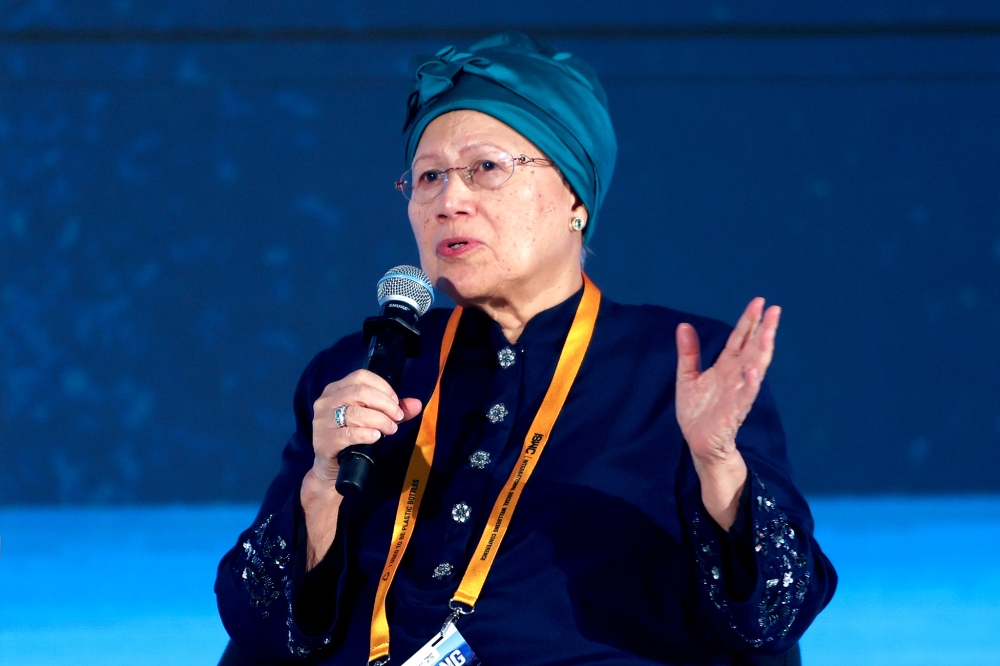
Prof. Emerita Tan Sri Dr. Sharifah Hapsah Syed Hasan, president of the National Council of Women's Organisations (NCWO) Malaysia, emphasized the need for a multi-sectoral coordinating body in Malaysia to address policies related to longevity and the ageing population.
She highlighted the importance of involving government, businesses, and civil society in formulating strategies that cover economic, social, health, and educational aspects for a better quality of life in old age.
The proposal was echoed by participants at the Employees Provident Fund's International Social Wellbeing Conference 2026, who suggested innovative policy approaches, such as establishing a Ministry of Longevity, to enhance coordination across various sectors.
The conference also underscored the potential role of the private sector in creating age-friendly products and services.
KUALA LUMPUR, Oct 2 — Malaysia should coordinate efforts and policies when it comes to longevity and older people, by getting the government, businesses and civil society to work together, National Council of Women's Organisations (NCWO) Malaysia president Prof. Emerita Tan Sri Dr Sharifah Hapsah Syed Hasan has proposed.
Dr Sharifah said there is a need to have a coordinating body, adding that it is up to the federal government on how this body would operate, such as as a council or committee.
She stressed that the coordinating body must be multi-sectoral, which means it should involve not only the government, but also others such as the private sector and non-governmental organisations.
She said the proposed coordinating body would look at policies on creating a society that will not only live longer but also put life to age, and also at all aspects of a longer life.
"It is looking at the economy, looking at the social aspects, looking at the health aspects, looking at the educational aspects. You imagine yourself going towards old age, there's so many things affecting you right, everything that impinges on your life going towards old age. They have to plan together well so that we will move there healthy, curious," she told Malay Mail when met recently at the Employees Provident Fund's (EPF) International Social Wellbeing Conference 2026.
Dr Sharifah said different ministries currently handle different matters relating to older people, such as the National Ageing Blueprint 2025-2045 being under the Ministry of Economy; and the Malaysia Care Strategic Framework and Action Plan (2026–2030) being under the Ministry of Women, Family and Community Development.
When speaking about the need for a coordinating body, she noted for example that caregiving and the care industry involves both economic and social aspects.
She said there are also other industries relating to ageing, such as tourism which is a big industry as older people may have different interests when it comes to travel.
During an ISWC 2026 panel session titled "The Long Horizon: From Structural Force to Lived Reality", Dr Sharifah had raised the idea of having a coordinating body or governing body to see through all efforts relating to longevity and older people in Malaysia.
"I think our country lacks that governing body to actually see this through. We have got the blueprint and the strategic plan. But they are belonging to different ministries, you know, so I think somebody must try to coordinate this," she said during the panel session.
Dr Sharifah was responding to a question from moderator Shazana Mokhtar, who asked what could help improve coordination among different government agencies and also external stakeholders.
Fellow panel speaker and UK’s National Innovation Centre for Ageing (NICA) director, Nicola Palmarini, proposed the idea of setting up a Ministry of Longevity, a feature which he said is missing from current governments globally.
"Probably we need a Ministry of Longevity, because it's a ministry that sees the metrics from very different perspective, it's not simply healthcare, transportation... it's how you connect dots, the data to these elements that helps understand the other factors," the Professor of Ageing, Policy and Planning at Newcastle University said at ISWC 2026.
"Well, I I can say that nobody yet has taken literally this thing so seriously to design what I try to force as a provocation as a Ministry of Longevity," he later said.
He suggested that such a hypothetical ministry could measure the return on different longevity policies, including by measuring all the factors that could influence people living a good and long life, such as education, social factors and pollution.
Earlier in his presentation, he had highlighted Marcella Messina, who is the first-ever official with a longevity portfolio in Italy, with her role being the Councillor for Social Policies, Longevity, Health and Sport in the municipal council of Bergamo in Italy.
Among other things, Palmarini also said there is a need to involve the private sector, as this could create opportunities to accelerate longevity solutions.
JP Morgan Asset Management's Chief Market Strategist (Asia Pacific), Tai Hui, said governments do have a role to play in providing guidance on what is appropriate for the population when it comes to essential services such as healthcare and elderly care.
At the same time, he said the private sector's creativity in providing age-friendly services should not be underestimated.
"For example, in China, we now start to have more package tours designed for the elderly with a less demanding schedule - you don't start at 7am every day, you build in a nap break in the afternoon, you've got softer food being served.
"I remember my dad has a phone which has super-large font size, where it's easier to read, it's simpler to use," he said as a speaker at the same panel session as Sharifah and Palmarini.
"So I think if you give the private sector sufficient room to design and be creative, they can come up with the products that are suitable for the older population as well," he said, indicating that the private sector would design products and services targeted towards older people since they form a large part of the consumer base.
"But there's clearly a public service aspect, which the government has a much bigger role to play, to make sure that it's affordable, is decent quality, and is suitable for the older population," he said.
The ISWC 2026, which was themed "The Long Horizon", is EPF's 13th edition and brought together international and local experts over two days to speak on wide-ranging topics related to longevity.
UM to roll out hostel project housing 40,000 students, meeting B40 families’ needs, says Zambry
Anwar vows tighter governance as Madani Government moves to seal leaks and abuse of power
Electricity bill protection up to 800kWh: What does it mean for a household?
马来西亚全国妇女组织理事会 (NCWO) 主席丹斯里莎丽法·哈普萨·赛义德·哈桑教授强调,马来西亚需要建立一个多部门协调机构,以解决与长寿和人口老龄化相关的政策问题。
她强调,政府、企业和民间社会应参与制定涵盖经济、社会、健康和教育等方面的战略,以提高老年人的生活质量。
该提议得到了 2026 年雇员公积金国际社会福祉大会与会者的响应,他们提出了创新的政策方法,例如设立长寿部,以加强各部门之间的协调。
会议还强调了私营部门在创造适老产品和服务方面的潜在作用。
吉隆坡,10 月 2 日讯——马来西亚全国妇女组织理事会 (NCWO) 主席丹斯里莎丽法·哈普萨·赛义德·哈桑教授建议,马来西亚应在长寿和老年人问题上协调努力和政策,让政府、企业和民间社会携手合作。
沙里法博士表示,有必要设立一个协调机构,并补充说,该机构如何运作,例如以理事会或委员会的形式,由联邦政府决定。
她强调,协调机构必须是多部门的,这意味着它不仅应该包括政府,还应该包括私营部门和非政府组织等其他部门。
她表示,拟议的协调机构将研究如何创建一个不仅寿命更长,而且能够延年益寿的社会的政策,以及延长寿命的各个方面。
“这涉及到经济、社会、健康、教育等各个方面。想象一下自己步入老年,有很多事情会影响你,对吧?所有这些都会影响你晚年的生活。他们必须共同做好规划,这样我们才能健康快乐地步入老年,”她在最近出席2026年雇员公积金局(EPF)国际社会福祉大会时告诉《马来邮报》。
莎丽法博士表示,目前不同的部门负责处理与老年人相关的不同事务,例如《2025-2045年国家老龄化蓝图》由经济部负责;《马来西亚关爱战略框架和行动计划(2026-2030年)》由妇女、家庭和社区发展部负责。
在谈到需要设立协调机构时,她指出,例如,照护和照护行业既涉及经济方面,也涉及社会方面。
她表示,还有其他与老龄化相关的行业,例如旅游业,这是一个很大的行业,因为老年人在旅行方面可能有不同的兴趣。
在 ISWC 2026 的一场题为“长远规划:从结构力量到生活现实”的小组讨论会上,Sharifah 博士提出了成立一个协调机构或管理机构的想法,以监督马来西亚所有与长寿和老年人相关的努力。
“我认为我们国家缺乏一个能够真正贯彻落实这项计划的管理机构。我们有了蓝图和战略规划,但它们分属不同的部门,所以我认为必须有人来协调这项工作,”她在小组讨论会上说道。
沙里法博士是在回答主持人沙扎娜·莫克塔尔提出的问题,莫克塔尔询问什么有助于改善不同政府机构以及外部利益相关者之间的协调。
同组发言嘉宾、英国国家老龄化创新中心 (NICA) 主任尼古拉·帕尔马里尼提出了设立长寿部的想法,他表示,目前全球各国政府都缺少这一部门。
“或许我们需要一个长寿部,因为这个部门看待指标的角度非常不同,它不仅仅是医疗保健、交通……而是如何将各个方面联系起来,将数据与这些要素联系起来,从而帮助理解其他因素,”纽卡斯尔大学老龄化、政策和规划教授在 2026 年国际长寿大会上说道。
“嗯,我可以说,目前还没有人像我这样认真地把这件事当成挑衅,设计成一个长寿部,”他后来说道。
他建议,这样一个假想的部门可以衡量不同长寿政策的回报,包括衡量所有可能影响人们健康长寿的因素,例如教育、社会因素和污染。
在他之前的演讲中,他重点介绍了马塞拉·梅西纳,她是意大利首位负责长寿事务的官员,担任意大利贝加莫市议会社会政策、长寿、健康和体育事务的议员。
帕尔马里尼还表示,有必要让私营部门参与进来,因为这可能会创造机会,加速长寿解决方案的开发。
摩根大通资产管理公司亚太区首席市场策略师戴辉表示,在医疗保健和老年护理等基本服务方面,政府确实可以发挥作用,为民众提供适当的指导。
与此同时,他表示不应低估私营部门在提供适老服务方面的创造力。
“例如,在中国,我们现在开始推出更多专为老年人设计的旅游套餐,行程安排不那么紧凑——你不用每天早上7点出发,下午会安排午睡时间,还会提供更软的食物。
“我记得我爸爸有一部手机,字体特别大,这样更容易阅读,也更容易使用,”他在与 Sharifah 和 Palmarini 同一场小组讨论会上发言时说道。
“所以我认为,如果给私营部门足够的空间去设计和发挥创造力,他们也能设计出适合老年人群的产品,”他说道,并指出私营部门会设计针对老年人的产品和服务,因为老年人是消费群体的重要组成部分。
“但显然其中也包含公共服务方面的内容,政府在这方面应该发挥更大的作用,确保价格合理、质量优良,并且适合老年人群体,”他说。
以“长远展望”为主题的 ISWC 2026 是 EPF 举办的第 13 届,为期两天,汇聚了国际和本地专家,就与长寿相关的广泛话题进行了演讲。
赞布里表示,马来亚大学将推出可容纳4万名学生的宿舍项目,以满足B40低收入家庭的需求。
安瓦尔誓言加强治理,马达尼政府着手堵住泄密漏洞和打击滥用权力行为。
电费保障最高可达 800kWh:这对家庭意味着什么?