Johor conservation efforts produce about 5,000 turtle hatchlings a year柔佛州的保护工作每年大约孵化出5000只小海龟。
MERSING, Oct 2 — Johor continues to make positive progress in turtle conservation, particularly for hawksbill and green turtles, with an estimated 5,000 hatchlings emerging each...
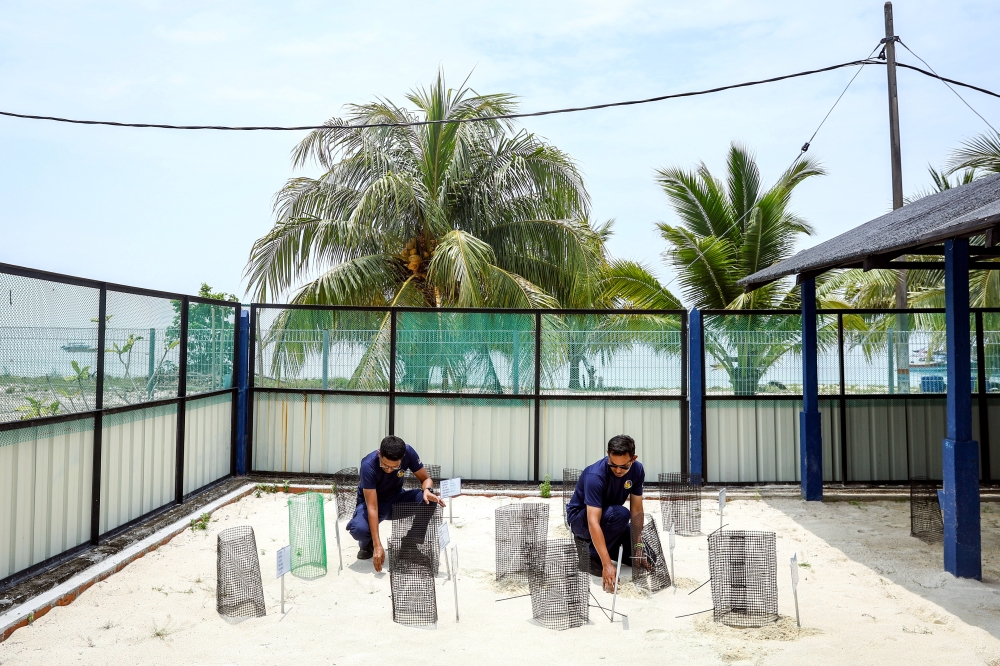
The Johor Department of Fisheries is making significant advancements in the conservation of hawksbill and green turtles, with about 5,000 hatchlings emerging annually due to protection efforts at key sites and hatcheries.
Director Rosmawati Ghazali emphasizes the importance of managing predation risks by transferring eggs to hatcheries for better monitoring and highlights the need for continued conservation programs, including education and artificial reef deployment.
The department also focuses on optimal temperature regulation to influence hatchling sex ratios and ensure more males are produced to support fertilization.
Pulau Tinggi leads in successful hatchings due to its remote location, reducing human and predator disturbances.
MERSING, Oct 2 — Johor continues to make positive progress in turtle conservation, particularly for hawksbill and green turtles, with an estimated 5,000 hatchlings emerging each year through protection efforts at nesting sites and hatcheries.
Johor Department of Fisheries director Rosmawati Ghazali said the main turtle nesting sites identified include Pulau Apil, Pulau Dayang, Pulau Besar and Pulau Tinggi here.
She said Pulau Tinggi recorded the highest number of hatchings due to its low population and remote location, which helps minimise human disturbance and threats from predators such as dogs and monitor lizards.
However, Rosmawati said turtle eggs left to hatch naturally face a high risk of predation, so they transfer eggs found at nesting sites to hatcheries for closer monitoring.
“When turtles lay their eggs in natural nests, they face many predators and the survival rate is low. Therefore, we transfer eggs found at nesting sites to hatcheries so our personnel can monitor them more closely,” she said.
She spoke to Bernama after inspecting the deployment of cheese block artificial reefs for coral restoration modules in the waters off Pulau Tinggi here recently.
Rosmawati said the Fisheries Conservation and Protection Branch’s conservation efforts are important, as studies show that only one in every 1,000 turtle hatchlings released into the sea is expected to reach maturity.
She said the department is continuing to step up conservation programmes, including education and awareness initiatives with students and local communities, as well as deploying artificial reefs to help preserve the marine ecosystem.
According to Rosmawati, turtle hatchlings face predators on land, in the sea and from the air after hatching, while also needing to find suitable feeding grounds to survive and grow.
She said temperature also plays an important role in determining the sex of turtle hatchlings, with warmer temperatures tending to produce more females and cooler temperatures more males.
“Sometimes we find unfertilised eggs, so we need to ensure the temperature in the area is suitable to produce male hatchlings, as one female needs four males for fertilisation.
“Therefore, we have set a ratio of five males to 10 females here,” she said, adding that the site is monitored regularly, with information recorded through the Fisheries Resources Management System, MyFiRSt.
Rosmawati said there is also a hatchery on Pulau Besar, but the island records relatively few turtle landings and faces constraints in electricity and water supply.
However, she said the department would transfer turtle eggs found on Pulau Besar to the Pulau Tinggi hatchery, which has better facilities for closer monitoring.
She said controlling human activity in hatchery areas is also important as they are sensitive locations where public access is discouraged. — Bernama
JB-Singapore RTS Link service start pushed back to February 2027
MCMC, MACC to use AI in fight against corruption and abuse of power
Anwar secures fast-track process for missing Malaysians in Nepal
Department mobilises 153 firefighters, medevac teams and buses to ensure optimum safety during F1
柔佛州渔业局在玳瑁和绿海龟的保护方面取得了重大进展,由于重点地点和孵化场的保护工作,每年约有 5000 只幼龟破壳而出。
主任罗斯玛瓦蒂·加扎利强调了将鱼卵转移到孵化场进行更好地监测以控制捕食风险的重要性,并强调了继续开展保护计划的必要性,包括教育和人工鱼礁的部署。
该部门还致力于优化温度调节,以影响雏鱼的性别比例,并确保产生更多雄性以支持受精。
由于地处偏远,减少了人类和捕食者的干扰,Pulau Tinggi 在成功孵化方面名列前茅。
丰盛港,10 月 2 日讯——柔佛州在海龟保护方面持续取得积极进展,尤其是在玳瑁和绿海龟的保护方面,每年通过对筑巢地和孵化场的保护工作,估计有 5000 只幼龟破壳而出。
柔佛州渔业局局长罗斯玛瓦蒂·加扎里表示,已确定的主要海龟筑巢地点包括阿皮岛、大洋岛、大岛和丁宜岛。
她说,由于人口稀少且位置偏远,Pulau Tinggi 的孵化数量最多,这有助于最大限度地减少人类的干扰以及狗和巨蜥等捕食者的威胁。
然而,罗斯玛瓦蒂表示,让海龟蛋自然孵化面临着很高的被捕食风险,因此他们会将筑巢地发现的海龟蛋转移到孵化场进行更密切的监测。
“当海龟在天然巢穴中产卵时,它们会面临许多天敌,存活率很低。因此,我们会将巢穴中发现的海龟卵转移到孵化场,以便我们的工作人员能够更密切地监测它们,”她说道。
她最近视察了在普劳丁宜岛附近海域部署的奶酪块人工礁用于珊瑚修复模块后,接受了马新社的采访。
罗斯玛瓦蒂表示,渔业保育和保护部门的保育工作非常重要,因为研究表明,每1000只被放生到海里的海龟幼崽中,只有1只有望长大成熟。
她表示,该部门正在继续加强保护计划,包括对学生和当地社区开展教育和宣传活动,以及部署人工鱼礁以帮助保护海洋生态系统。
据罗斯玛瓦蒂称,海龟幼龟孵化后,不仅要面对陆地、海洋和空中的捕食者,还要寻找合适的觅食地才能生存和成长。
她表示,温度在决定海龟幼崽的性别方面也起着重要作用,温度越高,雌性幼崽往往越多;温度越低,雄性幼崽则越多。
“有时我们会发现未受精的卵,所以我们需要确保该地区的温度适合雄性幼体孵化,因为一只雌性需要四只雄性才能受精。
“因此,我们在这里设定了 5 比 10 的雄性与雌性比例,”她说道,并补充说,该地点会定期进行监测,相关信息会通过渔业资源管理系统 MyFiRSt 进行记录。
罗斯玛瓦蒂表示,大岛上也有一个孵化场,但该岛记录到的海龟上岸数量相对较少,并且面临电力和供水方面的限制。
不过,她表示,该部门会将大岛上发现的海龟蛋转移到丁宜岛孵化场,那里有更好的设施进行更密切的监测。
她表示,控制孵化场区域的人类活动也至关重要,因为这些区域较为敏感,不鼓励公众进入。——马新社
新山-新加坡RTS连接线服务开通时间推迟至2027年2月
马来西亚通讯及多媒体委员会(MCMC)和反贪污委员会(MACC)将利用人工智能打击腐败和滥用权力。
安华为在尼泊尔失踪的马来西亚人争取快速通道
消防部门调集了153名消防员、医疗救援队和巴士,以确保F1赛事期间的最佳安全。