The NIH-Pentagon deal isn’t a cash grab. It’s a rescue.美国国立卫生研究院与五角大楼的协议并非为了敛财,而是为了拯救国家。
As global threats move faster than ever, uniting defense capability with scientific innovation is not a luxury, it’s an imperative, argues former Pentagon official David Lasseter.
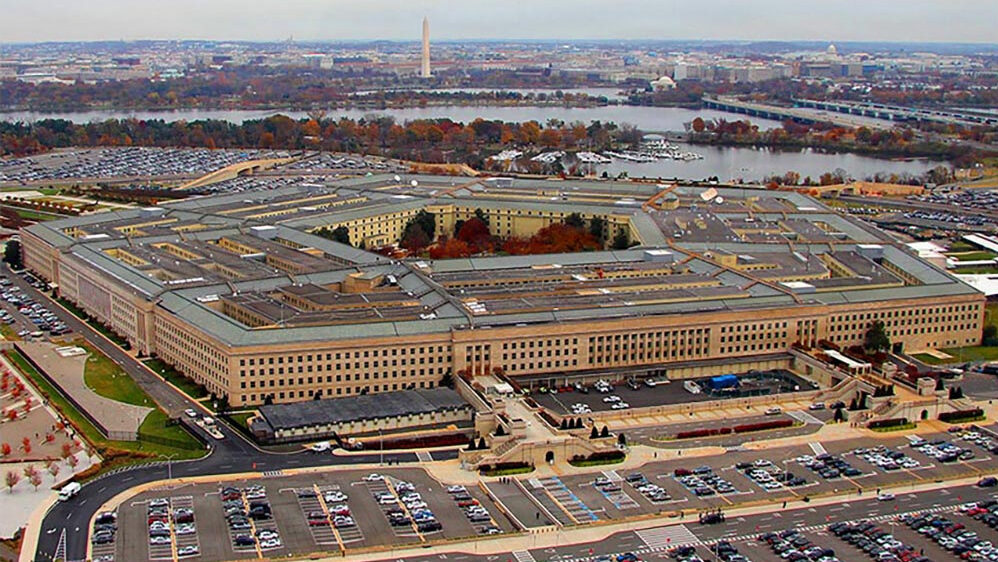
Aerial view of the Pentagon with the Washington Monument and Jefferson Memorial in the background.
Last month, an Interagency Agreement (IAA) between the Department of War and the National Institutes of Health (NIH) became a political flashpoint. Stories raged of a “ Pentagon cash grab ,” of military plans to “ tap huge sums ,” and “ outrage ” over funneled research dollars.
Ultimately, this was a misread of the situation. While it is understandable there would be concern about this administration’s handling of the NIH budget given previous cuts, these headlines mistook a legal, highly efficient acquisition mechanism as a hostile takeover.
In truth, this kind of agreement is exactly what the United States government needs to be doing more of in order to ensure that the US military is ready for future Chemical, Biological, Radiological and Nuclear (CBRN) threats.
First, it’s important to understand what actually happened here.
Signed by Assistant Secretary of War for Nuclear Deterrence, Chemical and Biological Defense Policy and Programs (OASW ND-CBD), Dr. Robert Kadlec and NIH Director Dr. Jayanta Bhattacharya, this agreement establishes a streamlined framework to accelerate the development of medical countermeasures (MCMs), advanced diagnostics and personal protective equipment (PPE).
The agreement relies on the statutory authority of the Economy Act (31 U.S.C. § 1535) and relevant provisions of Title 42 to allow NIH to access the Pentagon’s specialized acquisition infrastructure. NIH is not surrendering its mission or handing over a blank check; it is utilizing the department’s procurement, grant mechanisms and Other Transaction Authority to execute research orders that NIH itself requests and funds.
Also, under the Project Bioshield Act of 2004 (Public Law 108-276) Congress authorized NIH through the National Institute of Allergy and Infectious Disease (NIAID) to conduct expedited research and streamlined procurement mechanisms for MCMs across the CBRN threat spectrum. Importantly, this legislation gave NIH the authority to enter into interagency agreements with other U.S. Government agencies.
Three exercises that proved a new approach to C-UAS
Architecture that linked sensors, C2, RF effects, and lasers into a distributed c-UAS kill chain.
The plain language of the agreement is surgical in its scope, and it explicitly safeguards civilian public health interests. The agreement will have little to no effect on NIH’s important research on dementia, cancer, nutrition or other public health priorities. Section IV.C.iii of the agreement establishes a governance structure based on mutual concurrence for joint agendas, while explicitly preserving NIH’s final authority on product requirements and profiles aimed at civilian populations and public health preparedness. Concurrently, the Pentagon maintains final authority over requirements tailored specifically to warfighter protection, military operational environments and tactical deployment which ensures that civilian health needs and defense operational needs are mutually reinforced rather than compromised.
Let’s be clear on what this agreement between the department and NIH is designed to address. The true barrier to effective biodefense has never been a lack of basic science; it has been the notorious “valley of death” — the treacherous gap where promising laboratory discoveries fail to transition into scalable, manufactured medical countermeasures.
NIH excels at foundational discovery and basic scientific research. However, converting a laboratory discovery into a mass-producible therapeutic, rapid diagnostic kit or fieldable PPE requires rigorous program management, industrial base coordination and specialized contracting mechanisms — and as maligned as the Pentagon’s acquisition system can be, its success ratio is much, much higher than when NIH attempts to develop and procure capabilities on its own.
While NIH has conducted significant cutting edge, important and life-saving research across its enterprise, the record on successful CBRN medical countermeasure products is less clear. The publicly available information on funding, conversion of research into a medical product and human effectiveness is limited. While NIH/NIAID has been instrumental in enabling certain MCMs to meet FDA approval, reports and records from the Congressional Research Service, Government Accountability Office and the Department of Health and Human Services show numbers that are quite low–perhaps just five marketable products delivered to the Strategic National Stockpile. These include TPOXX and TEMBEXA for smallpox, EBANGA and INMAZEB for Ebola, as well as support for the midazolam autoinjector.
By leveraging the Department of War’s procurement machinery to support NIH’s scientific pipeline, the agreement can bridge the research valley to the procurement high ground, hopefully increasing the success rate in developing CBRN medical detection, mitigation and response capabilities. Far from wasting taxpayer dollars, this partnership eliminates duplicate administrative overhead, accelerates production timelines and maximizes the return on every federal research dollar spent.
Spelling it out more directly: This agreement takes nothing away from NIH. It is about the Pentagon offering its services to help NIH do what it cannot on its own. NIH is not the victim here, it is the beneficiary.
Now, the public does get something out of this deal: CBRN medical countermeasures are inherently dual-use assets. An antiviral therapeutic, broad-spectrum antitoxin or advanced diagnostic platform capable of protecting a deployed Marine on a contested battlefield in 2026 is likely the same countermeasure needed to protect American citizens at home during an emerging pandemic or biological attack. Pathogens and radiological hazards do not distinguish between someone in uniform or wearing jeans; our federal defense and health apparatuses shouldn’t either.
Is this agreement a roadmap for similar interagency agreements in the future? We must evaluate the results first. CBRN medical defense is particularly tricky. The products that this agreement would intend to develop come primarily from responding to the insidious work of bad actors often seeking to harm the men and women who protect us. What this agreement does is provide another mechanism, perhaps worth emulating, to ensure efficient and more precise use of taxpayer resources to develop life-saving products for the US military and the American people.
It should also be noted that the department spends an infinitesimal amount on radiological and nuclear (RN) defense when compared to defending against chemical and biological threats. As I have discussed previously, investment in RN detection, protection and MCMs must increase to a level that ensures our men and women in uniform have what they need to fight, survive and win on an RN contaminated battlefield. This agreement should enable positive progress to be made in that endeavor.
There have been cuts to NIH that the scientific community has deep concerns over, but this shouldn’t be one of them. This agreement is interagency cooperation that leaders in Congress and the scientific community should champion. In an era where global threats move faster than ever, uniting defense capability with scientific innovation is not a luxury — it is an imperative.
David F. Lasseter is the former Deputy Assistant Secretary of Defense for Countering Weapons of Mass Destruction and Founder of Horizons Global Solutions.
从空中俯瞰五角大楼,背景是华盛顿纪念碑和杰斐逊纪念堂。
上个月,美国战争部与美国国立卫生研究院(NIH)之间的一项机构间协议(IAA)成为政治焦点。各种报道甚嚣尘上,包括“五角大楼攫取资金”、军方计划“挪用巨额资金”以及对科研经费被挪用的“愤怒”。
最终,这被证明是对形势的误判。尽管考虑到此前的预算削减,人们对本届政府处理美国国立卫生研究院(NIH)预算的方式感到担忧是可以理解的,但这些新闻标题却将一种合法高效的收购机制误解为恶意收购。
事实上,美国政府需要更多地采取这种协议,以确保美国军队能够应对未来的化学、生物、放射性和核(CBRN)威胁。
首先,了解这里究竟发生了什么很重要。
该协议由负责核威慑、化学和生物防御政策和计划的助理战争部长罗伯特·卡德莱克博士和美国国立卫生研究院院长贾扬塔·巴塔查里亚博士签署,建立了一个简化的框架,以加速医疗对策 (MCM)、先进诊断和个人防护装备 (PPE) 的开发。
该协议依据《经济法》(31 USC § 1535)的法定授权以及第42篇的相关条款,允许美国国立卫生研究院(NIH)使用五角大楼的专用采购基础设施。NIH并非放弃自身使命或开出空白支票;它只是利用该部门的采购、拨款机制和其他交易授权来执行NIH自身提出并资助的研究项目。
此外,根据2004年《生物盾牌计划法案》(公法108-276),国会授权美国国立卫生研究院(NIH)通过其下属的国家过敏症和传染病研究所(NIAID)开展针对化学、生物、放射性和核(CBRN)威胁范围内的医疗对策(MCM)的快速研究和简化采购机制。重要的是,该法案赋予NIH与其他美国政府机构签订机构间协议的权力。
三个演习证明了反无人机系统(C-UAS)的一种新方法。
将传感器、C2、射频效应和激光连接成分布式 c-UAS 杀伤链的架构。
该协议措辞简洁明了,范围精准,明确保障了民众的公共卫生利益。该协议对美国国立卫生研究院(NIH)在痴呆症、癌症、营养或其他公共卫生重点领域的重要研究几乎没有影响。协议第四部分C.iii节建立了一个基于双方协商一致的治理结构,以制定共同议程,同时明确保留了NIH对面向民众和公共卫生应急准备的产品需求和规范的最终决定权。与此同时,五角大楼对专门针对作战人员保护、军事作战环境和战术部署的需求拥有最终决定权,从而确保民众健康需求和国防作战需求相互促进,而非相互妥协。
让我们明确一下该部门与美国国立卫生研究院 (NIH) 达成的这项协议旨在解决什么问题。有效生物防御的真正障碍从来都不是基础科学的匮乏,而是臭名昭著的“死亡谷”——实验室里那些极具前景的发现,往往无法转化为可规模化生产的医疗对策,而这正是其中的险滩。
美国国立卫生研究院(NIH)在基础发现和基础科学研究方面表现出色。然而,将实验室发现转化为可大规模生产的治疗药物、快速诊断试剂盒或可现场使用的个人防护装备,需要严格的项目管理、产业基础协调和专门的合同机制——尽管五角大楼的采购系统饱受诟病,但其成功率远高于NIH自行研发和采购的能力。
尽管美国国立卫生研究院 (NIH) 在其机构内开展了大量前沿、重要且拯救生命的研究,但在核生化 (CBRN) 医疗对策产品的成功案例方面,其记录却并不清晰。关于资金投入、研究成果转化为医疗产品以及人体疗效的公开信息有限。虽然 NIH/NIAID 在推动某些医疗对策产品获得美国食品药品监督管理局 (FDA) 批准方面发挥了关键作用,但来自国会研究服务处、政府问责局以及卫生与公众服务部的报告和记录显示,相关产品数量相当少——或许只有五种可上市的产品被送往国家战略储备库。这些产品包括用于预防天花的 TPOXX 和 TEMBEXA、用于预防埃博拉病毒的 EBANGA 和 INMAZEB,以及对咪达唑仑自动注射器的支持。
通过利用美国战争部的采购机制来支持美国国立卫生研究院(NIH)的科研项目,该协议能够弥合科研与采购之间的鸿沟,有望提高核生化(CBRN)医疗检测、缓解和应对能力开发的成功率。这项合作不仅不会浪费纳税人的钱,反而能够消除重复的行政开支,加快研发进度,并最大限度地提高每一笔联邦科研经费的回报。
更直白地说:这项协议丝毫不会损害美国国立卫生研究院(NIH)的利益。它体现的是五角大楼向NIH提供服务,帮助其完成自身无法独立完成的工作。NIH并非受害者,而是受益者。
现在,公众确实能从这项协议中受益:核生化医疗对策本质上是两用资产。一种抗病毒疗法、广谱抗毒素或先进的诊断平台,能够在2026年保护部署在敌对战场上的海军陆战队员,很可能也是在新出现的大流行病或生物袭击中保护美国公民所需的对策。病原体和放射性危害不会区分穿制服的人和穿牛仔裤的人;我们的联邦国防和卫生机构也不应该区别对待。
这项协议能否为未来类似的跨部门协议提供蓝图?我们必须首先评估其结果。核生化医疗防御尤其棘手。这项协议旨在研发的产品主要源于应对那些企图伤害保卫我们安全的军人的恶意行为。这项协议的作用在于提供一种新的机制,或许值得效仿,以确保更高效、更精准地利用纳税人的资源,为美国军方和美国人民研发救生产品。
还应指出的是,与防御化学和生物威胁相比,国防部在放射性和核(RN)防御方面的投入微乎其微。正如我之前所讨论的,必须增加对放射性物质探测、防护和水雷对抗措施(MCM)的投资,以确保我们的军人在放射性污染的战场上拥有作战、生存和取胜所需的一切。这项协议应该能够在这方面取得积极进展。
美国国立卫生研究院(NIH)的经费削减曾引起科学界的深切关注,但这不应成为其中之一。这项协议是跨部门合作的体现,国会和科学界的领导人应该大力支持。在全球威胁瞬息万变的时代,将国防能力与科学创新相结合并非可有可无,而是势在必行。
戴维·F·拉塞特曾任美国国防部负责打击大规模杀伤性武器的副助理部长,也是 Horizons Global Solutions 的创始人。