Poland, Romania lead a drone bonanza in Eastern Europe波兰和罗马尼亚引领东欧无人机热潮
Local companies are vying for new customers besides their national armed forces.
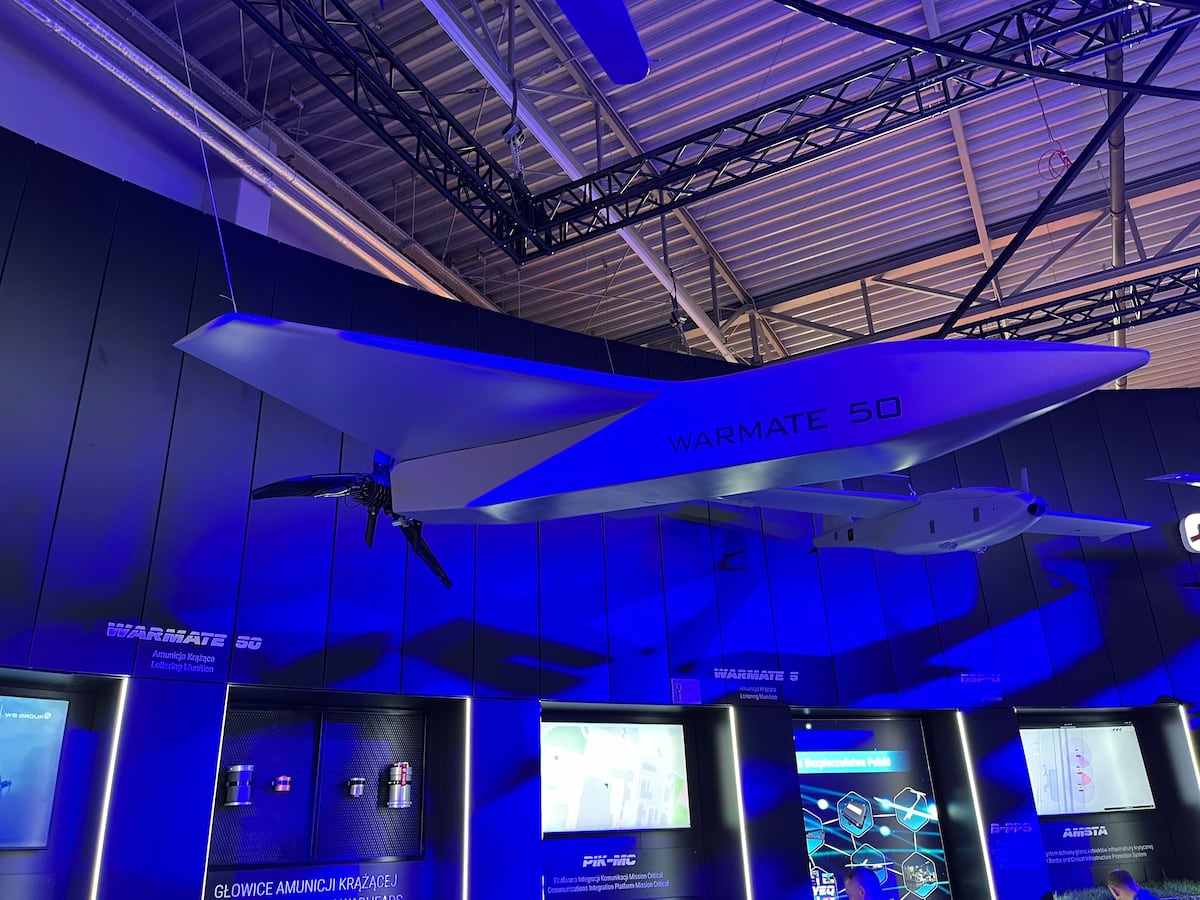
WARSAW, Poland — As Poland’s military is developing the Drone Force, its latest military component that was launched earlier this year, the Ministry of National Defence recently signed a deal to purchase the largest number of unmanned aerial vehicles in the country’s history.
The move comes as various Eastern European allies are advancing major drone purchases, drawing lessons from Russia’s war against Ukraine.
On May 15, the Polish ministry signed a framework agreement with local private defense company WB Group to buy some 10,000 units of the Warmate loitering munition. The contract foresees deliveries until 2035.
“This is a large-scale investment – 10,000 Warmate drones are becoming a fact,” Władysław Kosiniak Kamysz, Poland’s deputy prime minister and defense minister, said at the official signing ceremony, as quoted in a statement.
“They will soon start being delivered to the Polish military. The next deals, which will be executive, will be signed in the near future,” he added.
WB Group has been expanding its portfolio of UAVs over the past years. Some of the latest additions to the company’s range include the Warmate TL-R reconnaissance system, FT5 mini tactical class drones in new variants, Warmate 20 loitering munition, and the extended-range Warmate 50. Warmate 20 has a range of “several hundred kilometers” and Warmate 50’s range exceeds that of Warmate 20, according to the company.
Remigiusz Wilk, the head of communications at WB Group, told Defense News that, since the war’s outbreak, the drone producer has observed a surge in interest in unmanned capabilities across the region.
“Drones are now considered an important protective measure for soldiers,” Wilk said. “When combined, they allow to create complex aerial systems.”
In the fighting between Ukraine against Russian invaders, sections of the front line have almost become devoid of human soldiers, with drones patrolling large swathes of land, ready to pounce on anything that moves.
“The more we push soldiers away from the battlefield and replace them with drones, the safer they are,” Wilk said. “Drones have the potential to protect many lives, and the military appreciates this now more than ever before.”
The Polish Armed Forces are showing an growing interest in buying new UAVs to develop their Drone Force, but WB Group is also using the company’s expanding manufacturing capabilities to unlock additional markets.
“WB Group is currently building new facilities to produce more drones,” the spokesman said, listing countries in Europe and Asia, including South Korea and Malaysia, as clients. “We have supplied drones to Ukraine’s military since 2015, so we are in an optimal position to draw lessons from the conflict and continue to enhance our unmanned systems to respond to the evolving battlefield requirements.”
At the same time, the Polish Drone Force will also comprise larger UAVs. In December 2024, the ministry signed a contract worth around $310 million to acquire an undisclosed number of MQ-9B Sky Guardian drones. The UAVs are to be delivered to Poland’s military by the first quarter of 2027.
Meanwhile in Romania, the country’s economy minister, Bogdan Ivan, recently paid a visit to the factories of local drone manufacturers Carfil SA and IAR Ghimbav. During his visit to their facilities, Ivan announced Bucharest intends to use a significant portion of the European Union’s funds for defense acquisitions by member states to buy drones for Romania’s military.
The Romanian minister was referring to the ReArm Europe plan, an initiative designed to bolster the EU’s defense expenditure and capacities. Mobilizing up to €800 billion ($906 billion) through various means, the program is to stimulate higher national defense budgets and finance a new loan instrument available to member states to facilitate equipment purchases.
Romanian officials hope the rising domestic drone production capabilities will allow to ramp up the military’s unmanned capacities, but also enable local producers to sell a sizable share of their output abroad, according to the economy minister.
“When you have a production line that can make up to 3,500 drones annually, we will not only produce for the Romanian military,” Ivan said, as quoted by local daily Adevarul.
Jaroslaw Adamowski is the Poland correspondent for Defense News.
波兰华沙——波兰军方正在发展无人机部队,这是波兰今年早些时候推出的最新军事组成部分。与此同时,波兰国防部最近签署了一项协议,购买该国历史上数量最多的无人机。
此举正值东欧各盟友从俄罗斯对乌克兰的战争中吸取教训,并推进大规模无人机采购之际。
5月15日,波兰国防部与当地私营国防公司WB集团签署框架协议,采购约1万枚Warmate巡飞弹。合同规定交付工作将持续到2035年。
“这是一项大规模投资——10000架Warmate无人机即将成为现实,”波兰副总理兼国防部长瓦迪斯瓦夫·科西尼亚克·卡米什在正式签约仪式上表示,该声明援引了他的话说。
“这些装备很快就会开始交付给波兰军方。下一批订单,也就是正式订单,将在近期签署,”他补充道。
近年来,WB集团一直在拓展其无人机产品线。该公司最新推出的产品包括Warmate TL-R侦察系统、新型FT5迷你战术级无人机、Warmate 20巡飞弹以及远程Warmate 50无人机。据该公司称,Warmate 20的航程可达数百公里,而Warmate 50的航程则超过了Warmate 20。
WB集团通讯主管雷米吉乌什·威尔克告诉《防务新闻》,自战争爆发以来,这家无人机生产商观察到该地区对无人能力的兴趣激增。
威尔克说:“无人机现在被认为是士兵的重要防护措施。当它们组合使用时,可以构建复杂的空中系统。”
在乌克兰与俄罗斯侵略者之间的战斗中,前线部分地区几乎没有人类士兵,无人机在大片土地上巡逻,随时准备扑向任何移动的目标。
威尔克说:“我们越是让士兵远离战场,用无人机取而代之,他们的安全就越有保障。无人机有潜力保护许多生命,军方现在比以往任何时候都更加重视这一点。”
波兰武装部队对购买新型无人机以发展其无人机部队表现出越来越浓厚的兴趣,但 WB 集团也在利用公司不断扩大的制造能力来开拓更多市场。
发言人表示:“WB集团目前正在建设新的生产设施,以生产更多无人机。”他列举了包括韩国和马来西亚在内的欧洲和亚洲国家作为客户。“自2015年以来,我们一直向乌克兰军方供应无人机,因此我们能够从这场冲突中吸取经验教训,并不断改进我们的无人系统,以应对不断变化的战场需求。”
与此同时,波兰无人机部队还将包括更大型的无人机。2024年12月,波兰国防部签署了一份价值约3.1亿美元的合同,采购数量未公开的MQ-9B“天空卫士”无人机。这些无人机将于2027年第一季度交付波兰军方。
与此同时,罗马尼亚经济部长博格丹·伊万近日参观了当地无人机制造商Carfil SA和IAR Ghimbav的工厂。参观期间,伊万宣布布加勒斯特计划将欧盟成员国国防采购资金中的相当一部分用于为罗马尼亚军队购买无人机。
这位罗马尼亚部长指的是“重整欧洲”计划,该计划旨在加强欧盟的国防开支和能力。该计划将通过各种手段调动高达8000亿欧元(9060亿美元)的资金,以刺激各国增加国防预算,并为成员国提供一种新的贷款工具,以方便其采购装备。
据罗马尼亚经济部长称,罗马尼亚官员希望国内无人机生产能力的提升不仅能够提高军方的无人作战能力,还能使当地生产商将相当一部分产品销往国外。
据当地日报《真理报》报道,伊万表示:“当你拥有一条每年可生产 3500 架无人机的生产线时,我们就不会只为罗马尼亚军方生产了。”
Jaroslaw Adamowski 是《防务新闻》驻波兰记者。